
 Download PDF
 Download PDF
Market Overview
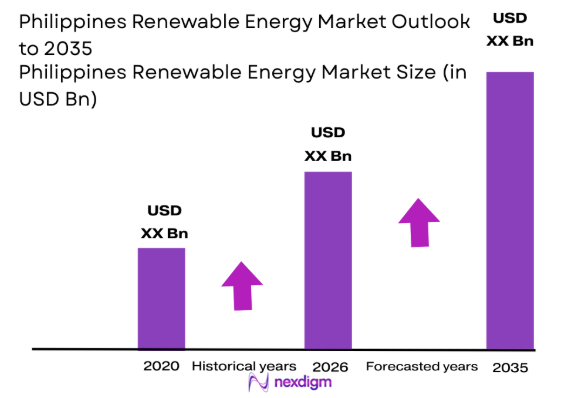
The Philippines renewable energy market has shown considerable growth, driven by the government’s support for clean energy initiatives, an expanding grid infrastructure, and increased consumer demand for sustainable energy sources. In recent assessments, the market is valued at approximately USD ~ billion, with strong support from both domestic and international investors. The adoption of solar, wind, and hydroelectric systems has been particularly robust, fueled by regulatory incentives and the global shift toward reducing carbon emissions. This surge in renewable energy adoption underscores the importance of technological advancements, alongside favorable policy and investment conditions, in accelerating the transition to renewable sources.
Dominant cities and regions in the Philippines, including Metro Manila, Cebu, and Davao, are leading the way in renewable energy development due to their economic significance and increasing energy demands. The country’s strategic location along the Pacific “Ring of Fire” provides abundant geothermal resources, while its vast coastline offers potential for wind and ocean energy. Additionally, government policies and international partnerships are fostering a favorable environment for expanding renewable energy infrastructure, especially in underserved rural areas. This widespread support has positioned the Philippines as one of the most promising markets for renewable energy growth in Southeast Asia.
Market Segmentation
By Product Type
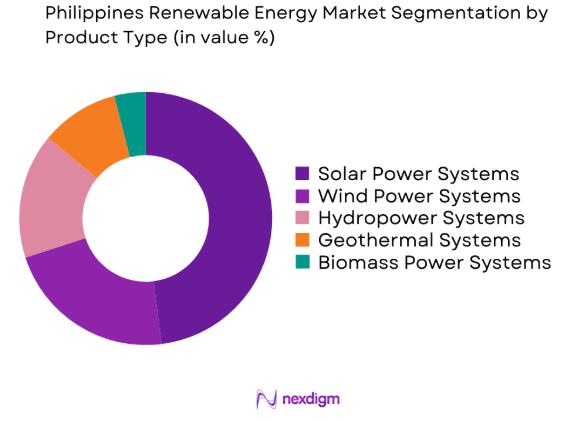
The Philippines Renewable Energy market is segmented by product type into solar power, wind power, hydropower, geothermal, and biomass. The solar power segment holds a dominant market share, driven by falling installation costs and the country’s high solar irradiance. Government incentives such as the Renewable Energy Act of 2008 have further encouraged solar adoption, particularly for residential and commercial installations. Additionally, the increasing demand for clean, off-grid power solutions is fueling solar power’s growth, especially in remote areas where traditional grid infrastructure is lacking.
By Platform Type
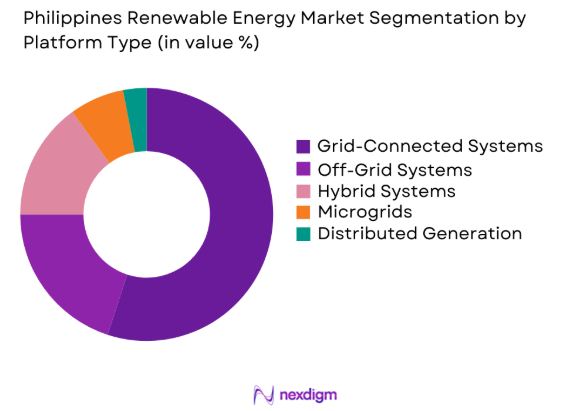
The market is also segmented by platform type, which includes grid-connected systems, off-grid systems, hybrid systems, microgrids, and distributed generation systems. Grid-connected systems dominate the market, benefiting from the growing national grid infrastructure and regulatory support for large-scale renewable energy projects. These systems are the backbone of the renewable energy push in urban centers and industrial zones. However, off-grid and hybrid systems are seeing increased adoption, particularly in rural and remote areas, driven by the need for energy access and the Philippines’ commitment to rural electrification.
Competitive Landscape
The competitive landscape in the Philippines renewable energy market is characterized by a mix of local and international players that are capitalizing on government incentives and public-private partnerships. These companies are engaged in both large-scale infrastructure projects and smaller distributed generation solutions. The market is highly competitive, with players seeking strategic collaborations and technological innovations to capture market share. Major players in the market include both renewable energy-focused firms and traditional energy companies diversifying into renewables. The presence of foreign investors is also strengthening market dynamics, providing a boost in terms of capital, technology, and expertise.
| Company Name | Establishment Year | Headquarters | Technology Focus | Market Reach | Key Products | Revenue (USD) | Additional Parameter |
| First Gen Corporation | 1998 | Quezon City | ~ | ~ | ~ | ~ | ~ |
| Aboitiz Power | 1998 | Taguig | ~ | ~ | ~ | ~ | ~ |
| Energy Development Corp | 1976 | Pasig City | ~ | ~ | ~ | ~ | ~ |
| AC Energy | 2008 | Makati | ~ | ~ | ~ | ~ | ~ |
| Solar Philippines | 2013 | Manila | ~ | ~ | ~ | ~ | ~ |
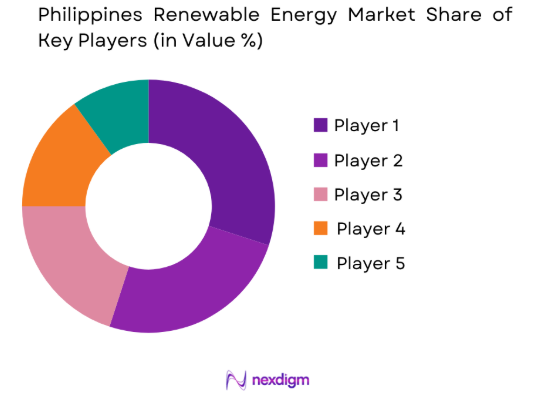
Philippines Renewable Energy Market Analysis
Growth Drivers
Government Policy Support
The Philippines government has played a significant role in driving the renewable energy market through progressive policy reforms. The Renewable Energy Act of 2008 has been instrumental in creating a favorable environment for renewable energy investments, providing tax incentives, financial subsidies, and facilitating the development of renewable energy plants. This has encouraged both local and foreign investments, particularly in solar, wind, and geothermal sectors. The government’s aggressive energy targets, including a shift towards 35% renewable energy in the power mix by 2030, is fueling infrastructure investments in the sector. By aligning energy policy with environmental goals, the government is facilitating the rapid growth of the renewable energy market.
Technological Advancements
Technological advancements in renewable energy systems, especially in solar and wind technologies, are contributing significantly to the market’s expansion. The declining costs of solar photovoltaic (PV) systems and improvements in efficiency are making solar energy more accessible to both commercial and residential users. Additionally, the development of hybrid systems that combine renewable energy sources with storage solutions has improved the reliability and feasibility of off-grid systems, driving the adoption of renewable energy in rural and remote areas. Moreover, advancements in energy storage technologies and grid management systems are optimizing energy production and distribution, further enhancing the growth potential of the sector.
Market Challenges
Regulatory Barriers and Bureaucratic Delays
Despite a supportive policy environment, the renewable energy market in the Philippines faces challenges due to bureaucratic inefficiencies and regulatory obstacles. Lengthy approval processes and delays in obtaining permits and licenses are hindering the timely development of renewable energy projects. These challenges are particularly pronounced in remote areas, where renewable energy systems are most needed. The absence of a streamlined regulatory framework, combined with inconsistent policy enforcement, adds complexity for developers. These inefficiencies slow down project implementation and increase costs, deterring investments. Addressing these regulatory bottlenecks is crucial to accelerating the growth of the renewable energy sector and ensuring equitable access to clean energy across the country.
High Capital Investment Requirements
A key challenge in the renewable energy sector is the high initial capital investment required for large-scale projects. While operational costs for renewable energy plants are typically lower than those of conventional power plants, the significant upfront costs of building solar farms, wind turbines, and hydropower systems pose a financial barrier. This challenge is further compounded by limited access to financing options, particularly for smaller players and rural projects. The need for substantial financial backing can slow down the development of the renewable energy market, especially for emerging developers and off-grid solutions. Overcoming this financial hurdle is crucial for accelerating renewable energy growth in underserved regions.
Opportunities
Off-Grid Energy Solutions in Rural Areas
The growing demand for renewable energy presents a significant opportunity for off-grid solutions in rural and remote areas of the Philippines. Many of these regions lack reliable access to the national grid, making renewable energy systems, particularly solar and wind, an ideal solution. With the government prioritizing rural electrification and the decreasing costs of solar technology, off-grid systems are becoming increasingly viable. This opens up opportunities for companies to develop and deploy affordable, scalable renewable energy solutions that can provide sustainable power to underserved communities. By addressing energy access challenges, off-grid renewable energy systems also contribute to the country’s broader renewable energy goals, improving both energy security and environmental sustainability.
Expansion of Offshore Wind Energy
Offshore wind energy is emerging as a key renewable power source in the Philippines due to its vast coastline and favorable wind conditions. The development of offshore wind farms presents a significant opportunity for investment and technological advancement. With the government actively promoting offshore wind energy projects, companies are exploring large-scale ventures along the country’s coasts, which are expected to contribute significantly to the renewable energy mix. Additionally, international collaborations and partnerships are accelerating the development of offshore wind infrastructure, enhancing the market’s growth prospects. This sector is poised for rapid expansion, helping the Philippines achieve its renewable energy goals and further diversify its energy sources.
Future Outlook
The future of the renewable energy market in the Philippines looks promising, with significant growth expected over the next few years. The government’s strong policy support, coupled with advancements in renewable energy technologies, will continue to drive the sector’s expansion. Technological innovations in solar, wind, and energy storage systems will lower costs and enhance efficiency, making renewable energy increasingly competitive. Regulatory support for infrastructure development and the integration of renewable energy into the national grid will also play a critical role in shaping the market’s growth trajectory, positioning the Philippines as a leader in renewable energy in Southeast Asia.
Major Players
- First Gen Corporation
- Aboitiz Power
- Energy Development Corporation
- AC Energy
- Solar Philippines
- PhinmaEnergy Corporation
- The Ayala Group
- SuanwaEnergy
- Meralco PowerGen
- AP Renewables
- Filinvest Development Corporation
- SuanwaRenewables
- Sustainable Energy Solutions
- Sterling and Wilson
- General Electric
Key Target Audience
- Investments and venture capitalist firms
- Government and regulatory bodies
- Renewable energy developers
- Energy utilities
- Renewable technology manufacturers
- Large commercial consumers of energy
- International energy consultants
- Private sector renewable energy investors
Research Methodology
Step 1: Identification of Key Variables
The initial phase involves identifying the key drivers, challenges, and opportunities that influence the renewable energy market in the Philippines. These factors are sourced from industry reports, government documents, and expert consultations.
Step 2: Market Analysis and Construction
A comprehensive market analysis is conducted using both primary and secondary research, with a focus on understanding the competitive landscape, market dynamics, and regulatory framework.
Step 3: Hypothesis Validation and Expert Consultation
A key part of the methodology involves validating the initial market hypothesis through interviews with industry experts, stakeholders, and government representatives.
Step 4: Research Synthesis and Final Output
The final step includes synthesizing all gathered data into a cohesive market report, providing actionable insights into the Philippines renewable energy sector.

- Executive Summary
- Research Methodology (Definitions, Scope, Industry Assumptions, Market Sizing Approach, Primary & Secondary Research Framework, Data Collection & Verification Protocol, Analytic Models & Forecast Methodology, Limitations & Research Validity Checks)

- Market Definition and Scope
- Value Chain & Stakeholder Ecosystem
- Regulatory / Certification Landscape
- Sector Dynamics Affecting Demand
- Strategic Initiatives & Infrastructure Growth

- Growth Drivers
Growing Demand for Clean Energy
Government Incentives and Subsidies
Rising Environmental Awareness - Market Challenges
Regulatory and Bureaucratic Hurdles
High Initial Investment Costs
Technological Limitations in Energy Storage - Market Opportunities
Expansion of Offshore Wind Energy
Rural Electrification through Off-grid Solutions
Collaboration with International Partners - Trends
Technological Advancements in Solar and Wind Energy
Integration of Energy Storage Systems
Rise in Renewable Energy Auctions - Government Regulations
- SWOT Analysis of Key Competitors
- Porter’s Five Forces

- By Market Value, 2020-2025
- By Installed Units, 2020-2025
- By Average System Price, 2020-2025
- By System Complexity Tier, 2020-2025

- By System Type (In Value%)
Solar Power Systems
Wind Power Systems
Hydropower Systems
Geothermal Power Systems
Biomass Power Systems - By Platform Type (In Value%)
Grid-connected Systems
Off-grid Systems
Hybrid Systems
Microgrids
Distributed Generation Systems - By Fitment Type (In Value%)
On-premise Solutions
Cloud-based Solutions
Modular Solutions
Integrated Solutions
Hybrid Solutions - By End User Segment (In Value%)
Government and Public Sector
Industrial and Commercial Enterprises
Residential
Utility Providers
Independent Power Producers - By Procurement Channel (In Value%)
Direct Procurement
Government Tenders
Private Sector Procurement
Online Bidding Platforms
Third-party Distributors

- Market Share Analysis
- Cross Comparison Parameters (System Type, Platform Type, Procurement Channel, End User Segment, Fitment Type, Geography, Technological Innovation, Regulatory Environment, Market Maturity, Competitive Landscape)
- SWOT Analysis of Key Competitors
- Pricing & Procurement Analysis
- Key Players
First Gen Corporation
AC Energy
San Miguel Corporation
Aboitiz Power
Solar Philippines
Energy Development Corporation
Phinma Energy Corporation
The Ayala Group
Suanwa Energy
Meralco PowerGen
AP Renewables
Filinvest Development Corporation
Suanwa Renewables
Sustainable Energy Solutions
Sterling and Wilson

- Government Initiatives Driving Renewable Adoption
- Industrial Sector Transition to Sustainable Energy
- Adoption by Residential Sector
- Impact of Regulatory Reforms on Private Investments

- Forecast Market Value, 2026-2035
- Forecast Installed Units, 2026-2035
- Price Forecast by System Tier, 2026-2035
- Future Demand by Platform, 2026-2035


 Request a Sample
 Ask for Customization
 Get a Quote
 Enquire Now