
 Download PDF
 Download PDF
Market Overview
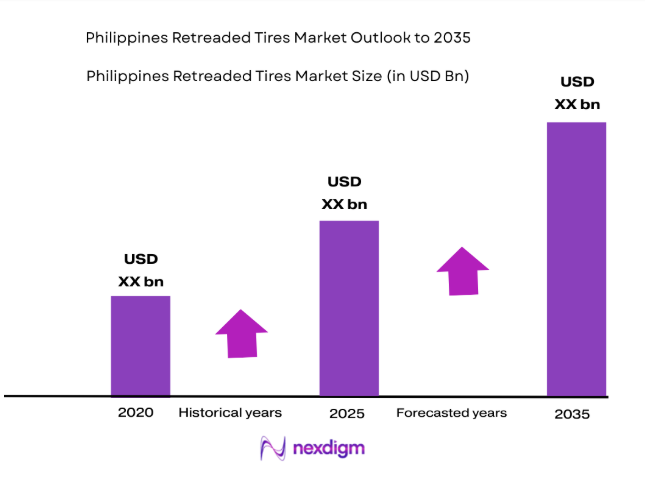
The Philippines retreaded tires market has seen significant growth in recent years, driven by the increasing need for cost-effective and environmentally friendly tire solutions. Retreaded tires are popular due to their lower price compared to new tires while maintaining comparable performance. Based on a recent historical assessment, the market is valued in the hundreds of millions of USD, as businesses and government regulations continue to push for sustainable alternatives in the automotive sector. This demand is largely influenced by the growing automotive industry and commercial fleets that are seeking to reduce operational costs.
The demand for retreaded tires is particularly strong in urban areas like Metro Manila, which hosts the majority of commercial fleet operations and vehicle services. The growing automotive aftermarket in these areas is a key factor, with many vehicle owners opting for retreaded tires as a practical and affordable solution. Additionally, the agricultural sector has become a significant contributor to the market, as rural areas increasingly adopt retreaded tires for agricultural machinery. Retreaded tires are becoming a go-to solution for industries looking to balance cost-effectiveness with durability.
Market Segmentation
By Product Type
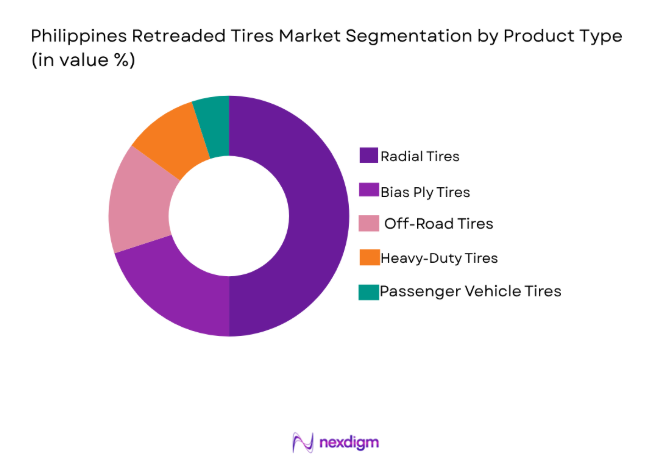
The retreaded tire market in the Philippines is segmented by platform type into on-road vehicles, off-road vehicles, agricultural vehicles, commercial fleets, and industrial machinery. On-road vehicles, including passenger cars and trucks, dominate due to frequent tire replacements. Off-road and agricultural vehicles offer growth potential as they require durable tires. The demand for retreaded tires is increasing in commercial fleets for cost savings, and industrial machinery represents a niche market due to high tire wear in harsh environments.
By Platform Type
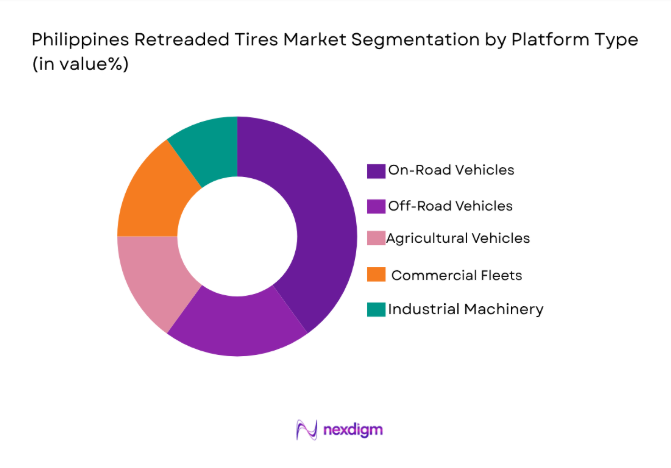
The retreaded tire market in the Philippines is segmented by platform type into on-road vehicles, off-road vehicles, agricultural vehicles, commercial fleets, and industrial machinery. On-road vehicles, including passenger cars and trucks, dominate the market due to their frequent tire replacements and the need for cost-effective solutions. Off-road and agricultural vehicles offer growth opportunities as they require durable tires for harsh conditions. The commercial fleet sector is expanding as operators look for cost-efficient options. Additionally, the industrial machinery segment provides a niche market where tire wear is high.
Competitive Landscape
The competitive landscape in the Philippines retreaded tires market is marked by a combination of local and international players, with some companies consolidating to dominate the market. The growing demand for sustainable and affordable tire solutions has led to an increase in competition. Major players have been focusing on expanding their product offerings and improving the quality of their retreaded tires, along with investing in advanced retreading technologies to enhance tire durability and performance.
| Company Name | Establishment Year | Headquarters | Technology Focus | Market Reach | Key Products | Revenue (USD) | Additional Parameter |
| Bridgestone Corporation | 1931 | Tokyo, Japan | ~ | ~ | ~ | ~ | ~ |
| Goodyear Tire & Rubber | 1898 | Akron, USA | ~ | ~ | ~ | ~ | ~ |
| Michelin | 1889 | Clermont-Ferrand, France | ~ | ~ | ~ | ~ | ~ |
| Apollo Tyres Ltd | 1972 | Ahmedabad, India | ~ | ~ | ~ | ~ | ~ |
| Pirelli & C. S.p.A. | 1872 | Milan, Italy | ~ | ~ | ~ | ~ | ~ |
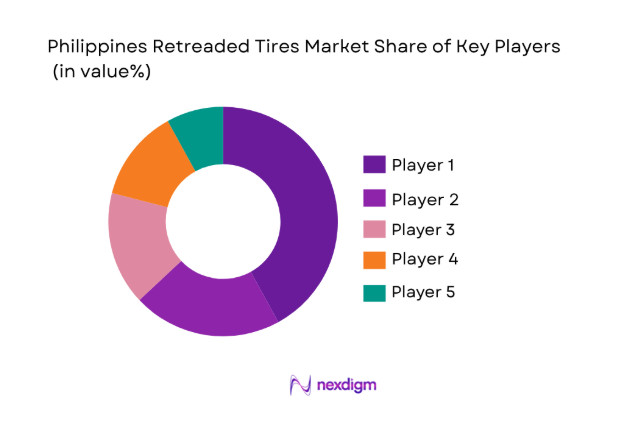
Philippines Retreaded Tires Market Analysis
Growth Drivers
Cost-Effectiveness in Commercial Fleets
A critical driver for the growth of the Philippines retreaded tire market is the increasing demand for cost-effective tire solutions, especially within commercial fleets. Retreaded tires are significantly more affordable than new tires, offering comparable performance at a fraction of the cost. As the cost of new tires continues to rise, fleet operators, particularly those in industries such as logistics, transportation, and agriculture, are increasingly adopting retreaded tires to reduce operating costs. Commercial fleets often face high tire replacement costs due to the large number of vehicles they manage. Retreaded tires offer a practical solution to this challenge, allowing these fleets to reduce expenses while maintaining tire reliability and performance. Additionally, the long lifespan of retreaded tires further reduces the frequency of tire replacements, providing even more cost-saving benefits. This trend of adopting cost-effective tire solutions among commercial fleets contributes to the steady growth of the market and is expected to continue as operational costs remain a primary concern for businesses.
Environmental Sustainability and Government Support
Another significant growth driver for the retreaded tire market in the Philippines is the increasing emphasis on environmental sustainability. With rising awareness about environmental issues, more consumers and businesses are seeking green alternatives, and retreaded tires fit perfectly into this trend. Retreaded tires are environmentally friendly because they extend the life cycle of the original tire, reducing tire waste. Producing new tires requires significant raw materials and energy, while retreading consumes fewer resources, making it a sustainable option. The Philippine government has also supported green initiatives, offering incentives for businesses that prioritize sustainability. Government policies encouraging the reduction of carbon footprints and waste have made retreaded tires more appealing to consumers, particularly fleet operators, who are often under pressure to adopt sustainable practices. Additionally, stricter environmental regulations on tire disposal and recycling are creating a market need for more sustainable tire solutions. The increasing government backing and the growing demand for eco-friendly products have thus positioned the retreaded tire market for sustained growth, particularly as businesses and consumers strive to meet environmental targets.
Market Challenges
Limited Consumer Awareness and Perceptions of Quality
Despite the clear advantages of retreaded tires, one of the major challenges facing the Philippine market is the limited consumer awareness regarding their benefits. Many consumers still view retreaded tires as inferior products compared to new tires, associating them with reduced safety or poor performance. This perception often arises from a lack of understanding of the retreading process, which can result in hesitancy to purchase retreaded tires. For fleet operators and vehicle owners to fully embrace retreaded tires, it is crucial to educate them about the rigorous quality control processes and advancements in retreading technologies that ensure safety and reliability. The market needs targeted campaigns and educational efforts to dispel myths and provide consumers with accurate information on the safety, performance, and cost-saving benefits of retreaded tires. Additionally, building consumer trust through third-party certifications and endorsements can significantly enhance the adoption of retreaded tires across various sectors.
Inconsistent Regulatory and Quality Standards
Another significant challenge is the lack of consistent regulatory and quality standards in the Philippines retreaded tire market. The absence of strict regulations and quality control measures across the industry means that some retreaded tires may not meet the desired safety and performance standards. This inconsistency can cause a lack of trust among consumers and businesses, making them hesitant to adopt retreaded tires. Without established quality benchmarks, some manufacturers may cut corners, leading to subpar products entering the market, which undermines the reputation of retreaded tires as a whole. For the market to grow and gain consumer confidence, there needs to be a concerted effort from both industry stakeholders and regulatory bodies to establish clear and enforceable quality standards. These standards should cover every aspect of the retreading process, from tire inspection to material selection and testing. Only through a unified approach to quality assurance can the retreaded tire market thrive and gain the necessary consumer trust to expand further.
Opportunities
Expansion into Rural and Agricultural Sectors
A significant opportunity for the Philippines retreaded tire market lies in expanding adoption within rural and agricultural sectors. These sectors, particularly in regions outside major urban centers, often face financial constraints that make purchasing new tires an impractical option. Retreaded tires provide an affordable solution for farmers and other rural businesses that rely on agricultural machinery and off-road vehicles. Retreaded tires offer significant savings compared to new tires while still providing the durability needed for the harsh conditions typical in rural and agricultural environments. The growing agricultural sector in the Philippines presents a huge market for retreaded tires, especially as the government continues to focus on improving rural infrastructure and supporting local farmers. Retreaded tires also help farmers reduce operational costs, making them more likely to choose this option over purchasing new tires. By targeting this sector, manufacturers can tap into a lucrative and underserved market, further expanding the reach of retreaded tires in the Philippines.
Collaborations with Commercial Fleets for Large-Scale Adoption
Another significant opportunity for growth in the Philippines retreaded tire market exists in forming strategic partnerships with commercial fleet operators, particularly those in the logistics, transportation, and construction sectors. These organizations often manage large fleets of vehicles and are always looking for ways to reduce maintenance costs while maintaining operational efficiency. Retreaded tires are an ideal solution for fleet operators seeking to balance cost savings with the need for reliable and durable tires. By offering bulk discounts, tailored retreading services, and improved warranties, retreaded tire manufacturers can build long-term relationships with fleet owners, encouraging them to adopt retreaded tires as their primary tire solution. Commercial fleets often operate in high-demand, high-mileage environments, which makes them ideal candidates for retreaded tires due to the cost efficiency and extended lifespan that these tires offer. With the ongoing trend of businesses looking for ways to reduce their operational costs, retreaded tire manufacturers have the opportunity to establish themselves as key partners for commercial fleets, thereby driving significant growth in the market.
Future Outlook
Over the next five years, the Philippines retreaded tires market is expected to experience steady growth, driven by technological advancements in tire retreading processes and an increasing demand for cost-effective and sustainable tire solutions. As fleet operators and businesses in various sectors seek to optimize their operations, the adoption of retreaded tires will expand. Additionally, growing government support for sustainability and environmental initiatives is likely to contribute to market expansion. As quality standards improve and awareness campaigns gain momentum, the market for retreaded tires will continue to evolve, offering more value to consumers.
Major Players
- Bridgestone Corporation
- Goodyear Tire & Rubber
- Michelin
- Apollo Tyres Ltd
- Pirelli & C. S.p.A.
- Hankook Tire
- Sumitomo Rubber Industries
- Yokohama Rubber Company
- BKT Tires
- Continental AG
- Cooper Tire & Rubber Company
- Kumho Tire
- Maxxis International
- ZC Rubber
- Toyo Tire Corporation
Key Target Audience
- Investments and venture capitalist firms
- Government and regulatory bodies
- Tire manufacturers and suppliers
- Commercial fleet operators
- Automotive aftermarket retailers
- Agricultural equipment manufacturers
- Logistics and transportation companies
Research Methodology
Step 1: Identification of Key Variables
Identify the key market drivers, challenges, and growth opportunities specific to the retreaded tire industry in the Philippines.
Step 2: Market Analysis and Construction
Conduct a thorough market analysis by studying existing data, reports, and trends within the industry to construct a comprehensive market model.
Step 3: Hypothesis Validation and Expert Consultation
Validate hypotheses through consultations with industry experts, stakeholders, and major players to ensure accurate and reliable insights.
Step 4: Research Synthesis and Final Output
Synthesize the collected data, expert opinions, and market analysis into a final report, highlighting key findings and actionable insights.

- Executive Summary
- Research Methodology (Definitions, Scope, Industry Assumptions, Market Sizing Approach, Primary & Secondary Research Framework, Data Collection & Verification Protocol, Analytic Models & Forecast Methodology, Limitations & Research Validity Checks)

- Market Definition and Scope
- Value Chain & Stakeholder Ecosystem
- Regulatory / Certification Landscape
- Sector Dynamics Affecting Demand
- Strategic Initiatives & Infrastructure Growth

- Growth Drivers
Cost-Effective Solution for Vehicle Fleets
Environmental Sustainability Initiatives
Increased Demand for Heavy-Duty and Agricultural Tires - Market Challenges
Limited Awareness of Retreading Benefits
Inconsistent Quality Standards
Lack of Technological Advancements - Market Opportunities
Expansion of Retreaded Tires in Emerging Markets
Technological Advancements in Retreading Processes
Partnerships with Vehicle Fleets for Large-Scale Adoption - Trends
Growth in Adoption of Eco-friendly Products
Technological Integration in Retreading Processes - Government Regulations
Tire Safety Standards for Retreaded Tires
Waste Management Regulations for Retreading Materials
Incentives for Sustainable Tire Solutions - SWOT Analysis
- Porter’s Five Forces

- By Market Value, 2020-2025
- By Installed Units, 2020-2025
- By Average System Price, 2020-2025
- By System Complexity Tier, 2020-2025

- By System Type (In Value%)
Bias Ply Tires
Radial Ply Tires
All-Terrain Tires
Heavy Duty Tires
Passenger Vehicle Tires - By Platform Type (In Value%)
On-Road Vehicles
Off-Road Vehicles
Agricultural Vehicles
Commercial Fleets
Industrial Machinery - By Fitment Type (In Value%)
On-site Retreading
Off-site Retreading
Mobile Retreading
Hybrid Retreading - By End User Segment (In Value%)
Commercial Fleets
Agricultural Sector
Logistics & Transportation
Automotive Aftermarket

- Market Share Analysis
- Cross Comparison Parameters (System Type, Platform Type, End User Segment, Fitment Type, Market Value, Installed Units, Price Tier)
- SWOT Analysis of Key Competitors
- Pricing & Procurement Analysis
- Key Players
Bridgestone Corporation
Goodyear Tire & Rubber Company
Michelin
Continental AG
Hankook Tire
Pirelli & C. S.p.A.
Toyo Tire Corporation
Apollo Tyres Ltd
ZC Rubber
Maxxis International
Kumho Tire
Sumitomo Rubber Industries
BKT Tires
Yokohama Rubber Company
Mitas Tires

- Increasing Adoption Among Commercial Fleets
- Demand from the Agricultural Sector for Cost-Effective Solutions
- Adoption of Retreaded Tires in Logistics & Transportation
- Interest from Automotive Aftermarket for Affordable Tires

- Forecast Market Value, 2026-2035
- Forecast Installed Units, 2026-2035
- Price Forecast by System Tier, 2026-2035
- Future Demand by Platform, 2026-2035


 Request a Sample
 Ask for Customization
 Get a Quote
 Enquire Now