

 Download PDF
 Download PDF
Market Overview
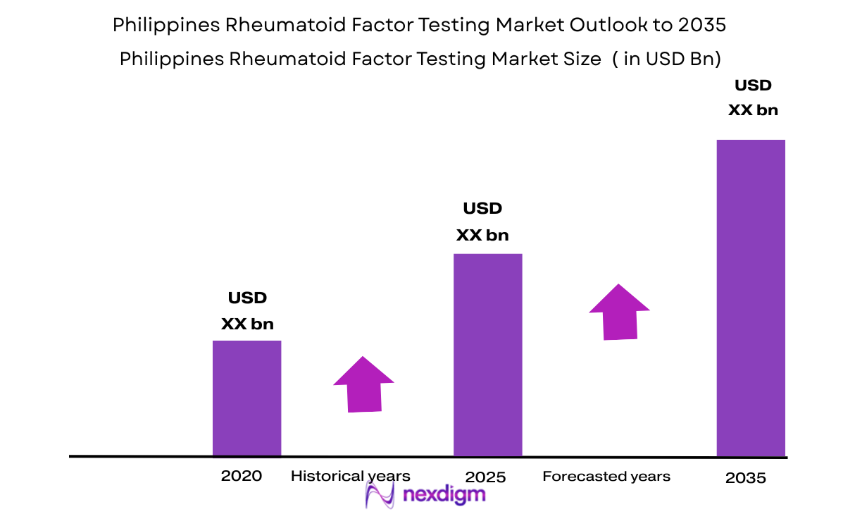
Philippines autoimmune disease diagnostics market (which includes RF tests) has been valued at approximately USD ~ million based on recent historical assessments of autoimmune diagnostics activity in the country. Demand for rheumatoid factor (RF) tests is propelled by the higher incidence of rheumatoid arthritis (RA) and a growing population that is becoming more health-conscious, seeking early diagnosis to manage chronic diseases. The market continues to expand with advancements in testing technologies, such as enzyme immunoassay and fluorescence immunoassay, providing accurate and timely results.
The dominant players in the Philippines market are concentrated in urban areas, with Manila being a key hub due to its healthcare infrastructure and diagnostic centers. The government’s push for improved healthcare access and early detection programs has spurred the adoption of RF testing services. As healthcare accessibility continues to improve, cities like Quezon City and Cebu are expected to drive further market expansion due to increasing healthcare investments and local demand for advanced medical diagnostics.
Market Segmentation
By Product Type:
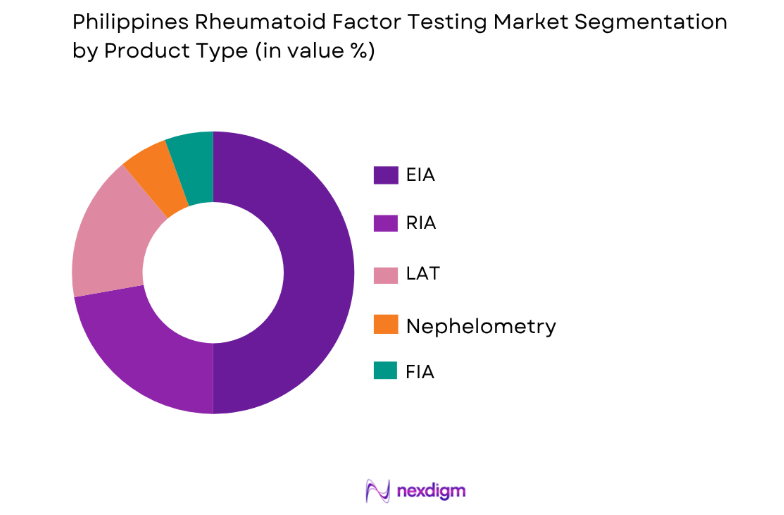
The Philippines Rheumatoid Factor Testing market is segmented by product type into enzyme immunoassay (EIA), radioimmunoassay (RIA), latex agglutination test (LAT), nephelometry, and fluorescent immunoassay (FIA). The enzyme immunoassay (EIA) segment has a dominant market share due to its high accuracy, cost-effectiveness, and ability to handle large volumes of tests. EIA is widely used in clinical laboratories across the country, driven by its reliability and accessibility. The increasing adoption of automated testing platforms in hospitals and diagnostic centers contributes to its widespread usage in the market.
By End-User Segment:
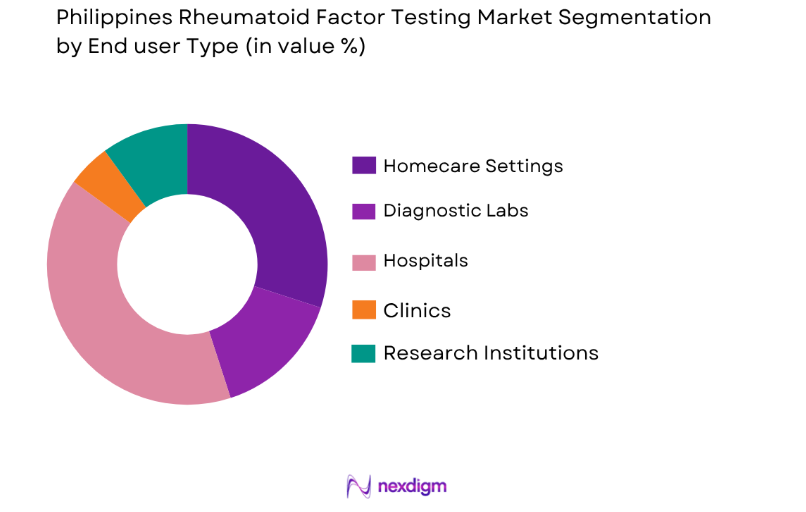
The Philippines Rheumatoid Factor Testing market is segmented by end-user into hospitals, diagnostic laboratories, homecare settings, clinics, and research institutions. Hospitals dominate the market share due to their extensive use of RF testing for patient diagnosis and management of autoimmune diseases like rheumatoid arthritis. These facilities have high patient volumes, advanced diagnostic equipment, and highly skilled medical professionals, making them a key segment for testing. The increased healthcare spending, government investments, and improved patient care infrastructure continue to drive hospital-based demand for diagnostic tests.
Competitive Landscape
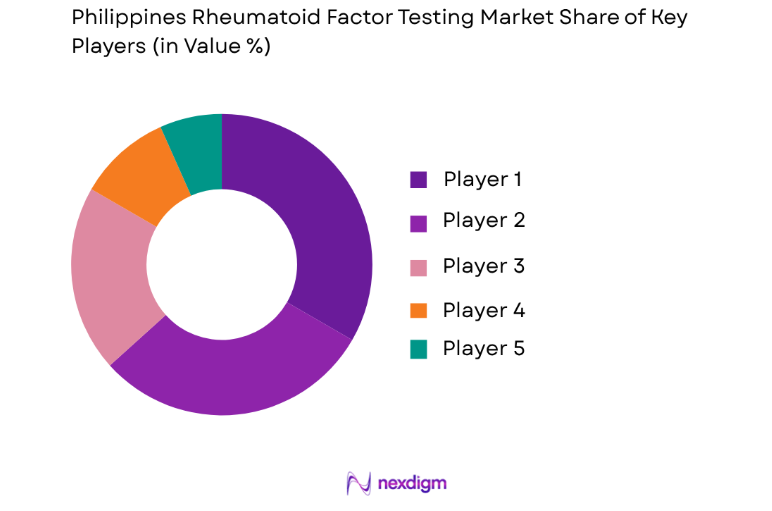
The competitive landscape of the Philippines Rheumatoid Factor Testing market is characterized by several prominent players offering a wide range of diagnostic solutions. Key players are focusing on expanding their product offerings, improving test accuracy, and increasing the availability of testing kits to capture a larger market share. Market consolidation is also observed as companies strive to collaborate with healthcare providers and diagnostic centers for wider reach and improved service delivery. The ongoing technological advancements in diagnostic platforms are a key factor driving competition in the market.
| Company Name | Establishment Year | Headquarters | Technology Focus | Market Reach | Key Products | Revenue | Market-specific Parameter |
| Roche Diagnostics | 1896 | Basel, Switzerland | ~ | ~ | ~ | ~ | ~ |
| Abbott Laboratories | 1888 | Chicago, USA | ~ | ~ | ~ | ~ | ~ |
| Siemens Healthineers | 1847 | Erlangen, Germany | ~ | ~ | ~ | ~ | ~ |
| Thermo Fisher Scientific | 1956 | Waltham, USA | ~ | ~ | ~ | ~ | ~ |
| Bio-Rad Laboratories | 1952 | Hercules, USA | ~ | ~ | ~ | ~ | ~ |
Philippines Rheumatoid Factor Testing Market Analysis
Growth Drivers
Increase in Rheumatoid Arthritis Incidence:
The growing number of rheumatoid arthritis (RA) cases in the Philippines is a major driver for the Rheumatoid Factor Testing market. Rheumatoid arthritis, a chronic inflammatory disorder, affects millions of individuals worldwide, and its prevalence is steadily increasing. As awareness of autoimmune diseases increases, there is a heightened demand for early diagnosis and effective disease management. Testing for rheumatoid factor, a crucial biomarker for RA diagnosis, enables healthcare professionals to provide early intervention, improving the prognosis for patients. Moreover, the adoption of newer, more sensitive testing methods, such as enzyme immunoassay (EIA), is expected to further boost market growth. With increasing government efforts to improve healthcare accessibility and funding for diagnostic services, early detection of rheumatoid arthritis through RF testing will continue to drive the market’s expansion.
Technological Advancements in Diagnostic Testing:
Technological advancements in diagnostic testing are significantly contributing to the growth of the Rheumatoid Factor Testing market in the Philippines. Recent innovations in testing equipment, such as automated platforms and point-of-care solutions, have improved the accuracy, efficiency, and affordability of RF tests. Automation and integration of artificial intelligence (AI) into diagnostic processes are enhancing the speed and reliability of test results. These technological improvements are not only driving higher adoption rates in healthcare settings but also increasing the accessibility of tests in remote areas, where patients may have limited access to traditional laboratories. Furthermore, advancements in test formats, such as rapid testing kits and mobile diagnostic tools, are expanding the reach of RF testing services, making it easier for patients to undergo early screening in clinics or at home. These developments are creating new growth opportunities and strengthening the market’s position in the region.
Market Challenges
High Testing Costs:
One of the key challenges facing the Rheumatoid Factor Testing market in the Philippines is the relatively high cost of testing, which can hinder access to necessary diagnostic services, particularly in rural areas. While the cost of testing has been decreasing with technological advancements, many diagnostic tests remain prohibitively expensive for the average consumer, especially in the private healthcare sector. In public healthcare, limited resources and budget constraints may also restrict the availability of RF testing, resulting in delays in diagnosis. Despite the Philippine government’s focus on improving healthcare access, cost remains a significant barrier for many individuals seeking early diagnosis and treatment for rheumatoid arthritis. Until more affordable solutions are introduced to the market, the overall adoption rate of RF testing could be hindered, particularly in underserved regions.
Lack of Skilled Healthcare Professionals:
The Philippines faces a shortage of skilled healthcare professionals trained in performing and interpreting advanced diagnostic tests, including rheumatoid factor testing. This lack of expertise contributes to inconsistent test quality and may lead to delayed or incorrect diagnoses, affecting patient outcomes. Many rural areas experience difficulties attracting and retaining qualified healthcare workers, limiting their access to specialized testing services. Additionally, healthcare workers in the Philippines often face high workloads, which can result in burnout and decreased accuracy in test execution. This challenge makes it difficult to scale the adoption of rheumatoid factor testing across the nation, especially as demand for these tests rises. Addressing this issue requires significant investments in training programs, healthcare infrastructure, and workforce development to ensure high-quality services for all patients.
Opportunities
Adoption of Point-of-Care Testing Solutions:
The increasing demand for point-of-care (POC) testing solutions in the Philippines represents a significant growth opportunity for the Rheumatoid Factor Testing market. POC tests provide immediate results, allowing for faster diagnosis and treatment, which is crucial in managing autoimmune diseases such as rheumatoid arthritis. These tests offer convenience for both healthcare providers and patients by eliminating the need for lab visits, thereby reducing wait times and improving patient satisfaction. The convenience of POC testing is especially beneficial in rural areas, where access to centralized diagnostic labs may be limited. Additionally, the integration of mobile devices and telemedicine platforms with POC tests is enhancing their accessibility, further driving market demand. The development of more cost-effective and reliable POC RF testing solutions will play a key role in expanding the market and making early detection of rheumatoid arthritis more widespread across the Philippines.
Government Initiatives to Promote Early Diagnosis:
The Philippine government’s efforts to promote early diagnosis of chronic diseases, including autoimmune disorders, provide a significant opportunity for the growth of the Rheumatoid Factor Testing market. Through various health initiatives, the government is increasing awareness about the importance of early detection in managing rheumatoid arthritis and other chronic diseases. These efforts include public health campaigns, subsidized testing programs, and collaborations with private diagnostic centers to increase the availability of tests across the country. Moreover, government support for healthcare infrastructure, especially in underserved areas, is likely to increase the adoption of RF testing services. By focusing on early diagnosis, these initiatives can improve health outcomes for patients while simultaneously expanding the market for diagnostic tests.
Future Outlook
The future of the Philippines Rheumatoid Factor Testing market looks promising, with continued growth expected over the next five years. This growth will be fueled by advancements in testing technologies, particularly point-of-care testing and AI-driven diagnostic solutions, which will enhance the accessibility and accuracy of RF tests. Government support for early disease detection and healthcare infrastructure improvements will further drive market expansion. Additionally, rising healthcare spending, coupled with an aging population and increasing prevalence of autoimmune diseases, will contribute to sustained demand for rheumatoid factor testing. As the market matures, innovations in testing methods and increased awareness about the benefits of early diagnosis will create new opportunities for market players.
Major Players
- Roche Diagnostics
- Abbott Laboratories
- Siemens Healthineers
- Thermo Fisher Scientific
- Bio-Rad Laboratories
- Danaher Corporation
- Johnson & Johnson Medical
- Ortho Clinical Diagnostics
- Sysmex Corporation
- BD Diagnostics
- Eli Lilly and Company
- LabCorp
- Quidel Corporation
- Medtronic
- Meridian Bioscience
Key Target Audience
- Investments and venture capitalist firms
- Government and regulatory bodies
- Healthcare providers
- Diagnostic laboratories
- Research institutions
- Pharmaceutical companies
- Medical device manufacturers
- Insurance companies
Research Methodology
Step 1: Identification of Key Variables
This step involves identifying and defining key variables that will influence the market, such as testing methods, technological advancements, and regulatory factors.
Step 2: Market Analysis and Construction
Market analysis involves evaluating current trends, growth patterns, and market drivers. The construction phase focuses on segmenting the market by key factors like product type and end-user.
Step 3: Hypothesis Validation and Expert Consultation
Validation involves testing the initial hypotheses with expert opinions, including consultations with healthcare professionals and market stakeholders.
Step 4: Research Synthesis and Final Output
This phase involves synthesizing research findings and integrating them into a comprehensive market report with actionable insights for stakeholders.

- Executive Summary
- Research Methodology (Definitions, Scope, Industry Assumptions, Market Sizing Approach, Primary & Secondary Research Framework, Data Collection & Verification Protocol, Analytic Models & Forecast Methodology, Limitations & Research Validity Checks)

- Market Definition and Scope
- Value Chain & Stakeholder Ecosystem
- Regulatory / Certification Landscape
- Sector Dynamics Affecting Demand

- Growth Drivers
Increase in Rheumatoid Arthritis Incidence
Rising Healthcare Expenditure
Growing Demand for Early Diagnosis - Market Challenges
Lack of Skilled Healthcare Professionals
High Testing Costs for Patients
Regulatory and Compliance Issues - Market Opportunities
Adoption of Point-of-Care Testing Solutions
Expansion of Homecare Testing Kits
Government Initiatives to Promote Early Diagnosis - Trends
Advancements in Diagnostic Technologies
Integration of Artificial Intelligence in Testing
Rise in Telemedicine and Remote Patient Monitoring - Government Regulations
- SWOT Analysis of Key Competitors

- By Market Value, 2020-2025
- By Installed Units, 2020-2025
- By Average System Price, 2020-2025
- By System Complexity Tier, 2020-2025

- By System Type (In Value%)
Enzyme Immunoassay (EIA)
Radioimmunoassay (RIA)
Latex Agglutination Test (LAT)
Nephelometry
Fluorescent Immunoassay (FIA) - By Platform Type (In Value%)
Laboratory-based Testing
Point-of-Care Testing
At-home Testing Kits
Mobile-based Testing Platforms
Telemedicine-based Platforms - By Fitment Type (In Value%)
Standalone Devices
Integrated Systems
Portable Systems
Disposable Kits
Reagents & Consumables - By EndUser Segment (In Value%)
Hospitals
Diagnostic Laboratories
Homecare Settings
Clinics

- Market Share Analysis
- CrossComparison Parameters (System Type, Platform Type, EndUser Segment, Procurement Channel, Fitment Type)
- SWOT Analysis of Key Competitors
- Pricing & Procurement Analysis
- Porter’s Five Forces
- Key Players
Philippine Medical Systems
Abbot Laboratories
Siemens Healthineers
Roche Diagnostics
Thermo Fisher Scientific
Bio-Rad Laboratories
Johnson & Johnson Medical
Ortho Clinical Diagnostics
Danaher Corporation
Sysmex Corporation
BD Diagnostics
Eli Lilly and Company
LabCorp
Quidel Corporation
Medtronic

- Increasing Use of Homecare Testing Solutions
- Growing Demand for Rheumatoid Arthritis Diagnostic Tools
- Preference for Early Diagnosis in Hospitals and Clinics
- Rising Adoption of Telehealth Services

- Forecast Market Value, 2026-2035
- Forecast Installed Units, 2026-2035
- Price Forecast by System Tier, 2026-2035
- Future Demand by Platform, 2026-2035


 Request a Sample
 Ask for Customization
 Get a Quote
 Enquire Now