
 Download PDF
 Download PDF
Market Overview
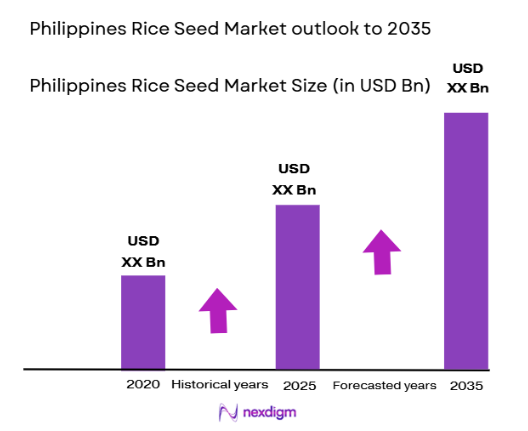
The Philippines rice seed market is experiencing robust growth, driven by factors such as increasing rice production demand and government initiatives promoting agricultural development. The market size for rice seeds in the Philippines is assessed to be approximately USD ~ billion based on a recent historical assessment. The demand for high-yielding, hybrid rice seeds is also increasing due to the need to improve rice production efficiency to meet the growing food requirements of the population.
The dominant players in the Philippines rice seed market are largely concentrated in major agricultural regions such as Central Luzon, Ilocos, and Cagayan Valley. These areas are considered the rice granaries of the country, benefiting from favorable agricultural conditions, government support, and established distribution networks. The key factors contributing to the dominance of these regions include infrastructure development, access to irrigation systems, and the implementation of advanced farming technologies.
Market Segmentation
By Product Type:
The Philippines rice seed market is segmented by product type into hybrid rice seeds, traditional rice seeds, inbred rice seeds, certified rice seeds, and seed treatment products. Recently, hybrid rice seeds have a dominant market share due to their high yield and resistance to pests and diseases. Hybrid varieties cater to the rising demand for better productivity and are favored by commercial farmers and large-scale rice producers who seek cost-effective solutions for maximizing rice output.

By Procurement Channel:
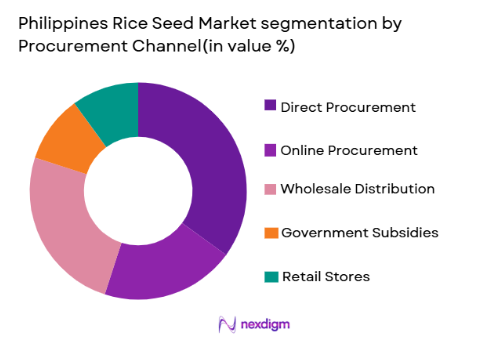
The Philippines rice seed market is segmented by procurement channel into direct procurement, online procurement, wholesale distribution, government subsidies, and retail stores. Recently, direct procurement from agricultural suppliers and wholesale distributors has been the dominant channel due to the established relationships between rice farmers and seed distributors. Farmers typically prefer purchasing seeds through trusted suppliers for consistency and quality, and these channels are the most efficient for large-scale rice production.
Competitive Landscape
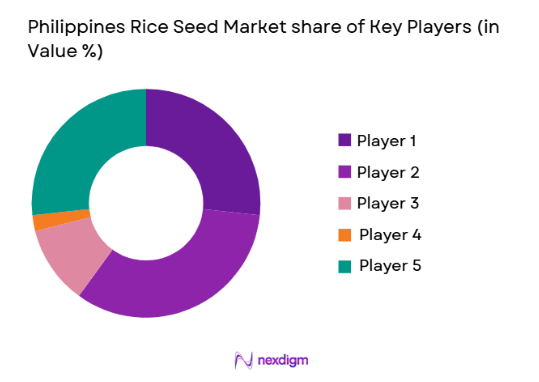
The competitive landscape of the Philippines rice seed market is highly concentrated, with several large international and domestic companies dominating the market. These companies play a crucial role in consolidating the market, focusing on research, innovation, and distribution. The market is influenced by major players who provide a wide range of hybrid and traditional rice seeds, leveraging brand recognition and strategic partnerships with local governments for distribution.
| Company Name | Establishment Year | Headquarters | Technology Focus | Market Reach | Key Products | Revenue (USD) | Additional Market-Specific Parameter |
| Syngenta | 2000 | Switzerland | ~ | ~ | ~ | ~ | ~ |
| Bayer CropScience | 2001 | Germany | ~ | ~ | ~ | ~ | ~ |
| Limagrain | 1997 | France | ~ | ~ | ~ | ~ | ~ |
| East-West Seed | 1982 | Philippines | ~ | ~ | ~ | ~ | ~ |
| Monsanto | 2006 | USA | ~ | ~ | ~ | ~ | ~ |
Philippines Rice Seed Market Analysis
Growth Drivers
Government Support for Rice Farming:
The Philippine government has been actively supporting the agricultural sector, especially rice farming, through various programs such as subsidies and technical support. The government’s commitment to enhancing food security has led to increased investment in rice seed development and distribution. This has created favorable conditions for the growth of the rice seed market, particularly for hybrid and high-yielding varieties. Such initiatives aim to reduce the country’s dependency on rice imports and boost local rice production. Furthermore, the government’s push for agricultural modernization is enhancing the adoption of advanced seed varieties, thus fostering long-term growth for the market. The collaboration between local government units and private entities to promote rice farming technologies is expected to continue driving market expansion.
Technological Advancements in Rice Seed Development:
Continuous advancements in seed technology are contributing significantly to the growth of the rice seed market. Innovations such as the development of drought-resistant, pest-resistant, and high-yielding rice varieties are meeting the growing demand for improved productivity and environmental sustainability. These innovations have made hybrid rice seeds more popular, as they offer higher yields and enhanced resilience compared to traditional varieties. As the agriculture sector shifts toward more sustainable and efficient practices, technological advancements in seed breeding and the application of biotechnology will remain key growth drivers. The availability of advanced farming equipment that can enhance the effectiveness of these seeds is also further propelling market growth.
Market Challenges
High Costs of Hybrid Rice Seeds:
Despite the advantages of hybrid rice seeds, their high costs pose a significant barrier to widespread adoption, especially among small-scale farmers. Hybrid seeds require more investment upfront compared to traditional seeds, and while they promise higher yields, they are often considered an expensive option. The cost of hybrid seeds is particularly challenging for farmers with limited access to financing or those facing unstable market conditions. Additionally, the cost of seed treatment and other supplementary products further increases the overall expense. This challenge limits the accessibility of hybrid rice seeds to a larger segment of farmers, especially in rural areas where agricultural financing is limited.
Limited Access to Advanced Agricultural Technology:
Many farmers in the Philippines still lack access to modern agricultural technologies, which restricts the full potential of the rice seed market. While technological advancements in seed breeding have led to improved varieties, the ability to fully benefit from these innovations requires advanced farming practices, equipment, and knowledge. Many rice farmers are not equipped with the necessary resources to implement new technologies, such as automated planting systems or precision irrigation, which would help optimize seed performance. This lack of infrastructure and education hampers the adoption of modern rice seed technologies and limits the overall growth of the market.
Opportunities
Emerging Demand for Organic Rice Farming:
There is an increasing demand for organic rice farming in the Philippines, driven by both local consumer preferences and international export opportunities. Organic rice farming is gaining traction as more consumers are becoming conscious of the environmental and health benefits of organic products. This presents a significant opportunity for rice seed producers to diversify their offerings by developing organic seed varieties. The government’s support for sustainable agriculture and the growing trend of organic food consumption create a promising market for organic rice seeds, particularly in urban areas. Farmers are also being encouraged to adopt organic farming practices as part of the government’s environmental policies, which further supports the market’s expansion.
Integration of Climate-Resistant Varieties:
As the effects of climate change continue to impact the agricultural sector, there is a growing opportunity to introduce climate-resistant rice seed varieties. These varieties are specifically bred to withstand extreme weather conditions such as drought, flooding, and high temperatures. With unpredictable weather patterns affecting rice production, climate-resistant seeds offer a solution to maintain stable yields. The market for such seeds is expanding as farmers seek to mitigate risks associated with climate change. Investment in research and development to create more resilient rice seed varieties will continue to provide opportunities for seed producers to meet evolving market demands.
Future Outlook
The Philippines rice seed market is expected to experience steady growth over the next five years. Advancements in seed technology, government support for rice farming, and the adoption of climate-resilient seed varieties are expected to drive market expansion. The focus on sustainability and organic farming will also create new opportunities within the market. As demand for rice increases, particularly in urban areas, the rice seed market will benefit from technological innovation and an improved distribution network.
Major Players
- Syngenta
- Bayer CropScience
- Limagrain
- East-West Seed
- Monsanto
- BASF
- DowDuPont
- Land O’Lakes
- Rijk Zwaan
- Sakata Seed Corporation
- Pioneer Hi-Bred
- Adama Agricultural Solutions
- KWS SAAT
- SeedCo
- Namdhari Seeds
Key Target Audience
- Investments and venture capitalist firms
- Government and regulatory bodies
- Rice farmers and agricultural producers
- Seed distributors and suppliers
- Agricultural equipment manufacturers
- Agricultural technology providers
- International rice traders
- Exporters of rice products
Research Methodology
Step 1: Identification of Key Variables
The first step involves identifying the most important variables affecting the rice seed market, including production trends, demand drivers, and technological innovations.
Step 2: Market Analysis and Construction
In this phase, comprehensive market analysis is conducted using primary and secondary data sources, followed by the construction of market models that reflect the current landscape.
Step 3: Hypothesis Validation and Expert Consultation
The assumptions and hypotheses derived from the initial analysis are validated through consultations with industry experts and stakeholders to ensure accuracy.
Step 4: Research Synthesis and Final Output
The final step involves synthesizing the research findings into a comprehensive report, incorporating expert insights, market dynamics, and forecasts

- Executive Summary
- Research Methodology
(Definitions, Scope, Industry Assumptions, Market Sizing Approach, Primary & Secondary Research Framework, Data Collection & Verification Protocol, Analytic Models & Forecast Methodology, Limitations & Research Validity Checks)

- Market Definition and Scope
- Value Chain & Stakeholder Ecosystem
- Regulatory / Certification Landscape
- Sector Dynamics Affecting Demand
- Strategic Initiatives & Infrastructure Growth

- Growth Drivers
Government support for rice production
Technological advancements in rice breeding
Rising domestic demand for rice
Increase in adoption of hybrid seeds
Enhanced seed processing technologies - Market Challenges
High production cost of hybrid seeds
Limited access to advanced farming technologies
Regulatory barriers in seed commercialization
Weather-related disruptions affecting crop yields
Intellectual property issues in seed patents - Market Opportunities
Growing adoption of organic rice farming
Expanding export opportunities for rice seeds
Development of climate-resistant seed varieties - Trends
Increase in hybrid rice seed adoption
Technological innovations in seed processing
Shift towards sustainable farming practices
Integration of AI for seed production
Rise in demand for drought-resistant rice seeds - Government Regulations & Defense Policy
Regulatory support for rice seed production
Subsidies for rice farming
Intellectual property laws for rice seeds - SWOT Analysis
- Stakeholder and Ecosystem Analysis
- Porter’s Five Forces Analysis
- Competition Intensity and Ecosystem Mapping

- By Market Value, 2020-2025
- By Installed Units, 2020-2025
- By Average System Price, 2020-2025
- By System Complexity Tier, 2020-2025

- By System Type (In Value%)
Hybrid Rice Seeds
Traditional Rice Seeds
Inbred Rice Seeds
Certified Rice Seeds
Seed Treatment Products - By Platform Type (In Value%)
Agriculture Farms
Seed Processing Units
Distribution Platforms
Research Institutes
Retail Platforms - By Fitment Type (In Value%)
On-field Application
Seed Storage Solutions
Packaging Solutions
Field Processing Solutions
Transport Solutions - By EndUser Segment (In Value%)
Farmers
Agricultural Distributors
Government & Regulatory Bodies
Agricultural Contractors
Research & Development Agencies - By Procurement Channel (In Value%)
Direct Procurement
Online Procurement
Wholesale Distribution
Government Subsidies
Retail Stores - By Material / Technology (In Value%)
Seed Treatment Chemicals
Biotechnology
Genetically Modified Seeds
Organic Fertilizers
Water-saving Technologies

- Market structure and competitive positioning
- Market share snapshot of major players
- CrossComparison Parameters (Seed Type, Distribution Channel, Procurement Method, End-User Segment, Technology Adoption, Packaging Solutions, Supply Chain Efficiency, Pricing Strategy, Brand Presence, Regulatory Compliance)
- SWOT Analysis of Key Players
- Pricing & Procurement Analysis
- Key Players
Syngenta AG
Monsanto Company
BASF SE
Cargill, Incorporated
DowDuPont
Limagrain
Bayer CropScience
Sakata Seed Corporation
Land O’Lakes, Inc.
KWS SAAT SE & Co. KGaA
Emergent Genetics
East-West Seed Company, Inc.
Rijk Zwaan
Jain Irrigation Systems Ltd
Progeny AgriTech Pvt Ltd

- Farmers seeking high-yield varieties
- Government focus on agricultural sustainability
- Increasing demand from commercial distributors
- Research institutes focusing on seed innovation

- Forecast Market Value, 2026-2035
- Forecast Installed Units, 2026-2035
- Price Forecast by System Tier, 2026-2035
- Future Demand by Platform, 2026-2035


 Request a Sample
 Ask for Customization
 Get a Quote
 Enquire Now