
 Download PDF
Market Overview
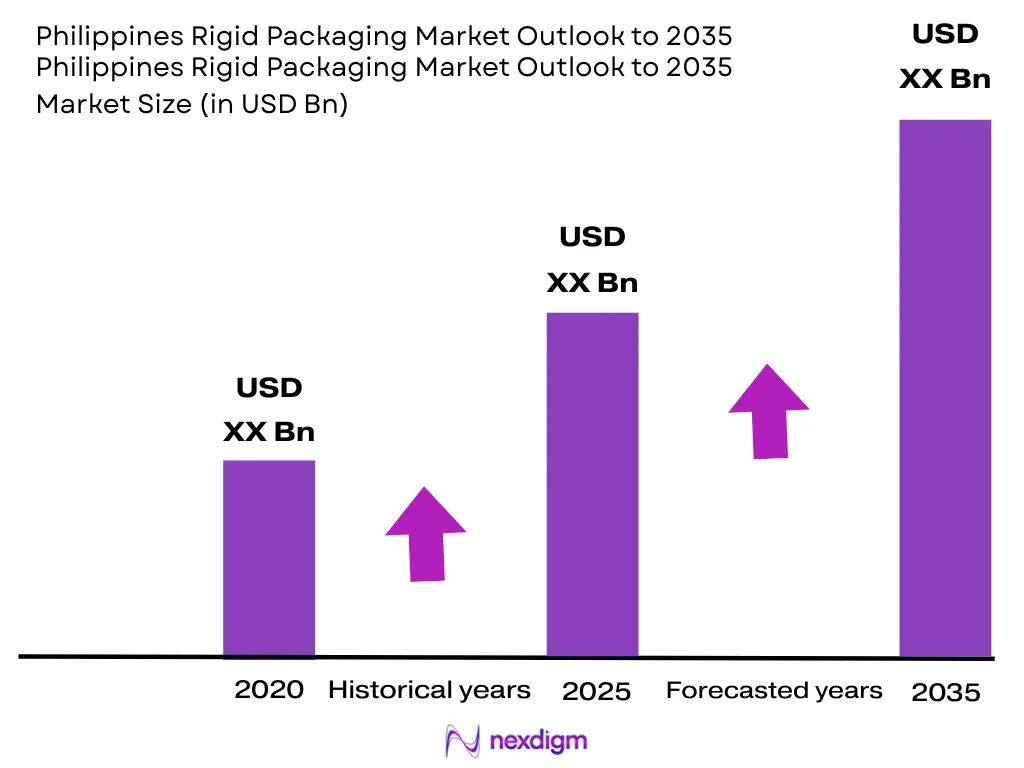
The Philippines rigid packaging market was valued at USD ~ Billion in 2024 and is projected to grow at a ~% CAGR during 2026–2035. The market is primarily supported by increasing demand from the food & beverage, pharmaceutical, personal care, household chemicals, and industrial manufacturing sectors. Rising packaged food consumption, expanding FMCG production, and growth in pharmaceutical manufacturing continue to strengthen demand for rigid plastic, glass, and metal packaging. The Philippine economy recorded GDP of USD 471.5 billion in 2024, while the manufacturing sector remained one of the country’s largest productive industries, supported by increasing domestic consumption and industrial investments. Additionally, the country’s population exceeded 115 million, creating sustained demand for packaged consumer products requiring rigid packaging solutions.
Market Segmentation
By Material Type
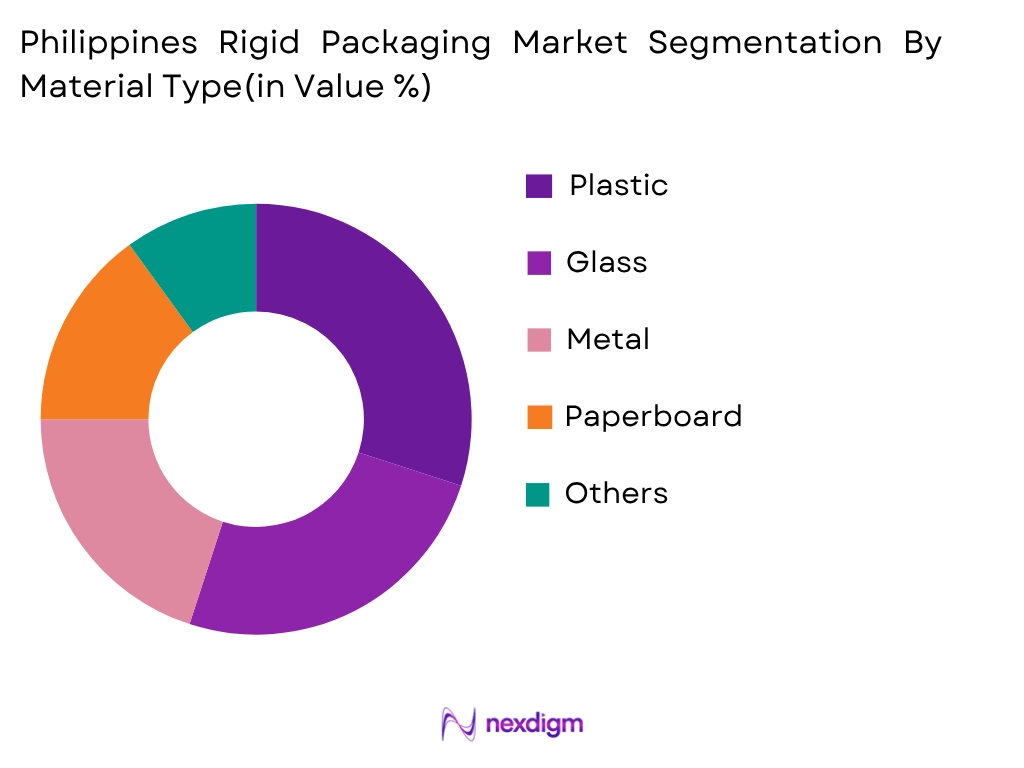
The Philippines rigid packaging market is segmented by material type into Plastic, Glass, Metal, Paperboard, and Wood. Plastic continues to dominate the market because of its lightweight properties, superior durability, low transportation costs, and compatibility with high-speed manufacturing lines. PET, HDPE, and polypropylene packaging materials are extensively utilized across bottled beverages, edible oils, dairy products, pharmaceuticals, personal care products, and household chemicals. The rapid expansion of modern retail, convenience stores, supermarkets, and e-commerce has further accelerated demand for lightweight yet durable plastic packaging. Manufacturers increasingly prefer recyclable plastic packaging due to sustainability initiatives and improved recycling infrastructure. Continuous investments in blow molding and injection molding technologies have further strengthened the competitiveness of plastic packaging compared with glass and metal alternatives, enabling manufacturers to achieve greater production efficiency while maintaining packaging quality across multiple end-use industries.
By End-Use Industry
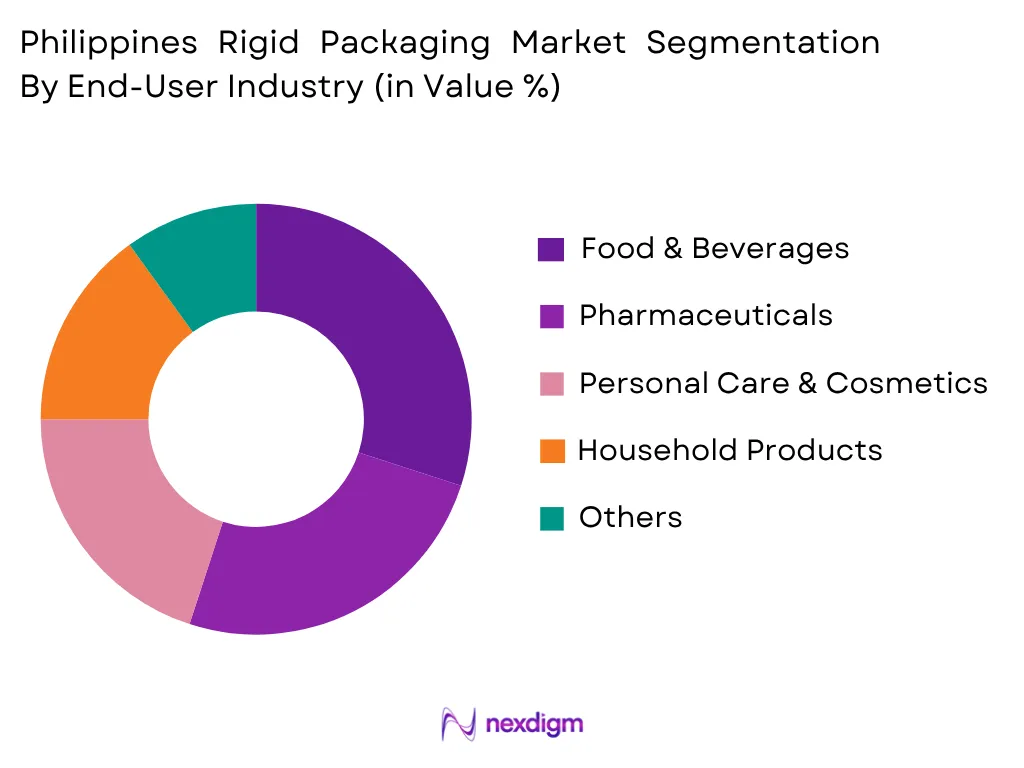
The Philippines rigid packaging market is segmented by end-use industry into Food & Beverages, Pharmaceuticals, Personal Care & Cosmetics, Household Products, Chemicals, Industrial Packaging, Agriculture, and Automotive Lubricants. Food and beverage manufacturers account for the largest market share owing to increasing consumption of packaged food, bottled water, carbonated beverages, dairy products, sauces, cooking oils, and alcoholic beverages. The country’s expanding urban population and growing middle-income consumer base continue driving demand for packaged consumer goods sold through supermarkets, convenience stores, and online platforms. Beverage manufacturers require PET bottles and closures, while food producers utilize rigid containers for product protection, shelf-life extension, and transportation efficiency. Continuous investments in domestic food processing facilities and international food brands further strengthen the dominance of this segment. Pharmaceutical and personal care industries also contribute substantially, but food and beverage packaging remains the largest consumer of rigid packaging products across the Philippines.
Competitive Landscape
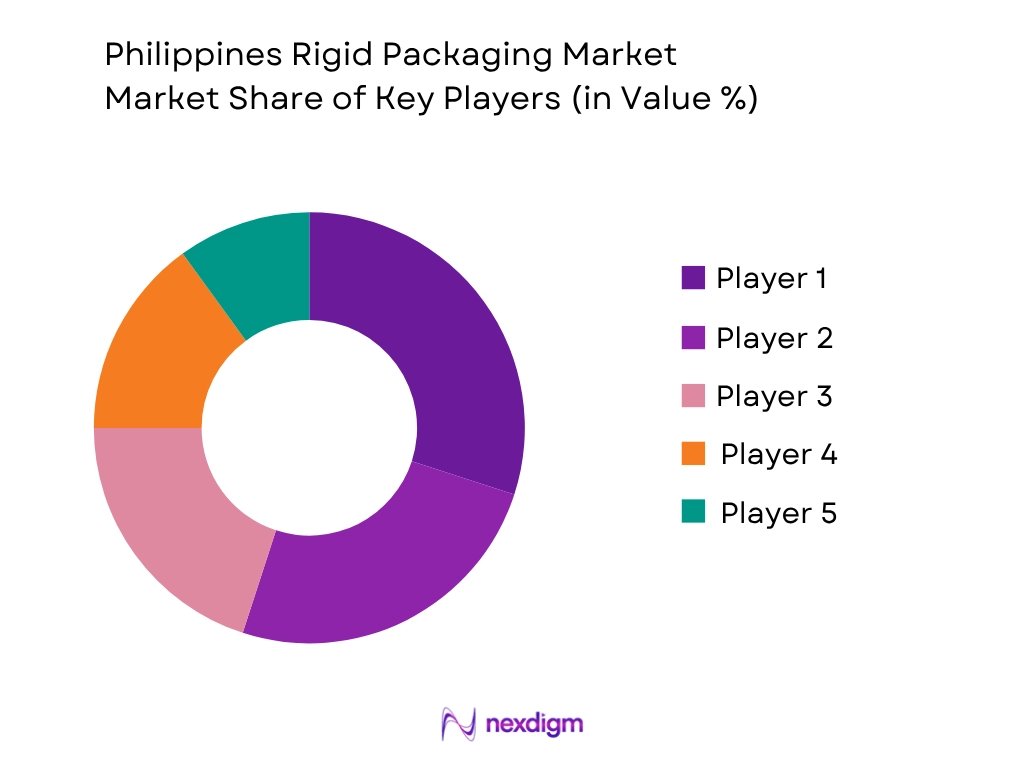
The Philippines rigid packaging market is moderately consolidated, with domestic manufacturers competing alongside multinational packaging companies supplying food, beverage, pharmaceutical, personal care, and industrial customers. Competition is primarily based on production capacity, product quality, sustainability initiatives, technological capabilities, regional distribution networks, and long-term contracts with multinational FMCG manufacturers. Companies continue investing in automation, lightweight packaging, recycled plastic solutions, and advanced molding technologies to improve operational efficiency and strengthen market competitiveness.
| Company | Established | Headquarters | Primary Product Portfolio | Rigid Packaging Portfolio | Manufacturing Presence | Major End-Use Industries | Key Strategic Focus | Certifications & Compliance |
| Amcor plc | 1860 | ~ | ~ | ~ | ~ | ~ | ~ | ~ |
| San Miguel Yamamura Packaging Corporation | 1959 | ~ | ~ | ~ | ~ | ~ | ~ | ~ |
| Manly Plastics Inc. | 1968 | ~ | ~ | ~ | ~ | ~ | ~ | ~ |
| Plastimer Industrial Corporation | 1988 | ~ | ~ | ~ | ~ | ~ | ~ | ~ |
| ALPLA Group | 1955 | ~ | ~ | ~ | ~ | ~ | ~ | ~ |
Philippines Rigid Packaging Market Analysis
Growth Drivers
Expansion of Food & Beverage Manufacturing
The Philippines rigid packaging market is primarily driven by the rapid expansion of the food and beverage manufacturing sector, which remains the largest consumer of PET bottles, HDPE containers, glass bottles, metal cans, and rigid closures. According to the Philippine Statistics Authority (PSA), the manufacturing sector continued to be one of the country’s largest productive industries during 2024, supported by increasing domestic consumption and export-oriented production. The World Bank reported that the Philippines recorded a GDP of USD 471.52 billion in 2024, while the country’s population exceeded 115.8 million, creating sustained demand for packaged beverages, bottled water, dairy products, edible oils, processed foods, and ready-to-eat meals. The Department of Trade and Industry (DTI) continues encouraging investments in food manufacturing through industrial development programs, resulting in increasing production capacities across Luzon, Visayas, and Mindanao. The expansion of supermarkets, convenience stores, and modern retail channels has further increased demand for rigid packaging offering longer shelf life, product protection, and efficient transportation. Beverage manufacturers continue investing in automated filling and bottling lines that require standardized PET and glass packaging, while food processors increasingly utilize rigid containers for sauces, condiments, confectionery, dairy, and frozen foods. These structural developments continue strengthening demand for rigid packaging throughout the Philippine food manufacturing ecosystem.
Rising Pharmaceutical and Healthcare Manufacturing
The continuous growth of pharmaceutical manufacturing and healthcare production has become another major driver for the Philippines rigid packaging market. Pharmaceutical companies increasingly require HDPE bottles, PET containers, rigid jars, pharmaceutical closures, and tamper-evident packaging that comply with stringent product safety standards. According to the Philippine Statistics Authority, manufacturing output continued expanding throughout 2024, while healthcare manufacturing remained an important contributor to industrial production. The World Bank reported a national population exceeding 115.8 million, supporting rising medicine consumption, healthcare expenditure, and demand for pharmaceutical products. The Philippine government continues promoting domestic pharmaceutical manufacturing to strengthen medicine availability and reduce import dependency through various investment promotion initiatives. Growth in vitamins, nutraceuticals, over-the-counter medicines, prescription drugs, and personal healthcare products has significantly increased demand for rigid packaging capable of ensuring product stability, moisture protection, dosage integrity, and product traceability. Modern pharmaceutical facilities also increasingly adopt automated packaging lines requiring precision-engineered bottles and closures. Furthermore, expansion of hospitals, pharmacies, diagnostic laboratories, and healthcare distribution networks continues supporting the consumption of pharmaceutical packaging products across the country, creating sustained long-term opportunities for rigid packaging manufacturers serving the healthcare industry.
Market Challenges
Dependence on Imported Polymer Resins and Raw Materials
The Philippines rigid packaging industry remains highly dependent on imported polymer resins including PET, HDPE, polypropylene, engineering plastics, aluminum sheets, and specialty packaging additives because domestic upstream petrochemical production remains limited. According to the Philippine Statistics Authority, merchandise imports continued to support manufacturing production during 2024, while industrial manufacturers relied heavily on imported raw materials to sustain packaging operations. The World Bank reported that the Philippines generated GDP of USD 471.52 billion, reflecting strong manufacturing activity but continued dependence on international supply chains for packaging feedstock. Global shipping disruptions, freight constraints, and fluctuations in resin availability directly affect local packaging manufacturers producing bottles, jars, industrial containers, closures, and pharmaceutical packaging. Import dependence also requires manufacturers to maintain higher inventory levels and diversified procurement strategies, increasing warehouse requirements and supply chain complexity. Packaging companies supplying multinational food, beverage, pharmaceutical, and FMCG manufacturers must continuously ensure uninterrupted availability of imported materials to maintain production schedules. This structural dependence on imported raw materials continues to present operational challenges despite growing domestic demand for rigid packaging products.
Logistics Complexity Across an Archipelagic Geography
The Philippines’ geographical structure consisting of more than 7,600 islands creates significant logistics and distribution challenges for rigid packaging manufacturers supplying nationwide markets. Manufacturing facilities are concentrated primarily in Luzon, while finished packaging products must be transported efficiently to Visayas and Mindanao through multimodal logistics networks. According to the Philippine Statistics Authority, manufacturing production continued expanding throughout 2024, while increasing domestic consumption required broader packaging distribution across multiple islands. The World Bank reported a population exceeding 115.8 million, creating widespread demand for packaged consumer goods throughout urban and rural markets. Rigid packaging products such as PET bottles, glass containers, industrial drums, and pharmaceutical packaging require careful transportation because of their bulk, storage requirements, and handling specifications. Ferry transportation, domestic shipping capacity, port congestion, and inland logistics increase supply chain complexity for manufacturers serving nationwide food, beverage, pharmaceutical, and consumer goods industries. Companies continue investing in regional warehousing, decentralized distribution centers, and optimized transportation planning to improve service levels while managing logistics efficiency across the country’s dispersed geographic landscape.
Market Opportunities
Growing Adoption of Sustainable and Recyclable Packaging
The transition toward sustainable packaging solutions presents substantial opportunities for rigid packaging manufacturers throughout the Philippines. The implementation of the Extended Producer Responsibility (EPR) Act encourages producers to improve plastic recovery, recycling, and circular economy practices across packaging value chains. According to the Philippine Statistics Authority, manufacturing activity continued expanding during 2024, while increasing consumer demand encouraged producers to adopt environmentally responsible packaging solutions. The World Bank reported GDP of USD 471.52 billion and a population exceeding 115.8 million, supporting continued consumption of packaged products requiring recyclable containers. Food manufacturers, beverage companies, pharmaceutical producers, and personal care brands increasingly incorporate recyclable PET, lightweight packaging, and reusable rigid containers into their product portfolios to improve sustainability performance. Investments in recycling infrastructure, food-grade recycled PET production, advanced sorting technologies, and circular packaging systems continue creating opportunities for packaging converters to expand environmentally friendly product offerings. As sustainability becomes a key procurement criterion for multinational consumer goods companies operating in the Philippines, demand for innovative rigid packaging manufactured using recycled materials is expected to strengthen further.
Expansion of Export-Oriented Manufacturing and Consumer Goods Production
The continued expansion of export-oriented manufacturing presents significant growth opportunities for the Philippines rigid packaging market. According to the Philippine Statistics Authority, manufacturing remained one of the country’s leading productive sectors throughout 2024, supported by growing exports of processed food, beverages, personal care products, chemicals, and healthcare products. The World Bank reported GDP of USD 471.52 billion, reflecting continued industrial expansion and increasing domestic manufacturing investment. Export-oriented industries require internationally compliant rigid packaging capable of maintaining product quality during transportation while meeting global food safety and pharmaceutical standards. Investments in special economic zones, industrial parks, food processing facilities, and consumer goods manufacturing continue increasing demand for high-quality rigid bottles, containers, closures, industrial drums, and specialty packaging. Expansion of multinational manufacturing operations within the Philippines further strengthens procurement requirements for standardized packaging materials produced according to international specifications. These developments create substantial opportunities for rigid packaging manufacturers capable of supplying advanced packaging solutions supporting both domestic distribution and international export markets.
Future Outlook
The Philippines rigid packaging market is expected to experience sustained growth over the coming years, supported by expanding food processing, pharmaceutical manufacturing, personal care production, and increasing consumer demand for packaged goods. Rising investments in sustainable packaging technologies, recycled plastics, and advanced manufacturing automation will further strengthen industry development. Government initiatives promoting manufacturing competitiveness and circular economy practices are also expected to encourage innovation across the rigid packaging value chain. As multinational companies continue expanding production facilities in the country, demand for high-quality rigid packaging solutions is expected to increase across both domestic and export-oriented industries.
Major Players
- San Miguel Yamamura Packaging Corporation
- Manly Plastics Inc.
- Moldex Products Inc.
- Plastimer Industrial Corporation
- Schütz Philippines Inc.
- Greif Philippines Inc.
- Berry Global Inc.
- Amcor plc
- ALPLA Group
- AptarGroup Inc.
- Silgan Holdings Inc.
- Ball Corporation
- Crown Holdings Inc.
- Cospak Philippines Corporation
- Philippine PET Packaging Corporation
Key Target Audience
- Food & Beverage Manufacturers
- Pharmaceutical Manufacturers
- Personal Care & Cosmetics Manufacturers
- Chemical Manufacturers
- Industrial Packaging Buyers
- Investment and Venture Capitalist Firms
- Government and Regulatory Bodies (Department of Trade and Industry (DTI), Department of Environment and Natural Resources (DENR), Food and Drug Administration Philippines (FDA), Board of Investments (BOI))
- Packaging Machinery and Automation Suppliers
Research Methodology
Step 1: Identification of Key Variables
The initial phase involves constructing a comprehensive ecosystem map covering raw material suppliers, packaging manufacturers, converters, distributors, FMCG companies, pharmaceutical manufacturers, retailers, logistics providers, and regulatory authorities operating within the Philippines Rigid Packaging Market. Extensive secondary research utilizing government publications, customs statistics, company reports, trade associations, and proprietary databases is undertaken to identify the key variables influencing market performance.
Step 2: Market Analysis and Construction
Historical market data is collected and analyzed by evaluating domestic production, packaging consumption, import-export trade, manufacturing output, raw material utilization, and demand across major end-use industries. A combination of bottom-up market estimation and top-down validation is applied to accurately determine market size while ensuring consistency across different market segments and applications.
Step 3: Hypothesis Validation and Expert Consultation
Market assumptions are validated through computer-assisted telephone interviews (CATIs) and detailed discussions with packaging manufacturers, resin suppliers, food processors, beverage companies, pharmaceutical producers, distributors, and industry associations. These interactions provide valuable operational, technological, and commercial insights that help refine market estimates and validate research findings.
Step 4: Research Synthesis and Final Output
The final phase combines quantitative market analysis with qualitative industry insights collected from multiple stakeholders across the packaging value chain. Forecast models incorporate manufacturing investments, regulatory developments, sustainability initiatives, evolving consumer demand, and technological advancements. The completed report undergoes multiple validation stages to ensure a comprehensive, reliable, and actionable assessment of the Philippines Rigid Packaging Market.

- Executive Summary
- Research Methodology (Market Definitions and Assumptions, Abbreviations, Market Sizing Approach, Top-Down Analysis, Bottom-Up Analysis, Demand-Side Assessment, Supply-Side Assessment, Primary Industry Interviews, Secondary Research Validation, Data Triangulation, Forecasting Framework, Limitations and Future Conclusions)

- Definition and Scope
- Market Evolution and Industry Genesis
- Timeline of Major Industry Developments
- Rigid Packaging Industry Value Chain Analysis
- Supply Chain Analysis

- Growth Drivers (Expansion of Food & Beverage Manufacturing, Rising Pharmaceutical Production, Increasing FMCG Consumption, Growth in Packaged Food Demand, Expansion of Modern Retail, Rising Personal Care Manufacturing)
- Market Challenges (Dependence on Imported Polymer Resins, High Logistics Costs Across Islands, Rising Energy Costs, Plastic Waste Management Challenges, Regulatory Compliance Requirements)
- Market Opportunities (Growth in Recyclable Packaging, Expansion of Food Export Packaging, Increasing Pharmaceutical Packaging Demand, Adoption of Food-Grade Recycled Plastics, Smart Packaging Technologies, Growth in E-commerce Packaging)
- Market Trends (Lightweight Packaging Solutions, Increased Adoption of rPET Packaging, Automation in Packaging Manufacturing, Smart Labels and QR-enabled Packaging, Sustainable Closures, Premium Packaging for Consumer Goods)
- Government Regulations (Extended Producer Responsibility (EPR) Act, Philippine Food and Drug Administration Packaging Standards, DENR Environmental Regulations, Philippine National Standards for Food Contact Materials, Bureau of Customs Import Regulations, Eco-Friendly Packaging Guidelines)
- Raw Material Price Trend Analysis
- Import-Export Trade Analysis
- Supply-Demand Gap Analysis
- Recycling Infrastructure Assessment
- SWOT Analysis
- Porter’s Five Forces Analysis
- PESTLE Analysis
- Stakeholder Ecosystem
- Competition Ecosystem

- By Market Value (2020-2025)
- By Volume Consumption (2020-2025)
- By Average Selling Price (2020-2025)

- By Material Type (In Value %)
Plastic
Glass
Metal
Paperboard
Wood - By Product Type (In Value %)
Bottles
Jars
Containers
Cans
Drums
Crates
Intermediate Bulk Containers (IBCs)
Caps & Closures - By Manufacturing Process (In Value %)
Injection Molding
Injection Stretch Blow Molding (ISBM)
Extrusion Blow Molding
Injection Blow Molding
Compression Molding
Thermoforming - By End-Use Industry (In Value %)
Food & Beverages
Pharmaceuticals
Personal Care & Cosmetics
Household Products
Chemicals
Industrial Packaging
Agriculture
Automotive Lubricants - By Region (In Value %)
Metro Manila (NCR)
CALABARZON (Region IV-A)
Central Luzon (Region III)
Central Visayas (Region VII)
Davao Region (Region XI)

- Market Share of Major Players (By Revenue, Production Capacity, Product Type, End-Use Industry)
- Cross Comparison Parameters (Production Capacity, Material Portfolio, Manufacturing Facilities, Product Portfolio Breadth, Food & Pharmaceutical Packaging Expertise, Sustainability & Recycled Packaging Capability, Regional Distribution Network, Innovation & Product Development Pipeline)
- SWOT Analysis of Major Players
- Pricing Analysis by Product Category and Material
- Manufacturing Capacity Benchmarking
- Recent Investments, Capacity Expansions and Strategic Partnerships
- Detailed Profiles of Major Companies
San Miguel Yamamura Packaging Corporation
Manly Plastics Inc.
Moldex Products Inc.
Plastimer Industrial Corporation
Schütz Philippines Inc.
Greif Philippines Inc.
Berry Global Inc.
Amcor plc
ALPLA Group
AptarGroup Inc.
Silgan Holdings Inc.
Ball Corporation
Crown Holdings Inc.
Cospak Philippines Corporation
Philippine PET Packaging Corporation

- Packaging Consumption Analysis by Industry
- Procurement Behavior Assessment
- Purchasing Power and Budget Allocation
- Packaging Specification Requirements
- Sustainability Preference Analysis
- Product Protection and Shelf-Life Requirements
- Consumer Packaging Preference Analysis (Durability, Product Safety, Convenience, Premium Appearance, Recyclability)
- Brand Owner Packaging Procurement Strategy
- Pain Point Analysis
- Purchase Decision-Making Process

- By Market Value (2026-2035)
- By Volume Consumption (2026-2035)
- By Average Selling Price (2026-2035)


 Request a Sample
 Ask for Customization
 Get a Quote
 Enquire Now