
 Download PDF
 Download PDF
Market Overview
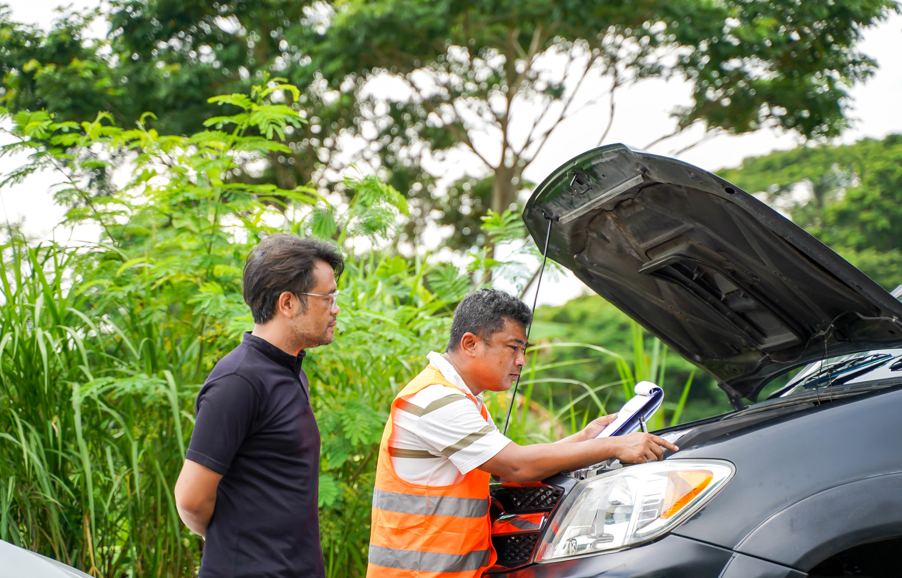
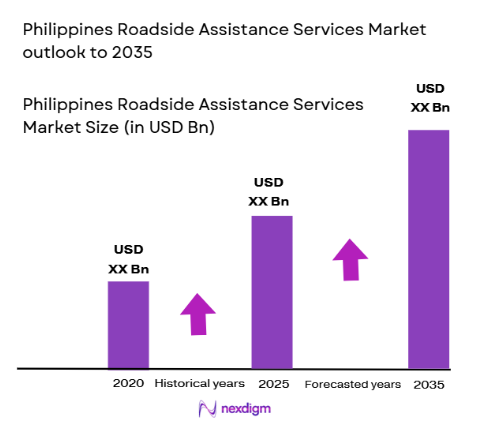
The Philippines Roadside Assistance Services market is projected to see significant growth, with a market size expected to reach USD ~ billion based on a recent historical assessment. Key drivers of growth in this market include the rising vehicle ownership rates, increasing demand for on-demand assistance services, and the expansion of road infrastructure in the country. With a growing number of cars on the road, consumers are increasingly seeking reliable roadside assistance services to ensure convenience and safety in case of emergencies.
The Philippines is a dominant player in Southeast Asia due to its strong automotive market, rapid urbanization, and expanding infrastructure projects. Cities like Metro Manila, Cebu, and Davao lead the demand for roadside assistance, driven by dense traffic, increasing vehicle numbers, and the growing middle-class population. The demand for roadside services is further amplified by the rise in consumer preference for convenience and a shift toward subscription-based models, making the Philippines a hub for roadside assistance in the region.
Market Segmentation
By Product Type:
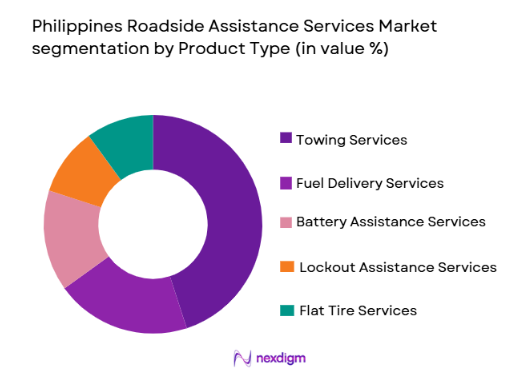
Philippines Roadside Assistance Services market is segmented by product type into towing services, fuel delivery services, battery assistance services, lockout assistance services, and flat tire services. Recently, towing services have a dominant market share due to factors such as the growing number of vehicles on the road and the need for reliable assistance during accidents and breakdowns. Towing services offer a crucial solution for vehicle recovery, driving their demand across urban and rural areas. The rise in car ownership and expanding road networks further supports the growing preference for towing services, as they provide a vital solution for consumers in need of emergency support.
By Platform Type:
Philippines Roadside Assistance Services market is segmented by platform type into mobile apps, call center services, vehicle services, web-based platforms, and third-party platforms. Mobile apps have recently dominated the market due to their convenience and ease of access, allowing users to quickly request roadside assistance services. The integration of GPS tracking, real-time updates, and seamless payment options on mobile apps has increased their popularity among consumers, making them the preferred platform for requesting roadside services. The growing reliance on smartphones, coupled with the rise in tech-savvy users, has solidified mobile apps as the market leader in roadside assistance.

Competitive Landscape
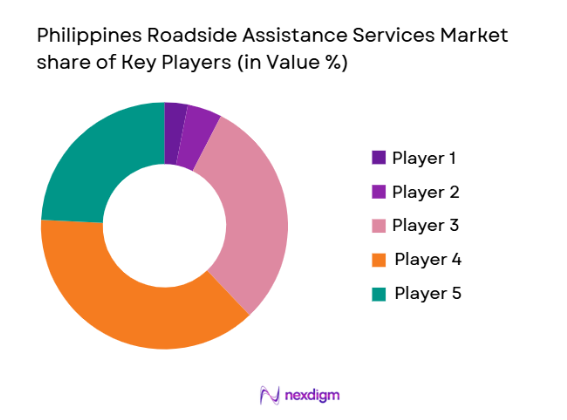
The competitive landscape in the Philippines Roadside Assistance Services market is marked by consolidation, with several major players dominating the market. These players are leveraging technology advancements and extensive service networks to enhance their offerings and expand their reach. The competition is further intensified by new entrants who are focusing on mobile platforms and innovative service models. The influence of key players continues to shape the market dynamics, as they compete for a larger share in the growing consumer-driven demand for roadside assistance services.
| Company Name | Establishment Year | Headquarters | Technology Focus | Market Reach | Key Products | Revenue | Market-Specific Parameter |
| Global Assist | 2002 | Philippines | ~ | ~ | ~ | ~ | ~ |
| Agero | 1994 | USA | ~ | ~ | ~ | ~ | ~ |
| Allstate Roadside Assistance | 1931 | USA | ~ | ~ | ~ | ~ | ~ |
| First Call Automotive | 2010 | Philippines | ~ | ~ | ~ | ~ | ~ |
| Mapfre | 1933 | Spain | ~ | ~ | ~ | ~ | ~ |
Philippines Roadside Assistance Services Market Analysis
Growth Drivers
Increasing Vehicle Ownership:
The rising vehicle ownership in the Philippines is driving the demand for roadside assistance services. As more consumers purchase cars, the need for reliable roadside assistance grows, particularly for emergency services like towing, fuel delivery, and battery assistance. Increased urbanization and expanding road networks further support this demand, as more vehicles on the road lead to higher instances of accidents, breakdowns, and the need for immediate assistance. Additionally, the rising middle-class population in the country has led to increased disposable income, allowing consumers to afford roadside assistance services. Car owners are becoming more aware of the value of having a roadside assistance service, especially in the event of emergencies during travel, further fueling market growth.
Technological Advancements and Convenience:
The development of mobile applications and GPS tracking technologies has greatly improved the convenience and efficiency of roadside assistance services in the Philippines. Consumers now prefer using mobile apps to request services, as they provide real-time updates, allow for easy payments, and help reduce response times. The integration of telematics systems in vehicles is also playing a key role in identifying potential breakdowns before they occur, allowing for preventive assistance. The use of technology has made roadside services more accessible and reliable, and this trend is expected to continue, as consumers increasingly demand faster and more efficient services. The rise in smartphone penetration in the country is also a significant factor contributing to the growth of mobile app-based roadside assistance services.
Market Challenges
High Operational Costs:
Roadside assistance service providers in the Philippines face high operational costs, particularly in the maintenance and deployment of a large fleet of vehicles that provide assistance across various regions. These costs include fuel, vehicle maintenance, and labor. The need to ensure quick response times and maintain service availability across urban and rural areas further increases the financial burden on service providers. As a result, companies are under pressure to balance cost efficiency with service quality, often leading to challenges in maintaining competitive pricing while meeting customer expectations for timely assistance. High operational expenses can hinder profitability, particularly for smaller service providers with limited resources.
Limited Coverage in Remote Areas:
While roadside assistance services are widely available in urban areas like Metro Manila, coverage in more remote and rural areas remains a significant challenge. The geographic distribution of vehicles and the need for efficient service delivery across large distances make it difficult to provide consistent and reliable roadside assistance in all areas. Service providers often face difficulties in reaching these locations quickly, which leads to longer wait times for customers and lower satisfaction levels. Additionally, there may be logistical challenges, such as poor road conditions and limited infrastructure, which can further delay response times in rural regions. As a result, companies are faced with the challenge of expanding their service coverage and ensuring that remote areas are adequately served.
Opportunities
Expansion of Electric Vehicle Roadside Assistance:
With the growing popularity of electric vehicles (EVs) in the Philippines, there is an emerging opportunity for service providers to expand their offerings to cater to EV owners. EVs require specialized roadside assistance, such as charging services and battery replacement. As the number of EVs on the road increases, the demand for dedicated roadside assistance services tailored to the unique needs of these vehicles will also rise. This presents a significant growth opportunity for service providers to diversify their offerings and tap into an underserved market segment. Companies that invest in electric vehicle infrastructure and offer EV-specific services will be well-positioned to capitalize on this emerging trend.
Integration with Insurance Providers:
Another significant opportunity lies in the integration of roadside assistance services with insurance providers. Many consumers already purchase roadside assistance as part of their auto insurance policies. By forming partnerships with insurance companies, roadside assistance service providers can expand their reach and gain access to a larger customer base. Insurance companies can bundle roadside assistance as an added benefit, increasing consumer adoption and driving demand for services. This collaboration can lead to more streamlined service offerings and provide customers with the convenience of having all their vehicle-related needs met through a single provider.
Future Outlook
The future of the Philippines Roadside Assistance Services market looks promising, with continued growth expected in the coming years. Factors such as technological advancements, the increasing number of vehicles on the road, and the rising consumer preference for convenience will drive market expansion. Service providers are expected to invest in innovative technologies, such as telematics and mobile apps, to enhance service delivery and improve customer satisfaction. Additionally, the government’s focus on infrastructure development and road safety will create a favorable environment for the growth of roadside assistance services. As the automotive market continues to thrive in the Philippines, the demand for reliable and efficient roadside assistance will only increase, offering significant opportunities for market players.
Major Players
- Global Assist
- Agero
- Allstate Roadside Assistance
- First Call Automotive
- Mapfre
- AAA
- Assurant
- NationSafe
- RAC Roadside Assistance
- SOS Roadside Assistance
- DriveSure
- Best Roadside Assistance
- RS Recovery
- Roadside Rescue
- Roadside Heroes
Key Target Audience
- Automotive manufacturers
- Insurance companies
- Fleet operators
- Car rental services
- Government and regulatory bodies
- Investors and venture capitalists
- Telecommunications companies
- Consumer service providers
Research Methodology
Step 1: Identification of Key Variables
Identifying the essential variables that impact the roadside assistance market in the Philippines, such as consumer behavior, vehicle trends, and technological advancements.
Step 2: Market Analysis and Construction
Constructing the market analysis using primary and secondary data sources, focusing on key market trends, drivers, challenges, and segmentation.
Step 3: Hypothesis Validation and Expert Consultation
Validating initial findings through consultations with industry experts and stakeholders to ensure the accuracy and relevance of the market assumptions.
Step 4: Research Synthesis and Final Output
Synthesizing the collected data and insights to create a comprehensive report that includes market forecasts, competitive landscape, and key market opportunities.

- Executive Summary
- Research Methodology (Definitions, Scope, Industry Assumptions, Market Sizing Approach, Primary & Secondary Research Framework, Data Collection & Verification Protocol, Analytic Models & Forecast Methodology, Limitations & Research Validity Checks)

- Market Definition and Scope
- Value Chain & Stakeholder Ecosystem
- Regulatory / Certification Landscape
- Sector Dynamics Affecting Demand
- Strategic Initiatives & Infrastructure Growth

- Growth Drivers
Increased vehicle ownership and demand for emergency services
Rising consumer preference for on-demand service options
Growth in the automotive insurance sector
Expansion of urban areas and road networks
Technological advancements in vehicle diagnostics and support systems - Market Challenges
High operational costs in service delivery
Lack of awareness in rural areas
Limited coverage in remote locations
Competition from traditional service providers
Regulatory compliance issues and insurance integration - Market Opportunities
Expansion of electric vehicle roadside assistance services
Integration of AI and IoT for real-time assistance
Strategic partnerships with insurance companies for bundled services - Trends
Integration of telematics into roadside assistance
Growth of app-based roadside assistance platforms
Development of smart roadside assistance solutions
Increase in fleet-based roadside assistance services
Consumer shift toward subscription-based service models - Government Regulations & Defense Policy
Road safety regulations and roadside assistance compliance
Regulations governing vehicle service contracts
Government incentives for electric vehicle assistance services - SWOT Analysis
- Stakeholder and Ecosystem Analysis
- Porter’s Five Forces Analysis
- Competition Intensity and Ecosystem Mapping

- By Market Value, 2020-2025
- By Installed Units, 2020-2025
- By Average System Price, 2020-2025
- By System Complexity Tier, 2020-2025

- By System Type (In Value%)
Towing Services
Fuel Delivery Services
Battery Assistance Services
Lockout Assistance Services
Flat Tire Services - By Platform Type (In Value%)
Mobile Apps
Call Center Services
Vehicle Services
Web-based Platforms
Third-party Platforms - By Fitment Type (In Value%)
Standard Assistance Plans
Premium Assistance Plans
Subscription-based Services
On-Demand Assistance Services
Corporate Fleet Assistance Plans - By EndUser Segment (In Value%)
Individual Consumers
Corporate Fleets
Car Rental Services
Automobile Manufacturers
Insurance Providers - By Procurement Channel (In Value%)
Direct Purchases
Third-party Service Providers
Partnerships with Automobile Manufacturers
Subscription Services
Insurance Channel - By Material / Technology (in Value%)
Mobile Applications
Telematics Systems
GPS Tracking Devices
Communication Systems
Electric Vehicle Support Technology

- Market structure and competitive positioning
- Market share snapshot of major players
- CrossComparison Parameters (Service Type, Platform Type, Pricing Model, Service Speed, Technology Integration, Coverage Area, End-User Segment, Procurement Channel, Fleet Size, Service Availability)
- SWOT Analysis of Key Players
- Pricing & Procurement Analysis
- Key Players
Global Assist
Agero
Allianz Roadside Assistance
First Call Automotive
Geico Roadside Assistance
Mapfre
AAA
Assurant
Nationwide Roadside Assistance
RAC Roadside Assistance
Emergency Road Services
SOS Roadside Assistance
DriveSure
Best Roadside Assistance
RSR Services

- Growth of demand from corporate fleet operators
- Individual consumers seeking personalized roadside services
- Car rental services adopting roadside assistance for customer satisfaction
- Automobile manufacturers offering bundled roadside assistance packages

- Forecast Market Value, 2026-2035
- Forecast Installed Units, 2026-2035
- Price Forecast by System Tier, 2026-2035
- Future Demand by Platform, 2026-2035


 Request a Sample
 Ask for Customization
 Get a Quote
 Enquire Now