
 Download PDF
 Download PDF
Market Overview
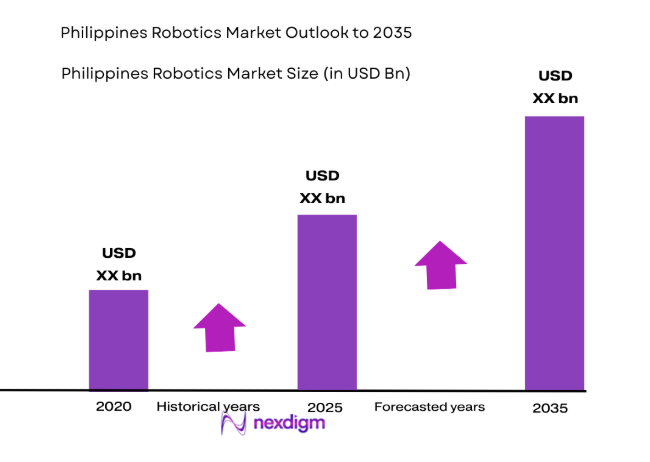
The Philippines Robotics Market is experiencing robust growth, driven by increasing demand across various sectors such as manufacturing, healthcare, and logistics. The market size is projected to reach USD ~ billion, primarily fueled by advancements in artificial intelligence and automation technologies. The rapid adoption of robotic systems in industries looking to enhance efficiency and reduce labor costs has significantly contributed to this growth. Furthermore, government initiatives supporting robotics innovation and integration are accelerating market development. The market’s potential is amplified by the increasing need for robotic solutions in diverse applications such as precision agriculture, healthcare automation, and smart manufacturing systems.
Dominant players in the robotics market are primarily concentrated in major urban centers like Metro Manila, where the infrastructure and economic activities are most conducive for high-tech industries. This urban dominance is supported by strong research and development capabilities, coupled with access to skilled labor and international investments. These areas also benefit from favorable government policies and increasing industrial demand, positioning them as key hubs for robotics adoption in the Philippines.
Market Segmentation
By Product Type
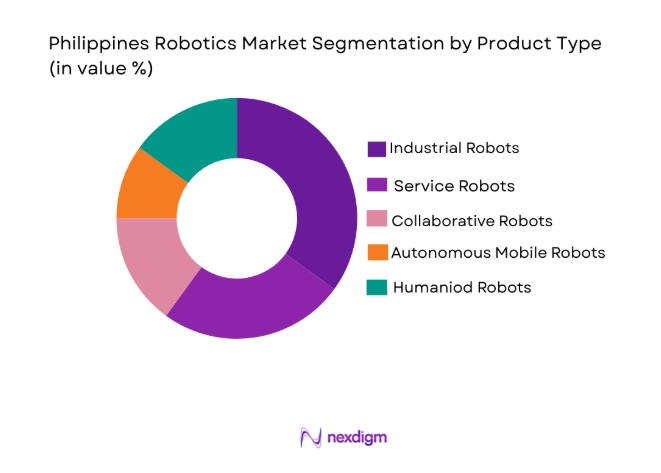
The Philippines Robotics Market is segmented by product type into industrial robots, service robots, collaborative robots, autonomous mobile robots, and humanoid robots. Recently, industrial robots have dominated the market share due to their widespread use in manufacturing industries. These robots are essential for automating repetitive tasks, improving production efficiency, and ensuring consistent product quality. The increasing focus on Industry 4.0 and automation in the Philippines, coupled with cost reductions in robotics technology, has further boosted the demand for industrial robots.
By Platform Type
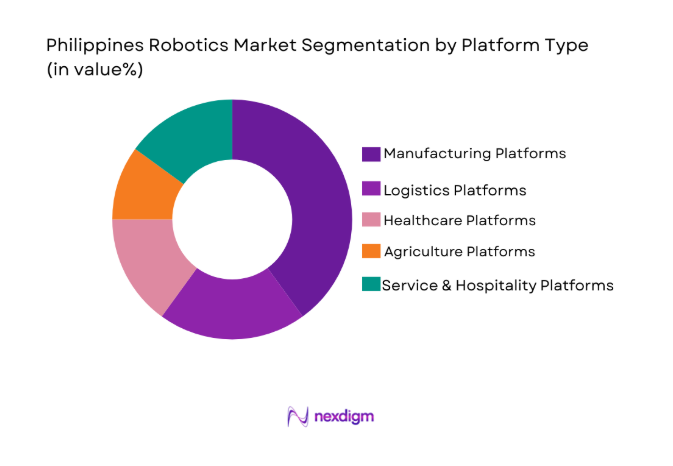
The market is also segmented by platform type into manufacturing platforms, logistics platforms, healthcare platforms, agriculture platforms, and service & hospitality platforms. Manufacturing platforms have the largest market share due to the increasing demand for automation in production lines. With the Philippines’ growing manufacturing sector, robots are increasingly deployed in automotive assembly, electronics manufacturing, and other industries, leading to their dominance in this platform. The push for higher precision, quality control, and operational efficiency in production processes continues to drive the growth of manufacturing platforms in the robotics sector.
Competitive Landscape
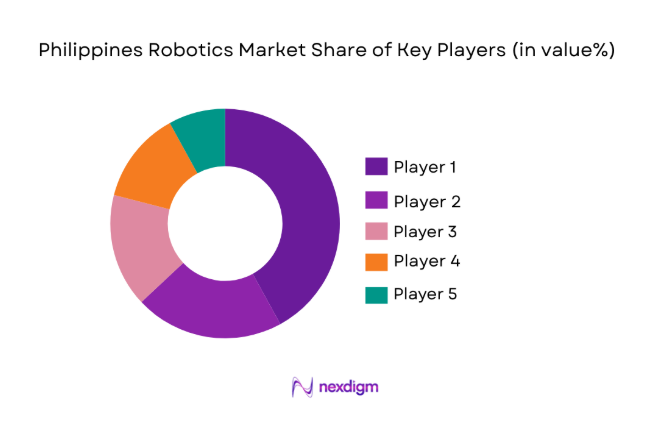
The Philippines Robotics Market is highly competitive, with major international and local players driving the technological advancements and expanding their market presence. Consolidation is evident, with large robotics companies acquiring smaller firms to enhance their technological capabilities and extend their product offerings. Major players influence the market through strategic partnerships, technological innovations, and investments in R&D. The growing presence of robotics firms in the country reflects the increasing demand across industries, and these firms continue to push the boundaries of automation, contributing to market growth.
| Company Name | Establishment Year | Headquarters | Technology Focus | Market Reach | Key Products | Revenue | Market-Specific Parameter |
| ABB Robotics | 1988 | Switzerland | ~ | ~ | ~ | ~ | ~ |
| KUKA Robotics | 1898 | Germany | ~ | ~ | ~ | ~ | ~ |
| Fanuc Corporation | 1955 | Japan | ~ | ~ | ~ | ~ | ~ |
| Universal Robots | 2005 | Denmark | ~ | ~ | ~ | ~ | ~ |
| Yaskawa Electric Corp | 1915 | Japan | ~ | ~ | ~ | ~ | ~ |
Philippines Robotics Market Analysis
Growth Drivers
Technological Advancements in Robotics
Technological advancements in robotics, particularly in artificial intelligence, automation, and machine learning, are significantly driving the growth of the Philippines Robotics Market. These innovations enable robots to perform complex tasks with greater precision, flexibility, and adaptability. Robotics systems are increasingly being integrated into manufacturing lines, agriculture, healthcare, and logistics, where automation can lead to cost reductions, efficiency improvements, and enhanced productivity. The development of collaborative robots and autonomous mobile robots further accelerates market growth by providing adaptable and easy-to-deploy solutions across various industries. Additionally, with the availability of advanced sensors and enhanced processing capabilities, robotics is becoming more accessible and affordable for businesses, thereby fueling demand across sectors.
Government Initiatives for automation
Government support for automation and robotics technologies is another key growth driver in the Philippines. Various initiatives, such as funding for robotics research and development, tax incentives for tech companies, and programs promoting digital transformation, have fostered a conducive environment for the robotics market. With the government’s focus on modernizing the manufacturing sector and boosting industrial productivity, the demand for robotic systems in the country is expected to continue growing. These initiatives not only enhance the country’s global competitiveness but also contribute to the training of a skilled workforce, which is critical for the successful adoption of robotics technology across different industries.
Market Challenges
High Initial Investment Costs
One of the primary challenges hindering the growth of the Philippines Robotics Market is the high initial investment required for robotics systems. Small and medium-sized enterprises (SMEs) in the country often find it difficult to adopt robotic solutions due to the high upfront capital expenditure. While the operational cost savings and efficiency gains offered by robotics are significant, the initial costs associated with purchasing, installing, and maintaining robotic systems can be a barrier for businesses operating with limited budgets. In addition, the complexity of integrating robotic systems with existing infrastructure further adds to the financial burden, limiting the widespread adoption of robotics, particularly in industries outside of manufacturing.
Lack of Skilled Workforce in Robotics
Another challenge is the lack of a sufficiently skilled workforce to operate and maintain advanced robotics systems. Despite the Philippines’ growing tech-savvy population, there is a shortage of professionals with specialized knowledge in robotics, automation, and AI technologies. This skill gap poses a challenge to the successful deployment and operation of robotic systems across various industries. The need for trained technicians, engineers, and system integrators who can handle robotics equipment and ensure smooth operations is critical for the market’s growth. Educational programs focused on robotics, automation, and artificial intelligence will be essential to bridge this skill gap and support the expansion of the robotics market in the Philippines.
Opportunities
Robotics in Healthcare
The healthcare sector in the Philippines presents significant opportunities for robotics adoption. With the growing demand for improved healthcare services, robotics can provide solutions to enhance patient care, streamline surgeries, and automate repetitive tasks. Robotic surgery systems, such as those used for minimally invasive procedures, are gaining popularity in hospitals across the country due to their precision and reduced recovery times. Furthermore, robots used in elderly care and rehabilitation offer new opportunities for improving the quality of life for the aging population. The increasing demand for healthcare automation, driven by a shortage of skilled medical professionals and the need for efficient healthcare delivery, positions robotics as a key solution in this sector.
Robotics in Agriculture
The agricultural sector in the Philippines also offers substantial opportunities for the growth of robotics. With the need to improve productivity and reduce labor costs in farming, robotics can provide efficient solutions such as autonomous harvesters, drones for monitoring crops, and robots for pest control. The adoption of precision agriculture technologies, which use robotics to optimize planting, watering, and harvesting processes, can significantly boost crop yields and sustainability. As the agricultural industry seeks to modernize and address labor shortages, the integration of robotics into farming practices is expected to increase, presenting a key opportunity for market growth.
Future Outlook
The future outlook for the Philippines Robotics Market is optimistic, with significant growth expected in the next five years. Advancements in artificial intelligence, machine learning, and automation technologies will continue to drive demand for robotics across various sectors, including manufacturing, healthcare, agriculture, and logistics. Government initiatives supporting automation and digital transformation will further accelerate the adoption of robotic solutions, particularly in small and medium-sized enterprises. As the market matures, the development of more affordable and user-friendly robotic systems will also enable greater penetration across industries. Regulatory support, alongside growing technological infrastructure, will ensure that robotics becomes an integral part of the Philippine economy.
Major Players
- ABB Robotics
- KUKA Robotics
- Fanuc Corporation
- Universal Robots
- Yaskawa Electric Corporation
- Cognex Corporation
- Omron Corporation
- Adept Technology
- Epson Robots
- Kawasaki Heavy Industries
- Stäubli Robotics
- Rethink Robotics
- Nachi-Fujikoshi Corp
- Mitsubishi Electric Corporation
- Techman Robot
Key Target Audience
- Investments and venture capitalist firms
- Government and regulatory bodies
- Manufacturing industries
- Healthcare providers
- Agricultural firms
- Logistics companies
- System integrators
Research Methodology
Step 1: Identification of Key Variables
The first step involves identifying the key variables that influence the robotics market, such as technological advancements, regulatory frameworks, and industry-specific demands.
Step 2: Market Analysis and Construction
The market is analyzed using both primary and secondary data sources, focusing on industry reports, expert interviews, and market trends to construct a comprehensive market model.
Step 3: Hypothesis Validation and Expert Consultation
Experts and key stakeholders are consulted to validate the hypotheses formed in the initial analysis phase, ensuring that the findings align with real-world market scenarios.
Step 4: Research Synthesis and Final Output
The final output synthesizes all research data and insights, providing a clear and actionable report on the robotics market in the Philippines.

- Executive Summary
- Research Methodology (Definitions, Scope, Industry Assumptions, Market Sizing Approach, Primary & Secondary Research Framework, Data Collection & Verification Protocol, Analytic Models & Forecast Methodology, Limitations & Research Validity Checks)

- Market Definition and Scope
- Value Chain & Stakeholder Ecosystem
- Regulatory / Certification Landscape
- Sector Dynamics Affecting Demand
- Strategic Initiatives & Infrastructure Growth

- Growth Drivers
Technological Advancements in Robotics
Government Initiatives for Automation
Expanding Demand for Robotics in Healthcare
Increasing Adoption of AI and Machine Learning in Robotics
Growing Robotics in E-commerce and Logistics - Market Challenges
High Initial Investment Costs
Lack of Skilled Workforce in Robotics
Technological Integration Issues
Regulatory and Safety Barriers
Cybersecurity Concerns in Robotic Systems - Market Opportunities
Expansion of Collaborative Robotics in Small and Medium Enterprises
Increased Robotics Adoption in Healthcare
Emerging Applications in Smart Manufacturing - Trends
Adoption of AI and Machine Learning in Robotic Systems
Integration of Robotics with Industry 4.0 and IoT - Government Regulations
- SWOT Analysis
- Porter’s Five Forces

- By Market Value, 2020-2025
- By Installed Units, 2020-2025
- By Average System Price, 2020-2025
- By System Complexity Tier, 2020-2025

- By System Type (In Value%)
Industrial Robots
Service Robots
Collaborative Robots
Autonomous Mobile Robots
Humanoid Robots - By Platform Type (In Value%)
Manufacturing Platforms
Logistics Platforms
Healthcare Platforms
Agriculture Platforms
Service & Hospitality Platforms - By Fitment Type (In Value%)
On-premise Solutions
Cloud-based Solutions
Hybrid Solutions
Integrated Solutions - By End User Segment (In Value%)
Manufacturing Industry
Healthcare Sector
Agricultural Sector
Logistics & Warehousing

- Market Share Analysis
- Cross Comparison Parameters (System Type, Platform Type, End User Segment, Fitment Type, Procurement Channel, Material/Technology, Geographical Presence)
- SWOT Analysis of Key Competitors
- Pricing & Procurement Analysis
- Key Players
ABB Robotics
KUKA Robotics
Fanuc Corporation
Universal Robots
Yaskawa Electric Corporation
Cognex Corporation
Omron Corporation
Adept Technology
Epson Robots
Kawasaki Heavy Industries
Stäubli Robotics
Rethink Robotics
Nachi-Fujikoshi Corp
Mitsubishi Electric Corporation
Techman Robot

- Growing Adoption of Robotics in Manufacturing
- Healthcare Robotics Adoption for Elderly Care
- E-commerce Driving Robotics in Logistics
- Robotics in Agriculture for Precision Farming

- Forecast Market Value, 2026-2035
- Forecast Installed Units, 2026-2035
- Price Forecast by System Tier, 2026-2035
- Future Demand by Platform, 2026-2035


 Request a Sample
 Ask for Customization
 Get a Quote
 Enquire Now