

 Download PDF
 Download PDF
Market Overview
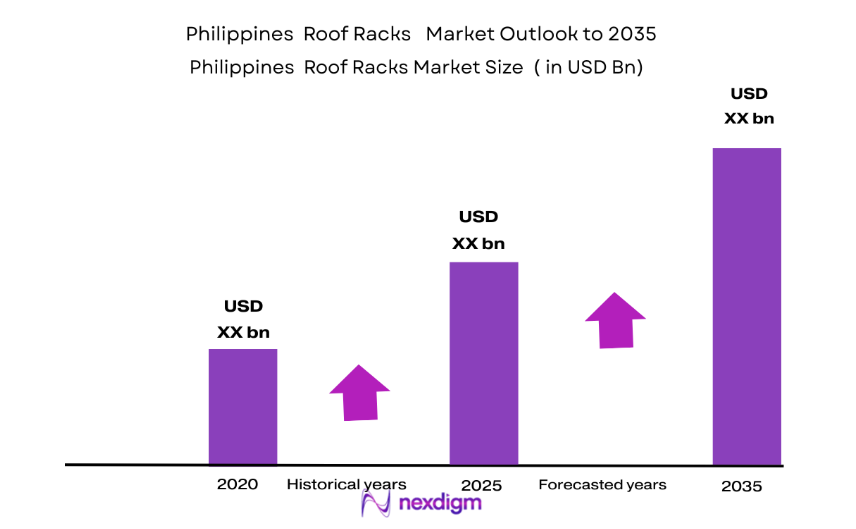
The Philippines Roof Racks market is experiencing steady growth driven by increasing vehicle sales and the growing demand for utility accessories. Based on a recent historical assessment, the market size for roof racks is valued at USD ~ million, largely driven by consumer preferences for vehicle customization and enhanced storage solutions. The rise in outdoor activities, road trips, and recreational travel, alongside expanding automotive sales, significantly contribute to this growth. The market is further supported by innovations in design, such as lightweight materials and improved durability, making roof racks a desirable add-on for vehicle owners.
The Philippines stands as a dominant player in Southeast Asia for roof racks due to its burgeoning automotive sector and growing middle-class population. Metro Manila, Cebu, and Davao are key areas driving the market, largely due to the rapid expansion of infrastructure and increasing vehicle ownership in these regions. The demand is also spurred by the country’s growing tourism industry and the rising interest in off-road and adventure vehicles, particularly in urban areas. This trend positions the Philippines as a central hub for roof rack adoption in the region.
Market Segmentation
By Product Type:
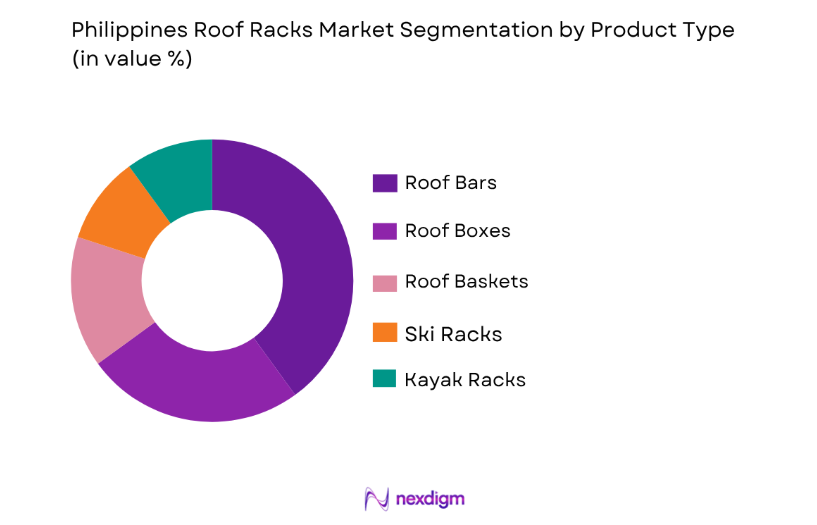
The Philippines Roof Racks market is segmented by product type into roof bars, roof boxes, roof baskets, ski racks, and kayak racks. Recently, roof bars have seen a dominant market share due to their ease of installation, versatility, and affordability. Roof bars are preferred by a large portion of vehicle owners because they can support multiple attachments, including cargo boxes, bike racks, and even skis, making them highly adaptable for various uses. With increasing numbers of vehicles needing versatile and efficient storage options, roof bars continue to lead the market, particularly among families and those engaged in outdoor activities.
By Platform Type:
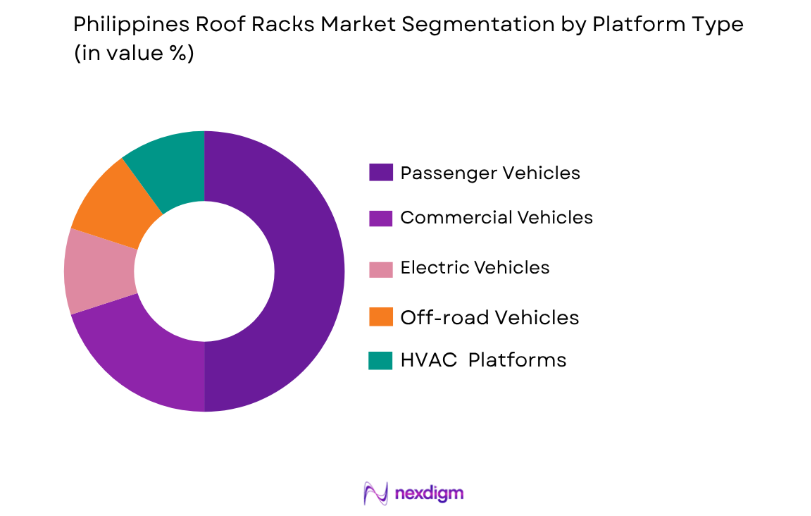
The market for roof racks in the Philippines is segmented by platform type into passenger vehicles, commercial vehicles, electric vehicles, off-road vehicles, and luxury vehicles. Passenger vehicles have dominated the market due to their large consumer base and high demand for additional storage solutions. Families and individuals are increasingly opting for roof racks to accommodate outdoor gear and travel necessities, which is a significant contributor to the segment’s growth. Additionally, the rise in road trips and weekend travel, along with the growing popularity of recreational vehicles, further solidifies passenger vehicles as the leading platform type for roof rack adoption.
Competitive Landscape
The competitive landscape of the Philippines Roof Racks market is highly fragmented, with key players offering a wide range of products and solutions to meet the growing demand for outdoor and utility accessories. The market sees both local manufacturers and international brands competing for market share. Consolidation is occurring as some major players form strategic alliances with automotive manufacturers to offer integrated solutions. The dominance of global players like Thule and Yakima, alongside strong local competition, contributes to a dynamic market environment.
| Company Name | Establishment Year | Headquarters | Technology Focus | Market Reach | Key Products | Revenue | Additional Parameter |
| Thule Group | 1942 | Sweden | ~ | ~ | ~ | ~ | ~ |
| Yakima Products | 1973 | USA | ~ | ~ | ~ | ~ | ~ |
| Rhino-Rack | 1992 | Australia | ~ | ~ | ~ | ~ | ~ |
| Prorack | 1975 | Australia | ~ | ~ | ~ | ~ | ~ |
| Menabo | 1993 | Italy | ~ | ~ | ~ | ~ | ~ |

Philippines Roof Racks Market Analysis
Growth Drivers
Increase in Vehicle Sales:
Vehicle sales in the Philippines have witnessed a steady rise due to a growing middle-class population and increased disposable income. As more consumers purchase vehicles, the demand for additional storage solutions such as roof racks increases. Roof racks are particularly appealing to individuals and families who require more cargo space for road trips, outdoor activities, or transporting larger items. With more people opting for personal vehicles as a means of transportation, the demand for roof racks is set to continue growing. Additionally, the expansion of infrastructure, such as highways and road networks, has encouraged travel and tourism, contributing further to the adoption of roof racks.
Rising Outdoor and Adventure Activities:
The growing interest in outdoor activities, such as hiking, camping, and biking, has fueled the demand for roof racks in the Philippines. Roof racks provide an efficient way to transport equipment like kayaks, bicycles, and camping gear, which are commonly used in outdoor recreation. As more Filipinos engage in these activities, the need for practical and durable storage solutions has become essential. The increasing popularity of off-road vehicles and adventure tourism has further amplified this trend, with consumers seeking roof racks that cater to their specific needs for outdoor storage.
Market Challenges
High Production and Raw Material Costs:
One of the primary challenges facing the roof rack market in the Philippines is the rising cost of raw materials, such as aluminum, steel, and plastic, which are commonly used in roof rack manufacturing. These cost increases have directly impacted production costs, leading to higher prices for consumers. Manufacturers are also under pressure to balance cost increases with maintaining product quality and performance, which is crucial in this competitive market. As global supply chains face disruptions and the cost of transportation rises, the impact on raw material costs and production timelines continues to pose a challenge.
Regulatory and Compliance Barriers:
Roof racks must adhere to stringent safety and quality standards set by local regulatory bodies. These regulations are designed to ensure the safety of both the vehicle and its occupants when the roof rack is in use. Compliance with these standards can be costly for manufacturers and can slow down the production process, leading to delays in bringing new products to market. Additionally, the Philippines’ regulatory environment can be complex, requiring manufacturers to navigate various rules related to imports, certifications, and testing procedures, which can be a barrier to market entry for new players.
Opportunities
Customization and Modular Solutions:
Consumers are increasingly looking for products that cater to their specific needs. This trend is particularly evident in the Philippines roof rack market, where there is growing demand for customizable and modular roof rack systems. Modular roof racks allow users to add or remove components depending on their storage needs, making them ideal for consumers with varying requirements. This presents an opportunity for manufacturers to create more versatile and adaptable roof racks that cater to different types of vehicles, from family cars to off-road vehicles. Companies that focus on customization are likely to see strong demand for their products as more consumers seek tailored solutions.
Sustainability and Eco-friendly Products:
With increasing environmental awareness, there is an opportunity for roof rack manufacturers to tap into the growing demand for sustainable products. Consumers are increasingly looking for eco-friendly alternatives, and the automotive industry is no exception. Roof racks made from recycled materials or those that offer energy-efficient features are gaining popularity. Manufacturers that focus on sustainability in their product design, such as using biodegradable or recyclable materials, are well-positioned to capitalize on this emerging trend. The Philippines’ regulatory push for greener products will further support this market shift, creating opportunities for innovation in the roof rack segment.
Future Outlook
The future outlook for the Philippines Roof Racks market is promising, with steady growth expected in the coming years. The market will benefit from the expansion of the automotive sector, which is anticipated to continue its upward trajectory as the economy grows. Technological developments in materials and manufacturing processes will likely drive further product innovation, resulting in lighter, stronger, and more durable roof racks. The rise of eco-friendly and modular solutions will also contribute to the market’s evolution, as sustainability becomes a key focus for both consumers and manufacturers. As the demand for outdoor and recreational activities continues to increase, the roof racks market is expected to see sustained demand across all vehicle types.
Major Players
- Thule Group
- Yakima Products
- Rhino-Rack
- Prorack
- Menabo
- TMS
- Car Roof Racks
- Kargo Master
- Rola Australia
- Atera
- MaxxTow
- Hitch Mate
- Cruzber
- Yakima Racks
- Autoanything
Key Target Audience
- Investments and venture capitalist firms
- Government and regulatory bodies
- Automotive manufacturers
- Outdoor retailers
- Vehicle owners
- Fleet operators
- E-commerce platforms
- Logistics companies
Research Methodology
Step 1: Identification of Key Variables
This step involves defining the critical variables that impact the roof racks market, such as vehicle sales trends, consumer behavior, and regulatory influences. These variables form the foundation for market analysis.
Step 2: Market Analysis and Construction
In this phase, data is gathered from multiple sources, including industry reports, surveys, and expert consultations. This information is analyzed to estimate the market size and forecast trends.
Step 3: Hypothesis Validation and Expert Consultation
At this stage, initial hypotheses about market trends are validated through expert consultations and discussions with key industry players. Insights from manufacturers, retailers, and government bodies help refine assumptions.
Step 4: Research Synthesis and Final Output
In this final step, the synthesized data is reviewed, and the market report is compiled. The findings are presented with supporting data, offering a comprehensive view of the market.

- Executive Summary
- Research Methodology (Definitions, Scope, Industry Assumptions, Market Sizing Approach, Primary & Secondary Research Framework, Data Collection & Verification Protocol, Analytic Models & Forecast Methodology, Limitations & Research Validity Checks)

- Market Definition and Scope
- Value Chain & Stakeholder Ecosystem
- Regulatory / Certification Landscape
- Sector Dynamics Affecting Demand

- Growth Drivers
Increasing Vehicle Sales
Rising Popularity of Outdoor Activities
Growing Demand for Cargo Solutions
Improved Product Durability and Design
Boom in E-commerce Distribution Channels - Market Challenges
High Manufacturing Costs
Supply Chain Disruptions
Regulatory Challenges in Material Sourcing - Market Opportunities
Innovation in Eco-friendly Materials
Partnerships with Electric Vehicle Manufacturers
Expanding Market for Roof Racks in E-commerceTrends
Rise of DIY Vehicle Modifications
Integration of Smart Technology in Roof Racks
Customization Preferences in Roof Racks - Government Regulations
- SWOT Analysis of Key Competitors

- By Market Value, 2020-2025
- By Installed Units, 2020-2025
- By Average System Price, 2020-2025
- By System Complexity Tier, 2020-2025

- By System Type (In Value%)
Metal Roof Racks
Plastic Roof Racks
Custom Roof Racks
Modular Roof Racks
Roof Box Systems - By Platform Type (In Value%)
Passenger Vehicles
Commercial Vehicles
Electric Vehicles
Off-road Vehicles
Luxury Vehicles - By Fitment Type (In Value%)
OEM Fitment
Aftermarket Fitment
Modular Fitment
Universal Fitment
Custom Fitment - By EndUser Segment (In Value%)
Automotive Manufacturers
Aftermarket Retailers
E-commerce Platforms
Consumers
Fleet Operators

- Market Share Analysis
- CrossComparison Parameters (System Type, Platform Type, EndUser Segment, Procurement Channel, Fitment Type)
- SWOT Analysis of Key Competitors
- Pricing & Procurement Analysis
- Porter’s Five Forces
- Key Players
Thule Group
Yakima Products
Rhino-Rack
Prorack
Cruzber
Menabo
TMS
Yakima Racks
Atera
MaxxTow
Car Roof Racks
Kargo Master
Hitch Mate
Roof Rack City
Rola Australia

- Consumers’ Growing Interest in Roof Racks for Personal Use
- Aftermarket Retailers’ Role in Expanding Reach
- Fleet Operators’ Shift Toward Custom Roof Solutions
- E-commerce Platforms’ Influence on Roof Racks Sales

- Forecast Market Value, 2026-2035
- Forecast Installed Units, 2026-2035
- Price Forecast by System Tier, 2026-2035
- Future Demand by Platform, 2026-2035


 Request a Sample
 Ask for Customization
 Get a Quote
 Enquire Now