
 Download PDF
Market Overview
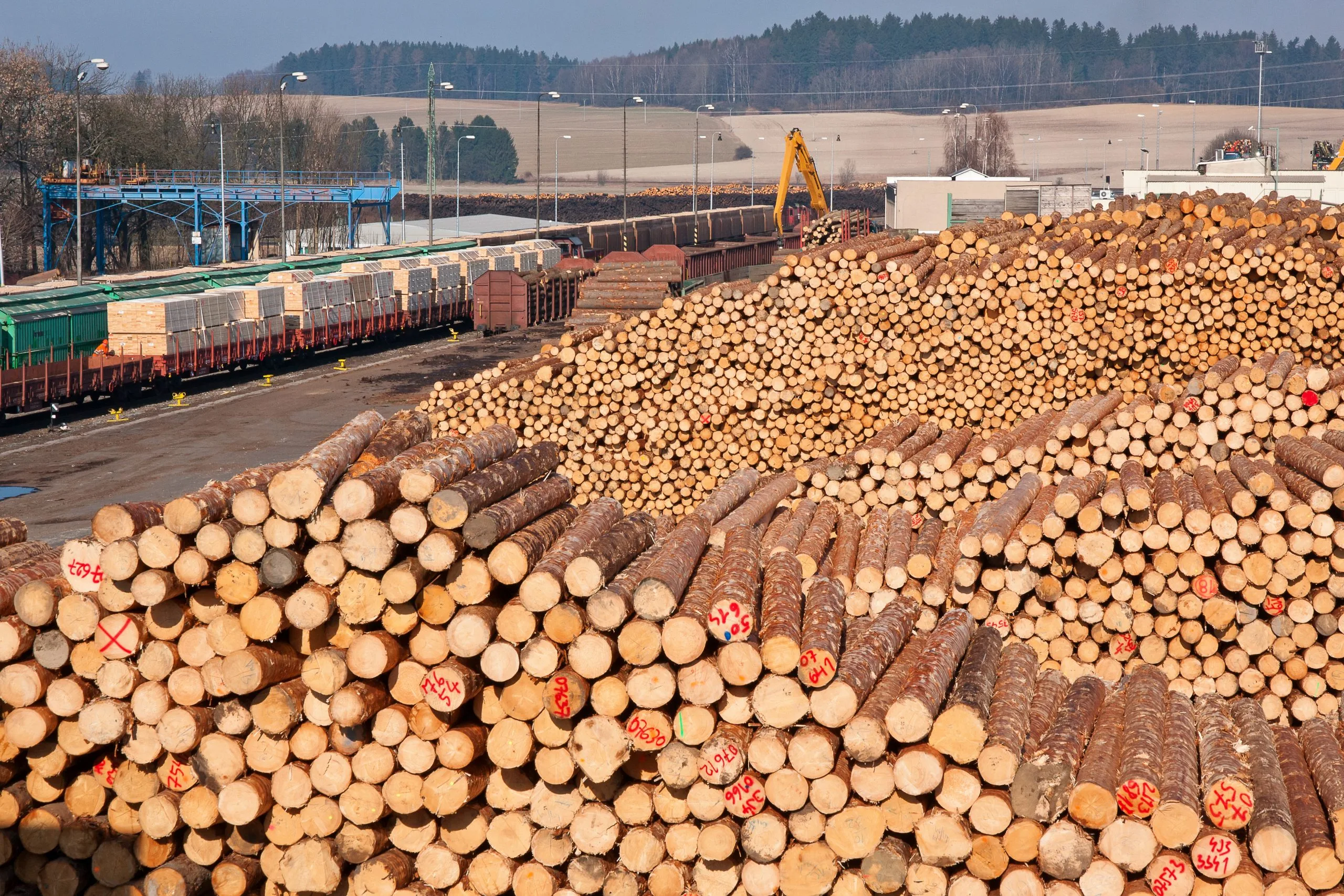
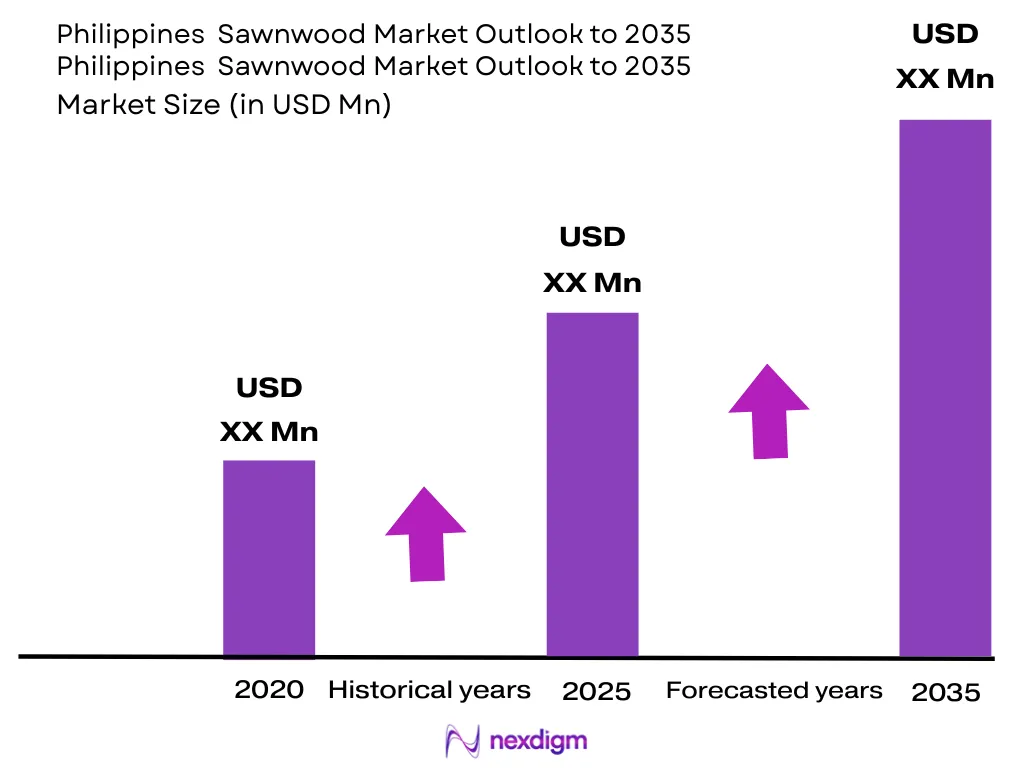
The Philippines Sawnwood Market was valued at approximately USD ~ Million in 2024, reflecting the archipelagic nation’s distinctive transition from a natural forest-based timber economy to a plantation-dependent sawnwood industry following the imposition of a nationwide commercial logging moratorium in natural and residual forests. According to data published by the Food and Agriculture Organization, the Department of Environment and Natural Resources (DENR), and the Forest Management Bureau (FMB), the Philippines possesses approximately 7.2 million hectares of forest cover across its more than 7,600 islands, though Executive Order No. 23, issued in 2011, has prohibited commercial logging in natural and residual forests nationwide, fundamentally restructuring the domestic sawnwood supply base towards fast-growing industrial tree plantation species. Falcata, Mahogany, and Gmelina plantations established across Luzon, Visayas, and Mindanao now constitute the primary legal domestic timber resource supplying the country’s sawmill and wood processing sector. The market is primarily driven by sustained residential and commercial construction activity supporting the Philippines’ rapidly urbanising population, the government’s “Build Better More” national infrastructure programme, a globally competitive furniture manufacturing and export industry, and continued demand for timber across the country’s extensive inter-island boat building and marine transport sector.
Market Segmentation
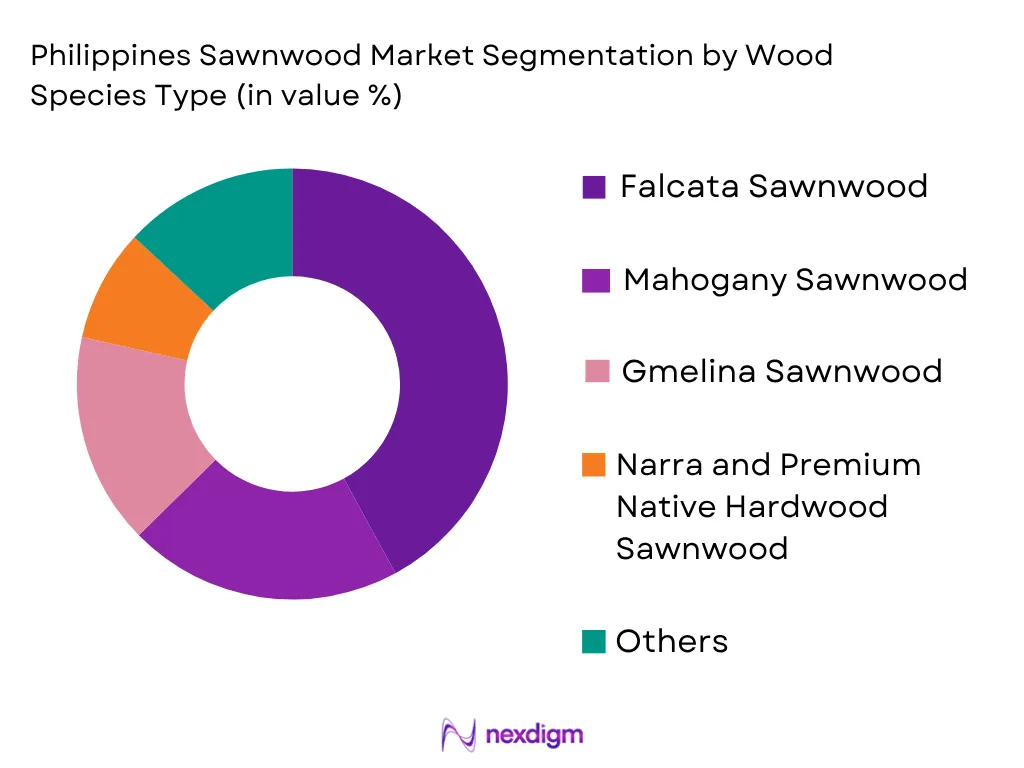
By Wood Species Type
Philippines Sawnwood Market is segmented by wood species type into Falcata Sawnwood, Mahogany Sawnwood, Gmelina Sawnwood, Narra and Premium Native Hardwood Sawnwood, Imported Pine and Softwood Sawnwood, and Other Commercial Species. Falcata Sawnwood holds the dominant market share by volume, reflecting its position as the Philippines’ primary industrial plantation species following the 2011 natural forest logging moratorium. Falcata, known for its rapid growth cycle of approximately six to eight years and broad smallholder farmer adoption across Mindanao, particularly in Bukidnon, Agusan, and Davao provinces, has become the structural backbone of the Philippines’ legal domestic sawnwood supply chain, widely processed into construction lumber, packaging materials, pallet stock, and laminated veneer lumber for both domestic markets and export to Japan and South Korea. The species’ light weight, ease of working, and suitability for fast-rotation smallholder tree farming have made it the preferred plantation species for thousands of individual farmers participating in industrial tree plantation programmes registered with the DENR. Mahogany Sawnwood, derived predominantly from naturalised plantation stands of Swietenia macrophylla introduced during the American colonial period and subsequently planted extensively across Luzon and the Visayas, commands strong demand for furniture manufacturing, joinery, and appearance-grade construction applications, benefiting from established consumer recognition and favourable working properties. Narra, the Philippines’ national tree and a premium native hardwood species, maintains a high-value niche position despite severely constrained legal supply, commanding substantial price premiums for luxury furniture, religious artifacts, and heritage restoration projects, with legal supply now overwhelmingly dependent on registered plantation sources and salvaged or confiscated timber stock given the species’ protected status in natural forest areas.
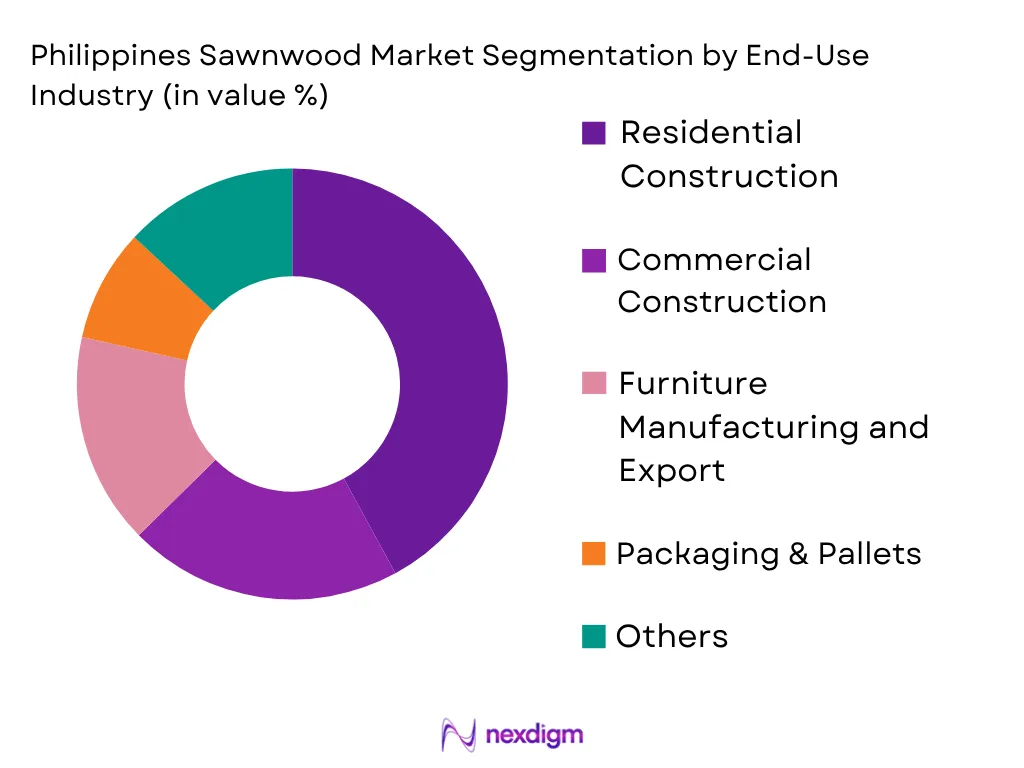
By End-Use Industry
Philippines Sawnwood Market is segmented by end-use industry into Residential Construction, Commercial Construction, Furniture Manufacturing and Export, Packaging & Pallets, Joinery & Interior Applications, Boat Building & Marine Applications, and Agricultural & Infrastructure Applications. Residential Construction represents the largest end-use segment, driven by the Philippines’ substantial and persistent housing backlog, estimated by the Department of Human Settlements and Urban Development (DHSUD) at several million units, combined with strong remittance-funded construction activity from the country’s extensive overseas Filipino worker (OFW) population. Overseas remittances, which consistently exceed USD 35 billion annually according to the Bangko Sentral ng Pilipinas, fund a substantial proportion of residential construction and home improvement activity across the Philippines, with OFW families frequently investing remittance income in house construction, extension, and renovation projects that consume structural and finishing-grade sawnwood. The government’s socialised and economic housing programmes, delivered through the National Housing Authority and Pag-IBIG Fund, generate additional demand for affordable construction-grade timber across formal housing development projects. Boat Building and Marine Applications constitute a distinctively significant end-use segment within the Philippine market, reflecting the country’s status as the world’s largest archipelagic nation with extensive inter-island transport dependency, a large artisanal and commercial fishing fleet, and a vibrant traditional bangka (outrigger boat) building tradition that consumes substantial volumes of durable hardwood species across coastal communities nationwide. Furniture Manufacturing and Export represents a high-value segment anchored by established manufacturing clusters in Cebu, Pampanga, and Metro Manila that supply both growing domestic consumer demand and export markets in the United States, Japan, and Europe.
Competitive Landscape
The Philippines Sawnwood Market is moderately fragmented, comprising a combination of large-scale industrial tree plantation companies with integrated sawmill operations, a substantial base of smallholder Falcata and Mahogany tree farmers supplying independent sawmills, and a sizeable population of small and medium-scale sawmill operators distributed across Mindanao, Luzon, and the Visayas. The market structure has been fundamentally reshaped by the 2011 natural forest logging moratorium, which eliminated the large integrated concessionaire model that historically dominated Philippine forestry and shifted competitive advantage towards companies with established industrial tree plantation programmes, smallholder farmer aggregation networks, and DENR-registered plantation timber documentation systems. Major participants including PICOP Resources, Provident Tree Farms, and A. Brown Company have developed substantial plantation forestry operations integrated with sawmill and downstream wood processing facilities. Companies with FSC certification or DENR-verified legal sourcing documentation are increasingly well-positioned to serve the export-oriented furniture manufacturing sector and growing domestic green building specification requirements. Sawmill capacity remains geographically concentrated in Mindanao, reflecting the island’s dominant share of Falcata and Mahogany plantation area.
| Company | Establishment Year | Headquarters | Plantation Assets | Sawmill Capacity | FSC/PEFC Certification | Export Presence | Product Portfolio | End-Use Focus |
| PICOP Resources Inc. | 1952 | ~ | ~ | ~ | ~ | ~ | ~ | ~ |
| Sierra Madre Wood Industries Inc. | 1968 | ~ | ~ | ~ | ~ | ~ | ~ | ~ |
| Provident Tree Farms Inc. | 1976 | ~ | ~ | ~ | ~ | ~ | ~ | ~ |
| Basilan Forest Industries Inc. | 1958 | ~ | ~ | ~ | ~ | ~ | ~ | ~ |
| Davao del Norte Timber Corporation | 1980 | ~ | ~ | ~ | ~ | ~ | ~ | ~ |
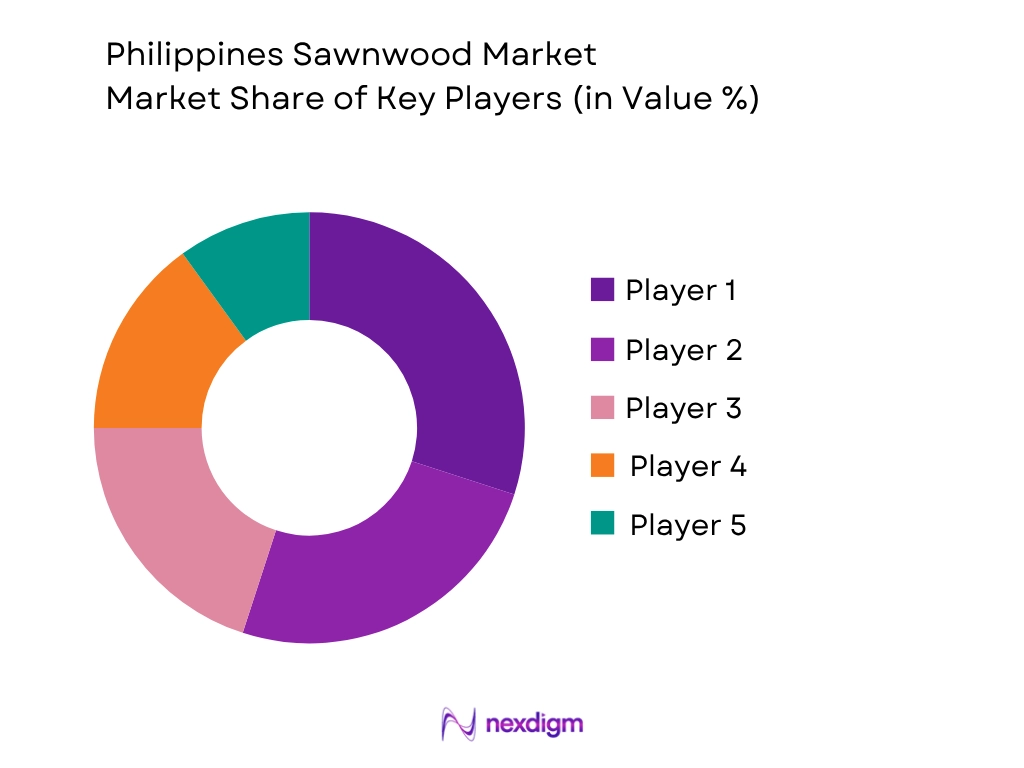
Philippines Sawnwood Market Analysis
Growth Drivers
Falcata and Industrial Tree Plantation Expansion
The Philippines sawnwood industry has undergone a structural transformation over the past decade, with rapid expansion of Falcata, Mahogany, and Gmelina industrial tree plantations emerging as the foundational growth driver for the country’s legal domestic timber supply following the 2011 natural forest logging moratorium under Executive Order No. 23. According to the Department of Environment and Natural Resources Forest Management Bureau, registered industrial tree plantations have expanded significantly across Mindanao, particularly in Bukidnon, Agusan del Sur, Davao de Oro, and Misamis Oriental, supported by smallholder farmer participation incentivised through the Community-Based Forest Management Program and private sector outgrower schemes operated by major plantation companies. Falcata’s exceptionally fast growth cycle, typically six to eight years to commercial maturity, provides smallholder farmers with a viable medium-term cash crop alternative to traditional agriculture while supplying sawmills with a renewable and legally compliant log source. Major plantation companies including PICOP Resources and Provident Tree Farms have developed substantial outgrower networks that combine company-managed plantation blocks with thousands of contracted smallholder farmer plots, creating a scalable and geographically distributed plantation timber supply model suited to the Philippines’ land tenure structure. The DENR’s National Greening Program, which has supported tree planting across millions of hectares of public and private land since 2011, has further expanded the country’s plantation timber resource base, with a growing proportion of planted area reaching commercial harvest maturity and entering the legal sawnwood supply chain. This plantation-based supply transformation provides the structural foundation for continued growth in legal, traceable, and increasingly certified Philippine sawnwood production through the forecast period.
Infrastructure Investment, Urbanisation, and Remittance-Funded Construction
The Philippines sawnwood market benefits from multiple reinforcing demand drivers rooted in the country’s sustained urbanisation trajectory, ambitious government infrastructure investment programme, and the unique economic phenomenon of overseas Filipino worker remittances funding substantial residential construction activity nationwide. The government’s “Build Better More” infrastructure programme, succeeding the earlier “Build, Build, Build” initiative, has committed substantial public investment to roads, bridges, flood control, airports, and public buildings across the archipelago, generating sustained demand for construction-grade timber in formwork, scaffolding, site infrastructure, and temporary works applications throughout project implementation. The Philippines’ overseas Filipino worker population, estimated at more than 1.8 million deployed workers with millions more permanently residing abroad, generates remittance inflows that the Bangko Sentral ng Pilipinas reports consistently exceed USD 35 billion annually, a substantial proportion of which is channelled into residential construction, home improvement, and property investment by OFW families across both urban and provincial areas. This remittance-funded construction activity represents a distinctive and resilient demand driver for the Philippines sawnwood market, as it is relatively insulated from domestic economic cycles and tends to remain stable or even counter-cyclically strong during periods of peso depreciation, when remittance purchasing power in local currency terms increases. Rapid urbanisation across Metro Manila, Metro Cebu, and Metro Davao, combined with the government’s continued housing programme delivery through the National Housing Authority and Pag-IBIG Fund, sustains broad-based construction sector timber demand across the archipelago’s three major island groups through the forecast period.
Market Challenges
Logging Moratorium Constraints and Premium Species Supply Scarcity
The Philippines sawnwood market faces a persistent structural challenge arising from the nationwide commercial logging moratorium in natural and residual forests imposed under Executive Order No. 23 in 2011, which, while environmentally motivated and broadly supported as a conservation measure, has severely constrained the domestic supply of premium native hardwood species including Narra, Yakal, Apitong, and other Philippine Dipterocarp timbers that historically commanded strong domestic and export demand. This supply constraint has created a significant and growing gap between domestic demand for premium appearance-grade and structural hardwood and the legally available supply from plantation and salvage sources, forcing furniture manufacturers, high-end construction projects, and heritage restoration specialists to rely on increasingly scarce and expensive legal stock, imported alternatives, or in some documented cases, illegally sourced timber from remaining natural forest areas. The persistence of illegal logging, despite the moratorium and DENR enforcement efforts, reflects the economic pressure created by genuine market demand for species that plantation forestry has not yet been able to replicate at commercial scale or comparable quality. Forest degradation from past decades of unsustainable commercial logging, agricultural conversion, and informal settlement expansion in upland areas continues to constrain the natural regeneration of premium hardwood species even in areas nominally protected from commercial harvesting. The DENR’s timber transport documentation and certificate of origin verification systems, while essential for distinguishing legal plantation timber from illegally sourced natural forest wood, create administrative compliance burdens for legitimate sawmill operators and timber traders that smaller, less formalised market participants often struggle to navigate efficiently.
Typhoon Vulnerability and Natural Disaster Risk to Forestry and Supply Chains
The Philippines’ position within the Pacific typhoon belt exposes the country’s plantation forestry resource base, sawmill infrastructure, and timber transport and distribution networks to recurring and severe natural disaster risk that represents a distinctive and significant operational challenge for the domestic sawnwood industry. The Philippines experiences an average of 20 tropical cyclones annually, with Mindanao, the primary centre of Falcata and Mahogany plantation forestry, historically considered relatively typhoon-sheltered compared to Luzon and the Visayas, though increasingly affected by severe storms in recent years as documented by PAGASA, the Philippine Atmospheric, Geophysical and Astronomical Services Administration. Major typhoons can cause extensive windthrow damage to standing plantation timber, destroying years of growth investment for smallholder farmers and plantation companies and creating sudden, unplanned harvest pressure as damaged timber must be salvaged before deterioration, often depressing market prices through oversupply in affected regions. Sawmill facilities, log yards, and timber transport infrastructure including roads, bridges, and port facilities are vulnerable to typhoon and flooding damage, periodically disrupting production and distribution across affected regions for extended recovery periods. The Philippines’ location along the Pacific Ring of Fire additionally exposes the forestry and wood processing sector to earthquake and volcanic risk, with periodic seismic events capable of damaging processing infrastructure and disrupting transport networks. These recurring natural disaster risks require Philippine sawnwood industry participants to maintain resilient supply chain diversification, disaster recovery planning, and insurance arrangements that add to operational costs and complexity relative to less disaster-prone timber-producing nations.
Market Opportunities
FSC Certification and Furniture Export Market Development
Growing international demand for certified, legally documented timber products presents a significant market development opportunity for the Philippines’ export-oriented furniture manufacturing sector and the plantation timber supply chains that feed it, particularly as the country’s post-moratorium plantation-based timber economy aligns naturally with international sustainability certification requirements. The Philippines’ furniture export industry, with established manufacturing clusters in Cebu, Pampanga, and Metro Manila supplying buyers in the United States, Japan, and the European Union, is increasingly required to demonstrate timber legality and sustainability credentials to satisfy buyer due diligence requirements under the EU Deforestation Regulation, the US Lacey Act, and corporate ESG procurement policies among major furniture retailers and specification clients. The Philippines’ plantation-based Falcata, Mahogany, and Gmelina supply chains are structurally well-positioned to achieve FSC or PEFC certification given their relatively recent establishment, documented land tenure arrangements, and DENR registration requirements that already capture much of the chain-of-custody documentation needed for certification. Expansion of group certification schemes for smallholder Falcata farmer networks, modelled on successful approaches in other Southeast Asian plantation timber economies, could enable thousands of individual tree farmers to access certified timber markets collectively, significantly expanding the volume of certified Philippine sawnwood available for export markets. The Cebu Furniture Industries Foundation and other industry associations have actively promoted Philippine furniture exports through international trade fairs and design collaborations, creating market access channels that certified, sustainably sourced plantation timber producers can leverage for premium positioning and expanded export volume growth through the forecast period.
National Greening Program Synergies and Value-Added Processing Investment
The continued implementation and expansion of the Department of Environment and Natural Resources’ National Greening Program, combined with growing private sector and development partner investment in commercial reforestation, presents a substantial opportunity to expand the Philippines’ legal plantation timber resource base while simultaneously advancing the country’s climate change mitigation and forest landscape restoration commitments under the Paris Agreement and national climate policy frameworks. Government incentives for private sector participation in industrial tree plantation development, including streamlined permitting for DENR-registered plantations and potential carbon credit revenue streams from verified reforestation projects, create increasingly attractive investment conditions for both domestic and international forestry investors seeking to develop scalable plantation timber operations in the Philippines. Investment in value-added wood processing capabilities, including kiln-drying infrastructure, laminated veneer lumber (LVL) production, finger-jointing facilities, and engineered wood component manufacturing, would enable Philippine sawmill operators to capture significantly greater value from the country’s growing plantation timber resource while improving product quality and consistency for both domestic construction markets and export furniture manufacturing customers. The development of disaster-resilient, engineered timber building systems suited to the Philippines’ typhoon and earthquake risk profile represents an emerging market opportunity, as growing awareness of climate resilience in construction specification creates demand for engineered wood products that combine the sustainability benefits of timber construction with improved structural performance under extreme wind and seismic loading conditions. These converging opportunities position the Philippines sawnwood sector for continued structural transformation from a depleted natural forest economy towards a modern, plantation-based, value-added wood products industry through 2035.
Future Outlook
The Philippines Sawnwood Market is expected to witness steady growth over the forecast period, supported by the continued maturation and expansion of Falcata, Mahogany, and Gmelina industrial tree plantations, sustained government infrastructure investment under the “Build Better More” programme, persistent remittance-funded residential construction activity, and growing export demand for certified Philippine furniture and wood products. The structural transition from a natural forest-dependent timber economy to a plantation-based supply model, while creating near-term premium species scarcity challenges, is expected to provide an increasingly stable, legally compliant, and certifiable domestic timber resource base over the long term. Expansion of smallholder farmer participation in industrial tree plantation programmes, supported by DENR registration systems and private sector outgrower schemes, is anticipated to continue increasing the volume of legal plantation timber entering the formal sawnwood supply chain. Growing FSC certification adoption, particularly through group certification models suited to the Philippines’ smallholder-dominated plantation structure, is expected to strengthen the country’s furniture export competitiveness in increasingly compliance-conscious international markets. Investment in value-added processing, engineered wood product development, and disaster-resilient construction material innovation are anticipated to create new growth avenues for Philippine sawnwood industry participants navigating the country’s distinctive typhoon and earthquake risk environment through 2035.
Major Players
- PICOP Resources Inc.
- Sierra Madre Wood Industries Inc.
- Provident Tree Farms Inc.
- Basilan Forest Industries Inc.
- Davao del Norte Timber Corporation
- Pacific Wood Products Corporation
- Bukidnon Forests Inc.
- A. Brown Company Inc. (Plantation Division)
- New Bian Yek Commercial Inc.
- Interwood Manufacturing Corporation
- Mindanao Industrial Timber Corporation
- Cagayan de Oro Timber & Plywood Corp.
- Northern Mindanao Timber Company
- Quezon Reforestation Development Corporation
- Eastern Visayas Timber & Wood Industries
Key Target Audience
- Industrial Tree Plantation Companies and Smallholder Farmer Networks
- Sawmill Operators and Wood Processing Enterprises
- Furniture Manufacturing and Export Companies
- Residential and Commercial Construction Companies
- Building Material Distributors and Timber Traders
- Investments and Venture Capitalist Firms
- Government and Regulatory Bodies
- Timber Exporters, Importers and ASEAN Regional Trading Organisations
Research Methodology
Step 1: Identification of Key Variables
The initial phase involves constructing an ecosystem map covering industrial tree plantation companies, smallholder farmer networks, sawmill operators, timber traders, furniture manufacturers, construction companies, and export trading companies operating within the Philippines Sawnwood Market. Extensive secondary research is conducted using industry associations, trade databases, forestry reports, and government publications including data from the Department of Environment and Natural Resources (DENR), Forest Management Bureau (FMB), Philippine Statistics Authority (PSA), Bangko Sentral ng Pilipinas, and the Food and Agriculture Organization to identify the variables influencing market demand, plantation timber supply, and export trade flows within the Philippines’ distinctive post-moratorium forestry economy.
Step 2: Market Analysis and Construction
This phase focuses on gathering historical information relating to plantation timber harvesting volumes, sawnwood production by species and region, domestic consumption across construction and industrial end uses, furniture export performance, pricing trends, and National Greening Program plantation development progress. Market revenues are estimated using a combination of production volumes, average selling prices, and trade flow assessments while validating relationships between plantation harvest cycles, smallholder farmer participation trends, remittance-funded construction activity, and infrastructure programme implementation timelines.
Step 3: Hypothesis Validation and Expert Consultation
Market assumptions are validated through structured interviews with plantation forestry managers, sawmill operators, furniture export company executives, smallholder farmer cooperative representatives, DENR forestry officials, and industry association representatives. These consultations provide operational insights regarding plantation timber availability, sawmill capacity utilisation, export order trends, species procurement dynamics, certification compliance progress, and typhoon and disaster recovery impacts on supply chain continuity, ensuring greater accuracy of market estimates across the Philippines’ distinctive plantation-based and disaster-exposed sawnwood industry.
Step 4: Research Synthesis and Final Output
The final stage integrates findings from primary and secondary research to develop market forecasts, segmentation analysis, competitive benchmarking, and strategic recommendations. Data triangulation techniques are applied to validate market estimates and generate a comprehensive assessment of the Philippines Sawnwood Market while ensuring consistency across all species segments, regions, and stakeholder perspectives within this structurally transformed and disaster-resilient Southeast Asian timber economy.

- Executive Summary
- Research Methodology (Market Definitions and Assumptions, Abbreviations, Market Sizing Approach, Top-Down Analysis, Bottom-Up Analysis, Demand-Side Assessment, Supply-Side Assessment, Primary Industry Interviews, Forestry Sector Validation Framework, Trade Flow Assessment, Data Triangulation, Forecasting Framework, Limitations and Future Conclusions)

- Definition and Scope
- Market Evolution and Industry Genesis
- Timeline of Major Industry Developments
- Forestry and Wood Processing Industry Ecosystem
- Sawnwood Value Chain Analysis

- Growth Drivers (Falcata and Industrial Plantation Expansion, “Build Better More” Infrastructure Programme, Furniture Manufacturing Export Growth, Urbanisation and Housing Demand, Remittance-Funded Residential Construction)
- Market Challenges (Log Export and Harvesting Ban Restrictions, Typhoon and Natural Disaster Vulnerability, Illegal Logging and Forest Degradation, Import Dependency for Premium and Structural Species, Fragmented Sawmill Sector and Limited Mechanisation)
- Market Opportunities (Plantation Timber Industry Expansion, FSC Certification and Furniture Export Market Development, Government Infrastructure and National Greening Programme Synergies, Value-Added Wood Processing Investment, Digital Timber Trading Platforms)
- Market Trends (Falcata Plantation Dominance in Domestic Supply, Mahogany and Gmelina Utilisation Growth, Furniture Export Sector Modernisation, Engineered Wood Product Adoption, Disaster-Resilient Construction Material Demand)
- Government Regulations (Executive Order No. 23 Logging Moratorium, Revised Forestry Code (Presidential Decree No. 705), National Greening Program, DENR Timber Documentation and Transport Permit Requirements, CITES Implementation for Protected Species)
- SWOT Analysis
- Porter’s Five Forces Analysis
- PESTLE Analysis
- Stakeholder Ecosystem
- Competition Ecosystem

- By Market Value (2020-2025)
- By Volume (2020-2025)
- By Average Realized Price (2020-2025)


- Market Share of Major Players (By Value, Production Volume, Export Volume, Sawmill Capacity)
- Cross Comparison Parameters (Annual Sawnwood Production Capacity, Plantation Area Under Management, Sawmill Recovery Rate, Kiln Drying Capacity, FSC/PEFC Certified Timber Share, Export Revenue Share, Number of Sawmill Facilities, Product Grade Portfolio)
- SWOT Analysis of Major Players
- Benchmarking Analysis of Major Players
- Pricing Analysis (By Species, Grade, Moisture Content, Thickness, Export vs Domestic Sales)
- Detailed Profiles of Major Companies
PICOP Resources Inc.
Sierra Madre Wood Industries Inc.
Provident Tree Farms Inc.
Basilan Forest Industries Inc.
Davao del Norte Timber Corporation
Pacific Wood Products Corporation
Bukidnon Forests Inc.
Brown Company Inc. (Plantation Division)
New Bian Yek Commercial Inc.
Interwood Manufacturing Corporation
Mindanao Industrial Timber Corporation
Cagayan de Oro Timber & Plywood Corp.
Northern Mindanao Timber Company
Quezon Reforestation Development Corporation
Eastern Visayas Timber & Wood Industries

- Consumption Pattern Assessment (Consumption Frequency, Product Mix, Industry Demand Share, Volume Utilisation, Seasonal Demand)
- Sawnwood Utilisation by Industry (Construction Usage, Furniture Manufacturing and Export Share, Packaging Consumption, Boat Building Demand, Infrastructure Applications)
- Procurement and Sourcing Analysis (Contract Duration, Supplier Preference, Import Dependence, Procurement Volume, Lead Time Requirements)
- Buyer Preference Analysis (Species Preference, Grade Preference, Moisture Requirements, Certification Requirements, Delivery Expectations)
- Price Sensitivity Analysis (Price Elasticity, Species-Based Pricing, Regional Price Variations, Volume Discounts, Export vs Domestic Pricing Trends)

- By Market Value (2026-2035)
- By Volume (2026-2035)
- By Average Realized Price (2026-2035)


 Request a Sample
 Ask for Customization
 Get a Quote
 Enquire Now