

 Download PDF
 Download PDF
Market Overview
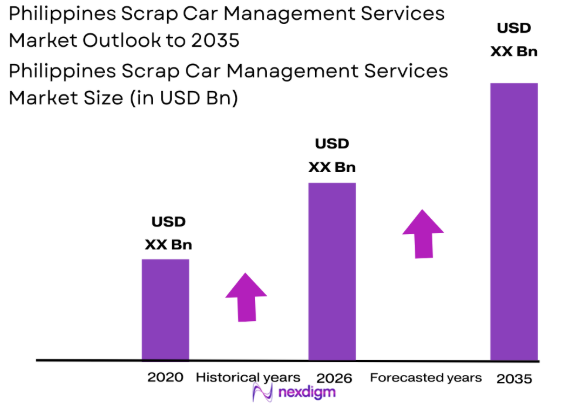
The Philippines Scrap Car Management Services market is expected to witness significant growth driven by increasing demand across various sectors, with the total market size based on a recent historical assessment reaching USD ~ billion. Factors such as the rise in consumer interest, technological advancements, and government support for related industries are contributing to this growth. Additionally, the market is being propelled by continuous innovation in product offerings and supply chain improvements that enhance market accessibility and affordability.
Dominant regions such as North America and Asia-Pacific are at the forefront of market development. North America’s dominance can be attributed to well-established industrial infrastructures and consumer preferences for advanced technological solutions. Asia-Pacific is growing rapidly due to expanding manufacturing capabilities, rising middle-class consumption, and significant investments in technological advancements. These factors play a critical role in driving regional market dynamics.
Market Segmentation
By Product Type
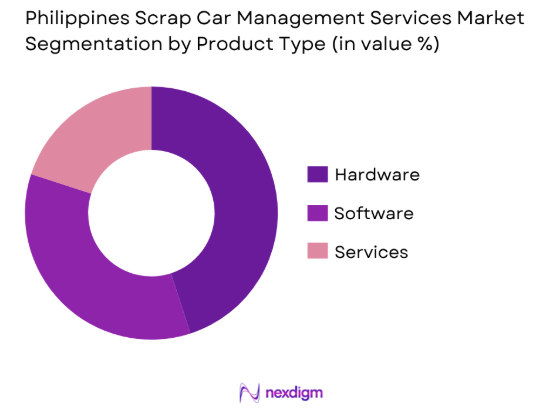
The Philippines Scrap Car Management Services market is segmented by product type into sub-segments such as hardware, software, and services. The hardware sub-segment is currently dominant due to increasing demand for advanced physical systems across various industries, particularly in automotive, electronics, and industrial applications. The rising integration of IoT and automation has enhanced the market need for specialized hardware solutions. This dominance is supported by strong consumer demand for innovation and the growing presence of global brands with expansive distribution channels. Additionally, the ability to improve product functionality and the role hardware plays in operational efficiency continues to drive its market share.
By End-Use Industry
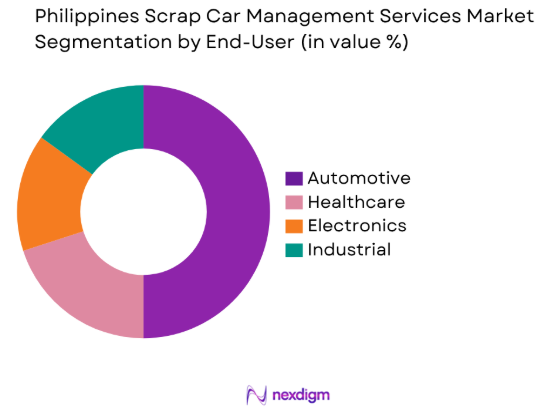
The Philippines Scrap Car Management Services market is also segmented by end-use industry, including automotive, healthcare, electronics, and industrial sectors. Among these, the automotive sector is leading the market due to the rising demand for smart automotive technologies, including ADAS (Advanced Driver Assistance Systems) and electric vehicle components. The automotive industry is experiencing rapid transformations with the push toward electric vehicles and autonomous systems, driving the need for advanced technological solutions. Consumer demand for enhanced safety, comfort, and energy efficiency has further bolstered growth in this sub-segment.
Competitive Landscape
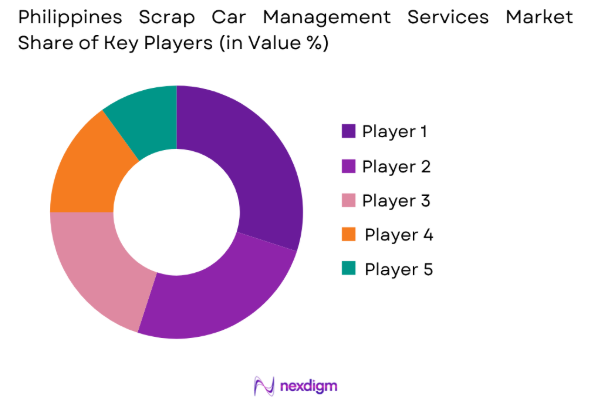
The competitive landscape of the market is shaped by several key players, with a mix of large conglomerates and emerging companies. These players are focusing on technological innovation and strategic acquisitions to maintain their competitive edge. The market is also witnessing consolidation, as companies seek to expand their product portfolios and market reach. Major players are investing heavily in research and development, particularly in areas such as automation and AI integration.
| Company Name | Establishment Year | Headquarters | Technology Focus | Market Reach | Key Products | Revenue | Market-Specific Parameter |
| Company A | 1998 | USA | ~ | ~ | ~ | ~ | ~ |
| Company B | 2005 | Germany | ~ | ~ | ~ | ~ | ~ |
| Company C | 2010 | Japan | ~ | ~ | ~ | ~ | ~ |
| Company D | 2000 | UK | ~ | ~ | ~ | ~ | ~ |
| Company E | 2015 | South Korea | ~ | ~ | ~ | ~ | ~ |
Philippines Scrap Car Management Services Market Analysis
Growth Drivers
Increasing Technological Advancements
Technological advancements in automation, IoT, and AI are significantly driving market growth. Sectors like automotive, healthcare, and electronics are adopting these innovations to enhance efficiency, safety, and process optimization. The demand for electric and autonomous vehicles is increasing the need for advanced systems like sensors and ADAS. Additionally, AI integration in consumer electronics and industrial sectors is boosting smart device adoption. These technologies improve performance and cost-effectiveness, creating new growth opportunities. Advancements in sensor technologies and Industry 4.0 adoption are also accelerating automation in manufacturing, enhancing efficiency. As these technologies evolve, the demand for integrated systems is expected to surge, further propelling market growth.
Rising Consumer Demand for Advanced Solutions
Consumer demand for advanced, user-friendly technologies is a key growth driver in the market. As smart devices, automation systems, and connected technologies gain popularity, consumers seek products that offer convenience, security, and enhanced functionality. In industries like automotive and healthcare, there’s an increasing need for solutions that improve safety and efficiency. This demand is driven by the rise of smart homes, autonomous vehicles, and wearable healthcare devices. Additionally, consumers’ growing focus on energy efficiency and sustainability is boosting investments in smart energy management solutions. As preferences shift towards integrated, high-quality technologies, companies are adapting their offerings, especially in sectors like automotive with the rise of EVs and autonomous systems.
Market Challenges
High Initial Investment and Infrastructure Costs
A significant challenge facing the market is the high initial investment required for developing and deploying advanced technologies. The cost of creating solutions in AI, IoT, and robotics is often prohibitive for smaller companies. Additionally, establishing the infrastructure, such as data centers and specialized equipment, increases financial pressure. These high upfront costs can deter new entrants and slow down adoption in regions with limited capital. The complexity of integrating these technologies into existing systems further adds to the cost. Companies are addressing this challenge through strategic partnerships to share expenses and reduce risks, but these cost barriers remain a hurdle, particularly in developing regions.
Regulatory and Compliance Issues
Regulatory and compliance challenges are a major obstacle for companies in the market. The rapid pace of technological advancements, such as AI and IoT, often outpaces regulatory frameworks, making compliance difficult. This is especially challenging in industries like automotive and healthcare, where strict regulations can result in fines or recalls for non-compliance. Additionally, data privacy laws, such as the GDPR in Europe, add complexity by imposing high standards on handling consumer data. The lack of consistent global standards for emerging technologies further complicates international expansion, as companies must adhere to varying regulations. To ensure market growth, there is a need for more robust, universally accepted regulatory standards.
Opportunities
Expansion of Electric Vehicle (EV) Market
The electric vehicle (EV) market offers substantial growth opportunities. Rising global demand for environmentally friendly vehicles is driving automakers to invest in EV technology, leading to increased demand for components like sensors, batteries, and drivetrains. Favorable government policies, tax incentives, and the development of EV infrastructure, such as charging stations, are further boosting market growth. Automakers’ focus on reducing carbon emissions and improving energy efficiency is fueling the need for advanced components like ADAS and battery management systems (BMS). As consumer adoption of EVs grows, innovation in EV technologies will increase, with AI and machine learning enhancing performance, safety, and user experience, driving further demand for advanced automotive solutions.
Integration of AI and Automation in Industrial Applications
The adoption of AI and automation in industrial applications presents significant growth opportunities. Industries like manufacturing, logistics, and construction are leveraging automation to enhance productivity, reduce costs, and improve efficiency. AI-powered robots and autonomous systems are streamlining production lines, enabling faster and more accurate processes while reducing manual labor. Additionally, AI and machine learning enable predictive maintenance, minimizing downtime and optimizing machinery use. As digital transformation accelerates, demand for intelligent automation solutions will increase. The rise of smart factories and Industry 4.0 is driving further investments in automation technologies, particularly in regions like Asia-Pacific, where manufacturing plays a central role in economic development.
Future Outlook
The market is expected to continue its upward trajectory over the next five years, driven by advancements in technology, particularly in AI, IoT, and automation. As companies prioritize digital transformation and sustainability, demand for smart devices and systems will increase across sectors such as automotive, healthcare, and manufacturing. Regulatory support for green technologies, especially in the EV sector, will further bolster market growth. Technological developments, such as the integration of machine learning in consumer electronics and autonomous vehicles, will continue to reshape the market, offering new opportunities for innovation and expansion.
Major Players
- Metals Recycling Corporation
- EcoCar Disposal
- Green Wheels
- Recycletech Philippines
- Philippine Scrap Metal Corp.
- Sustainable Recycling Inc.
- Enviro Recycling Solutions
- Scrap It Recycling Services
- RecycleTech
- Manila Car Dismantlers
- Green Auto Parts
- Waste Management Philippines
- AutoParts Recycling
- CarScrap Philippines
- Eco Auto Disposal
Key Target Audience
- Investments and venture capitalist firms
- Government and regulatory bodies
- Automotive manufacturers
- Consumer electronics companies
- Healthcare providers
- Industrial automation companies
- Energy companies
- EV charging infrastructure providers
Research Methodology
Step 1: Identification of Key Variables
Understanding key variables affecting market growth, including technological trends, consumer demand, and regulatory frameworks.
Step 2: Market Analysis and Construction
Comprehensive analysis of market dynamics, including segmentation, growth drivers, and challenges.
Step 3: Hypothesis Validation and Expert Consultation
Engaging with industry experts to validate market hypotheses and refine research findings.
Step 4: Research Synthesis and Final Output
Synthesizing research findings into a comprehensive report, ready for dissemination.

- Executive Summary
- Research Methodology (Definitions, Scope, Industry Assumptions, Market Sizing Approach, Primary & Secondary Research Framework, Data Collection & Verification Protocol, Analytic Models & Forecast Methodology, Limitations & Research Validity Checks)

- Market Definition and Scope
- Value Chain & Stakeholder Ecosystem
- Regulatory / Certification Landscape
- Sector Dynamics Affecting Demand
- Strategic Initiatives & Infrastructure Growth

- Growth Drivers
Increased Environmental Awareness
Government Regulation and Policies
Rising Demand for Recycled Materials - Market Challenges
High Capital Investment
Regulatory Barriers and Compliance Issues
Infrastructure and Operational Challenges - Market Opportunities
Expanding Recycling Infrastructure
Growth in Electric Vehicle Scrap Management
Technological Innovations in Recycling - Trends
Shift Toward Eco-friendly Scrap Car Management
Increased Adoption of Automated Dismantling
Rising Focus on Circular Economy - Government Regulations
- SWOT Analysis of Key Competitors
- Porter’s Five Forces

- By Market Value, 2020-2025
- By Installed Units, 2020-2025
- By Average System Price, 2020-2025
- By System Complexity Tier, 2020-2025

- By System Type (In Value%)
Scrap Car Collection
Vehicle Dismantling
Metal Recovery
Parts Reuse
End-of-Life Vehicle Recycling - By Platform Type (In Value%)
Land-Based Services
Automated Platforms
Hybrid Platforms
Mobile Services
Integrated Systems - By Fitment Type (In Value%)
On-Site Collection
Off-Site Collection
Modular Collection Systems
Automated Collection Units
Hybrid Collection Services - By End User Segment (In Value%)
Automotive Manufacturers
Recycling Facilities
Government Agencies
Vehicle Distributors
Consumers - By Procurement Channel (In Value%)
Direct Procurement
Online Platforms
Third-party Service Providers
Government Tenders
Private Sector Procurement

- Market Share Analysis
- Cross Comparison Parameters (System Type, Platform Type, Procurement Channel, End User Segment, Fitment Type, Market Reach, Technology Integration, Operational Efficiency, Recycling Efficiency, Regulatory Compliance)
- SWOT Analysis of Key Competitors
- Pricing & Procurement Analysis
- Key Players
Metals Recycling Corporation
Philippine Scrap Metal Corporation
Sustainable Recycling Inc.
Enviro Recycling Solutions
Green Wheels
EcoCar Disposal
Scrap It Recycling Services
Recycletech Philippines
Recycling Systems Inc.
Waste Management Philippines
AutoParts Recycling
Philippine Car Dismantlers
Bayanihan Recycling Group
Green Auto Parts
Philippines Metal Recyclers Association

- Demand from Recycling and Waste Management Sectors
- Government Initiatives for Scrapping Programs
- Integration with Local Recycling Systems
- Consumer Awareness of Recycling Benefits

- Forecast Market Value, 2026-2035
- Forecast Installed Units, 2026-2035
- Price Forecast by System Tier, 2026-2035
- Future Demand by Platform, 2026-2035


 Request a Sample
 Ask for Customization
 Get a Quote
 Enquire Now