

 Download PDF
Market Overview
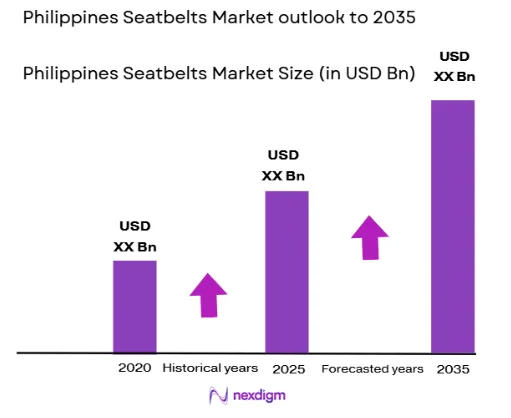
The Philippines seatbelts market is valued at approximately USD ~ billion based on a recent historical assessment, driven by increasing vehicle production, rising road safety awareness, and strict enforcement of transportation regulations. Growth is supported by expanding automotive manufacturing hubs and government-led safety compliance initiatives, alongside integration of advanced restraint systems in modern vehicles, particularly in passenger cars and public transport fleets.
Metro Manila, Cebu, and Davao emerge as dominant regions due to high vehicle density, urbanization, and strong enforcement of safety laws. These regions benefit from established automotive distribution networks and infrastructure development, encouraging adoption of advanced seatbelt systems. Additionally, proximity to manufacturing zones and logistics corridors enhances supply chain efficiency, while growing middle-class populations in these cities contribute to increased vehicle ownership and safety feature demand.
Market Segmentation
By Product Type
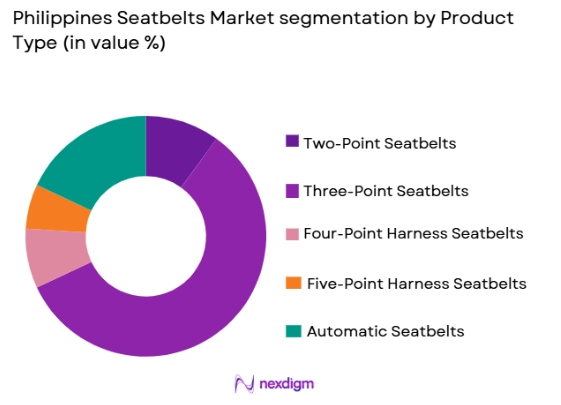
Philippines Seatbelts Market is segmented by product type into two-point seatbelts, three-point seatbelts, four-point harness seatbelts, five-point harness seatbelts, and automatic seatbelts. Recently, three-point seatbelts has a dominant market share due to factors such as widespread regulatory compliance, compatibility with passenger vehicles, and strong OEM adoption across entry-level and premium vehicle categories. The dominance is also supported by consumer familiarity and cost-effectiveness, making it a standard feature in most vehicles. Government mandates requiring front-seat aaaaaaaaoccupants to use three-point systems have further reinforced demand. Additionally, integration with airbags and pretensioner systems enhances safety performance, increasing preference among manufacturers. Public transport modernization programs also rely heavily on three-point systems for safety compliance. The consistent availability of replacement parts and ease of maintenance further strengthen its market position across urban and semi-urban areas.
By Vehicle Type
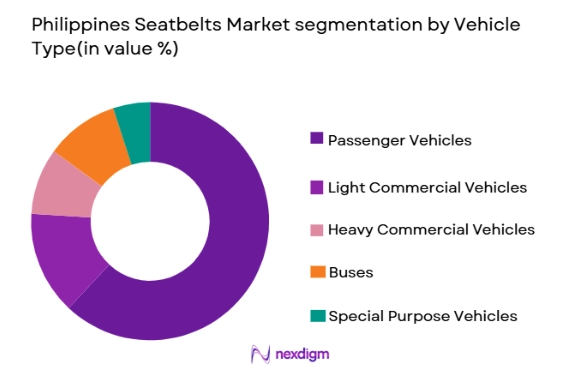
Philippines Seatbelts Market is segmented by vehicle type into passenger vehicles, light commercial vehicles, heavy commercial vehicles, buses, and special purpose vehicles. Recently, passenger vehicles has a dominant market share due to increasing private car ownership, urban commuting needs, and rising disposable income levels. The segment benefits from strong OEM production and import activity, ensuring consistent integration of safety systems. Additionally, consumer preference for safety-equipped vehicles has driven manufacturers to standardize advanced seatbelt systems. Urban congestion and accident awareness have also heightened demand for reliable restraint systems in personal vehicles. Government incentives for vehicle modernization and replacement have further boosted this segment. Furthermore, ride-hailing and car-sharing services have expanded passenger vehicle utilization, indirectly increasing the demand for durable and compliant seatbelt systems across the market.
Competitive Landscape
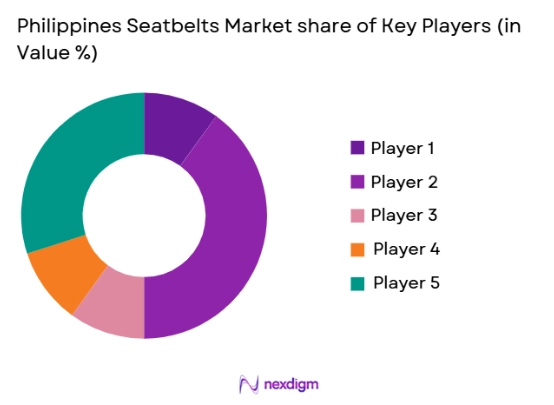
The Philippines seatbelts market exhibits moderate consolidation, with global automotive safety component manufacturers dominating supply through OEM partnerships and local distribution networks. Major players leverage advanced technologies such as pretensioners and load limiters, while regional suppliers compete through cost efficiency and aftermarket availability. Strategic collaborations with automotive manufacturers and adherence to regulatory standards significantly influence competitive positioning and market penetration.
| Company Name | Establishment Year | Headquarters | Technology Focus | Market Reach | Key Products | Revenue | Safety System Integration |
| Autoliv Inc | 1953 | Sweden | ~ | ~ | ~ | ~ | ~ |
| ZF TRW | 2015 | Germany | ~ | ~ | ~ | ~ | ~ |
| Joyson Safety Systems | 2018 | China | ~ | ~ | ~ | ~ | ~ |
| Tokai Rika | 1948 | Japan | ~ | ~ | ~ | ~ | ~ |
| Hyundai Mobis | 1977 | South Korea | ~ | ~ | ~ | ~ | ~ |
Philippines Seatbelts Market Analysis
Growth Drivers
Rising Enforcement of Vehicle Safety Regulations
The Philippines seatbelts market is significantly influenced by stricter implementation of road safety laws that mandate seatbelt usage for drivers and passengers across vehicle categories. Government authorities have intensified monitoring and penalties for non-compliance, which has improved awareness and adherence among vehicle owners. This regulatory push has compelled automotive manufacturers to standardize seatbelt systems in all vehicle models, including entry-level variants. The expansion of vehicle inspection programs has further ensured compliance with safety requirements. Additionally, public awareness campaigns highlighting accident prevention have strengthened consumer perception of seatbelts as essential safety features. Urbanization has led to higher traffic density, increasing the importance of occupant protection systems. Insurance policies also incentivize the use of safety features, indirectly supporting market growth. Continuous updates to transportation policies reinforce the adoption of advanced seatbelt technologies across both private and commercial vehicle segments.
Expansion of Automotive Production and Vehicle Ownership
growing automotive sector in the Philippines is a major contributor to the seatbelts market, driven by increasing vehicle assembly operations and imports. Rising disposable incomes and improving financing options have enabled more consumers to purchase vehicles, leading to higher demand for safety components. The expansion of ride-hailing services and logistics fleets has also increased vehicle utilization, requiring durable and compliant seatbelt systems. Local manufacturing initiatives and government support for the automotive industry have enhanced production capacity. Additionally, urban infrastructure development has improved road connectivity, encouraging vehicle adoption. The demand for commercial vehicles in logistics and transportation sectors has further contributed to market growth. Consumer preference for safety-equipped vehicles has influenced OEMs to integrate advanced seatbelt systems. This consistent growth in vehicle population directly supports the expansion of the seatbelts market across the country.
Market Challenges
Proliferation of Low-Quality Aftermarket Products
The presence of counterfeit and substandard seatbelt products in the aftermarket poses a significant challenge to the Philippines seatbelts market. These products are often sold at lower prices, attracting cost-sensitive consumers and fleet operators, which undermines the adoption of certified safety systems. The lack of strict enforcement in certain regions allows such products to circulate widely. These inferior seatbelts compromise passenger safety and damage consumer trust in the overall market. Additionally, they create unfair competition for established manufacturers who comply with stringent quality standards. Limited awareness among consumers regarding product authenticity further exacerbates the issue. The fragmented distribution network also makes it difficult to regulate product quality effectively. Addressing this challenge requires stronger regulatory enforcement and consumer education initiatives.
Price Sensitivity in Entry-Level Vehicle Segments
The Philippines market is characterized by a significant proportion of cost-conscious consumers, particularly in entry-level vehicle categories. This price sensitivity limits the adoption of advanced seatbelt technologies such as pretensioners and load limiters. Manufacturers often prioritize cost reduction over advanced safety features to maintain competitive pricing. This constraint affects innovation and the overall value proposition of safety systems. Additionally, fleet operators seeking to minimize operational costs may opt for basic or lower-cost seatbelt solutions. Economic fluctuations and fuel price volatility further influence consumer purchasing decisions. Limited financing options for advanced vehicle models also restrict adoption. Overcoming this challenge requires balancing affordability with safety enhancements to ensure broader market penetration.
Opportunities
Integration of Smart Safety Technologies in Vehicles
The increasing adoption of smart vehicle technologies presents a significant opportunity for the Philippines seatbelts market. Modern vehicles are incorporating advanced safety systems such as sensors, electronic control units, and automated alerts, which enhance the functionality of seatbelts. Integration with airbags and collision detection systems improves occupant protection and overall safety performance. Automotive manufacturers are investing in research and development to introduce innovative restraint systems that align with global safety standards. Consumer demand for technologically advanced vehicles is also rising, particularly in urban areas. Government initiatives promoting road safety further support the adoption of intelligent systems. The growing electric vehicle segment offers additional opportunities for integrating advanced seatbelt technologies. This trend is expected to drive long-term growth and innovation in the market.
Growth of Aftermarket Replacement and Retrofit Demand
The increasing vehicle lifespan in the Philippines has created strong demand for seatbelt replacement and retrofit solutions. Aging vehicles require periodic maintenance and component replacement, including safety systems such as seatbelts. This trend is particularly prominent in commercial fleets and public transport vehicles that undergo frequent usage. The aftermarket segment offers opportunities for manufacturers to expand their distribution networks and product offerings. Additionally, government regulations mandating safety compliance encourage vehicle owners to upgrade outdated systems. The availability of affordable replacement options further supports market growth. Consumer awareness regarding vehicle safety maintenance is gradually improving, contributing to higher demand. The expansion of e-commerce platforms has also facilitated easier access to aftermarket products, enhancing market reach and growth potential.
Future Outlook
The Philippines seatbelts market is expected to witness steady expansion over the next five years, driven by increasing vehicle ownership and regulatory enforcement. Technological advancements in safety systems will enhance product offerings, while government initiatives will strengthen compliance. Growing demand for smart and integrated safety solutions is likely to reshape the market. Additionally, expansion in urban mobility and logistics sectors will further support sustained demand growth.
Major Players
- Autoliv Philippines Inc
- ZF TRW Philippines Corporation
- Joyson Safety Systems Philippines
- Tokai Rika Philippines Inc
- Hyundai Mobis Philippines
- AISIN Philippines Corporation
- Denso Philippines Corporation
- Daicel Safety Systems Philippines
- Ashimori Industry Philippines Inc
- Far Europe Safety Systems Philippines
- Delphi Automotive Safety Philippines
- Faurecia Philippines
- Nippon Seatbelt Corporation Philippines
- GWR Safety Systems Philippines
- Takata Philippines Corporation
Key Target Audience
- Automotive OEM manufacturers
- Automotive component distributors
- Fleet operators
- Public transportation authorities
- Logistics and transportation companies
- Car rental and ride-hailing companies
- Investments and venture capitalist firms
- Government and regulatory bodies
Research Methodology
Step 1: Identification of Key Variables
Key variables such as vehicle production, safety regulations, consumer behavior, and technology adoption were identified. These variables formed the basis for market sizing and segmentation analysis across the Philippines automotive sector.
Step 2: Market Analysis and Construction
Data from automotive production, imports, and regulatory frameworks were analyzed. Market models were constructed to estimate demand across vehicle categories and product types within the seatbelts ecosystem.
Step 3: Hypothesis Validation and Expert Consultation
Industry experts, automotive professionals, and safety compliance authorities were consulted to validate assumptions. Feedback was incorporated to refine data accuracy and align insights with real-world market conditions.
Step 4: Research Synthesis and Final Output
All findings were synthesized into a structured report. Analytical frameworks ensured consistency, while cross-verification methods enhanced reliability and ensured comprehensive coverage of market dynamics.

- Executive Summary
- Research Methodology (Definitions, Scope, Industry Assumptions, Market Sizing Approach, Primary & Secondary Research Framework, Data Collection & Verification Protocol, Analytic Models & Forecast Methodology, Limitations & Research Validity Checks)

- Market Definition and Scope
- Value Chain & Stakeholder Ecosystem
- Regulatory / Certification Landscape
- Sector Dynamics Affecting Demand
- Strategic Initiatives & Infrastructure Growth

- Growth Drivers
Increasing enforcement of road safety regulations
Rising vehicle ownership across urban centers
Growth in automotive manufacturing and assembly activities
Public awareness campaigns on passenger safety
Integration of advanced safety technologies in vehicles - Market Challenges
Price sensitivity in entry-level vehicle segments
Limited awareness in rural and semi-urban areas
Counterfeit and low-quality aftermarket products
Supply chain disruptions in automotive components
Compliance variability across regions - Market Opportunities
Expansion of advanced seatbelt technologies in mid-range vehicles
Growth in aftermarket replacement demand
Integration with smart vehicle safety ecosystems - Trends
Adoption of pretensioner and load limiter technologies
Integration with vehicle safety sensors and airbags
Increasing use of lightweight and durable materials
Shift toward intelligent seatbelt reminder systems
Growth in electric vehicle safety system integration - Government Regulations & Defense Policy
Mandatory seatbelt laws for drivers and passengers
Vehicle safety compliance standards and certifications
Government-led road safety awareness initiatives - SWOT Analysis
- Stakeholder and Ecosystem Analysis
- Porter’s Five Forces Analysis
- Competition Intensity and Ecosystem Mapping

- By Market Value, 2020-2025
- By Installed Units, 2020-2025
- By Average System Price, 2020-2025
- By System Complexity Tier, 2020-2025

- By System Type (In Value%)
Two-Point Seatbelts
Three-Point Seatbelts
Four-Point Harness Seatbelts
Five-Point Harness Seatbelts
Motorized Automatic Seatbelts - By Platform Type (In Value%)
Passenger Vehicles
Light Commercial Vehicles
Heavy Commercial Vehicles
Public Transport Buses
Special Purpose Vehicles - By Fitment Type (In Value%)
OEM Installed Seatbelts
Aftermarket Replacement Seatbelts
Retrofit Safety Systems
Integrated Seat Systems
Custom Safety Harness Installations - By EndUser Segment (In Value%)
Private Vehicle Owners
Fleet Operators
Public Transport Authorities
Logistics and Transportation Companies
Automotive OEM Manufacturers - By Procurement Channel (In Value%)
Direct OEM Procurement
Authorized Dealerships
Automotive Component Distributors
Online Automotive Parts Platforms
Government Tender Contracts - By Material / Technology (in Value %)
Polyester Webbing Seatbelts
Nylon Webbing Seatbelts
Pretensioner Seatbelt Systems
Load Limiter Seatbelt Systems
Smart Sensor Integrated Seatbelts

- Market structure and competitive positioning
- Market share snapshot of major players
- Cross Comparison Parameters (Product Range, Technology Integration, Pricing Strategy, Distribution Network, OEM Partnerships, Aftermarket Presence, Material Quality, Safety Certification Compliance, Innovation Capability, Regional Reach)
- SWOT Analysis of Key Players
- Pricing & Procurement Analysis
- Key Players
Autoliv Philippines Inc
ZF TRW Philippines Corporation
Tokai Rika Philippines Inc
Hyundai Mobis Philippines
Joyson Safety Systems Philippines
Nippon Seatbelt Corporation Philippines
Ashimori Industry Philippines Inc
Far Europe Safety Systems Philippines
GWR Safety Systems Philippines
Delphi Automotive Safety Philippines
AISIN Philippines Corporation
Takata Philippines Corporation
Faurecia Automotive Philippines
Denso Philippines Corporation
Daicel Safety Systems Philippines

- Increasing safety compliance among private vehicle users
- Fleet operators prioritizing passenger protection standards
- Public transport modernization programs driving adoption
- OEMs integrating advanced restraint systems as standard features

- Forecast Market Value, 2026-2035
- Forecast Installed Units, 2026-2035
- Price Forecast by System Tier, 2026-2035
- Future Demand by Platform, 2026-2035


 Request a Sample
 Ask for Customization
 Get a Quote
 Enquire Now