
 Download PDF
 Download PDF
Market Overview
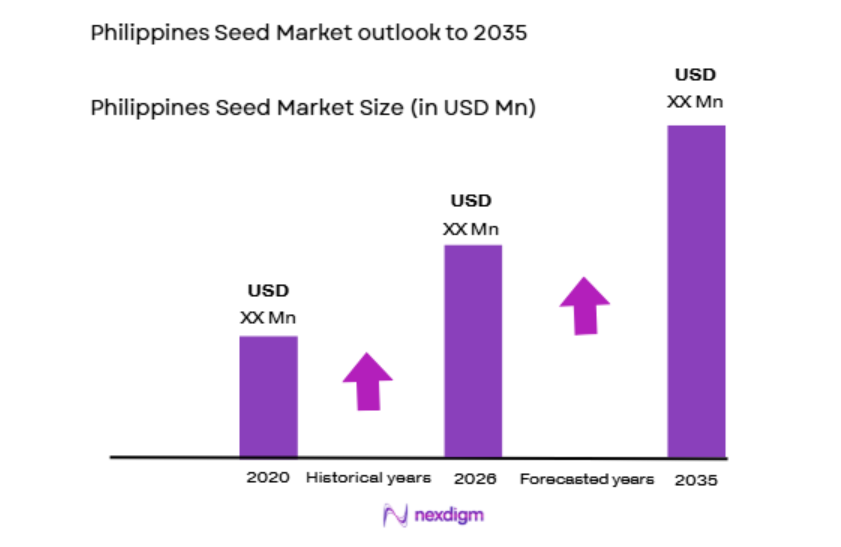
The Philippines seed market is valued at USD ~ million based on a recent historical assessment. This growth is driven by the increasing adoption of advanced seed technologies, including hybrid and genetically modified (GM) seeds, which enhance productivity and improve crop resilience. Government initiatives supporting food security, combined with a rising demand for high-quality agricultural products, are also contributing to the expansion of the seed market. The focus on improving crop yield in the face of climate challenges further fuels market growth.
Dominant regions in the Philippines, such as Luzon and Mindanao, are crucial to the seed market’s growth due to their large-scale agricultural activities. These areas benefit from strong agricultural infrastructure, research and development centers, and government programs promoting sustainable farming practices. The proximity to key farming areas, combined with an increasing number of agri-tech investments, strengthens the position of these regions in driving seed market growth in the Philippines.
Market Segmentation
By Product Type
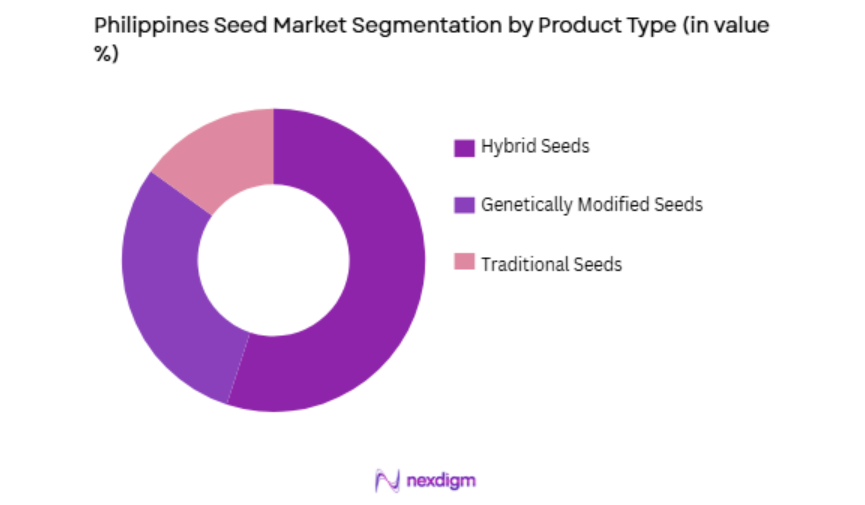
The Philippines seed market is segmented by product type into hybrid seeds, genetically modified (GM) seeds, and traditional seeds. Hybrid seeds dominate the market due to their high yield potential, pest and disease resistance, and ability to adapt to diverse environmental conditions. These seeds are particularly favored by farmers for staple crops like rice, maize, and vegetables, where maximizing productivity is crucial. The government’s push to increase food security and reduce import dependency is further encouraging the adoption of hybrid seeds, cementing their position as the dominant seed variety in the market.
By Seed Category
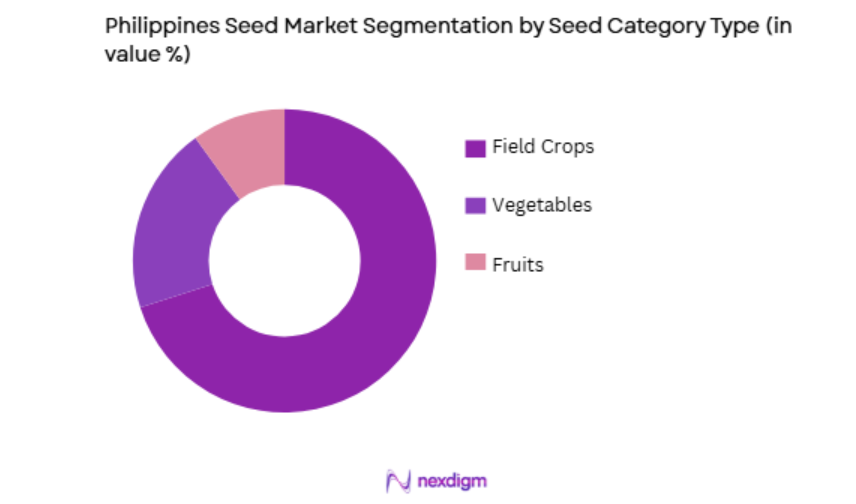
The market is also segmented by seed category into field crops, vegetables, and fruits. Field crops hold the largest market share due to their importance in ensuring national food security, particularly for staple crops such as rice, maize, and sugarcane. These crops form the foundation of the Philippine agricultural economy, and their seeds are in high demand. Government programs focused on improving domestic crop production and reducing reliance on imports further drive the demand for field crop seeds, making them the dominant segment in the Philippine seed market.
Competitive Landscape
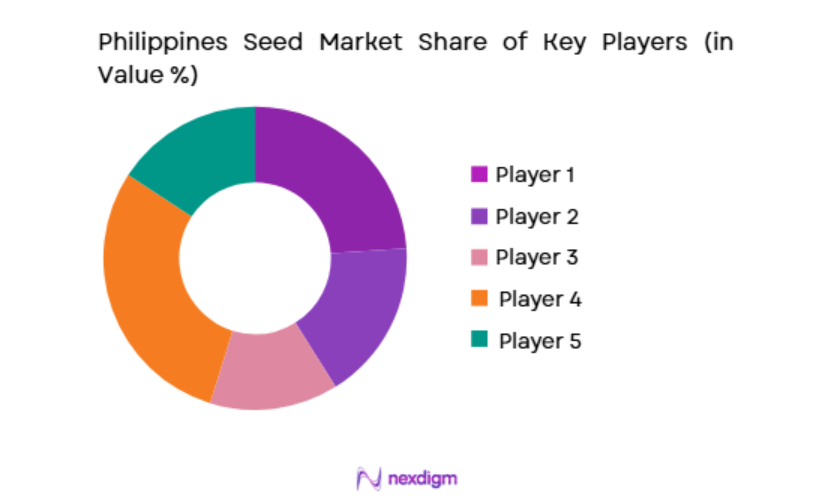
The competitive landscape of the Philippines seed market is characterized by a mix of multinational corporations and strong local players. These companies are increasingly focusing on product innovation, especially in hybrid and genetically modified seed technologies, to cater to the growing demand for higher yields and disease-resistant crops. The market is also undergoing consolidation, with large firms acquiring smaller regional players to enhance their product portfolios and expand their reach. Government support for agricultural innovation further boosts competition in the seed market.
| Company Name | Establishment Year | Headquarters | Technology Focus | Market Reach | Key Products | Revenue (USD) | R&D Investment (%) |
| Bayer CropScience | 2002 | Germany | ~ | ~ | ~ | ~ | ~ |
| Syngenta | 2000 | Switzerland | ~ | ~ | ~ | ~ | ~ |
| East-West Seed | 1982 | Netherlands | ~ | ~ | ~ | ~ | ~ |
| SL Agritech | 1992 | Philippines | ~ | ~ | ~ | ~ | ~ |
| Monsanto | 2001 | USA | ~ | ~ | ~ | ~ | ~ |
Philippines Seed Market Analysis
Growth Drivers
Government Support for Food Security
One of the main growth drivers in the Philippines seed market is the government’s strong emphasis on food security and agricultural modernization. The government’s National Food Security Program and various subsidies for seed production are fostering a favorable environment for the development and adoption of high-quality seeds, particularly in hybrid and GM varieties. These initiatives are designed to enhance domestic food production, reduce the country’s reliance on imported food, and ensure consistent food supply across the nation. Additionally, the government’s push towards sustainable farming practices and climate-resilient agricultural methods is further driving the demand for innovative seed varieties that can withstand changing environmental conditions. The government’s active role in supporting research and development (R&D) in the agricultural sector also contributes to the growth of the seed market by ensuring the availability of improved and resilient seed varieties.
Technological Advancements in Seed Development
Technological advancements in seed development are another significant growth driver for the Philippines seed market. The introduction of hybrid seeds has revolutionized crop production by providing farmers with varieties that offer higher yields, better resistance to pests, and enhanced drought tolerance. Furthermore, genetically modified (GM) seeds are gaining popularity due to their ability to offer improved disease resistance and increased nutritional value. As climate change and environmental stressors continue to affect traditional farming practices, the demand for these advanced seeds is expected to grow. The continued focus on biotechnology and seed innovation is expected to drive the adoption of seeds that are better adapted to local conditions, providing farmers with the tools to improve productivity and mitigate the risks associated with climate change.
Market Challenges
Climate Change and Environmental Challenges
Climate change presents a significant challenge to the Philippines seed market. The country is highly vulnerable to extreme weather events, such as typhoons, floods, and droughts, which directly impact agricultural production. These climatic conditions pose a challenge to the performance of traditional seed varieties, making it crucial for farmers to adopt more resilient seed technologies. While hybrid and genetically modified seeds offer some solutions, the unpredictability of weather patterns and the frequency of extreme weather events still create uncertainty in crop yields. The market must continue to innovate and develop seeds that can withstand these environmental stresses, while also addressing the ongoing challenges posed by climate change and natural disasters.
High Cost of Advanced Seed Varieties
The high cost of advanced seed varieties, particularly hybrid and genetically modified seeds, is another key challenge in the Philippines seed market. While these seeds offer improved performance in terms of yield and resilience, their premium pricing can be a barrier for smaller farmers, particularly those in rural areas. Despite government subsidies and support for farmers, the cost of these seeds remains a concern, particularly for smallholders with limited access to financial resources. The cost of high-quality seeds, coupled with the price of agricultural inputs such as fertilizers and pesticides, can make it difficult for farmers to maintain profitability. This issue limits the widespread adoption of advanced seed technologies, particularly in less developed areas where farmers are more likely to rely on traditional farming methods.
Opportunities
Rise of Urban Farming and Controlled Agriculture
The rise of urban farming presents a significant opportunity for the Philippines seed market. As the country faces increasing urbanization and a growing population, there is a push to develop alternative methods of food production within urban areas. Urban farming techniques, such as vertical farming, hydroponics, and aquaponics, are gaining popularity in metropolitan areas like Metro Manila. These farming methods require specially adapted seeds that can thrive in controlled environments with limited space. As consumers become more interested in locally grown, sustainable produce, the demand for high-quality seeds that are suited for urban farming systems is expected to rise. Seed companies have an opportunity to cater to this growing segment by developing seeds that are specifically designed for urban agriculture, offering an innovative solution to the challenges posed by limited arable land.
Growing Demand for Organic and Sustainable Agriculture
The growing demand for organic food and sustainable farming practices presents a major opportunity for the Philippines seed market. As consumers become more health-conscious and environmentally aware, the demand for organic produce continues to rise. This trend is being supported by government policies that encourage sustainable farming and the use of organic farming methods. Seed companies can capitalize on this shift by offering organic seed varieties that meet the needs of farmers transitioning to organic farming. The market for non-GMO and eco-friendly seeds is expected to continue growing, driven by the rising demand for cleaner, safer food options. By focusing on organic seed development, seed companies have the opportunity to tap into a rapidly expanding market segment.
Future Outlook
The future outlook for the Philippines seed market is positive, driven by government support for agricultural innovation, increasing consumer demand for organic produce, and technological advancements in seed development. Hybrid and genetically modified seeds will continue to dominate, while the growing trend of urban farming and sustainable agriculture will create new opportunities for seed companies to innovate and diversify their product offerings. As the market for organic and locally grown produce expands, the demand for high-quality seeds is expected to increase. With continued research and development, the Philippines seed market is well-positioned for sustained growth in the coming years.
Major Players
- Bayer CropScience
- Syngenta
- East-West Seed
- SL Agritech
- Monsanto
- Dow AgroSciences
- Limagrain
- Kaveri Seed
- SeedWorks International
- Mahyco
- Sakata Seed Corporation
- Rasi Seeds
- DuPont Pioneer
- Krishi Rasayan Exports
- Agroviet
Key Target Audience
- Investments and venture capitalist firms
- Government and regulatory bodies
- Large-scale farmers and agricultural enterprises
- Seed distributors and retailers
- Agri-tech companies
- Agricultural cooperatives
- Food processing companies
- Research and development organizations
Research Methodology
Step 1: Identification of Key Variables
Identifying key variables such as technological trends, market demand for specific seed types, and the impact of government policies on the seed market.
Step 2: Market Analysis and Construction
Analyzing historical data, market dynamics, and growth trends to construct an accurate market model based on real-world data.
Step 3: Hypothesis Validation and Expert Consultation
Validating market trends and hypotheses through consultations with industry experts, farmers, and government agencies.
Step 4: Research Synthesis and Final Output
Synthesizing research findings and expert insights into a detailed report, providing actionable insights for stakeholders in the seed market.

- Executive Summary
- Research Methodology (Definitions, Scope, Industry Assumptions, Market Sizing Approach, Primary & Secondary Research Framework, Data Collection & Verification Protocol, Analytic Models & Forecast Methodology, Limitations & Research Validity Checks)

- Market Definition and Scope
- Value Chain & Stakeholder Ecosystem
- Regulatory / Certification Landscape
- Sector Dynamics Affecting Demand

- Growth Drivers
Government Support for Agricultural Development
Technological Advancements in Seed Production
Increasing Demand for High-Yield Varieties - Market Challenges
Climate Change and Weather Variability
Supply Chain and Distribution Issues
Regulatory and Certification Barriers - Market Opportunities
Expanding Organic Farming Trends
Rising Investment in Agricultural Research
Growing Demand for Bio-based Seeds - Trends
Adoption of Precision Farming Technologies
Shift Toward Sustainable Agricultural Practices
Integration of Digital Platforms for Seed Distribution - Government regulations
- SWOT analysis
- Porters 5 forces

- By Market Value, 2020-2025
- By Installed Units, 2020-2025
- By Average System Price, 2020-2025
- By System Complexity Tier, 2020-2025

- By System Type (In Value%)
Hybrid Seeds
Open Pollinated Seeds
Genetically Modified Seeds
Certified Seeds
Vegetable Seeds - By Platform Type (In Value%)
Agricultural Land Platforms
Greenhouse Platforms
Hydroponic Platforms
Vertical Farming Platforms
Aquaponic Platforms - By Fitment Type (In Value%)
Field Application
Greenhouse Application
Hydroponic Application
Urban Farming Application
Commercial Application - By End User Segment (In Value%)
Farmers
Agricultural Cooperatives
Government Organizations
Private Sector Companies

- Market Share Analysis
- Cross Comparison Parameters (System Type, Platform Type, Procurement Channel, EndUser Segment, Fitment Type, Seed Variety, Regional Market Dynamics, Technological Advancements, Production Capacity, Distribution Network, Market Penetration, Sustainability Practices)
- SWOT Analysis of Key Competitors
- Pricing & Procurement Analysis
- Key Players
Bayer CropScience
Syngenta Philippines
Monsanto
Vietseed
Rongsheng Group
Philippines Seed Corporation
Agritech Philippines
Thang Loi Seed
Daewoo Seeds
Khang Minh Seed
Philippine Agricultural Science Institute
Vinasoy
Herbicide Seeds
VietGAP Seed Company
Hoang Anh Gia Lai Group

- Increasing Demand from Small-scale Farmers
- Large Corporations Investing in Seed Production
- Government Initiatives to Support Agricultural Growth
- Focus on Sustainable and Organic Farming Practices

- Forecast Market Value, 2026-2035
- Forecast Installed Units, 2026-2035
- Price Forecast by System Tier, 2026-2035
- Future Demand by Platform, 2026-2035


 Request a Sample
 Ask for Customization
 Get a Quote
 Enquire Now