
 Download PDF
 Download PDF
Market Overview
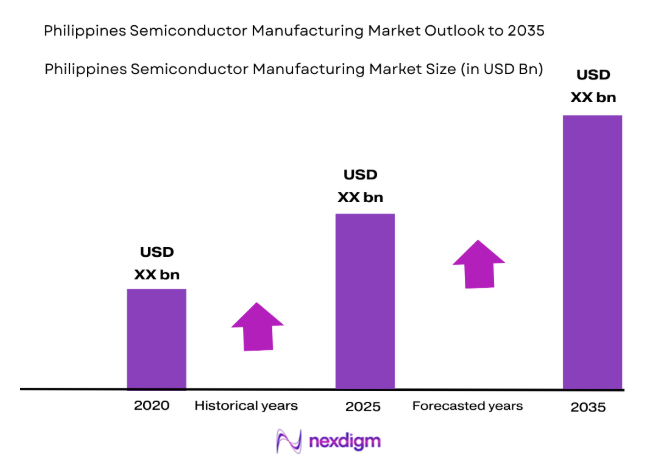
The Philippines semiconductor manufacturing market is valued at approximately USD ~ billion based on a recent historical assessment. This market is primarily driven by increasing demand for consumer electronics, automotive systems, and telecommunications, supported by local government initiatives aimed at boosting technological advancements and infrastructure. The government’s focus on strengthening its semiconductor sector through various incentives is accelerating growth and attracting global investments, further enhancing market dynamics.
The Philippines stands out as a key player in the global semiconductor manufacturing landscape due to its strategic location, robust infrastructure, and well-established production capabilities. Cities like Manila, Cebu, and Davao dominate the industry due to their proximity to key international shipping hubs and access to skilled labor. Additionally, the country’s growing number of free trade zones and government support are vital factors that reinforce its competitiveness in the global semiconductor manufacturing market.
Market Segmentation
By Product Type
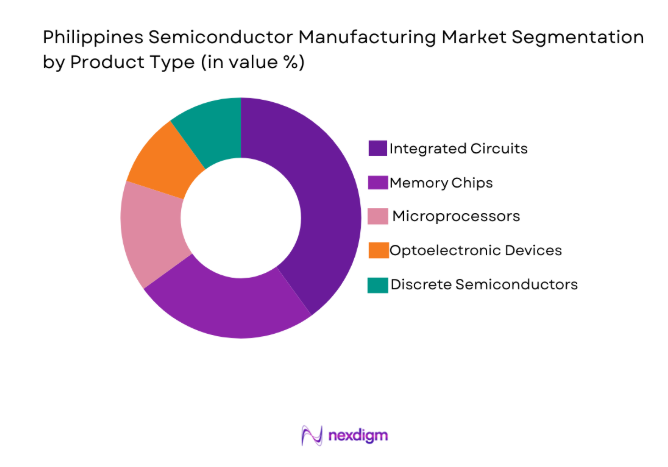
The semiconductor manufacturing market in the Philippines is segmented by product type into integrated circuits, memory chips, microprocessors, optoelectronic devices, and discrete semiconductors. Recently, integrated circuits have dominated the market share, driven by their widespread use in consumer electronics, automotive, and telecommunications sectors. These products are favored due to their high efficiency, compact size, and versatility across various devices. The rapid adoption of smartphones, computers, and automotive applications has further propelled demand for integrated circuits, making them the leading sub-segment in the market.
By Platform Type
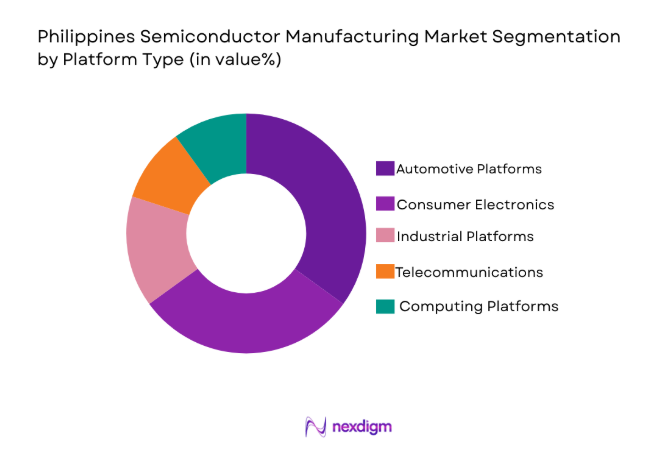
The Philippines semiconductor manufacturing market is segmented by platform type into automotive platforms, consumer electronics platforms, industrial platforms, telecommunication platforms, and computing platforms. Recently, the automotive platform has gained the largest market share due to the growing demand for advanced automotive electronics such as sensors, power management systems, and electric vehicle components. This shift towards more electronic-intensive vehicles, especially electric vehicles (EVs), has created strong demand for semiconductor components in the automotive sector, boosting the platform’s dominance.
Competitive Landscape
The Philippines semiconductor manufacturing market is highly competitive, with a mix of large multinational corporations and local manufacturers. Major players like TSMC, Samsung, and Intel influence the market through their technological innovations and investments in the region. The market is seeing increasing consolidation, with leading players forming strategic alliances to enhance production capacity and improve the efficiency of their semiconductor manufacturing processes. These collaborations are aimed at strengthening their foothold in the Southeast Asian market, driven by the growing demand for consumer electronics and automotive components.
| Company Name | Establishment Year | Headquarters | Technology Focus | Market Reach | Key Products | Revenue (USD Billion) | Additional Parameter |
| TSMC | 1987 | Taiwan | ~ | ~ | ~ | ~ | ~ |
| Samsung Electronics | 1938 | South Korea | ~ | ~ | ~ | ~ | ~ |
| Intel Corporation | 1968 | USA | ~ | ~ | ~ | ~ | ~ |
| NXP Semiconductors | 2006 | Netherlands | Automotive Electronics | ~ | ~ | ~ | ~ |
| Micron Technology | 1978 | USA | Memory Chips | ~ | ~ | ~ | ~ |
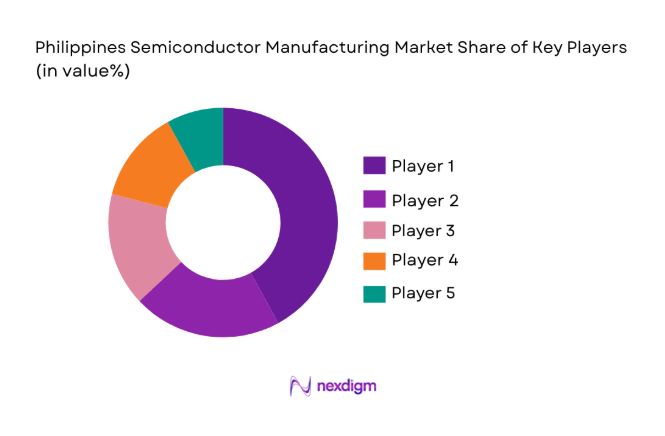
Philippines Semiconductor Manufacturing Market Analysis
Growth Drivers
Increasing Demand for Consumer Electronics:
The rapid expansion of the consumer electronics sector in the Philippines has significantly increased the demand for semiconductor components. Products like smartphones, laptops, and wearable devices require advanced semiconductor technology to support functionalities such as processing, memory, and connectivity. Consumer electronics manufacturers are investing heavily in semiconductor solutions to meet the growing need for high-performance and energy-efficient components. The Philippines benefits from strong local demand and global export opportunities, contributing to substantial market growth. This sector’s reliance on high-quality semiconductors continues to drive the expansion of the Philippine semiconductor manufacturing industry.
Technological Advancements in Semiconductor Manufacturing:
Another key growth driver for the Philippines semiconductor manufacturing market is the continuous innovation in semiconductor technology. With advancements in nanotechnology, 3D packaging, and AI-based design, semiconductor manufacturers are increasingly able to produce faster, smaller, and more power-efficient components. These innovations have allowed manufacturers to meet the ever-growing demand for devices that require advanced processing capabilities. Additionally, the shift towards Internet of Things (IoT) devices, electric vehicles, and 5G infrastructure has significantly expanded the range of semiconductor applications, thereby creating more opportunities for local manufacturers in the Philippines to strengthen their market position.
Market Challenges
Supply Chain Disruptions:
One of the main challenges faced by the Philippines semiconductor manufacturing market is the frequent disruption of the global supply chain. Geopolitical tensions, such as trade wars, as well as natural disasters, can have significant impacts on the availability of raw materials and semiconductor components. Supply chain interruptions can lead to delays in production, increased costs, and reduced ability to meet market demand. The Philippines’ dependence on global supply chains for raw materials and finished goods makes it vulnerable to disruptions, which can affect both local and international sales.
High Capital Investment Requirements:
The semiconductor manufacturing process is highly capital-intensive, requiring significant investment in advanced machinery, skilled labor, and research and development. Companies must allocate substantial resources to maintain and upgrade their facilities to meet growing demand for more sophisticated products. These high costs can pose a challenge to new entrants and smaller companies looking to expand in the market. Despite the government’s incentives, the steep initial investment required to establish or upgrade a semiconductor manufacturing plant remains a critical barrier to market entry.
Opportunities
Expansion of Electric Vehicle Demand:
With the growing global emphasis on sustainable energy and environmental regulations, the demand for electric vehicles (EVs) is expected to surge. This creates a significant opportunity for the Philippines semiconductor manufacturing market, as EVs rely heavily on semiconductor components for battery management, electric drive systems, and infotainment solutions. As the Philippines focuses on enhancing its automotive industry, semiconductor manufacturers can capitalize on the increasing demand for EV components. This trend provides a new revenue stream for semiconductor companies looking to diversify into the automotive sector.
Investment in 5G Technology Infrastructure:
The Philippines government is investing heavily in the development of 5G infrastructure, providing substantial opportunities for the semiconductor manufacturing market. As 5G networks require advanced semiconductor technology for high-speed communication, this initiative will drive the demand for chips that support faster data transmission, lower latency, and improved connectivity. Semiconductor manufacturers will benefit from increased demand for 5G-related components, including semiconductors for smartphones, routers, and network infrastructure.
Future Outlook
The Philippines semiconductor manufacturing market is expected to continue expanding over the next five years, fueled by increasing demand for consumer electronics, automotive electronics, and telecommunications devices. Technological advancements in manufacturing processes will drive product innovation, with further investments in the Philippines’ infrastructure and workforce to meet global demand. Continued support from the government, along with the growth of 5G technology and electric vehicle production, will shape the market’s future trajectory, making it a key player in Southeast Asia’s semiconductor industry.
Major Players
- TSMC
- Samsung Electronics
- Intel Corporation
- NXP Semiconductors
- Micron Technology
- STMicroelectronics
- Texas Instruments
- Qualcomm
- Infineon Technologies
- Broadcom
- Renesas Electronics
- ON Semiconductor
- Analog Devices
- GlobalFoundries
- Advanced Micro Devices
Key Target Audience
- Investments and venture capitalist firms
- Government and regulatory bodies
- Semiconductor component distributors
- Automotive electronics manufacturers
- Consumer electronics companies
- Telecommunications companies
- Electric vehicle manufacturers
Research Methodology
Step 1: Identification of Key Variables
This step involves identifying the key market variables, including market size, product types, and end-users, which will form the foundation of the analysis.
Step 2: Market Analysis and Construction
Data is collected from multiple primary and secondary sources to construct a detailed market profile, including trends, growth drivers, and market dynamics.
Step 3: Hypothesis Validation and Expert Consultation
The formulated market hypotheses are validated through consultations with industry experts, stakeholders, and academic researchers to ensure accuracy.
Step 4: Research Synthesis and Final Output
All research findings are synthesized to generate a comprehensive market report, covering all identified aspects, supported by data and insights.

- Executive Summary
- Research Methodology (Definitions, Scope, Industry Assumptions, Market Sizing Approach, Primary & Secondary Research Framework, Data Collection & Verification Protocol, Analytic Models & Forecast Methodology, Limitations & Research Validity Checks)

Market Definition and Scope
Value Chain & Stakeholder Ecosystem
Regulatory / Certification Landscape
Sector Dynamics Affecting Demand
Strategic Initiatives & Infrastructure Growth

- Growth Drivers
Government Investment in High-Tech Manufacturing
Rising Demand for Consumer Electronics
Advancements in Semiconductor Technology - Market Challenges
Supply Chain Disruptions
High Capital Investment for Manufacturing Facilities
Global Trade Barriers - Market Opportunities
Growth in Electric Vehicle Demand
Expanding 5G Networks
Increase in Semiconductor R&D Investment - Trends
Integration of AI in Semiconductor Manufacturing
Rising Use of 3D Semiconductor Packaging - Government Regulations
Export Control Regulations
Intellectual Property Protection Laws
Environmental and Sustainability Policies - SWOT Analysis
- Porter’s Five Forces

- By Market Value, 2020-2025
- By Installed Units, 2020-2025
- By Average System Price, 2020-2025
- By System Complexity Tier, 2020-2025

- By System Type (In Value%)
Integrated Circuits
Memory Chips
Microprocessors
Optoelectronic Devices
Discrete Semiconductors - By Platform Type (In Value%)
Automotive Platforms
Consumer Electronics Platforms
Industrial Platforms
Telecommunication Platforms
Computing Platforms - By Fitment Type (In Value%)
On-premise Solutions
Cloud-based Solutions
Modular Solutions
Integrated Solutions - By End User Segment (In Value%)
Automotive Manufacturers
Consumer Electronics Companies
Industrial Equipment Providers
Telecommunications Service Providers

- Market Share Analysis
- Cross Comparison Parameters (System Type, Platform Type, Procurement Channel, End User Segment, Fitment Type, Material Technology, Manufacturing Process)
- SWOT Analysis of Key Competitors
- Pricing & Procurement Analysis
- Key Players
Samsung Electronics
TSMC
Intel Corporation
STMicroelectronics
Qualcomm
Micron Technology
Broadcom
NXP Semiconductors
Analog Devices
Texas Instruments
Infineon Technologies
Renesas Electronics
ON Semiconductor
GlobalFoundries
Advanced Micro Devices

- Automotive Industry’s Growing Demand for Semiconductors
- Consumer Electronics Sector’s Adoption of New Technologies
- Telecommunications Industry’s Investment in Semiconductor Solutions
- Rising Demand for Semiconductors in Industrial Automation

- Forecast Market Value, 2026-2035
- Forecast Installed Units, 2026-2035
- Price Forecast by System Tier, 2026-2035
- Future Demand by Platform, 2026-2035


 Request a Sample
 Ask for Customization
 Get a Quote
 Enquire Now