
 Download PDF
Market Overview
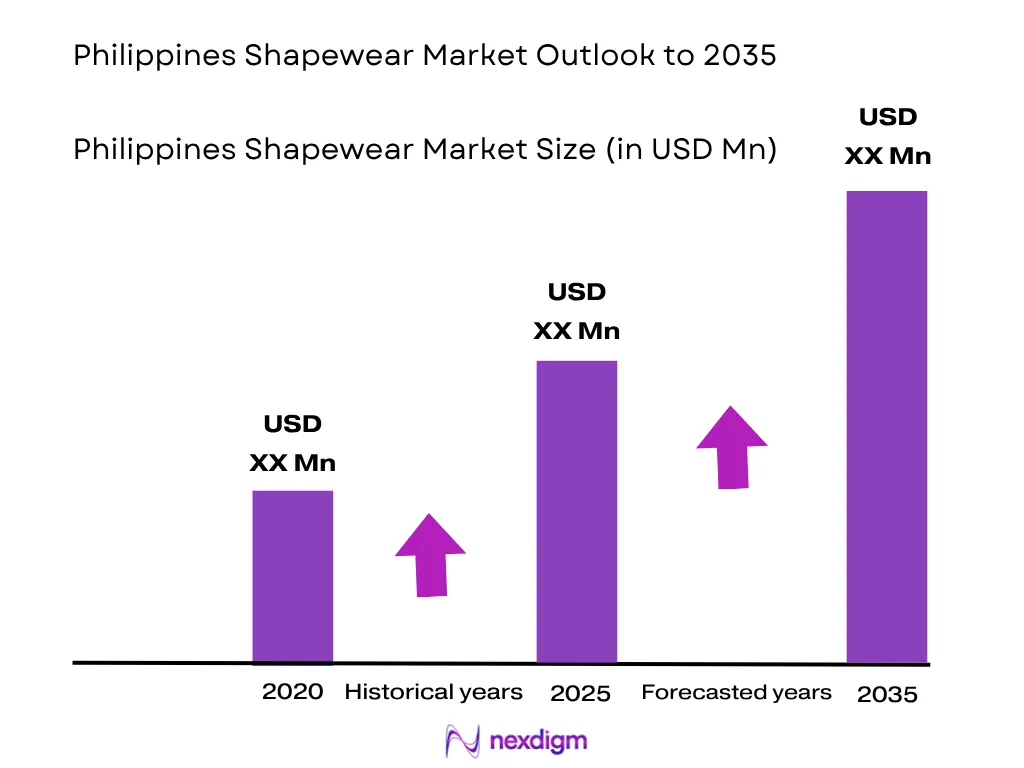
The Philippines Shapewear Market is valued at USD ~ million, based on top-down allocation from Southeast Asia shapewear revenue of USD ~ million and bottom-up validation from lingerie, apparel, e-commerce, and SKU-price benchmarking. The wider Philippines clothing market is valued at USD ~ billion, while household clothing and footwear consumption increased from PHP ~ billion to PHP ~ billion, supporting demand for functional innerwear, shaping shorts, bodysuits, waist cinchers, and seamless tummy-control products.
Metro Manila, CALABARZON, Central Luzon, Cebu, and Davao dominate the Philippines Shapewear Market because they combine dense fashion retail, stronger mall infrastructure, higher courier coverage, and higher online-shopping adoption. CALABARZON has 16.93 million people, NCR has 14.00 million, and Central Luzon has 12.99 million, forming the country’s largest consumption belt. The market also benefits from 86.98 million internet users and marketplace-led apparel discovery through Shopee, Lazada, TikTok Shop, and Zalora.
Market Segmentation
By Product Type
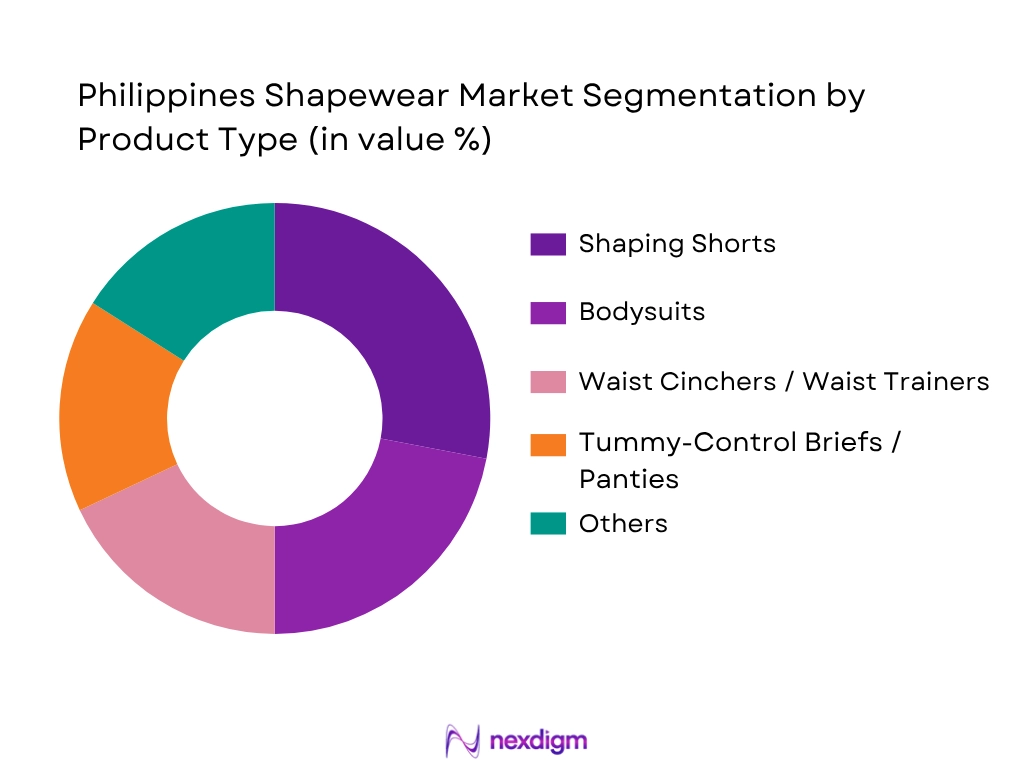
The Philippines Shapewear Market is segmented by product type into shaping shorts, bodysuits, waist cinchers, tummy-control briefs, camisoles, slips, and thigh slimmers. Shaping shorts dominate because they solve the most frequent local pain points: thigh chafing, tummy smoothing, visible panty lines, and under-dress support in humid weather. They are also easier to buy online than bodysuits because sizing risk is lower, return friction is reduced, and price points are accessible. Bench lists seamless shapewear shorts at mass-market pricing, while Herah sells high-waist shapewear shorts in accessible shades, showing the strength of this daily-wear sub-segment.
By Distribution Channel
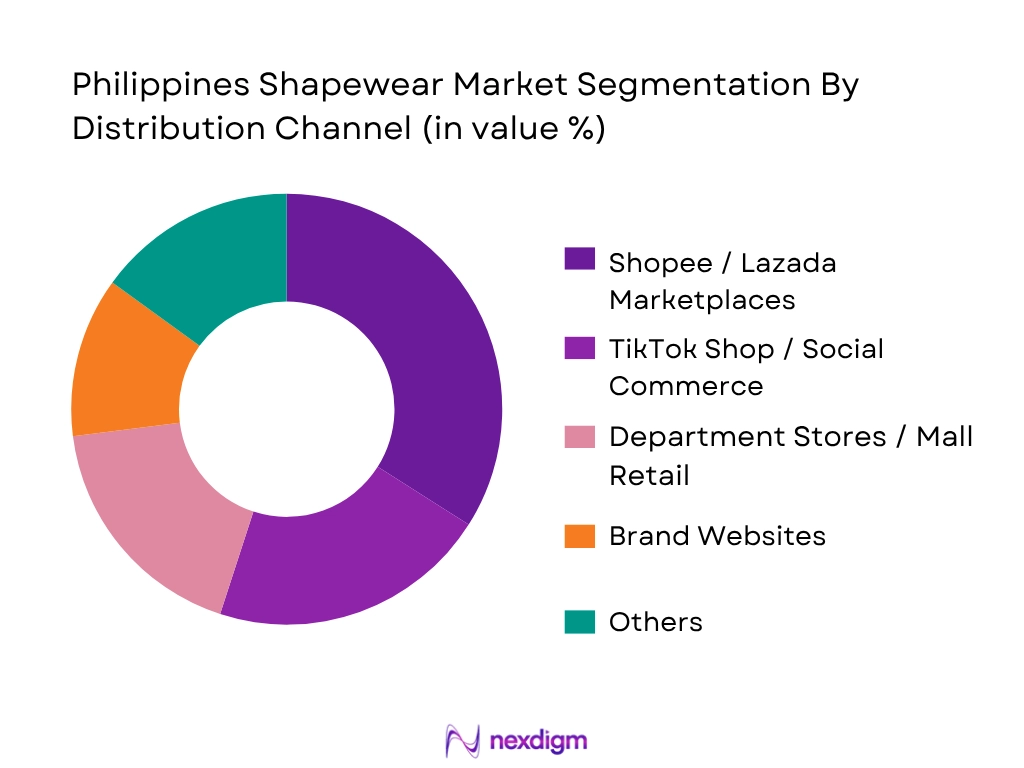
The Philippines Shapewear Market is segmented by distribution channel into Shopee, Lazada, TikTok Shop, department stores, brand websites, specialty lingerie stores, and fashion e-retailers. Shopee and Lazada dominate because shapewear is highly review-led, price-sensitive, and frequently purchased through search-led discovery. Filipino buyers compare size charts, customer photos, vouchers, shipping fees, and cash-on-delivery availability before buying. Marketplace dominance is reinforced by Shopee’s leading e-commerce traffic position and Lazada’s broad apparel assortment. TikTok Shop is rising quickly because shapewear benefits from creator demonstrations, before-and-after content, and live-selling conversion.
Competitive Landscape
The Philippines Shapewear Market is fragmented across local innerwear brands, international lingerie specialists, fast-fashion retailers, and marketplace-native sellers. Bench Body and Herah compete strongly at accessible price points, while Wacoal and Triumph focus on premium comfort, fit, and structured shaping. Imported brands such as Spanx and Maidenform occupy premium positioning, while SHEIN, Lovito, Shopee, Lazada, and TikTok sellers intensify price competition.
| Player | Establishment Year | Headquarters | Product Focus | Price Positioning | Channel Presence | Size Inclusivity | Fabric / Fit Proposition | Philippines Relevance |
| Bench Body | 1987 | Manila, Philippines | ~ | ~ | ~ | ~ | ~ | ~ |
| Herah | 2020s | Philippines | ~ | ~ | ~ | ~ | ~ | ~ |
| Wacoal | 1949 | Kyoto, Japan | ~ | ~ | ~ | ~ | ~ | ~ |
| Triumph | 1886 | Switzerland / Germany heritage | ~ | ~ | ~ | ~ | ~ | ~ |
| SHEIN | 2008 | Singapore / China-linked operations | ~ | ~ | ~ | ~ | ~ | ~ |
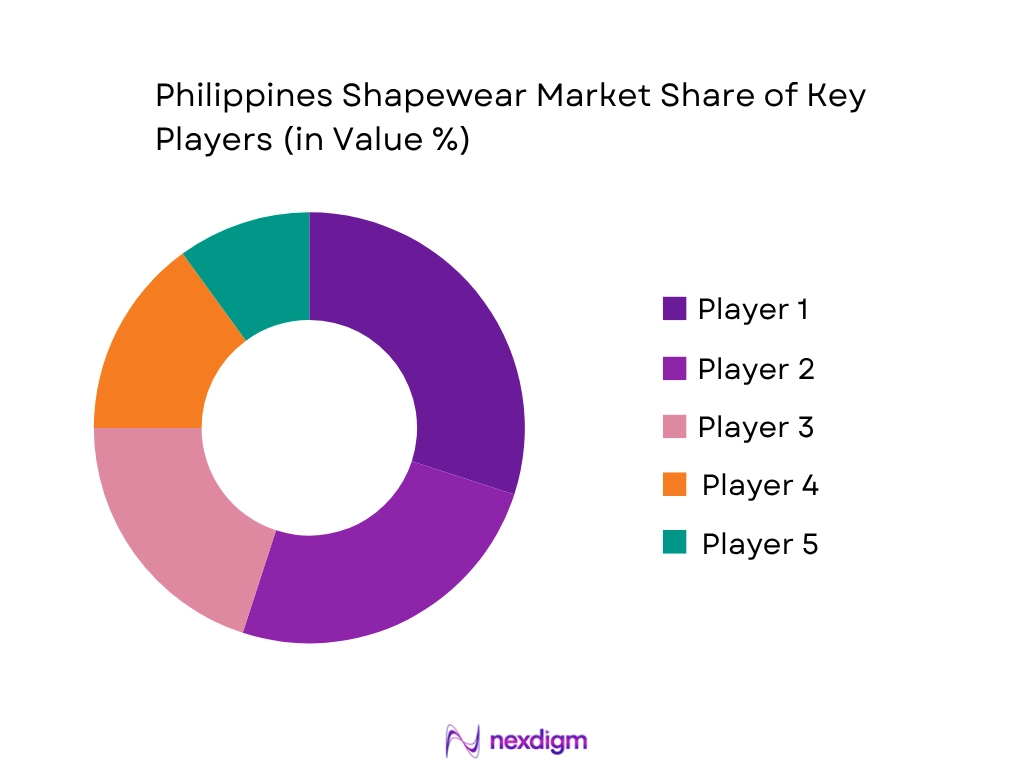
Philippines Shapewear Market Analysis
Growth Drivers
Body-Confidence Fashion
Body-confidence fashion is supporting the Philippines Shapewear Market as apparel purchases become tied to occasionwear, workwear, and daily fit confidence. The Philippines recorded 5.6% GDP growth in 2024, while IMF data placed nominal GDP at USD 469.5 billion and GDP per capita at USD 4,148, strengthening consumer capacity for discretionary apparel categories such as innerwear and body-shaping garments. The country also had a labor force of 50.79 million people aged 15 and above, creating a large workwear-linked consumer base for seamless shorts, tummy-control briefs, bodysuits, and shaping camisoles. Urban consumption is concentrated in CALABARZON with 16.93 million people, NCR with 14.00 million, and Central Luzon with 12.99 million, making fashion-led shapewear demand strongest in dense retail and workplace hubs. Sources: World Bank, IMF, Philippine Statistics Authority.
Social Commerce
Social commerce is a core growth driver for the Philippines Shapewear Market because shapewear is demonstration-led: consumers want to see body fit, compression, waist smoothing, under-dress visibility, and fabric stretch before buying. PSA’s 2024 National ICT Household Survey recorded 61.46 million internet users aged 10 years and above in the Philippines, with users spending an average of 4.6 hours online daily. Among internet users, 98.8% used cellphones, making mobile-first product discovery critical for shapewear sellers on TikTok Shop, Shopee Live, Lazada Live, and brand social pages. PSA also reported that social networking, profile creation, and posting were used by 87.3% of internet users, directly supporting influencer reviews, before-and-after try-ons, live-selling, and user-generated content for shaping shorts, bodysuits, waist trainers, and seamless panties. Sources: Philippine Statistics Authority.
Market Challenges
Sizing Mismatch
Sizing mismatch remains a major challenge in the Philippines Shapewear Market because shapewear depends on accurate waist, hip, bust, torso, thigh, and compression-fit measurements, while purchasing is increasingly mobile-led and review-led. PSA recorded 61.46 million internet users aged 10 years and above, and 98.8% of these users accessed the internet through cellphones, meaning many shapewear purchases are assessed through small-screen product images and inconsistent seller size charts. The challenge is intensified by the country’s large and geographically spread demand base: CALABARZON has 16.93 million people, NCR has 14.00 million, and Central Luzon has 12.99 million, while six other regions each exceed 5.00 million people. This creates fit variability across urban and provincial buyers, making standardized S/M/L sizing less reliable for compression products than for ordinary apparel. Sources: Philippine Statistics Authority.
Heat/Humidity Discomfort
Heat and humidity discomfort directly affects the Philippines Shapewear Market because many shapewear products use nylon-spandex, polyester-spandex, latex, powernet, mesh, and multilayer compression panels that can retain heat during daily wear. PSA, citing PAGASA, reported an annual average minimum temperature of 24.5°C and annual average maximum temperature of 31.6°C in 2024. The highest monthly average maximum temperature reached 33.7°C in May, while the warmest observed temperature reached 36.9°C at the Central Luzon State University, Nueva Ecija monitoring station. These conditions reduce tolerance for firm-control bodysuits, waist trainers, and full-coverage thigh slimmers, especially during commuting, office wear, weddings, and outdoor events. As a result, breathable tropical fabrics, moisture-control panels, lighter compression, and anti-chafing shorts become necessary product features rather than optional innovations.
Market Opportunities
Plus-Size Shapewear
Plus-size shapewear is a strong opportunity in the Philippines Shapewear Market because the addressable consumer base is large, urban, and increasingly visible through fashion e-commerce and body-confidence content. The national population reached 112,729,484 people in the 2024 Census, while the largest consumption regions were CALABARZON with 16.93 million, NCR with 14.00 million, and Central Luzon with 12.99 million people. DOST-FNRI reported that adult overweight and obesity prevalence remained high at 39.8%, with higher prevalence among women at 45.4% and urban dwellers at 44.5%. For shapewear brands, this supports expansion beyond narrow standard sizing into extended waistbands, reinforced seams, anti-roll panels, longer inseams, and fuller torso fits. The opportunity is strongest for products that combine compression with comfort rather than treating plus-size consumers as a single-size extension of standard SKUs.
Breathable Tropical Fabrics
Breathable tropical fabrics represent a future-facing opportunity in the Philippines Shapewear Market because climate conditions make comfort, ventilation, sweat control, and lighter compression central to repeat purchase. PSA and PAGASA recorded an annual average maximum temperature of 31.6°C, annual average minimum temperature of 24.5°C, highest monthly average maximum temperature of 33.7°C, and warmest observed temperature of 36.9°C in 2024. At the same time, urban consumer concentration is high, with NCR at 14.00 million people and nearby CALABARZON at 16.93 million, creating a dense commuter and officewear base exposed to tropical heat. Shapewear suppliers can grow by introducing lightweight powernet, breathable mesh zones, moisture-wicking yarns, seamless knit panels, cotton-blend gussets, and anti-chafing leg construction. These features directly address discomfort barriers affecting waist trainers, shaping shorts, bodysuits, and firm-control briefs.
Future Outlook
The Philippines Shapewear Market is expected to register a forecast CAGR of 8.0% during 2026-2035, aligned with global shapewear growth expectations and supported by the Philippines’ digital apparel expansion. Growth will be driven by breathable compression fabrics, plus-size inclusivity, postpartum recovery use cases, creator-led commerce, and marketplace penetration. Premium brands will compete on fit and comfort, while local and marketplace sellers will win on affordability, bundles, and faster replenishment.
Major Players
- Bench Body
- Herah
- Avon Philippines
- Sorella
- Lady Grace Intimates
- Triumph
- Wacoal
- Spanx
- Maidenform
- Uniqlo
- Marks & Spencer
- H&M
- Cotton On Body
- SHEIN
- Lovito
Key Target Audience
- Shapewear and intimate apparel manufacturers
- Lingerie and women’s innerwear brands
- Fashion and apparel retailers
- E-commerce marketplaces and social-commerce platforms
- Department store and specialty retail chains
- Importers, distributors, and private-label apparel suppliers
- Investments and venture capitalist firms
- Government and regulatory bodies (Department of Trade and Industry, Philippine Statistics Authority, Bureau of Customs, Food and Drug Administration Philippines for relevant consumer-product compliance, Intellectual Property Office of the Philippines)
Research Methodology
Step 1: Identification of Key Variables
The research begins with mapping the Philippines shapewear ecosystem, including product categories, consumer cohorts, retail channels, import flows, and pricing tiers. Key variables include compression level, product type, SKU pricing, distribution mix, size inclusivity, and local weather-driven comfort needs.
Step 2: Market Analysis and Construction
Historical demand is assessed through apparel consumption, lingerie market indicators, e-commerce penetration, shapewear SKU availability, and regional consumption clusters. A top-down approach is used from Southeast Asia shapewear and Philippines apparel data, while bottom-up checks are conducted through brand pricing, marketplace presence, and retail assortment.
Step 3: Hypothesis Validation and Expert Consultation
Market assumptions are validated through interviews with distributors, lingerie retailers, e-commerce sellers, apparel category managers, and brand-side professionals. These consultations assess product sell-through, return behavior, sizing pain points, discount intensity, and consumer preference between seamless shorts, bodysuits, and waist trainers.
Step 4: Research Synthesis and Final Output
The final output integrates secondary data, primary inputs, SKU-level benchmarking, and channel-level triangulation. Findings are synthesized into market size, segmentation, competitive positioning, growth outlook, and strategic recommendations for brands, investors, distributors, and retailers operating in the Philippines Shapewear Market.

- Executive Summary
- Research Methodology: (Shapewear Definition, Compression Level Assumptions, Product Inclusion/Exclusion, Retail Price Benchmarking, SKU Mapping, Marketplace Scraping, Primary Interviews, Distributor Validation, TAM/SAM/SOM Build-Up, Limitations)

- Definition and Scope
- Market Genesis and Evolution
- Shapewear Adoption Curve
- Business Cycle
- Supply Chain and Value Chain Analysis
- Offline-to-Online Channel Migration
- Import Dependency and Local Retailer Participation

- Growth Drivers (Body-Confidence Fashion, Social Commerce, Influencer-Led Product Discovery, Rising Women’s Apparel Spend, Postpartum Recovery Demand)
- Market Challenges (Sizing Mismatch, Heat/Humidity Discomfort, Counterfeit Listings, Low Brand Loyalty, Return-Rate Pressure)
- Market Opportunities (Plus-Size Shapewear, Breathable Tropical Fabrics, Maternity/Postpartum Lines, Bridal Bundles, Private-Label Marketplace Brands)
- Trends (Seamless Sculpting, TikTok-Led Viral SKUs, Nude-Tone Inclusivity, Anti-Chafing Shorts, Bodysuit-as-Outerwear Styling)
- Regulatory and Compliance Landscape (Textile Labelling, Import Duties, Consumer Product Safety, E-Commerce Seller Compliance, Return/Refund Rules)
- SWOT Analysis (Brand Differentiation, Price Sensitivity, Online Discovery, Fabric Innovation)
- Stakeholder Ecosystem (Importers, Distributors, Marketplaces, Department Stores, Influencers, Lingerie Specialists, Logistics Partners)
- Porter’s Five Forces (Marketplace Rivalry, Supplier Dependence, Substitution by Activewear, Buyer Bargaining Power, New Entrant Threat)
- Competition Ecosystem (International Brands, Local Intimates Brands, Marketplace Private Labels, Fast-Fashion Retailers)

- By Value (2020-2025)
- By Volume (2020-2025)
- By Average Selling Price (2020-2025)
- By Unit Economics (2020-2025)
- By Online Gross Merchandise Value (2020-2025)

- By Product Type(In Value%)
Bodysuits
Waist Cinchers
Shaping Shorts
Shaping Panties
Tummy-Control Briefs
Thigh Slimmers
Camisoles
Slips - By Compression Level(In Value%)
Light Smoothing
Medium Control
Firm Control
Extra-Firm Sculpting
Medical/Post-Surgical Compression - By Consumer Cohort(In Value%)
Gen Z Occasionwear Buyers
Millennial Working Women
Postpartum Mothers
Plus-Size Consumers
Bridal Customers
Fitness-Conscious Buyers - By Price Band(In Value%)
Mass Value
Mid-Market
Premium
International Premium
Luxury/Imported Specialist - By Distribution Channel(In Value%)
Shopee
Lazada
TikTok Shop
Zalora
Brand Websites
Department Stores
Specialty Lingerie Stores
Fashion Retail Chains - By Material/Fabric(In Value%)
Nylon-Spandex
Polyester-Spandex
Cotton-Blend
Seamless Knit
Mesh Panels
Breathable Powernet
Latex Waist-Trainer Fabric - By Occasion/Use Case (In Value%)
Daily Wear
Office Wear
Bridal Wear
Partywear
Postpartum Recovery
Fitness/Active Shaping
Saree/Filipiniana/Formal Dress Support - By Geography (In Value%)
Metro Manila
CALABARZON
Central Luzon
Cebu
Davao
Other Urban Provinces
Tier-2/Tier-3 Cities

- Market Share of Major Players (Online GMV, Offline Retail Presence, SKU Breadth, Price Tier, Brand Recall)
- Cross Comparison Parameters (Product Range Depth, Compression Technology, Fabric Breathability, Size Inclusivity, Shade Inclusivity, Marketplace Rating, Return/Exchange Flexibility, Average Selling Price)
- Pricing Analysis (Bodysuits, Waist Trainers, Shaping Shorts, Tummy-Control Briefs, Camisoles, Premium Imported SKUs)
- SKU Benchmarking (Best-Seller Rank, Discount Intensity, Bundle Strategy, Review Count, Stock Availability)
- Brand Positioning Matrix (Mass, Mid-Market, Premium, Imported Specialist, Social-Commerce Native)
- SWOT Analysis of Major Players (Distribution Reach, Product Comfort, Brand Trust, Marketplace Dependence)
- Detailed Profiles of Major Companies
Bench Body
Herah
Avon Philippines
Sorella
Lady Grace Intimates
Triumph
Wacoal
Spanx
Maidenform
Uniqlo
Marks & Spencer
H&M
Cotton On Body
SHEIN
Lovito

- Demand and Usage Mapping (Everyday Smoothing, Event Dressing, Postpartum Support, Plus-Size Fit Needs)
- Purchase Criteria (Comfort, Compression, Breathability, Size Accuracy, No-Roll Waistband, Seamless Finish, Price, Reviews)
- Pain Point Analysis (Heat Retention, Visible Lines, Rolling Down, Difficult Sizing, Skin Irritation, Limited Shade Range)
- Decision-Making Journey (Marketplace Search, Influencer Validation, Review Reading, Size-Chart Comparison, COD/Free Return Preference)
- Customer Cohort Economics (Repeat Purchase, Basket Size, Return Rate, Discount Dependence, Cross-Sell with Bras/Panties)

- By Value (2026-2035)
- By Volume (2026-2035)
- By Average Selling Price (2026-2035)
- By Online GMV (2026-2035)
- By Premiumization Potential (2026-2035)


 Request a Sample
 Ask for Customization
 Get a Quote
 Enquire Now