
 Download PDF
 Download PDF
Market Overview
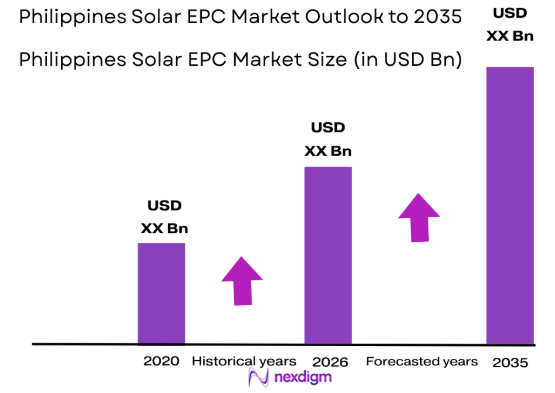
The Philippines Solar EPC market has experienced significant growth, driven by an increased adoption of renewable energy sources. With a market size of approximately USD ~ billion, the solar energy sector in the Philippines is expanding rapidly as the government continues to support green energy initiatives. Factors such as favorable regulatory frameworks, decreased solar panel costs, and rising energy demand contribute to the market’s steady expansion. Solar energy is becoming a viable solution for both residential and commercial use, providing affordable and sustainable power.
The dominant cities in the Philippines driving this market growth are Metro Manila, Cebu, and Davao. These urban centers are experiencing increasing investments in renewable energy, facilitated by both public and private sector initiatives. Metro Manila leads in solar installations due to its high population density and government incentives. Cebu and Davao have also become key players, with substantial infrastructure investments and growing public awareness of renewable energy solutions, making these areas central to the market’s development.
Market Segmentation
By System Type
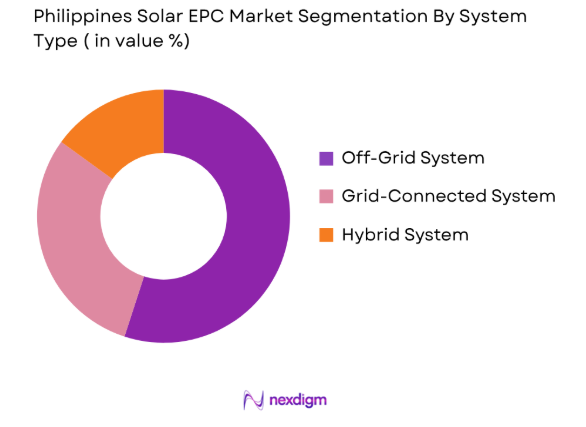
The Philippines Solar EPC market is segmented by system type into grid-connected solar systems, off-grid solar systems, and hybrid solar systems. Grid-connected systems have a dominant market share, driven by the increasing demand for sustainable energy solutions in urban areas. These systems are favored due to their lower initial cost and the ability to integrate with the existing grid infrastructure. Additionally, the government’s push for energy independence and the declining cost of solar panels further boosts their popularity.
By Platform Type
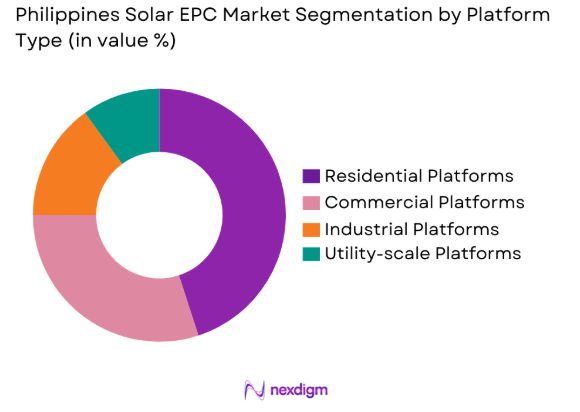
The market is segmented into residential platforms, commercial platforms, industrial platforms, and utility-scale platforms. Residential platforms have been the dominant segment, as more homeowners are opting for solar solutions to reduce their electricity costs and dependence on the grid. Government incentives, as well as the rising awareness of environmental impact, are fueling the demand for residential solar installations, especially in urban areas.
Competitive Landscape
The Philippines Solar EPC market is competitive, with several large players and local developers vying for market share. The market has seen consolidation in recent years, with a few key players dominating the solar energy solutions landscape. These companies provide turnkey solutions for both residential and commercial sectors, offering everything from design to installation and maintenance. The market’s competitive intensity is driven by the rapid expansion of renewable energy adoption, particularly solar energy, and the ongoing innovation in solar technologies.
| Company Name | Establishment Year | Headquarters | Technology Focus | Market Reach | Key Products | Revenue (USD) | Additional Parameter |
| First Gen Corporation | 1998 | Pasig City | ~ | ~ | ~ | ~ | ~ |
| AC Energy | 2009 | Taguig City | ~ | ~ | ~ | ~ | ~ |
| Solar Philippines | 2013 | Manila | ~ | ~ | ~ | ~ | ~ |
| SunPower Philippines | 2007 | Taguig City | ~ | ~ | ~ | ~ | ~ |
| Solaric Corporation | 2011 | Pasig City | ~ | ~ | ~ | ~ | ~ |
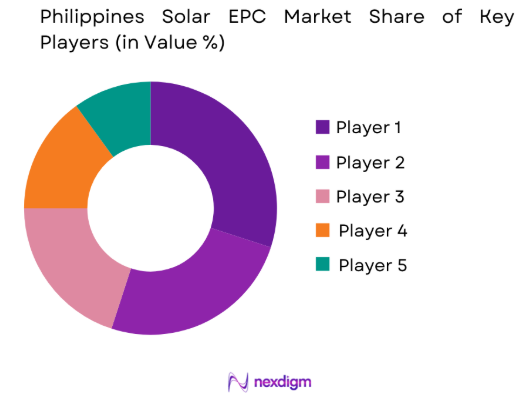
Philippines Solar EPC Market Analysis
Growth Drivers
Government support for renewable energy
The Philippine government’s commitment to renewable energy, reinforced by policies such as the Renewable Energy Act of 2008, has played a pivotal role in driving the solar EPC market’s growth. Government incentives, including tax breaks and financial support for solar projects, have reduced the financial burden for both residential and commercial buyers, promoting broader adoption of solar technologies. As part of its renewable energy goals, the government is focused on increasing the share of renewables in the energy mix, fostering a favorable environment for solar energy installations. These efforts have spurred increased demand for solar power systems, contributing to the rapid growth of the market across various sectors.
Technological advancements in solar energy
Advancements in solar technology, particularly in panel efficiency and energy storage, have significantly accelerated market growth. The cost of solar panels has dropped substantially in recent years, making solar energy more accessible to a broader range of consumers. Furthermore, the integration of energy storage solutions with solar systems has enhanced their practicality, especially in off-grid areas where reliable power access is limited. These innovations improve the reliability and performance of solar energy, making it a cost-effective and sustainable choice for both residential and commercial users. As solar technology continues to evolve, its appeal as a viable and economical energy solution increases, further boosting adoption across various sectors.
Market Challenges
High initial installation costs
A key challenge facing the Philippines Solar EPC market is the high upfront cost of solar systems. While solar technology costs have dropped in recent years, the initial capital required for installation remains a significant barrier for many potential customers, especially in rural areas with limited access to financing. Despite government incentives aimed at encouraging solar adoption, the lack of affordable financing options makes it difficult for some individuals and businesses to invest in solar energy systems. This financial hurdle slows down the transition to renewable energy, limiting the market’s growth potential, particularly in underserved regions where solar power could provide significant benefits.
Regulatory and policy challenges
Although the Philippine government actively supports renewable energy, the regulatory and policy environment can pose significant challenges. The permitting process for solar projects is often complex, with bureaucratic inefficiencies causing delays in project implementation. These regulatory hurdles can slow the progress of solar energy initiatives, hindering the overall market growth. Furthermore, there is a pressing need for more streamlined policies and clearer regulations to facilitate smoother project approval processes and encourage greater private sector investment. The lack of clarity in regulatory frameworks can result in longer project timelines and higher costs for developers, which may discourage investment and delay the widespread adoption of solar energy solutions in the country. Simplifying these processes could accelerate growth in the solar sector.
Opportunities
Expansion in off-grid solar solutions
The growing demand for off-grid solar solutions presents valuable opportunities for market players in the Philippines. Many rural areas, which remain unconnected to the national grid, stand to benefit from affordable and reliable off-grid solar power. The government’s emphasis on rural electrification, coupled with declining solar technology costs, has created a favorable environment for expanding off-grid solar installations. This shift opens up significant opportunities for companies specializing in off-grid systems to target underserved regions. By offering sustainable energy solutions to these areas, these companies can capture a larger share of the market and help meet the energy needs of rural communities across the country.
Partnerships for large-scale solar projects
There is increasing potential for private companies and government entities to collaborate on large-scale solar projects in the Philippines. Partnerships between local developers, international firms, and government bodies can address financial and logistical challenges, expediting the deployment of utility-scale solar systems. By combining public sector funding with private sector expertise, these collaborations can drive the rapid scaling of solar energy production. Such partnerships play a key role in achieving the Philippines’ renewable energy targets and expanding solar infrastructure. The opportunity for synergistic efforts in developing large-scale solar projects can accelerate the transition to clean energy, fostering economic growth and sustainability across the country.
Future Outlook
The Philippines Solar EPC market is expected to see continued growth over the next five years. The demand for solar energy will be driven by technological advancements, government support, and the increasing focus on environmental sustainability. Solar energy adoption will expand across residential, commercial, and industrial sectors, with off-grid solar systems gaining traction in rural areas. Regulatory support, along with cost reductions in solar technology, will continue to play a key role in market expansion, creating a positive environment for both consumers and businesses to invest in renewable energy.
Major Players
- First Gen Corporation
- AC Energy
- Solar Philippines
- SunPower Philippines
- SolaricCorporation
- Solarvest
- Philippine Solar Power Alliance
- Aboitiz Power
- Meralco PowerGen
- JinkoSolar
- Vikram Solar
- First Solar
- Trina Solar
- Hanwha Q CELLS
- Sharp Solar
Key Target Audience
- Investments and venture capitalist firms
- Government and regulatory bodies
- Energy producers and distributors
- Solar energy developers
- Commercial and industrial users
- Non-governmental organizations
- Environmental agencies
- Large-scale construction companies
Research Methodology
Step 1: Identification of Key Variables
The identification of key market variables, including technological trends, regulatory factors, and consumer behavior, is the first step in understanding market dynamics. This provides a clear framework for data collection and analysis.
Step 2: Market Analysis and Construction
Comprehensive analysis of market conditions, including historical data, industry reports, and current trends, helps build the market structure and segmentation for accurate forecasting.
Step 3: Hypothesis Validation and Expert Consultation
Engagement with industry experts, stakeholders, and market players helps validate assumptions and hypotheses. This stage ensures the accuracy of market projections and the reliability of collected data.
Step 4: Research Synthesis and Final Output
Synthesizing all gathered information, the final report is compiled with clear conclusions, recommendations, and market insights, ready for presentation to stakeholders.

- Executive Summary
- Research Methodology (Definitions, Scope, Industry Assumptions, Market Sizing Approach, Primary & Secondary Research Framework, Data Collection & Verification Protocol, Analytic Models & Forecast Methodology, Limitations & Research Validity Checks)

- Market Definition and Scope
- Value Chain & Stakeholder Ecosystem
- Regulatory / Certification Landscape
- Sector Dynamics Affecting Demand
- Strategic Initiatives & Infrastructure Growth

- Growth Drivers
Increased Government Support for Renewable Energy
Technological Advancements in Solar Power
Rising Electricity Prices and Energy Demand
Environmental Sustainability and Green Energy Initiatives
Development of Rural and Off-grid Energy Solutions - Market Challenges
High Initial Capital Investment
Regulatory and Policy Barriers
Intermittency of Solar Power Generation
Land Acquisition and Site Development Issues
Competition from Other Renewable Energy Sources - Market Opportunities
Emerging Demand for Off-Grid Solar Solutions
Government Incentives and Subsidies
Integration of Energy Storage with Solar Systems - Trends
Growth in Residential Solar Installations
Shift Towards Hybrid and Microgrid Systems
Increasing Interest in Solar-plus-Storage Solutions
Government Regulations
SWOT Analysis of Key Competitors
Porter’s Five Forces - Philippines Solar EPC Market End User Analysis
Government Support for Solar Initiatives
Increasing Adoption of Solar in Residential Sector
Private Sector Investment in Solar Energy
Large-Scale Utility Solar Projects

- By Market Value, 2020-2025
- By Installed Units, 2020-2025
- By Average System Price, 2020-2025
- By System Complexity Tier, 2020-2025

- By System Type (In Value%)
Solar PV Systems
Solar Thermal Systems
Concentrated Solar Power (CSP) Systems
Off-Grid Solar Systems
Hybrid Solar Systems - By Platform Type (In Value%)
Residential Platforms
Commercial Platforms
Utility-Scale Platforms
Industrial Platforms
Hybrid Platforms - By Fitment Type (In Value%)
On-grid Systems
Off-grid Systems
Hybrid Systems
Microgrids
Solar Home Systems - By End User Segment (In Value%)
Residential
Commercial & Industrial
Utilities
Government & Public Sector
Agriculture - By Procurement Channel (In Value%)
Direct Procurement
Tenders
Third-party Contractors
Online Bidding Platforms
Private Procurement

- Market Share Analysis
- Cross Comparison Parameters (System Type, Platform Type, End User Segment, Procurement Channel, Fitment Type, Regulatory Compliance, Technological Innovation, Energy Storage Integration, Land Acquisition Challenges, Grid Connectivity)
- SWOT Analysis of Key Competitors
- Pricing & Procurement Analysis
- Key Players
First Gen Corporation
AC Energy
Solar Philippines
Suanze Solar Solutions
Sustainable Energy Development Corporation
SunPower Philippines
Philippine Solar Power Alliance
Aboitiz Power
Solaric Corporation
Monark Equipment Corporation
KDC Solar
Meralco PowerGen
Enfinity Global
JinkoSolar
Vikram Solar

- Government Support for Solar Initiatives
- Increasing Adoption of Solar in Residential Sector
- Private Sector Investment in Solar Energy
- Large-Scale Utility Solar Projects

- Forecast Market Value, 2026-2035
- Forecast Installed Units, 2026-2035
- Price Forecast by System Tier, 2026-2035
- Future Demand by Platform, 2026-2035


 Request a Sample
 Ask for Customization
 Get a Quote
 Enquire Now