
 Download PDF
 Download PDF
Market Overview
The Philippines Tire Pressure Sensors market is expected to see significant growth driven by the increasing adoption of automotive safety technologies, alongside government regulations requiring the inclusion of tire pressure monitoring systems (TPMS) in vehicles. The market size is projected to reach USD 500 million by the next assessment, supported by a growing focus on vehicle safety and performance. Innovations in sensor technology and increasing vehicle production in the country are also contributing to the demand for more efficient tire pressure management systems.
The market is largely dominated by major automotive manufacturing hubs such as Metro Manila, where demand for both passenger and commercial vehicles is higher. The region’s rapid urbanization and improving infrastructure are driving the adoption of automotive safety features, particularly in high-traffic areas. Additionally, the demand for electric vehicles in urban regions further strengthens the market, as newer 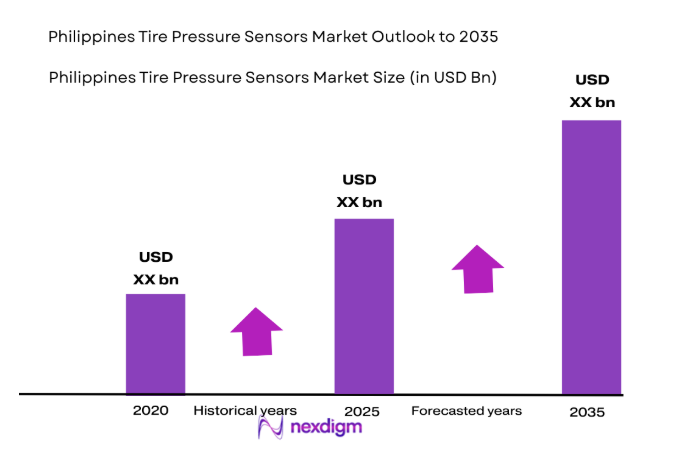 vehicles often incorporate TPMS as a standard feature.
Market Segmentation
By Product Type
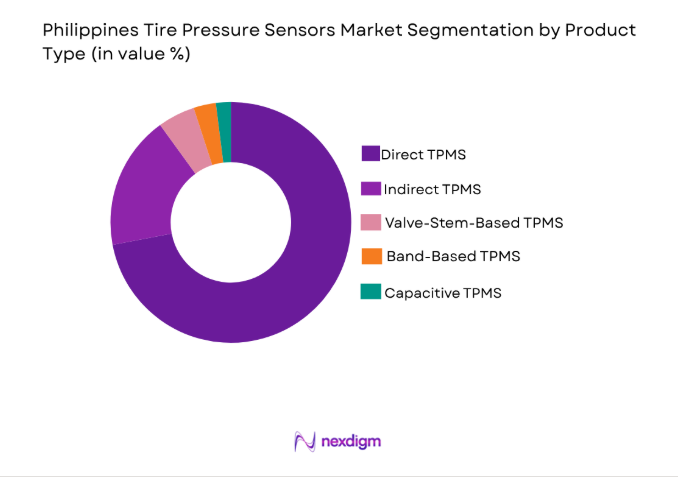
The Philippines Tire Pressure Sensors market is segmented by product type into direct TPMS, indirect TPMS, valve-stem-based TPMS, band-based TPMS, and capacitive TPMS. Direct TPMS has emerged as the dominant sub-segment due to its ability to provide accurate, real-time tire pressure data, ensuring the safety and performance of the vehicle. The growing focus on vehicle safety and government regulations requiring TPMS in new vehicles has amplified the demand for direct TPMS. Additionally, the increasing adoption of electric vehicles (EVs) and advancements in sensor technology further contribute to its dominance. Direct TPMS offers enhanced reliability compared to indirect TPMS, driving its widespread adoption across various vehicle segments in the Philippines.
By Platform Type
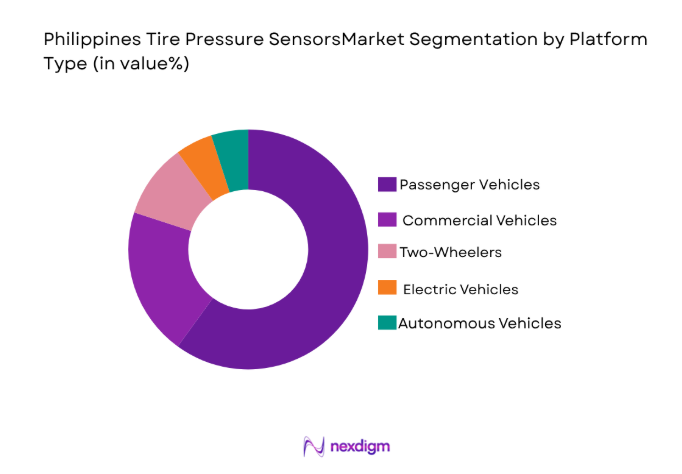
The Philippines Tire Pressure Sensors market is also segmented by platform type into passenger vehicles, commercial vehicles, two-wheelers, electric vehicles (EVs), and autonomous vehicles. Passenger vehicles dominate the market, driven by the growing demand for safety features and rising consumer awareness about tire maintenance. The increasing production of vehicles equipped with advanced technologies, such as TPMS, has been a major factor in driving this trend. Additionally, the growing preference for vehicles with integrated safety systems, as well as rising disposable incomes, has significantly contributed to the widespread adoption of TPMS in the passenger vehicle segment.
Competitive Landscape
The Philippines Tire Pressure Sensors market is competitive, with a blend of global and regional players vying for dominance. The market has seen consolidation as major automotive manufacturers and sensor technology companies collaborate to enhance their offerings. This collaboration is further driven by the need for highly reliable and cost-effective solutions.
| Company Name | Establishment Year | Headquarters | Technology Focus | Market Reach | Key Products | Revenue | Market-Specific Parameter |
| Sensata Technologies | 1964 | United States | ~ | ~ | ~ | ~ | ~ |
| Continental AG | 1871 | Germany | ~ | ~ | ~ | ~ | ~ |
| Huf Hülsbeck & Fürst | 1908 | Germany | ~ | ~ | ~ | ~ | ~ |
| Robert Bosch GmbH | 1886 | Germany | ~ | ~ | ~ | ~ | ~ |
| Valeo | 1923 | France | ~ | ~ | ~ | ~ | ~ |
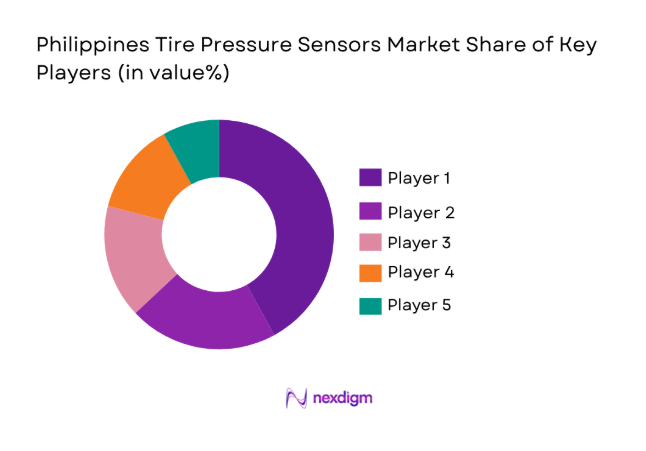
Philippines Tire Pressure Sensors Market Analysis
Growth Drivers
Government Regulations
In the Philippines, government regulations have increasingly focused on enhancing vehicle safety, with a specific emphasis on the adoption of tire pressure monitoring systems (TPMS) in all new vehicles. This regulatory push has led to the mandatory inclusion of TPMS in vehicles produced by both local and international manufacturers, significantly boosting the market for these systems. As the government continues to prioritize road safety, including reducing tire-related accidents, the demand for tire pressure sensors is expected to rise. Furthermore, heightened awareness of the importance of tire maintenance, particularly regarding fuel efficiency, vehicle safety, and reducing carbon emissions, is encouraging consumers to opt for vehicles equipped with TPMS. The Philippines government’s sustained efforts to enforce road safety laws and promote eco-friendly transportation alternatives are propelling the adoption of TPMS in both passenger and commercial vehicles. Additionally, increasing concerns over fuel efficiency and the growing focus on reducing vehicle emissions make TPMS a crucial component for modern vehicles in the country.
Technological Advancements
The continuous innovation in tire pressure sensor technology represents another significant growth driver for the Philippines market. With advancements such as the development of wireless TPMS systems, vehicle owners can now monitor tire pressure in real-time, enhancing both safety and convenience. These systems are increasingly integrated with mobile applications, allowing consumers to receive instant notifications about tire pressure, which aids in timely maintenance and avoids potential tire-related accidents. The rise of electric vehicles (EVs) is also contributing to the growth of TPMS adoption, as EVs require advanced safety systems to ensure the optimal performance of their tires, which is critical to vehicle efficiency and battery performance. The push for better energy efficiency and reduced environmental impact in the automotive sector has led to further improvements in tire monitoring technology, making TPMS a key feature in modern automotive designs. These innovations not only make TPMS systems more reliable and user-friendly but also more affordable and accessible to a larger consumer base, particularly in the growing EV market.
Market Challenges
High Initial Cost of TPMS Installation
One of the primary barriers to the widespread adoption of tire pressure monitoring systems in the Philippines is the high initial cost associated with the installation of direct TPMS systems. Direct systems, which provide more accurate tire pressure readings, are priced significantly higher compared to indirect systems. While indirect TPMS is less costly, it does not offer the same level of precision, which drives higher demand for the more expensive direct systems. For individual consumers and fleet operators, the initial installation costs present a considerable financial challenge. Additionally, replacing or maintaining these systems, particularly in the aftermarket sector, can be expensive, further limiting market penetration. The reluctance to invest in TPMS systems, driven by both the initial cost and the perceived long-term expense, remains a significant hurdle in the Philippine market, especially among budget-conscious vehicle owners.
Lack of Consumer Awareness
Despite growing recognition of the benefits of tire pressure monitoring systems, a significant challenge to market expansion in the Philippines is the lack of consumer awareness, particularly in rural areas and among lower-income groups. Many vehicle owners are still unaware of the safety risks associated with improperly maintained tire pressure, such as the increased likelihood of tire blowouts, reduced fuel efficiency, and greater vehicle emissions. Without sufficient knowledge about the advantages of TPMS and how it can prevent costly repairs and accidents, many consumers do not prioritize its adoption. This lack of awareness is slowing the rate at which TPMS systems are integrated into vehicles, especially older models that lack this technology. Additionally, there is a need for greater educational campaigns and public outreach to emphasize the importance of tire maintenance and safety, which could accelerate the wider adoption of TPMS systems in the Philippines.
Opportunities
Growth in Electric Vehicles (EVs)
The growing demand for electric vehicles (EVs) in the Philippines presents a promising opportunity for the tire pressure sensors market. As more consumers shift towards EVs, the need for advanced vehicle safety technologies such as TPMS becomes even more critical. EVs typically require high-performance tires to optimize their energy efficiency, which directly impacts battery life and overall vehicle performance. By ensuring that tire pressures are consistently maintained at optimal levels, TPMS systems contribute significantly to enhancing the safety and efficiency of these vehicles. As the Philippine government continues to promote the adoption of EVs through incentives and the development of EV infrastructure, the demand for advanced automotive technologies, including TPMS, is set to rise. The expanding EV market presents a fertile ground for TPMS suppliers to innovate and capture the growing demand for smart safety solutions that ensure the reliable performance of electric vehicles in the country.
Emerging Aftermarket Demand
There is a significant opportunity in the Philippines Tire Pressure Sensors market, particularly in the aftermarket sector. As the number of vehicles on the road continues to increase, so does the demand for retrofitted TPMS systems, especially in older models that were not originally equipped with such technology. Consumers who are looking to upgrade their vehicles with enhanced safety features, particularly those who want to avoid costly tire-related accidents and improve fuel efficiency, are increasingly turning to aftermarket TPMS solutions. This segment provides a cost-effective entry point for many vehicle owners, further expanding the overall market for tire pressure monitoring systems. The growing interest in vehicle safety and the increasing availability of affordable, easy-to-install TPMS solutions for older vehicles are expected to drive the aftermarket segment, creating new growth opportunities for TPMS suppliers. This presents an untapped market that is likely to grow significantly over the coming years, as consumers seek low-cost solutions to enhance their vehicle’s safety features.
Future Outlook
The future outlook for the Philippines Tire Pressure Sensors market is optimistic, driven by the expansion of vehicle production, government regulations, and technological advancements. The market is expected to see steady growth over the next five years, particularly as safety standards become more stringent and demand for electric vehicles rises. Advancements in TPMS technology, such as the integration with smart vehicle systems, are anticipated to further propel the market. Regulatory support and growing consumer awareness will also play a crucial role in the continued adoption of tire pressure sensors in the Philippines.
Major Players
- Sensata Technologies
- Continental AG
- Huf Hülsbeck & Fürst
- Robert Bosch GmbH
- Valeo
- ZF Friedrichshafen
- Delphi Technologies
- Autoliv
- Aisin Seiki Co., Ltd.
- Honeywell International
- Nexteer Automotive
- Denso Corporation
- Panasonic Corporation
- Johnson Controls
- Michelin
Key Target Audience
- Investments and venture capitalist firms
- Government and regulatory bodies
- Vehicle manufacturers
- Automotive safety product suppliers
- Commercial vehicle fleet operators
- Electric vehicle manufacturers
- Logistics and transportation
Research Methodology
Step 1: Identification of Key Variables
The first step involves identifying the critical variables that influence the market, including technological advancements, government policies, and consumer behavior patterns.
Step 2: Market Analysis and Construction
We analyze the market by evaluating existing data, historical trends, and current market performance, followed by the construction of a detailed market model.
Step 3: Hypothesis Validation and Expert Consultation
This step validates the constructed model through discussions with industry experts and stakeholders, ensuring accuracy and real-world applicability.
Step 4: Research Synthesis and Final Output
The final output synthesizes all collected data, providing a comprehensive market report with actionable insights and forecasts for stakeholders.

- Executive Summary
- Research Methodology (Definitions, Scope, Industry Assumptions, Market Sizing Approach, Primary & Secondary Research Framework, Data Collection & Verification Protocol, Analytic Models & Forecast Methodology, Limitations & Research Validity Checks)

- Market Definition and Scope
- Value Chain & Stakeholder Ecosystem
- Regulatory / Certification Landscape
- Sector Dynamics Affecting Demand
- Strategic Initiatives & Infrastructure Growth

- Growth Drivers
Rising Vehicle Production in the Philippines
Increasing Vehicle Safety Standards
Government Regulations on Vehicle Emissions - Market Challenges
High Initial Costs of TPMS Installation
Limited Awareness in the Aftermarket Sector
Technological Integration Issues in Older Vehicles - Market Opportunities
Technological Advancements in Wireless TPMS
Government Incentives for Safety Technologies
Growing Market for Electric Vehicles - Trends
Shift Towards Smart Tire Solutions
Integration of TPMS with Autonomous Vehicles - Government Regulations
- SWOT Analysis
- Porter’s Five Forces

- By Market Value, 2020-2025
- By Installed Units, 2020-2025
- By Average System Price, 2020-2025
- By System Complexity Tier, 2020-2025

- By System Type (In Value%)
Direct Tire Pressure Monitoring System (TPMS)
Indirect Tire Pressure Monitoring System (TPMS)
Valve Stem-based TPMS
Band-based TPMS
Capacitive TPMS - By Platform Type (In Value%)
Passenger Vehicles
Commercial Vehicles
Two-Wheelers
Electric Vehicles
Autonomous Vehicles - By Fitment Type (In Value%)
OEM (Original Equipment Manufacturer)
Aftermarket
Integrated Solutions
Modular Solutions - By End User Segment (In Value%)
Automotive OEMs
Automotive Aftermarket Suppliers
Vehicle Fleet Operators

- Market Share Analysis
- Cross Comparison Parameters (System Type, Platform Type, End User Segment, Fitment Type, Price, Technology, Vehicle Type)
- SWOT Analysis of Key Competitors
- Pricing & Procurement Analysis
- Key Players
Sensata Technologies
ZF Friedrichshafen
Continental AG
Huf Hülsbeck & Fürst
Robert Bosch GmbH
Valeo
Tire Pressure Monitoring Systems (TPMS) Inc.
STMicroelectronics
Autoliv
Delphi Technologies
Aptiv
Honeywell International Inc.
Tire-Tech Corporation
Mahindra Electric
Nexteer Automotive

- Increasing Demand for Automotive Safety Features
- Government Focus on Vehicle Emissions Reduction
- Shift Towards Electric and Autonomous Vehicles
- Growth in Vehicle Fleet Management Systems

- Forecast Market Value, 2026-2035
- Forecast Installed Units, 2026-2035
- Price Forecast by System Tier, 2026-2035
- Future Demand by Platform, 2026-2035


 Request a Sample
 Ask for Customization
 Get a Quote
 Enquire Now