

 Download PDF
Market Overview
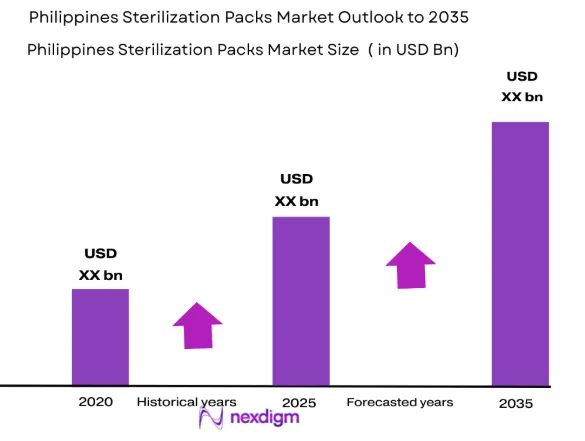
The Philippines sterilization packs market demonstrates steady expansion driven by rising surgical volumes, infection control mandates, and healthcare infrastructure upgrades, with the total market value reaching approximately USD ~ billion based on a recent historical assessment. Growth is supported by increasing hospital admissions, expansion of private healthcare networks, and stronger regulatory enforcement on sterilization protocols. Demand is further influenced by the growing adoption of disposable sterile packs, which improve operational efficiency and reduce contamination risks across healthcare facilities.
Metro Manila, Cebu, and Davao emerge as dominant regional hubs due to their concentration of tertiary hospitals, specialized surgical centers, and advanced diagnostic facilities. These urban centers benefit from higher healthcare spending, better procurement capabilities, and access to international suppliers. Their dominance is also linked to stronger regulatory compliance, higher patient inflow, and the presence of large private hospital chains that prioritize standardized sterilization practices to meet global healthcare benchmarks.
Market Segmentation
By Product Type
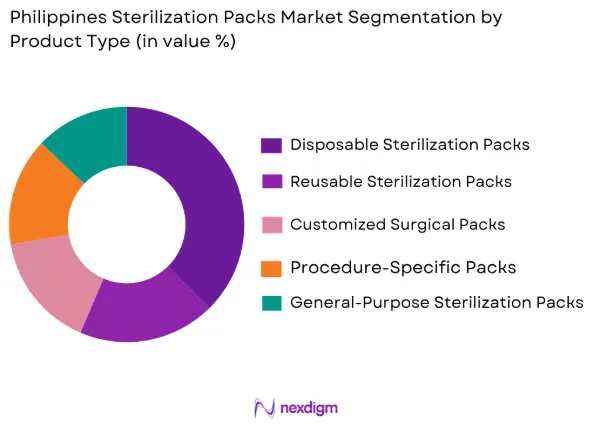
Philippines Sterilization Packs market is segmented by product type into disposable sterilization packs, reusable sterilization packs, customized surgical packs, procedure-specific packs, and general-purpose sterilization packs. Recently, disposable sterilization packs have a dominant market share due to factors such as increasing preference for single-use solutions to prevent cross-contamination, ease of use in high-volume surgical environments, and alignment with infection control protocols. Hospitals and surgical centers favor disposable packs as they reduce sterilization turnaround time and eliminate the need for reprocessing infrastructure, which is particularly beneficial in facilities with limited resources.
By End User Segment
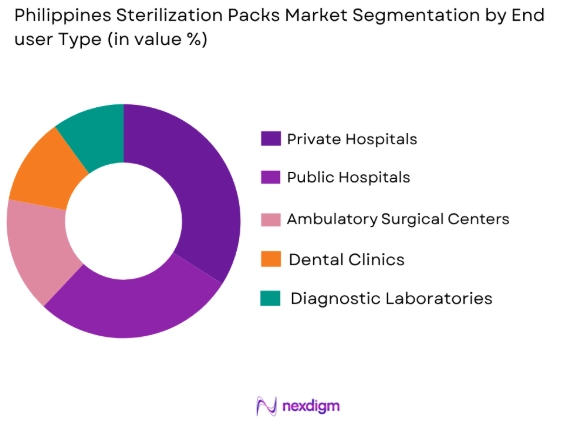
Philippines Sterilization Packs market is segmented by end user into public hospitals, private hospitals, ambulatory surgical centers, dental clinics, and diagnostic laboratories. Recently, private hospitals have a dominant market share due to factors such as higher investment capacity, advanced surgical capabilities, and stronger adherence to international sterilization standards. These institutions prioritize quality and efficiency, often procuring premium sterilization packs and customized solutions. Additionally, private hospitals experience higher patient turnover and surgical volumes, necessitating consistent and reliable sterilization processes.
Competitive Landscape
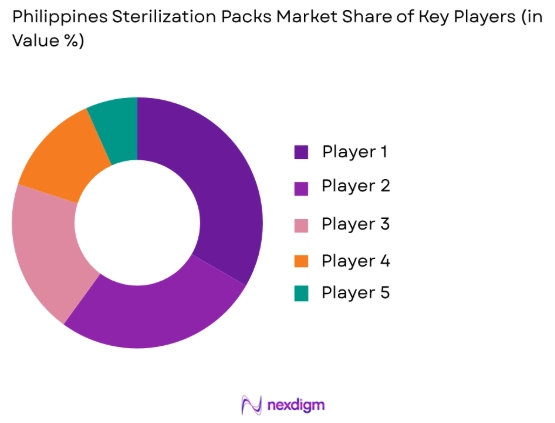
The Philippines sterilization packs market exhibits moderate consolidation, with a mix of global medical supply companies and regional distributors shaping competitive dynamics. Multinational players dominate due to strong product portfolios, established supply chains, and compliance with international standards, while local firms compete through cost efficiency and distribution reach. Strategic partnerships with hospitals and government procurement agencies significantly influence market positioning.
| Company Name | Establishment Year | Headquarters | Technology Focus | Market Reach | Key Products | Revenue (USD) | Sterilization Pack Customization |
| 3M Company | 1902 | USA | ~ | ~ | ~ | ~ | ~ |
| Cardinal Health | 1971 | USA | ~ | ~ | ~ | ~ | ~ |
| Medline Industries | 1966 | USA | ~ | ~ | ~ | ~ | ~ |
| Mölnlycke Health Care | 1849 | Sweden | ~ | ~ | ~ | ~ | ~ |
| B. Braun Melsungen AG | 1839 | Germany | ~ | ~ | ~ | ~ | ~ |
Philippines Sterilization Packs Market Analysis
Growth Drivers
Expansion of Surgical Procedures and Hospital Infrastructure
The increasing number of surgical procedures performed across the Philippines is a significant growth driver for the sterilization packs market, as hospitals and surgical centers require consistent and reliable sterile supplies to maintain patient safety and operational efficiency. The expansion of both public and private healthcare infrastructure has led to a rise in hospital beds, operating rooms, and outpatient surgical facilities, all of which depend heavily on sterilization packs. Government initiatives aimed at improving healthcare accessibility have further contributed to infrastructure growth, particularly in regional areas. The rising prevalence of chronic diseases has increased the need for surgical interventions, thereby boosting demand for sterile medical products. Additionally, medical tourism is gradually gaining traction, leading to higher standards of care and increased adoption of advanced sterilization practices. Hospitals are also investing in modern surgical equipment that requires compatible sterile packaging solutions. The integration of standardized surgical procedures has further reinforced the need for pre-packaged sterile kits. These factors collectively create a sustained demand for sterilization packs across healthcare settings.
Increasing Focus on Infection Prevention and Regulatory Compliance
The growing emphasis on infection control and patient safety is driving the adoption of sterilization packs in healthcare facilities across the Philippines, as hospitals strive to reduce hospital-acquired infections and comply with stringent regulatory standards. Regulatory bodies have introduced guidelines that mandate proper sterilization practices, pushing healthcare providers to adopt reliable and standardized solutions. Awareness among healthcare professionals regarding infection risks has significantly increased, leading to greater reliance on sterile disposable products. The adoption of international healthcare standards by private hospitals has further accelerated demand for high-quality sterilization packs. Additionally, accreditation requirements for hospitals and clinics often include strict sterilization protocols, reinforcing the need for consistent supply of sterile products. The shift toward single-use medical supplies has been driven by the need to eliminate cross-contamination risks. Investments in infection control training and quality assurance programs have also contributed to increased adoption. These regulatory and awareness-driven factors continue to strengthen market growth.
Market Challenges
High Cost Sensitivity Among Healthcare Providers
The Philippines sterilization packs market faces a significant challenge due to the high cost sensitivity among healthcare providers, particularly in public hospitals and smaller clinics that operate under constrained budgets. Many healthcare institutions prioritize cost reduction over product quality, leading to slower adoption of advanced sterilization packs. The reliance on imported sterilization products further increases costs due to logistics and tariffs. Smaller facilities often opt for reusable solutions despite higher long-term risks, limiting market penetration of disposable packs. Budget allocations in public healthcare systems are often insufficient to support widespread adoption of premium sterilization products. Price competition among suppliers also leads to margin pressures, affecting overall market profitability. Additionally, procurement decisions are frequently influenced by cost rather than efficiency or safety benefits. The lack of reimbursement mechanisms for sterilization consumables further exacerbates financial constraints. These factors collectively hinder the widespread adoption of high-quality sterilization packs.
Dependence on Imported Medical Supplies and Supply Chain Disruptions
The heavy reliance on imported sterilization packs and related materials presents a major challenge for the Philippines market, as it exposes the industry to supply chain vulnerabilities and price fluctuations. Global disruptions in manufacturing and logistics can lead to delays in product availability, affecting hospital operations. Currency fluctuations also impact import costs, making sterilization products more expensive for local buyers. Limited domestic manufacturing capabilities restrict the ability to meet growing demand locally. Distribution inefficiencies in remote regions further complicate supply chain management. Hospitals often face stock shortages during periods of high demand, such as public health emergencies. The lack of diversified supplier networks increases dependency on a few key players. Additionally, regulatory requirements for imported medical devices can delay product approvals and market entry. These challenges highlight the need for stronger local production and supply chain resilience.
Opportunities
Growth of Private Healthcare and Specialty Clinics
The rapid expansion of private healthcare facilities and specialty clinics in the Philippines presents a significant opportunity for the sterilization packs market, as these institutions prioritize quality, efficiency, and patient safety. Private hospitals are increasingly investing in advanced medical technologies and standardized procedures, which require reliable sterilization solutions. The rise of specialty clinics focusing on areas such as orthopedics, cardiology, and dentistry has further increased demand for customized sterilization packs. These facilities often cater to higher-income patients and medical tourists, necessitating adherence to international standards. The willingness of private healthcare providers to invest in premium products creates opportunities for suppliers offering innovative solutions. Additionally, the growing trend of outpatient surgeries in specialized centers drives demand for convenient and pre-packaged sterile kits. Partnerships between manufacturers and private healthcare providers can enhance product adoption. This segment is expected to play a crucial role in driving future market growth.
Development of Local Manufacturing and Sustainable Sterilization Solutions
The increasing focus on developing local manufacturing capabilities and sustainable sterilization solutions offers a promising opportunity for the Philippines sterilization packs market, as it addresses both cost and supply chain challenges. Establishing domestic production facilities can reduce dependency on imports and lower overall costs. Local manufacturing also enables faster response to demand fluctuations and improves supply chain efficiency. The growing emphasis on environmental sustainability is driving interest in reusable and eco-friendly sterilization products. Healthcare providers are increasingly seeking solutions that balance cost efficiency with environmental responsibility. Government incentives for local manufacturing can further support industry growth. Collaboration between local firms and international players can facilitate technology transfer and innovation. Additionally, the development of biodegradable materials for sterilization packs presents new growth avenues. These opportunities can significantly enhance market resilience and long-term sustainability.
Future Outlook
The Philippines sterilization packs market is expected to experience sustained growth driven by increasing healthcare investments, rising surgical volumes, and stronger infection control practices. Technological advancements in sterilization materials and pack customization will enhance product efficiency and usability. Regulatory frameworks are likely to become more stringent, further promoting standardized sterilization practices. Demand from private healthcare providers and specialty clinics will continue to expand. Overall, the market is positioned for steady development supported by infrastructure growth and evolving healthcare standards.
Major Players
- 3M Company
- Cardinal Health Inc.
- Medline Industries LP
- Mölnlycke Health Care AB
- Paul Hartmann AG
- Steris plc
- Getinge AB
- B. Braun Melsungen AG
- Thermo Fisher Scientific Inc.
- Cantel Medical Corp.
- Dynarex Corporation
- Owens & Minor Inc.
- Ansell Limited
- Winner Medical Co. Ltd.
- Priontex (Pty) Ltd.
Key Target Audience
- Hospitals and healthcare providers
- Ambulatory surgical centers
- Dental clinic networks
- Medical device distributors
- Pharmaceutical and healthcare companies
- Investments and venture capitalist firms
- Government and regulatory bodies
- Private healthcare infrastructure developers
Research Methodology
Step 1: Identification of Key Variables
Key variables such as surgical volume, healthcare infrastructure, sterilization standards, and procurement patterns were identified through secondary research. Industry reports, regulatory publications, and healthcare databases were analyzed to determine relevant metrics influencing the market. These variables formed the foundation for market modeling and segmentation.
Step 2: Market Analysis and Construction
Comprehensive data analysis was conducted using a combination of top-down and bottom-up approaches to estimate market size and segmentation. Historical data, trade statistics, and company reports were integrated to construct a reliable market framework. Cross-validation ensured consistency across different data sources.
Step 3: Hypothesis Validation and Expert Consultation
Initial findings were validated through consultations with industry experts, healthcare professionals, and procurement specialists. Feedback from these stakeholders helped refine assumptions and improve data accuracy. This step ensured alignment with real-world market dynamics and operational insights.
Step 4: Research Synthesis and Final Output
All validated data and insights were synthesized into a structured report format. Analytical models were applied to generate actionable insights and forecasts. The final output was reviewed for accuracy, consistency, and relevance to stakeholders.

- Executive Summary
- Research Methodology (Definitions, Scope, Industry Assumptions, Market Sizing Approach, Primary & Secondary Research Framework, Data Collection & Verification Protocol, Analytic Models & Forecast Methodology, Limitations & Research Validity Checks)

- Market Definition and Scope
- Value Chain & Stakeholder Ecosystem
- Regulatory / Certification Landscape
- Sector Dynamics Affecting Demand
- Strategic Initiatives & Infrastructure Growth

- Growth Drivers
Rising surgical procedure volumes across public and private hospitals
Increasing focus on infection prevention and control standards
Expansion of healthcare infrastructure in emerging urban areas - Market Challenges
High cost sensitivity among small and mid-sized healthcare providers
Supply chain disruptions impacting availability of sterilization materials
Limited awareness of advanced sterilization pack customization options - Market Opportunities
Growing demand for procedure-specific and customized sterilization packs
Expansion of private healthcare facilities in tier-2 cities
Adoption of eco-friendly and reusable sterilization solutions - Trends
Shift toward single-use sterile packs to reduce cross-contamination risks
Integration of traceability and tracking features in sterilization packs
Increasing partnerships between hospitals and local manufacturers - Government Regulations
- SWOT Analysis of Key Competitors
- Porter’s Five Forces

- By Market Value, 2020-2025
- By Installed Units, 2020-2025
- By Average System Price, 2020-2025
- By System Complexity Tier, 2020-2025

- By Product Type (In Value%)
Disposable Sterilization Packs
Reusable Sterilization Packs
Customized Surgical Packs
Procedure-Specific Sterilization Packs
General Purpose Sterilization Packs - By Platform Type (In Value%)
Hospital Sterilization Systems
Clinic-Based Sterilization Systems
Ambulatory Surgical Center Platforms
Laboratory Sterilization Platforms
Mobile Healthcare Sterilization Units - By End User Segment (In Value%)
Public Hospitals
Private Hospitals
Ambulatory Surgical Centers
Dental Clinics
Diagnostic Laboratories - By Procurement Channel (In Value%)
Direct Procurement from Manufacturers
Third-Party Medical Distributors
Government Tenders
Group Purchasing Organizations (GPOs)
Online Medical Supply Platforms

- Market Share Analysis
- Cross Comparison Parameters (Product Portfolio Breadth, Pricing Strategy, Distribution Network Strength, Customization Capabilities, Regulatory Compliance, Product Quality, Packaging Durability, Sterilization Assurance Level, Material Compatibility, Supply Reliability, Brand Reputation, Market Presence, Customer Support, Procurement Flexibility, Innovation in Packaging)
- SWOT Analysis of Key Competitors
- Pricing & Procurement Analysis
- Key Players
3M Company
Cardinal Health Inc.
Medline Industries LP
Mölnlycke Health Care AB
Paul Hartmann AG
Steris plc
Getinge AB
B. Braun Melsungen AG
Thermo Fisher Scientific Inc.
Cantel Medical Corp.
Dynarex Corporation
Owens & Minor Inc.
Ansell Limited
Winner Medical Co. Ltd.
Priontex (Pty) Ltd.

- Hospitals account for the largest demand due to high surgical volumes
- Clinics show increasing adoption driven by outpatient procedures
- Dental practices rely on compact and cost-effective sterilization packs
- Laboratories require specialized sterilization kits for sample handling

- By Market Value, 2026-2035
- By Installed Units, 2026-2035
- By Average System Price, 2026-2035
- By System Complexity Tier, 2026-2035


 Request a Sample
 Ask for Customization
 Get a Quote
 Enquire Now