
 Download PDF
Market Overview
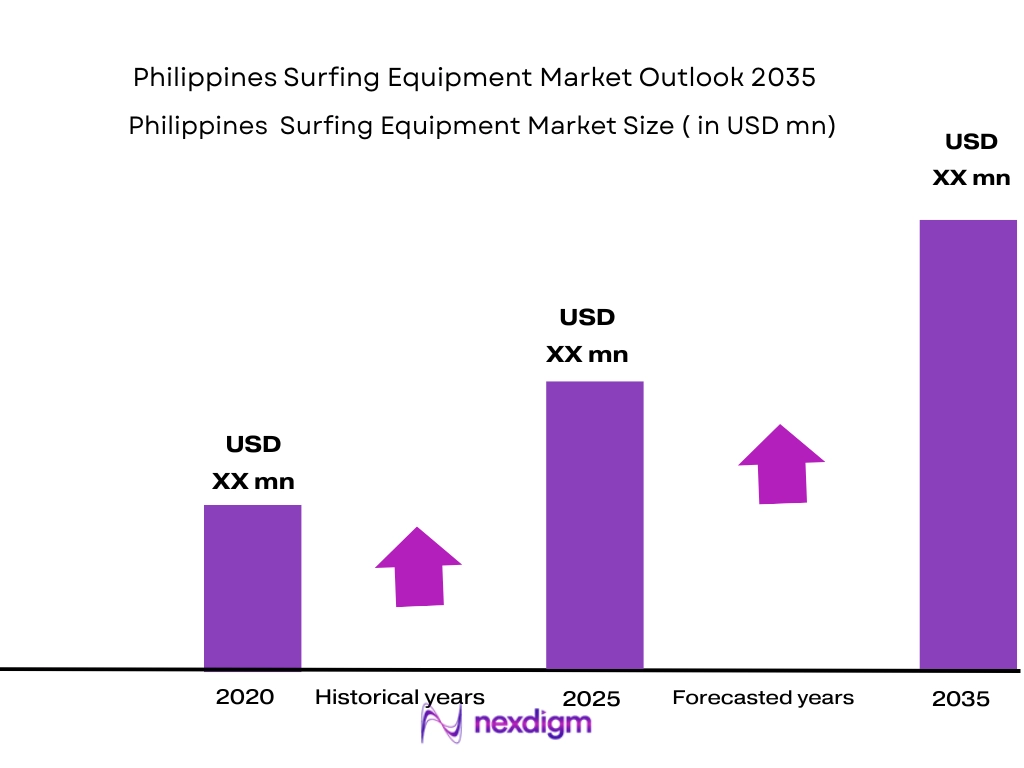
The Philippines surfing equipment market is valued at approximately USD ~ million, driven by the rising interest in surfing as a recreational activity. The growth of surfing tourism in key coastal regions such as Siargao, La Union, and Baler is significantly contributing to the market’s expansion. Surfboards, wetsuits, and accessories are in high demand as the popularity of surfing continues to rise among locals and international visitors. Government support for tourism and water sports infrastructure development is expected to further boost the market. Additionally, growing consumer awareness about outdoor sports and the rise in the middle-class population who are more inclined toward leisure activities are propelling the market forward.
The Philippines is home to several key surf destinations such as Siargao, La Union, and Baler, which are central to the surfing equipment market. These cities attract both local and international tourists seeking world-class surfing experiences, thereby driving the demand for surfboards, wetsuits, and related accessories. Siargao, in particular, has gained global recognition for its consistent waves and picturesque surfing spots, making it a hub for surfing enthusiasts. The government’s efforts to promote surfing tourism, along with investments in local surf schools, further solidify these regions as the dominant areas in the market.
Market Segmentation
By Product Type
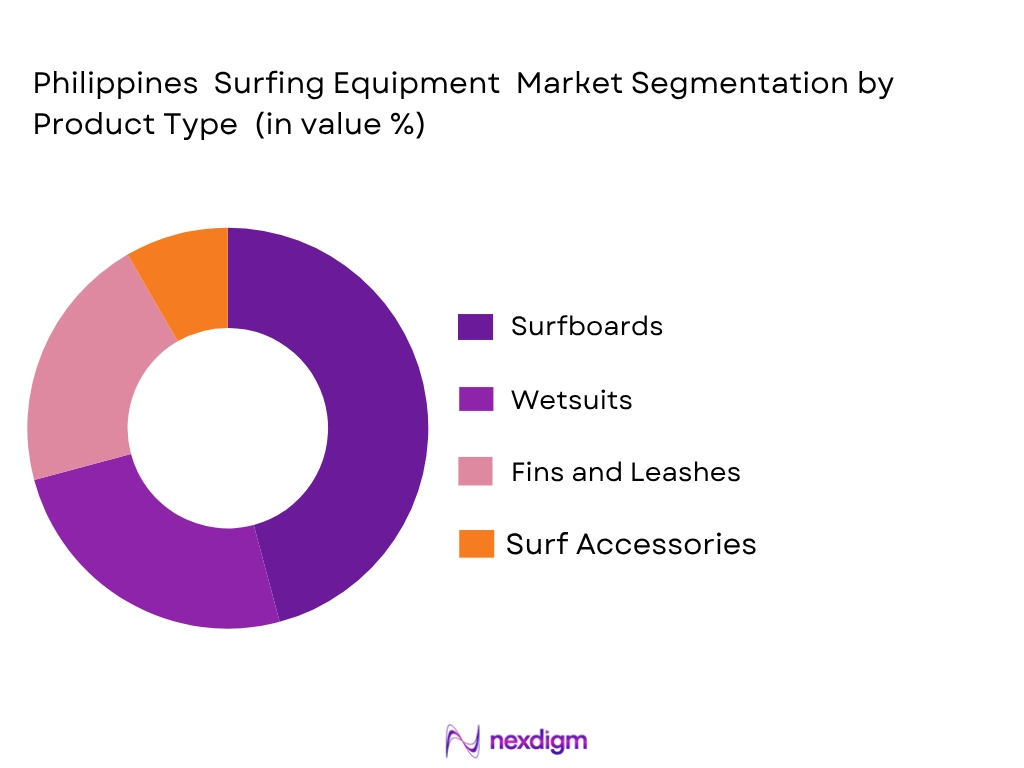
The Philippines surfing equipment market is segmented by product type into surfboards, wetsuits, fins and leashes, and surf accessories. Among these, surfboards dominate the market due to their essential nature in surfing and widespread consumer adoption. As the most significant product in the market, surfboards cater to different types of surfers, from beginners to professionals. The diverse range of surfboard designs, including shortboards, longboards, and fish boards, further contributes to their market dominance. Popular global brands such as Rip Curl, Quiksilver, and Channel Islands continue to lead this segment by offering high-quality boards tailored to different wave conditions in the Philippines.
By End User
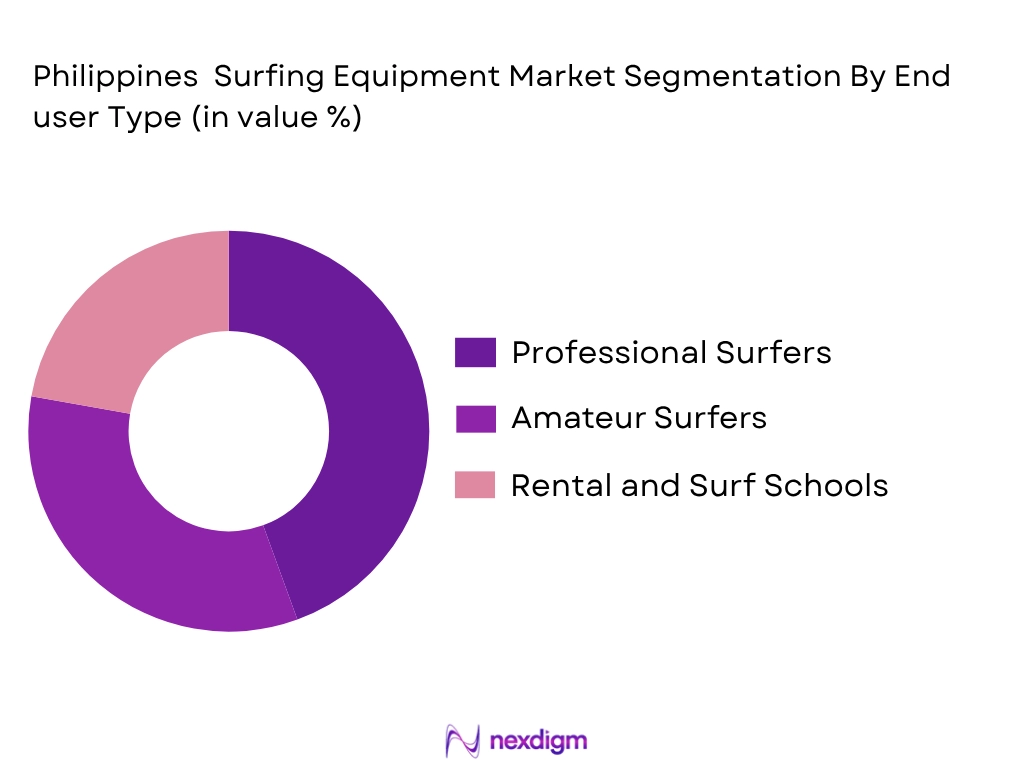
The market is segmented by end user into professional surfers, amateur surfers, and rental and surf schools. The rental and surf school segment holds the largest share in the Philippines market, primarily driven by the influx of tourists visiting the country’s prime surf spots. Many of these tourists opt to rent equipment or participate in lessons offered by local surf schools. With the rapid growth of surfing tourism, the demand for rentals has surged, especially in popular areas like Siargao. As a result, surf schools and equipment rental businesses have become key players in driving the consumption of surfing gear.
Competitive Landscape
The Philippines surfing equipment market is characterized by both global and local players. Major international brands like Rip Curl, Quiksilver, and Billabong have established a strong presence in the market due to their global reputation and quality products. Local surf brands, such as Siargao-based Shaper Studios, have also made an impact by offering customized boards and accessories tailored to the specific surfing conditions in the country. This blend of global and local brands creates a competitive landscape where both price and quality are key differentiators.
| Company Name | Establishment Year | Headquarters | Product Focus | Key Differentiator | Distribution Channels | Key Markets |
| Rip Curl | 1969 | Australia | ~ | ~ | ~ | ~ |
| Quiksilver | 1969 | USA | ~ | ~ | ~ | ~ |
| Billabong | 1973 | Australia | ~ | ~ | ~ | ~ |
| Shaper Studios | 2007 | Philippines | ~ | ~ | ~ | ~ |
| FCS | 1969 | Australia | ~ | ~ | ~ | ~ |
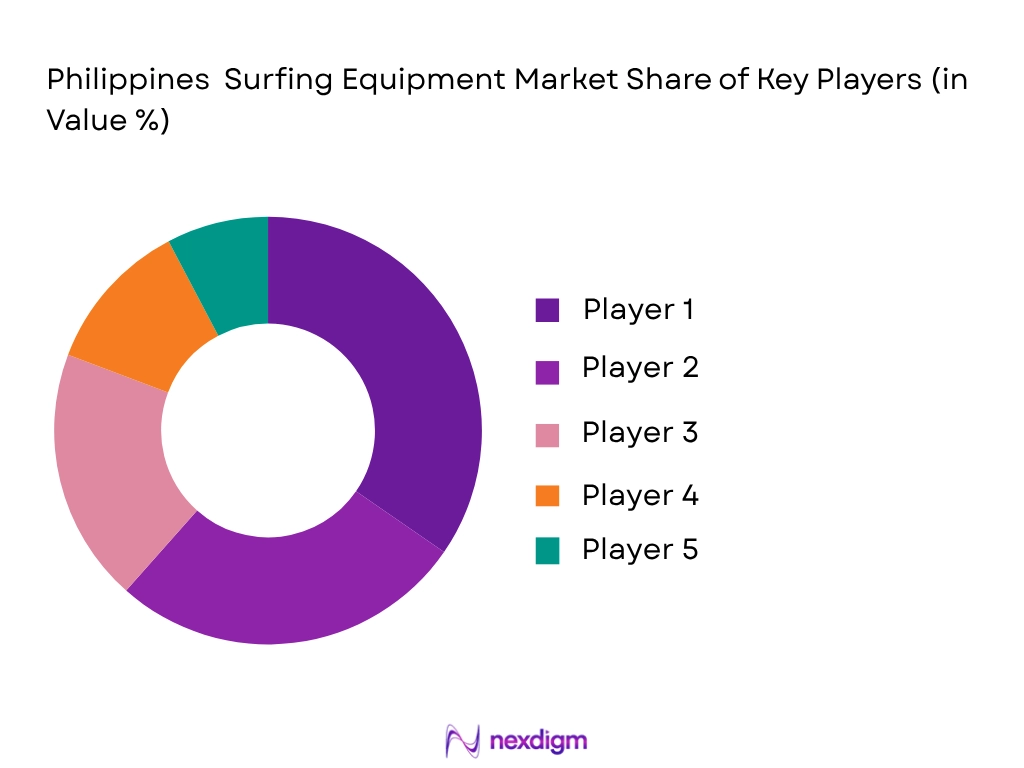
Philippines Surfing Equipment Market Analysis
Growth Drivers
Increasing Popularity of Surfing in the Philippines
Surfing has gained substantial popularity in the Philippines, particularly in coastal regions like Siargao, La Union, and Baler. With its vast coastline and favorable wave conditions, the country attracts both local surfers and international tourists. The increasing interest in adventure tourism, combined with a growing appreciation for outdoor sports, has led to a surge in recreational surfing. The younger generation, in particular, is drawn to surfing as a lifestyle choice, further contributing to its growing popularity. As more people embrace surfing as a form of fitness and leisure, the demand for surfing equipment such as surfboards, wetsuits, and accessories is on the rise, positively impacting the market.
Government Support for Water Sports
The Philippine government plays a crucial role in supporting water sports, including surfing. Through initiatives by agencies such as the Department of Tourism and the Department of Trade and Industry, the government has actively promoted the country’s beaches as world-class surfing destinations. These efforts include funding for infrastructure development, such as surf schools and resorts, and marketing campaigns targeting international tourists. Additionally, the government supports local surf competitions, enhancing the visibility of surfing in the global sports arena. These measures are vital in increasing the appeal of surfing and driving the demand for related equipment, thereby supporting the overall market growth.
Market Challenges
High Import Costs
A significant challenge for the Philippines surfing equipment market is the high cost of importing surfing gear. As most surfing equipment, including surfboards, wetsuits, and accessories, is sourced from international manufacturers, import duties, shipping costs, and taxes increase the price of products. This makes it difficult for local businesses to offer competitive pricing while maintaining quality. Additionally, fluctuations in currency exchange rates can further elevate costs for distributors, negatively impacting both consumers and retailers. These high costs create a barrier for entry, limiting the affordability of premium surfing gear for local surfers and hindering broader market penetration.
Limited Surfing Locations
Despite the Philippines’ extensive coastline, there are limited locations that offer ideal, consistent surfing conditions, which restrict the potential for market growth. Popular surfing destinations such as Siargao and La Union are well-known, but they are concentrated in certain regions. Many other parts of the country lack the natural infrastructure or wave conditions required for quality surfing. This limits the number of locations where surfing is a mainstream activity, thereby restricting the overall demand for surfing equipment. As a result, the market remains concentrated in a few regions, and surf tourism is concentrated in these prime spots.
Opportunities
Growth of Surf Tourism in Southeast Asia
Southeast Asia, with its warm waters and consistent wave conditions, has emerged as a key surfing hub, and the Philippines is at the forefront of this surge in surf tourism. International surfers flock to the Philippines, especially to Siargao, which has gained global recognition for its waves. As the country continues to develop its tourism infrastructure, surf tourism is expected to grow even further, creating an increased demand for surfing equipment and related services. The rise in surf tourism presents opportunities for local surf schools, equipment rentals, and surf gear retailers, positioning the Philippines as a significant player in Southeast Asia’s surfing market.
Emerging Trends in Eco-Friendly Surfing Equipment
As environmental concerns grow, the Philippines surfing market is witnessing a shift towards eco-friendly products. Surfboards made from sustainable materials, such as recycled foam or eco-resins, and wetsuits crafted from plant-based rubber are becoming increasingly popular among consumers who prioritize environmental sustainability. The growing awareness of the environmental impact of production processes has led to a demand for products that are both high-performance and environmentally responsible. As eco-conscious consumers make up a larger share of the market, surf equipment brands that invest in sustainable production processes and eco-friendly materials are well-positioned to capitalize on this trend and attract environmentally aware surfers.
Future Outlook
Over the next 5-6 years, the Philippines surfing equipment market is expected to witness robust growth. This expansion will be driven by the continued rise in surfing tourism, particularly in areas like Siargao and La Union, which are gaining international recognition as prime surfing destinations. Additionally, the increasing popularity of surfing as a recreational activity among locals will contribute to the growth of the market. With further developments in infrastructure and surf schools, as well as the increasing trend towards eco-friendly surfing gear, the market is poised for steady growth through the 2020s.
Major Players
- Rip Curl
- Quiksilver
- Billabong
- Shaper Studios
- Channel Islands Surfboards
- Firewire Surfboards
- Lost Surfboards
- O’Neill
- Dakine
- FCS
- Vissla
- Northcore
- Hurley
- Roxy
- BIC Sport
Key Target Audience
- Investments and venture capitalist firms
- Government and regulatory bodies
- Surf Schools and Academies
- Professional Surfers
- Amateur Surfers
- Sporting Goods Retailers
- E-commerce platforms and online retailers
- Eco-tourism companies and sustainable product manufacturers
Research Methodology
Step 1: Identification of Key Variables
The first step involves identifying and mapping the key stakeholders in the Philippines surfing equipment market. Secondary research will be conducted using existing reports, industry publications, and government data to gather valuable insights on the market’s drivers and restraints.
Step 2: Market Analysis and Construction
In this phase, historical data related to market trends, surf tourism growth, and equipment consumption patterns will be analyzed. This data will help build a comprehensive picture of the market’s growth trajectory and highlight key factors influencing demand.
Step 3: Hypothesis Validation and Expert Consultation
Expert opinions from surf equipment manufacturers, surf schools, and tourism bodies will be gathered to validate market hypotheses. This will involve interviews with key players and industry professionals to obtain qualitative insights on trends, challenges, and opportunities.
Step 4: Research Synthesis and Final Output
The final phase involves compiling the data and insights collected throughout the research process into a cohesive market report. This will include a detailed analysis of the Philippines surfing equipment market, incorporating expert feedback, data validation, and the synthesis of all findings to ensure accuracy.

- Executive Summary
- Research Methodology (Market Definitions and Assumptions, Abbreviations, Market Sizing Approach, Consolidated Research Approach, Understanding Market Potential Through In-Depth Industry Interviews, Primary Research Approach, Limitations and Future Conclusions)

- Definition and Scope
- Market Genesis and Evolution
- Market Dynamics
- Major Milestones in the Market
- Supply Chain and Value Chain Analysis

- Growth Drivers
Increasing Popularity of Surfing in the Philippines
Government Support for Water Sports
Technological Advancements in Surfing Gear - Market Challenges
High Import Costs
Limited Surfing Locations - Opportunities
Growth of Surf Tourism in Southeast Asia
Emerging Trends in Eco-Friendly Surfing Equipment - Trends
Rise of Sustainable and Eco-Friendly Products
Popularity of Portable Surfing Equipment - Government Regulation
Regulatory Approvals and Certifications
Import and Distribution Regulations - SWOT Analysis
- Stakeholder Ecosystem
- Porter’s Five Forces Analysis
- Competition Ecosystem

- By Value, 2020-2025
- By Volume, 2020-2025
- By Average Price, 2020-2025

- By Product Type, (In Value %)
Surfboards
Wetsuits
Fins and Leashes
Surf Accessories - By End User, (In Value %)
Professional Surfers
Amateur Surfers
Rental and Surf Schools - By Distribution Channel, (In Value %)
Direct Sales
Retail Outlets
E-commerce - By Region, (In Value %)
Luzon
Visayas
Mindanao

- Market Share of Major Players by Value/Volume
- Market Share of Major Players by Product Type Segment
- Cross Comparison Parameters (Company Overview, Business Strategies, Recent Developments, Strengths, Weaknesses, Organizational Structure, Revenues, Revenues by Product Type, Distribution Channels, Margins, Production Plants, Capacity, Unique ValueOfferings, Number of Dealers and Distributors, Technological Advancements)
- SWOT Analysis of Major Players
- Pricing Analysis by SKUs for Major Players
- Detailed Profiles of Major Companies
Rip Curl
Quiksilver
Billabong
O’Neill
Roxy
Lost Surfboards
Firewire Surfboards
Channel Islands Surfboards
Northcore
FCS
Dakine

- Market Demand and Utilization
- Budget Allocations and Purchasing Power
- Regulatory and Compliance Factors for End Users
- End User Pain Points and Preferences
- Decision-Making Process in End User Segments

- By Value, 2026-2035
- By Volume, 2026-2035
- By Average Price, 2026-2035


 Request a Sample
 Ask for Customization
 Get a Quote
 Enquire Now