

 Download PDF
 Download PDF
Market Overview
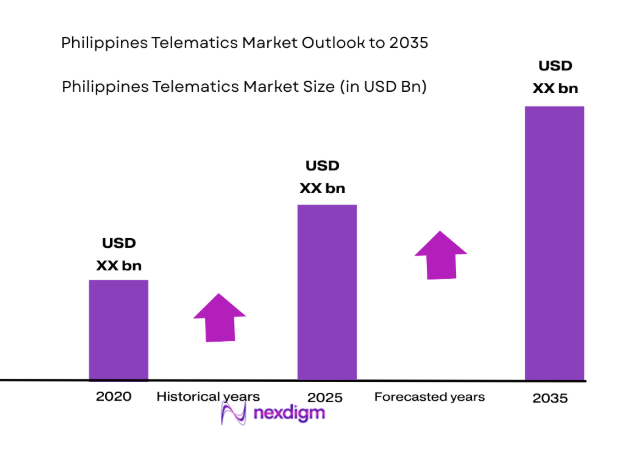
The Philippines telematics market is witnessing steady growth, primarily driven by the increasing demand for connected vehicle technologies and advanced fleet management solutions. Based on a recent historical assessment, the market value for telematics systems is estimated at USD ~ billion, bolstered by advancements in vehicle tracking, driver behavior monitoring, and the integration of AI in fleet management. The growing need for safety, operational efficiency, and regulatory compliance further accelerates the adoption of telematics solutions across various industries.
The Philippines, particularly Metro Manila and other urbanized regions, dominate the market due to their dense traffic conditions and high demand for fleet optimization. These areas witness the highest adoption of telematics solutions, as businesses seek to enhance fleet performance, reduce operational costs, and ensure regulatory compliance. Moreover, key initiatives by the government and private sector investments in smart city infrastructure are expected to further strengthen the demand for telematics systems in these regions.
Market Segmentation
By Product Type
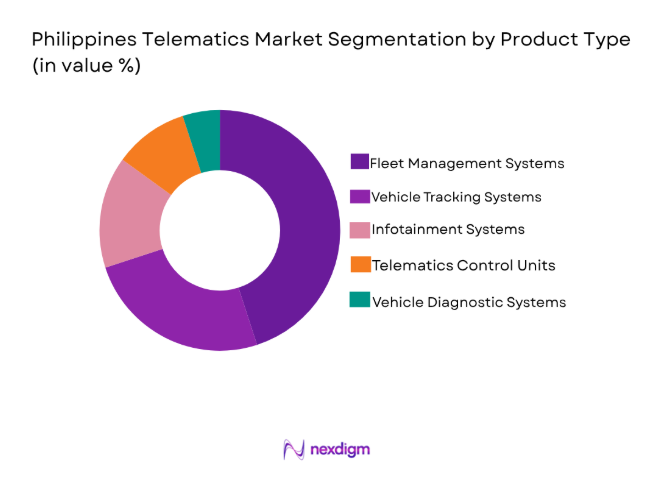
The Philippines telematics market is segmented by product type into fleet management systems, vehicle tracking systems, infotainment systems, telematics control units, and vehicle diagnostic systems. Recently, fleet management systems have a dominant market share due to the increasing need for businesses to optimize fleet operations and reduce costs. Factors such as government regulations promoting safety, the rise in e-commerce delivery services, and the growing demand for real-time vehicle data contribute to the dominance of this segment.
By Platform Type
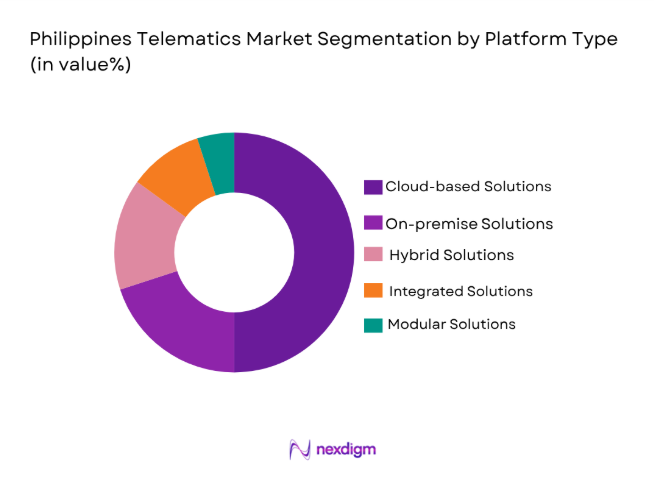
The Philippines telematics market is segmented by platform type into on-premise solutions, cloud-based solutions, hybrid solutions, integrated solutions, and modular solutions. Cloud-based solutions dominate the market due to their scalability, cost-effectiveness, and real-time data access. Their flexibility in managing fleet operations and ease of integration make them particularly popular in the Philippine market, driving their dominance in the industry.
Competitive Landscape
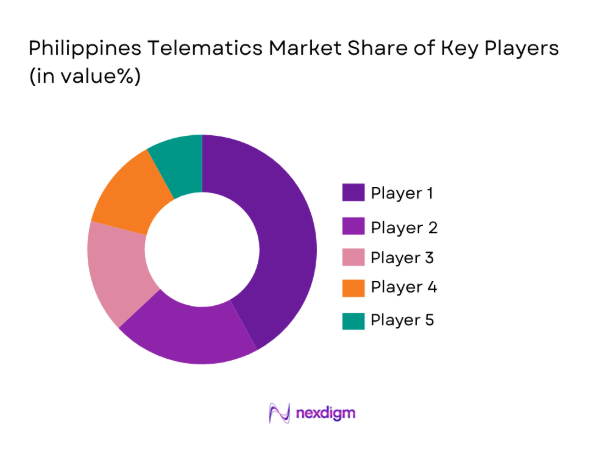
The competitive landscape of the Philippines telematics market is highly dynamic, with several key players focusing on both technology innovation and strategic partnerships. Leading companies are consolidating their positions through acquisitions and collaborations to enhance their service offerings. The rise of digital transformation in the transportation and logistics sectors is also influencing the market.
| Company Name | Establishment Year | Headquarters | Technology Focus | Market Reach | Key Products | Revenue | Fleet Optimization Solutions |
| Geotab | 2000 | Canada | ~ | ~ | ~ | ~ | ~ |
| Samsara | 2011 | USA | ~ | ~ | ~ | ~ | ~ |
| Garmin | 1989 | USA | ~ | ~ | ~ | ~ | ~ |
| Fleet Complete | 2000 | Canada | ~ | ~ | ~ | ~ | ~ |
| Trimble | 1978 | USA | ~ | ~ | ~ | ~ | ~ |
Philippines Telematics Market Analysis
Growth Drivers
Increased Government Initiatives
The Philippine government has been actively promoting the adoption of smart city technologies, with a clear emphasis on improving road safety, reducing traffic congestion, and enhancing the overall efficiency of urban transport systems. This has led to substantial investments in telematics systems, particularly those designed to optimize traffic management and improve fleet performance across the country. The government’s strong push for digitizing transportation services, including logistics, delivery fleets, and public transport, has created a conducive environment for telematics growth. Various infrastructure projects aimed at improving urban mobility, such as intelligent traffic signals and digital monitoring systems, have further accelerated the need for telematics solutions. Additionally, public-private partnerships and collaborations are further encouraging innovation and investment in the telematics sector, paving the way for more integrated and sustainable urban transportation solutions. As more initiatives are introduced, telematics systems are expected to become an integral part of the country’s transportation infrastructure, offering increased connectivity, safety, and operational efficiency.
Rise of E-commerce and Logistics Sector
The significant boom in the e-commerce industry in the Philippines has driven the demand for telematics systems, particularly in the logistics sector. As businesses across various industries increasingly rely on delivery fleets to meet the growing demand for fast and efficient services, telematics has become a vital tool in managing these fleets. Real-time vehicle tracking, route optimization, and driver behavior monitoring are critical in ensuring timely deliveries, reducing operational costs, and enhancing fleet management. The rapid growth of e-commerce, combined with changing consumer expectations for faster delivery, has necessitated the widespread adoption of telematics solutions. Furthermore, the logistics sector’s continuous expansion, especially in urban areas where traffic congestion and road safety are major concerns, makes telematics systems essential in improving fleet performance and efficiency. The Philippines’ rising consumer demand for more sustainable and reliable delivery solutions is also driving investments in advanced telematics systems that can support autonomous vehicle technologies and electric vehicles in the future. As the logistics sector becomes more digitalized, the role of telematics is expected to become even more critical in ensuring the success of modern supply chains.
Market Challenges
High Initial Investment
One of the major challenges facing the Philippines telematics market is the high initial cost of adopting telematics systems. For many small and medium-sized enterprises (SMEs) and local businesses, the upfront cost of implementing telematics solutions is a significant financial burden. The cost of purchasing and installing hardware, integrating software, and training employees on the new system can be prohibitive, especially for companies operating on tight budgets. While telematics systems offer long-term benefits, such as improved fleet management, better fuel efficiency, and reduced operational costs, the initial investment required to deploy these technologies remains a barrier to entry for many businesses, especially those in underserved regions. This challenge is particularly evident in industries with smaller fleets, where the return on investment (ROI) from telematics solutions may not be immediately apparent. Furthermore, the cost of maintaining and upgrading telematics systems over time can add to the financial pressure, making it more difficult for companies to justify the investment. As a result, many businesses are hesitant to adopt telematics technology, slowing down overall market growth.
Data Privacy Concerns
Data privacy concerns are another significant challenge facing the telematics market in the Philippines. As telematics systems are built around the collection and transmission of data from vehicles and drivers, there are growing concerns about the potential misuse of this data. Businesses, consumers, and regulatory bodies are increasingly concerned about the security of sensitive information, such as vehicle location, driver behavior, and real-time performance metrics. In light of the Philippines’ stringent data privacy regulations, including the Data Privacy Act, businesses must ensure that their telematics systems comply with these laws to protect user information. Failure to comply with these regulations could result in legal consequences, fines, and reputational damage. Moreover, the increasing prevalence of cyber-attacks and data breaches has heightened the risk of data being compromised, which can undermine trust in telematics systems. As a result, telematics companies must invest heavily in robust data encryption and security measures to protect their clients’ data and maintain consumer confidence. These privacy concerns could slow the rate of telematics adoption, particularly among businesses and consumers who remain skeptical about the security of their information.
Opportunities
Integration of Telematics with Autonomous Vehicles
The rise of autonomous vehicle technologies in the Philippines presents a significant opportunity for the telematics market. As the country continues to explore the development of smart transportation systems, telematics will play an integral role in supporting autonomous vehicles. These vehicles require advanced telematics solutions to monitor performance, track vehicle location, and ensure safe operation. The integration of telematics with autonomous vehicles will provide valuable insights into fleet operations, such as vehicle diagnostics, driver behavior, and route optimization, all of which are critical for ensuring the efficiency and safety of autonomous vehicles. This presents a growth opportunity for telematics companies to collaborate with manufacturers and transportation service providers to create integrated solutions that cater specifically to autonomous vehicles. With autonomous vehicle technologies becoming increasingly prevalent in global markets, the Philippines telematics sector has the chance to position itself as a leader in the development and deployment of connected vehicle technologies. Furthermore, the potential for improved road safety, reduced accidents, and more efficient traffic management offered by autonomous vehicles will likely drive demand for telematics solutions in the coming years, supporting the growth of this market segment.
Expansion of Electric Vehicle Fleets
As the Philippines makes strides toward adopting more sustainable transportation solutions, the growing adoption of electric vehicles (EVs) presents a significant opportunity for the telematics market. With the government’s push for green and sustainable technologies, EVs are becoming increasingly popular, particularly in urban areas. Telematics solutions will play a critical role in managing EV fleets, ensuring that vehicles are operating efficiently, and that battery health and energy consumption are continuously monitored. Telematics systems can provide valuable insights into the performance of EVs, track energy usage, optimize charging schedules, and assist in predictive maintenance, all of which are essential for improving the operational efficiency and longevity of EV fleets. As the Philippines aims to increase its fleet of electric vehicles, especially in the commercial and public transport sectors, the demand for advanced telematics systems to manage these fleets will rise significantly. Furthermore, telematics systems can help EV fleet operators reduce costs, maximize vehicle uptime, and ensure compliance with regulations aimed at promoting clean energy and reducing carbon emissions. This presents a major growth opportunity for telematics providers as they develop specialized solutions for the EV market in the Philippines.
Future Outlook
Over the next five years, the Philippines telematics market is expected to experience steady growth, driven by technological advancements in AI, IoT, and vehicle connectivity. Regulatory support for smart city initiatives and fleet optimization will further bolster demand. The market will witness increased adoption of telematics solutions across industries such as logistics, transportation, and automotive, with a growing emphasis on data security and privacy.
Major Players
- Geotab
- Samsara
- Garmin
- Fleet Complete
- Trimble
- CalAmp
- TomTom Telematics
- ORBCOMM
- Zonar Systems
- Teletrac Navman
- MiX Telematics
- Fleetmatics
- Intelligent Telematics
- Webfleet Solutions
- Continental AG
Key Target Audience
- Investments and venture capitalist firms
- Government and regulatory bodies
- Fleet management companies
- Automotive manufacturers
- Insurance companies
- Logistics service providers
- Technology platform providers
Research Methodology
Step 1: Identification of Key Variables
The research identifies essential market drivers, trends, and challenges to frame the scope of the study.
Step 2: Market Analysis and Construction
Market analysis includes segmentation, trends, and technology adoption patterns to structure the market report.
Step 3: Hypothesis Validation and Expert Consultation
Consultation with industry experts and key stakeholders helps validate the hypotheses developed during the analysis.
Step 4: Research Synthesis and Final Output
All collected data is synthesized, analyzed, and formatted to create the final market report output.

- Executive Summary
- Research Methodology (Definitions, Scope, Industry Assumptions, Market Sizing Approach, Primary & Secondary Research Framework, Data Collection & Verification Protocol, Analytic Models & Forecast Methodology, Limitations & Research Validity Checks)

- Market Definition and Scope
- Value Chain & Stakeholder Ecosystem
- Regulatory / Certification Landscape
- Sector Dynamics Affecting Demand
- Strategic Initiatives & Infrastructure Growth

- Growth Drivers
Growing Automotive Market
Advancement in IoT & Connectivity
Government Regulations and Initiatives - Market Challenges
High Initial Cost of Installation
Privacy and Data Security Concerns
Lack of Standardization - Market Opportunities
Integration of Telematics with Electric Vehicles
Expansion in Autonomous Vehicle Telematics
Growth of Data Analytics in Telematics - Trends
Increase in Fleet Management Solutions
Advancements in Vehicle Tracking Technologies - Government Regulations
- SWOT Analysis
- Porter’s Five Forces

- By Market Value, 2020-2025
- By Installed Units, 2020-2025
- By Average System Price, 2020-2025
- By System Complexity Tier, 2020-2025

- By System Type (In Value%)
Fleet Management Systems
Vehicle Tracking Systems
Infotainment Systems
Telematics Control Units
Vehicle Diagnostic Systems - By Platform Type (In Value%)
On-premise Solutions
Cloud-based Solutions
Hybrid Solutions
Integrated Solutions
Modular Solutions - By Fitment Type (In Value%)
OEM Solutions
Aftermarket Solutions
Embedded Solutions
Integrated Solutions - By End User Segment (In Value%)
Automotive Manufacturers
Fleet Operators
Government Agencies
Insurance Companies

- Market Share Analysis
- Cross Comparison Parameters (System Type, Platform Type, End User Segment, Procurement Channel, Fitment Type, Market Value, Installed Units)
- SWOT Analysis of Key Competitors
- Pricing & Procurement Analysis
- Key Players
Telematics Philippines
AISIN Seiki
Garmin Ltd.
Calsonic Kansei Corporation
Valeo
Bosch
Continental AG
Denso Corporation
Harman International
Trimble Inc.
Samsara Inc.
Fleet Complete
Geotab
TomTom Telematics
OEM Telematics

- Growing Demand from Automotive Manufacturers
- Increasing Adoption by Fleet Operators
- Government Focus on Smart City Infrastructure
- Rise in Insurance Companies Implementing Telematics

- Forecast Market Value, 2026-2035
- Forecast Installed Units, 2026-2035
- Price Forecast by System Tier, 2026-2035
- Future Demand by Platform, 2026-2035


 Request a Sample
 Ask for Customization
 Get a Quote
 Enquire Now