

 Download PDF
 Download PDF
Market Overview
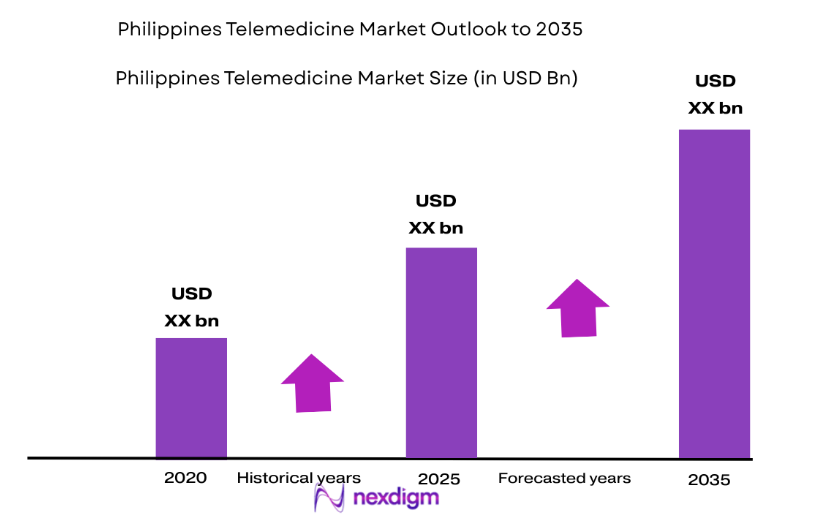
The Philippines telemedicine market is driven by the rapid adoption of digital healthcare services, addressing the country’s growing demand for remote medical consultations. The market has been positively impacted by the government’s focus on improving healthcare access, especially in rural areas. Advancements in telecommunications infrastructure and the growing healthcare needs of the population have contributed to the expansion of telemedicine services. As of a recent assessment, the market’s value is estimated at approximately USD ~ million, with a steady growth trajectory projected for the coming years. This growth is largely fueled by increasing patient demand for convenience, lower costs, and more efficient healthcare delivery.
Dominant players in the Philippines telemedicine market are concentrated in major urban areas such as Metro Manila, Cebu, and Davao. These regions benefit from superior infrastructure, higher population density, and greater access to healthcare professionals. Metro Manila, being the capital, leads the market due to its advanced healthcare ecosystem and government initiatives promoting digital health solutions. The widespread availability of smartphones and internet connectivity also strengthens the market position in these areas, facilitating seamless telemedicine adoption. As the infrastructure improves and more healthcare providers embrace telemedicine, other provinces are also expected to see gradual market penetration.
Market Segmentation
By Product Type
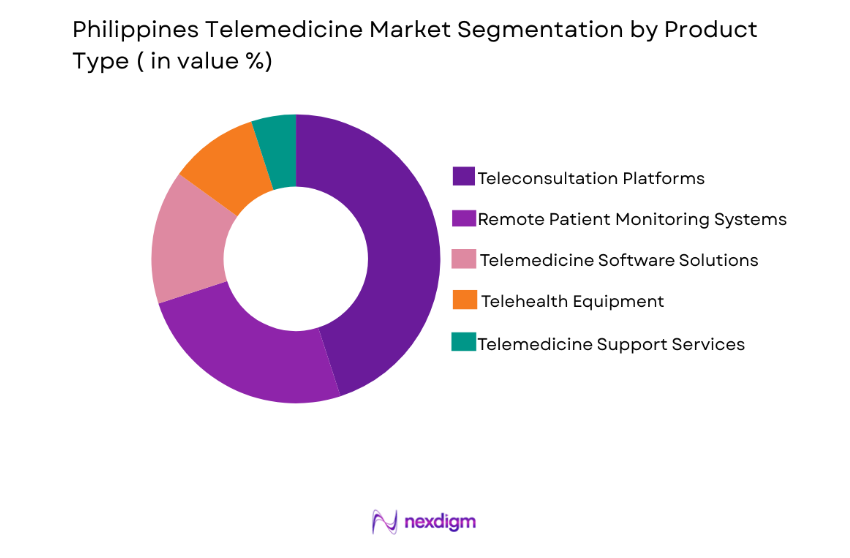
The Philippines telemedicine market is segmented by product type into various sub-segments, including teleconsultation platforms, remote patient monitoring systems, telehealth equipment, and telemedicine software solutions. Recently, teleconsultation platforms have become the dominant sub-segment due to the rising demand for virtual consultations, which provide an efficient way to meet patient needs. Factors such as convenience, affordability, and the ability to consult healthcare professionals from the comfort of home are key drivers for the rapid adoption of teleconsultation platforms.
By Platform Type
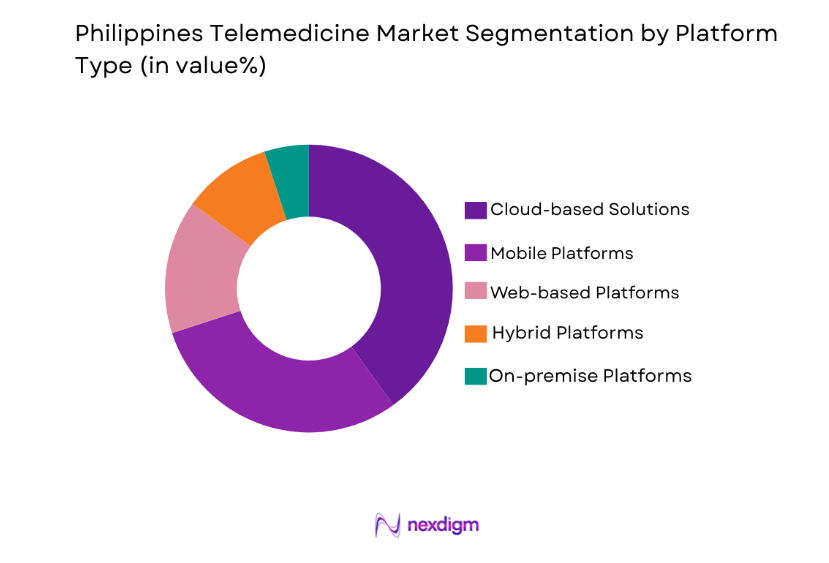
The telemedicine market in the Philippines is segmented by platform type, with sub-segments including mobile platforms, cloud-based platforms, web-based platforms, hybrid platforms, and on-premise platforms. Among these, cloud-based platforms have gained significant market share due to their scalability, ease of integration with existing healthcare systems, and cost-effectiveness. The flexibility of cloud-based solutions allows healthcare providers to offer a wide range of services while reducing infrastructure and maintenance costs, which contributes to their dominance in the market.
Competitive Landscape
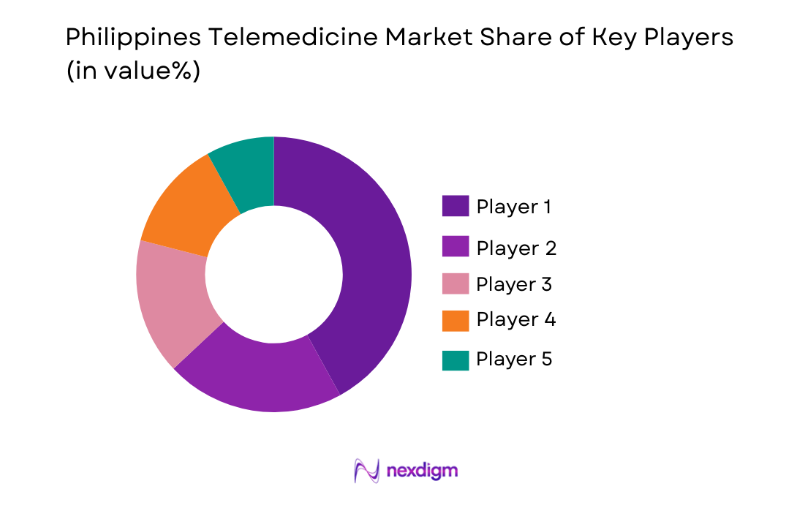
The competitive landscape of the Philippines telemedicine market is dynamic, with several established companies competing to provide innovative solutions. Market consolidation is evident as larger players acquire smaller, technology-focused startups to strengthen their product offerings and market reach. Major players influence the market through their technological advancements, strong customer bases, and the ability to scale rapidly across the country.
| Company Name | Establishment Year | Headquarters | Technology Focus | Market Reach | Key Products | Revenue | Telemedicine Focus |
| Medgate Philippines | 2015 | Manila, Philippines | ~ | ~ | ~ | ~ | ~ |
| HealthNow | 2016 | Makati, Philippines | ~ | ~ | ~ | ~ | ~~ |
| Maxicare | 1987 | Makati, Philippines | ~ | ~ | ~ | ~ | ~ |
| MedicoHealth | 2019 | Cebu, Philippines | ~ | ~ | ~ | ~ | ~ |
| AIMS Healthcare | 2020 | Davao, Philippines | ~ | ~ | ~ | ~ | ~ |
Philippines Telemedicine Market Analysis
Growth Drivers
Government Initiatives and Support
The government of the Philippines has been actively promoting telemedicine through various initiatives aimed at improving healthcare access, especially in underserved areas. The establishment of policies supporting digital health services, coupled with funding programs for healthcare infrastructure development, has significantly accelerated telemedicine adoption. These efforts have improved the healthcare delivery system by enabling faster, more cost-effective consultations, particularly for rural populations who otherwise have limited access to medical professionals. Additionally, government-backed efforts to integrate telemedicine into public healthcare systems have enhanced the credibility and availability of telemedicine services. With the government’s continued focus on expanding digital healthcare infrastructure, the telemedicine market is expected to grow substantially in the coming years.
Increasing Smartphone and Internet Penetration
Another key growth driver in the Philippines telemedicine market is the rapid expansion of smartphone usage and internet connectivity. The high penetration of smartphones, particularly in urban areas, has played a crucial role in the increasing accessibility of telemedicine platforms. The widespread availability of affordable data plans and mobile internet allows patients to easily connect with healthcare providers, overcoming geographical and logistical barriers. The rise in mobile internet usage has enabled telemedicine providers to offer real-time services such as video consultations, appointment scheduling, and access to digital health records, making it easier for patients to receive timely healthcare support.
Market Challenges
Infrastructure Limitations in Rural Areas
Despite the positive outlook for telemedicine, the lack of robust infrastructure in rural areas presents a significant challenge. Many remote regions still face challenges such as unreliable internet connections, limited access to smartphones, and low levels of digital literacy, which hinder the widespread adoption of telemedicine. The quality of video consultations and real-time remote monitoring services may also be compromised due to poor network connectivity, limiting the effectiveness of these services in underserved areas. Addressing these infrastructure gaps will be crucial for achieving nationwide telemedicine adoption.
Data Privacy and Security Concerns
As telemedicine services involve the transmission of sensitive personal health data, concerns over data privacy and security remain a major challenge in the Philippines. Healthcare providers and telemedicine companies need to ensure that their platforms comply with data protection regulations, such as the Data Privacy Act, to safeguard patient information. Data breaches and cyberattacks in the healthcare industry have become increasingly common, raising concerns about the confidentiality of patient records. Ensuring secure digital communication channels and investing in advanced cybersecurity measures will be essential to building trust and encouraging wider adoption of telemedicine services.
Opportunities
Expansion into Rural and Underserved Areas:
One of the most promising opportunities for the telemedicine market in the Philippines lies in expanding services into rural and underserved areas. With the government’s emphasis on healthcare equity, telemedicine has the potential to bridge the healthcare gap by providing easy access to medical consultations in remote areas. By offering affordable and scalable telehealth solutions, service providers can capture the unmet demand in these regions. Furthermore, the adoption of telemedicine platforms will likely result in better healthcare outcomes and increased patient satisfaction, as individuals in rural areas gain greater access to healthcare professionals without the need for long-distance travel.
Strategic Partnerships with Telecom Providers
Strategic partnerships between telemedicine companies and telecommunications providers present significant growth opportunities in the Philippines market. Telecom companies already possess the infrastructure necessary to support mobile data and internet services across the country, and by collaborating with telemedicine companies, they can extend their reach and enhance the quality of healthcare services. These partnerships can help develop tailored solutions for rural areas, where telecom providers may already have coverage, ensuring that telemedicine services can be delivered efficiently to remote populations. By combining their expertise, both sectors can accelerate the adoption of telemedicine in the country.
Future Outlook
The future outlook for the Philippines telemedicine market is positive, with significant growth anticipated over the next five years. As healthcare infrastructure continues to improve, the market is expected to witness an increase in the adoption of telemedicine services across both urban and rural areas. The government’s support for digital health initiatives and the growing demand for convenient healthcare services will further drive market growth. Technological advancements, such as AI and IoT in telemedicine, will enhance patient care and operational efficiency, while expanding internet access in rural areas will improve service reach. Furthermore, as the market matures, the integration of telemedicine with traditional healthcare systems will strengthen the overall healthcare ecosystem in the Philippines.
Major Players
- MedgatePhilippines
- HealthNow
- Maxicare
- MedicoHealth
- AIMS Healthcare
- Consult Health
- Teleconsult
- Medicus
- Salud Medical Services
- AIMS Healthcare
- DocSquad
- CareBridge Health
- TelehealthRx
- Virtus Health
- HealthPlus
Key Target Audience
- Investments and venture capitalist firms
- Government and regulatory bodies
- Healthcare providers
- Telecom operators
- Health insurance companies
- Digital health startups
- Pharmaceutical companies
Research Methodology
Step 1: Identification of Key Variables
The first step in the research process involves identifying the key variables that will influence the telemedicine market in the Philippines. This includes analyzing demographic trends, healthcare infrastructure, government policies, and technology adoption rates.
Step 2: Market Analysis and Construction
Market analysis involves gathering data from primary and secondary sources to construct a comprehensive view of the telemedicine landscape. This includes assessing market size, segmentation, growth trends, and competitive dynamics.
Step 3: Hypothesis Validation and Expert Consultation
The next step involves validating hypotheses through expert consultations with healthcare professionals, telemedicine service providers, and regulatory bodies. This step ensures that the research accurately reflects market realities and emerging trends.
Step 4: Research Synthesis and Final Output
Finally, the data is synthesized to create a complete market report, which includes a detailed analysis of growth drivers, challenges, opportunities, and future trends in the Philippines telemedicine market.

- Executive Summary
- Research Methodology (Definitions, Scope, Industry Assumptions, Market Sizing Approach, Primary & Secondary Research Framework, Data Collection & Verification Protocol, Analytic Models & Forecast Methodology, Limitations & Research Validity Checks)

- Market Definition and Scope
- Value Chain & Stakeholder Ecosystem
- Regulatory / Certification Landscape
- Sector Dynamics Affecting Demand

- Growth Drivers
Rising Healthcare Access in Remote Areas
Government Investment in Digital Healthcare Infrastructure
Increased Acceptance of Telemedicine by Patients and Providers - Market Challenges
Regulatory Hurdles and Licensing Issues
Lack of Digital Infrastructure in Remote Regions
Data Privacy and Security Concerns - Market Opportunities
Expansion of Telemedicine Services in Rural Areas
Integration with Artificial Intelligence for Enhanced Services
Strategic Partnerships with Telecom and Healthcare Providers - Trends
Increased Integration of AI and Machine Learning in Telemedicine
Rise of Mobile Health Applications - Government Regulations
- SWOT Analysis
- Porter’s Five Forces

- By Market Value, 2020-2025
- By Installed Units, 2020-2025
- By Average System Price, 2020-2025
- By System Complexity Tier, 2020-2025

- By System Type (In Value%)
Remote Patient Monitoring Systems
Teleconsultation Platforms
Telemedicine Software Solutions
Telehealth Equipment
Telemedicine Support Services - By Platform Type (In Value%)
Mobile Platforms
Web-based Platforms
Cloud-based Platforms
On-premise Platforms
Hybrid Platforms - By Fitment Type (In Value%)
On-premise Solutions
Cloud-based Solutions
Hybrid Solutions
Integrated Solutions - By End User Segment (In Value%)
Healthcare Providers
Insurance Providers
Government Organizations
Patients

- Market Share Analysis
- Cross Comparison Parameters (System Type, Platform Type, End User Segment, Fitment Type, Procurement Channel, Regulatory Environment, Technological Advancements)
- SWOT Analysis of Key Competitors
- Pricing & Procurement Analysis
- Key Players
PhilHealth
Philippine Telehealth Solutions
Medgate Philippines
HealthNow
Telemedicine Philippines
Maxicare
Consult Health
Teleconsult
Medicus
Salud Medical Services
AIMS Healthcare
DocSquad
CareBridge Health
TelehealthRx
Virtus Health

- Increasing Demand for Telemedicine Services in Rural Areas
- Government Initiatives to Support Telemedicine Adoption
- Growing Role of Insurance Providers in Telemedicine Integration
- Patients Seeking Convenient and Affordable Healthcare

- Forecast Market Value, 2026-2035
- Forecast Installed Units, 2026-2035
- Price Forecast by System Tier, 2026-2035
- Future Demand by Platform, 2026-2035


 Request a Sample
 Ask for Customization
 Get a Quote
 Enquire Now