
 Download PDF
Market Overview
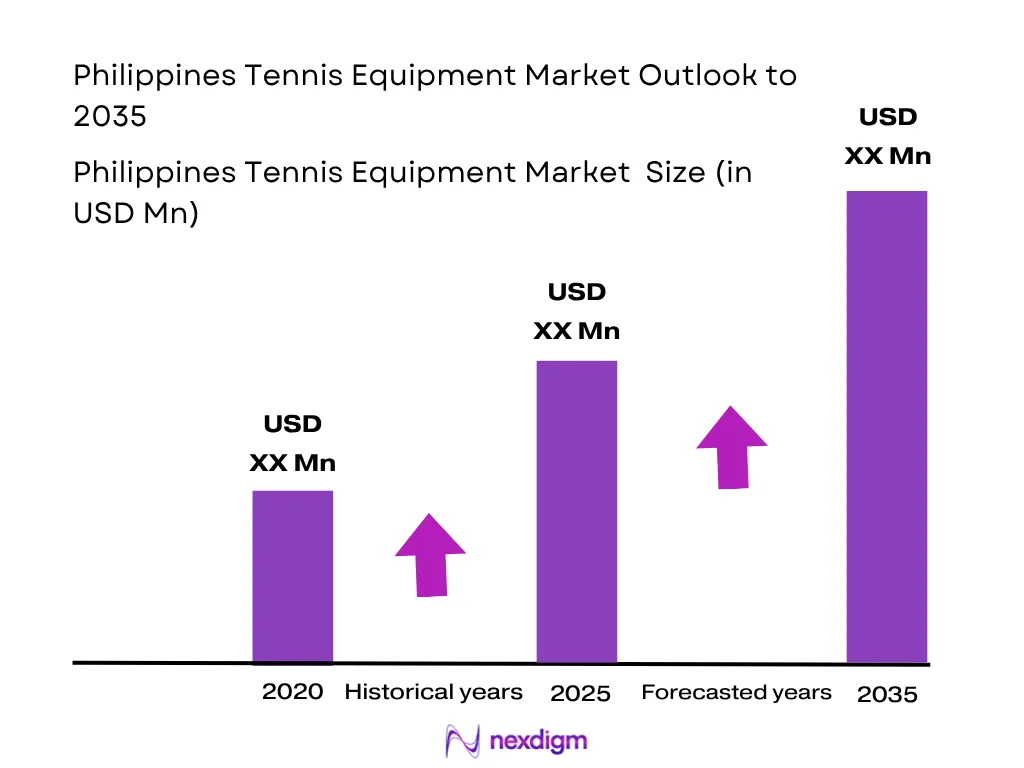
The Philippines Tennis Equipment Market is experiencing rapid expansion, driven by increasing participation in racket sports and growing consumer interest in health and fitness. According to Nexdigm, the tennic equipment market in the Philippines is expected to generate approximately USD ~ million in revenue, reflecting an expanding segment within overall sports gear. Specific imports of tennis and racket equipment showed strong revenue growth rising from USD ~ million in 2024 to USD ~ million in 2025, indicating rising market demand and importer activity backed by trade data from verified sources.
The market’s mobility is strongest in Metro Manila, Cebu, and Davao, where disposable incomes, active sports communities, and infrastructure are most developed. Metro Manila remains dominant due to high retail penetration, dense club networks, and international brand presence, while Cebu and Davao benefit from rising urbanization and local sports programming. These regions attract major retail players and importers that cater to both amateur and competitive segments.
Market Segmentation
By Product Type
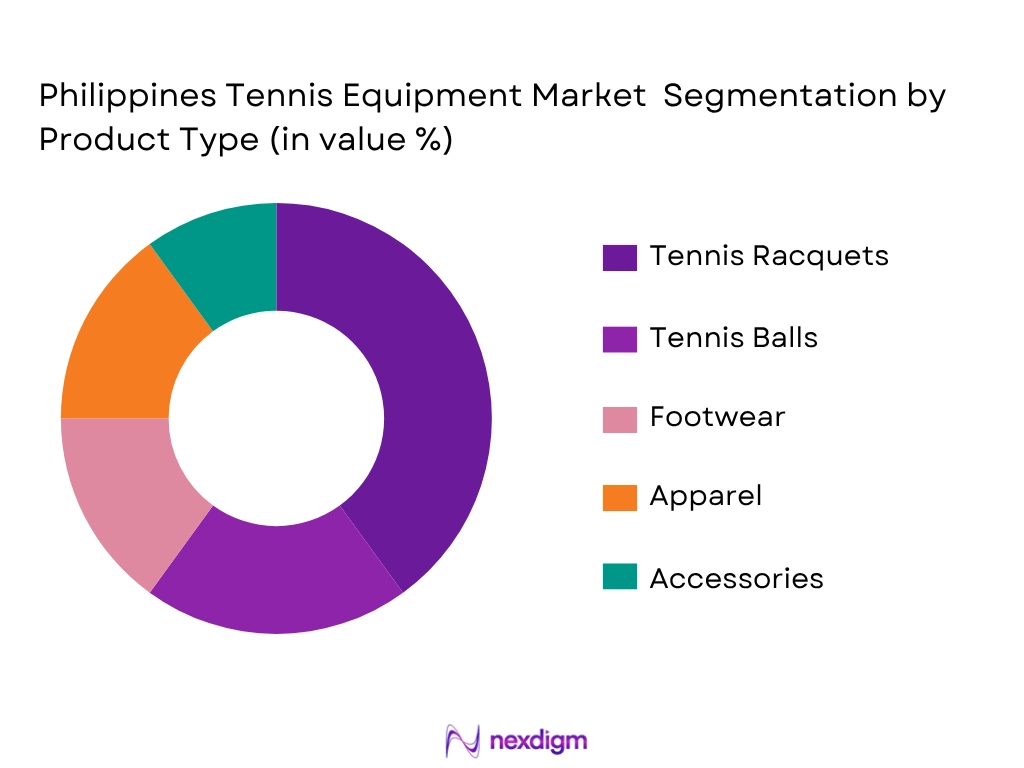
By product type, tennis rackets dominate the Philippines Tennis Equipment market due to being the essential entry product for participation. Higher expenditure per unit and sustained demand among both beginners and ongoing players contribute to this dominance. Major brands such as Wilson, Head, Babolat, and Yonex are widely imported and retailed escalate the prominence of racket sales. Tennis balls are next due to regular replacement cycles, while footwear and apparel also hold meaningful portions because tennis players often seek performance‑oriented designs. Accessories such as grips and bags account for smaller but steadily growing demand, tied to customization and seasonal purchases.
By Distribution Channel
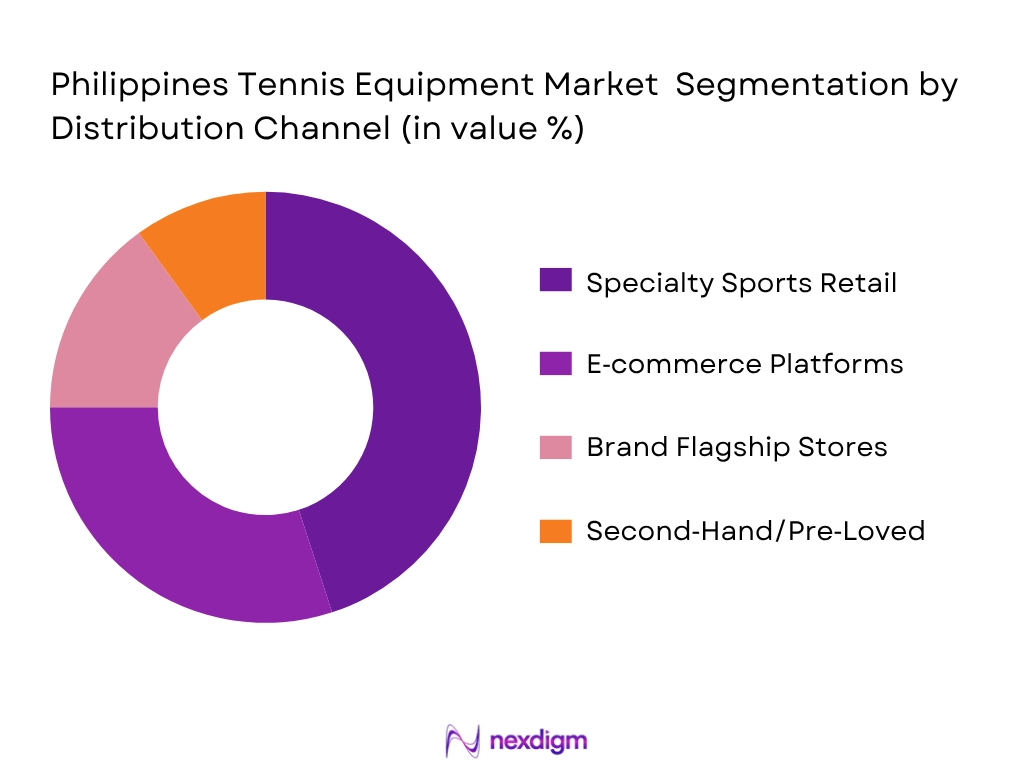
Under distribution channels, specialty sports retailers dominate due to established networks, catalog breadth, and in‑store consumer testing factors that build consumer confidence in high‑value tennis gear purchases. Brick‑and‑mortar stores like Decathlon and Toby’s Sports maintain strong brand strength and physical presence, especially in Metro Manila and key urban centers. E‑commerce is rapidly expanding, benefitting from digital adoption and convenience, particularly among younger players and less central regions. Flagship brand stores contribute through premium offerings, and second‑hand market activity continues as a niche but active segment due to affordability motivations among entry‑level consumers.
Competitive Landscape
The Philippines Tennis Equipment Market exhibits moderate competition, with global brands active through imports and local retail partnerships. A few key players influence pricing, distribution, and market awareness, highlighting the influence of international sporting goods manufacturers and established chain retailers. The Philippines Tennis Equipment market is shaped by the presence of major international brands (Wilson, Head, Babolat) and strong retail channels such as Decathlon Philippines Inc. and Toby’s Sports. These players influence product availability, pricing tiers, and consumer engagement as they integrate both offline experiences and digital storefronts. Market consolidation is evident as a limited number of global manufacturers and retail importers control significant portions of supply and distribution, while local specialty sellers cater to niche preferences and collectible equipment segments.
| Company | Founded | Headquarters | Retail Footprint | Import Network | Online Presence | Brand Portfolio | Local Distributors |
| Wilson Sporting Goods | 1913 | USA | ~ | ~ | ~ | ~ | ~ |
| Babolat | 1875 | France | ~ | ~ | ~ | ~ | ~ |
| Head | 1950 | Austria | ~ | ~ | ~ | ~ | ~ |
| Yonex | 1946 | Japan | ~ | ~ | ~ | ~ | ~ |
| Decathlon Philippines Inc. | 1976 | France (Philippines) | ~ | ~ | ~ | ~ | ~ |
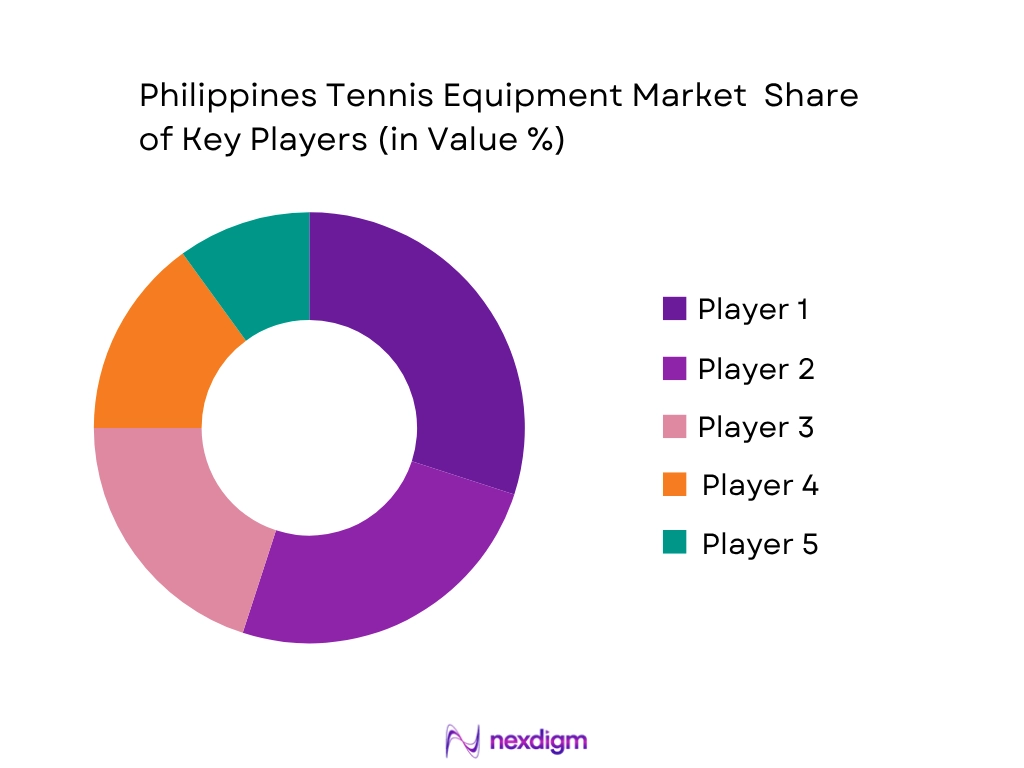
Philippines Tennis Equipment Market Analysis
Growth Drivers
Rising Tennis Participation
Participation in tennis within the Philippines has shown tangible signs of expansion, reflected by the sustained interest in national and international events hosted locally and competitive fields in junior age group competitions. For instance, a recent grass‑roots tournament, the Rep. Eric Olivarez Cup, featured 230 junior participants, indicating strong engagement among younger players and growing community involvement in the sport across Metro Manila and nearby provinces. Additionally, the Philippine Women’s Open, a WTA 125 event held in Manila, was notably discussed by the Philippine Sports Commission (PSC) chair as a catalyst expected to further elevate national interest and participation in tennis. While comprehensive official participation headcounts specific to tennis are not regularly published by the Philippine government, these event figures and official commentary from the PSC highlight meaningful traction among athletes and juniors. At the same time, the Philippines’ broader population of 115.8 million people, combined with improving economic indicators such as GDP of USD 461.62 billion and GDP per capita of USD 3,984.8, creates an environment where more individuals can engage in leisure and competitive sports. These patterns support the inference that tennis participation is on an upward trajectory.
Increasing Disposable Income
Macroeconomic conditions in the Philippines contribute to growing discretionary spending capacity among segments of the population that can afford sports participation. According to World Bank data, the Philippines’ GDP per capita reached USD 3,984.8 in 2024, an increase from prior years, reflecting stronger aggregate economic output per resident. Meanwhile, personal remittances represented 8.7 percent of GDP, which is a relatively substantial inflow that supports household income and consumption potential beyond domestic earnings. These remittance flows often fund lifestyle and recreational expenditures that include sports equipment and participation costs. The country’s unemployment rate is low at 2.2 percent, indicating a relatively stable labor market where more individuals retain regular income streams, which can translate into discretionary spending on sports like tennis that require gear, court access, and training. Infrastructure development and urban consumer demand evidenced by high internet usage of 67 percent of the population, also support e‑commerce purchases of sports equipment and access to information about tennis programs and facilities. Collectively, these macroeconomic indicators point to a context in which rising disposable income enables individuals to allocate resources toward activities such as tennis, contributing to market demand for equipment and participation opportunities.
Market Challenges
Limited Local Manufacturing
One of the structural challenges facing the Philippines Tennis Equipment Market is the lack of domestic production capacity for tennis gear. The nation does not host local manufacturers of tennis rackets, balls, or specialized tennis footwear at scale; instead, these items are predominantly imported, which increases reliance on foreign production hubs. This manufacturing gap constrains the market’s ability to build competitive pricing advantages and creates supply dependencies on global suppliers. In broader industrial terms, the Philippines economy, with a GDP of USD 461.62 billion as reported in 2024, has a significant services sector and a comparatively smaller industrial production base, which limits localized production of specialized sporting goods. The country’s total population of 115.8 million supports diverse demand, yet without robust local manufacturing, national consumption remains tied to imported goods. The absence of large‑scale domestic manufacturing also limits opportunities for backend investment in related areas such as materials engineering or equipment assembly that could contribute to overall industry growth. Public data on sports equipment production at the national level remains limited, underscoring this structural challenge. As a result, stakeholders must navigate supply chains that depend heavily on imports and external suppliers, which can introduce volatility in availability and cost.
Heavy Import Dependence
Closely linked to limited local manufacturing is the Philippines’ heavy dependence on imports for tennis equipment. The country’s trade profile shows substantial import activity. For example, overall imports were valued at about USD 185.16 billion in 2024, significantly higher than exports of approximately USD 118.97 billion. This broad import orientation reflects the broader sports equipment landscape where specialized items like tennis rackets, balls, and footwear are brought in from international producers. Such reliance exposes the market to external supply chain risks including global logistical bottlenecks, currency fluctuations, and tariff structures that can affect consumer access and pricing. The import reliance also means that domestic retailers and distributors must manage inventory based on foreign supply schedules, which can impact availability for players and clubs. Given a macroeconomic context in which personal income and consumption are improving, as indicated by remittances accounting for 8.7 percent of GDP and a relatively low unemployment rate, the continued reliance on imported goods can constrain responsiveness to growing market demand. Reducing this dependency requires strategic interventions such as attracting foreign direct investment into manufacturing or establishing import‑substitution policies, but current patterns illustrate the market’s exposure to external factors.
Opportunity Areas
School & Community Tennis Programs
Expanded engagement in school and community tennis programs represents a significant opportunity to broaden player bases and cultivate long‑term participation. Grassroots and junior tournaments like the Olivarez Cup, which fielded 230 entrants across multiple age categories, demonstrate existing community demand and suggest that structured programs can mobilize large groups of youths into regular tennis activity. The presence of such competitions is indicative of organized participation infrastructure at local levels, which can be scaled further through collaboration between schools, local governments, and national bodies such as the Philippine Sports Commission (PSC). By integrating tennis into school physical education and after‑school activities, younger cohorts can access the sport irrespective of socioeconomic background. Higher participation in school programs also generates demand for equipment purchases, coaching services, and related support industries. Moreover, community programs often serve as entry points for lifelong participation and can help diversify the sport’s demographic base. With over 115 million people in the Philippines, these programs have the potential to reach large segments of the youth population, fostering a culture of sport engagement that supports broader market growth.
Partnerships with Local Tennis Clubs
Developing strategic partnerships with local tennis clubs and associations offers a pathway to enhance market penetration and organize competitive ecosystems. Entities such as the Philippine Tennis Association (PhilTA), established in 1920 and now leading national tennis development efforts, are central to structured competitive play and athlete development. Aligning with such bodies allows equipment manufacturers, retailers, and program organizers to tap into established networks of players and venues. Local clubs serve as hubs for regular play, coaching, and competitive matches, which stimulates sustained demand for equipment and training services. Partnerships can also unlock shared investments in facilities, coaching certifications, and promotional campaigns that increase visibility for tennis among broader populations. These collaborative frameworks leverage existing social structures and club memberships to create more integrated market engagement, particularly in urban centers where tennis facilities are more concentrated. With coaching programs and academy networks growing in metropolitan areas like Metro Manila, such partnerships could facilitate both grassroots development and higher‑level competitive pathways, feeding back into equipment demand and overall market expansion.
Future Outlook
Over the next decade, the Philippines Tennis Equipment Market is expected to sustain growth as interest in racket sports continues to broaden beyond traditional hubs. Expanding access to digital retail platforms, improved import logistics, and targeted efforts to develop tennis infrastructures (courts, facilities) will support market penetration. Partnerships between global brands and local clubs may also catalyze product demand among younger demographics. Rising disposable incomes and health‑oriented lifestyle shifts are likely to strengthen overall equipment sales, while sustained entry‑level interest supports ancillary segments like apparel and accessories.
Major Players
- Wilson Sporting Goods
- Babolat
- Head
- Yonex
- Decathlon Philippines Inc.
- Toby’s Sports
- Baseline Tennis PH
- Philippine Tennis Cartel
- Prince Sports (via local reseller)
- Tecnifibre (retail partners)
- Nike (tennis footwear/apparel)
- Adidas (tennis gear)
- Chris Sports Philippines
- EM Swiss Imports
- Swiss Tennis Partners
Key Target Audience
- Sports Retail Chains
- Specialty Tennis Equipment Importers
- Investments and Venture Capital Firms
- Government and Regulatory Bodies
- Tennis Clubs and Academy Operators
- E‑commerce Marketplace Sellers
- Athletic Event Organizers
- Retail Product Category Managers
Research Methodology
Step 1: Identification of Key Variables
The initial phase involved charting the Philippines tennis equipment ecosystem, identifying key variables such as import volume, distribution networks, product categories, and consumption behavior through secondary research databases and industry data sources.
Step 2: Market Analysis and Construction
Historical data from trade intelligence (imports, revenue trends), retail reports, and market forecasts were aggregated to analyze demand patterns, product penetration, and resultant revenue contributions across segments.
Step 3: Hypothesis Validation and Expert Consultation
Market assumptions were validated through expert discussions with wholesalers, retailers, and trade analysts familiar with the Philippines sports goods sector, ensuring operational inputs align with observed market behaviors.
Step 4: Research Synthesis and Final Output
The final phase integrated insights from verified trade databases, secondary industry reports, and professional feedback to produce a validated market overview, segmentation analysis, competitive landscape, and future outlook.

- Executive Summary
- Research Methodology (Market Definitions and Scope, Abbreviations & Terminology, Primary and Secondary Data Sources, Market Sizing and Forecasting Methodology (Demand‑Side & Supply‑Side), Competitive Benchmarking Framework, Assumptions and Limitations)

- Market Definition and Inclusion Criteria
- Market Genesis and Development Dynamics
- Sport Adoption and Participation Trends
- Supply Chain Structure
- Value Chain and Channel Flows
- Regulatory, Trade, and Quality Standards Landscape

- Growth Drivers (Rising Tennis Participation & Fitness Awareness, Increasing Disposable Income and Sports Spending, Growth of Online Sales Channels, Performance‑Driven Product Innovation)
- Market Challenges (Limited Local Manufacturing and Heavy Import Dependence, Import Tariffs & Distribution Inefficiencies, Limited Tennis Infrastructure in Secondary Cities) Opportunity Areas (School & Community Tennis Programs, Partnerships with Local Tennis Clubs, Growth in Carbon Fiber & Advanced Material Equipment)
- Emerging Trends (Tech‑Enabled Gear and Sport Analytics, Eco‑Friendly & Sustainable Tennis Products)
- Apparel & Accessories, Digital Coaching Integration, Youth-Oriented Performance Gear)
- Retail Integration, Social Play & Community‑Led Marketing)
- Regulatory Environment (Product Safety and Certification Requirements, Import Duties & Trade Tariff Impacts, Advertising and Endorsement Guidelines)
- SWOT Analysis (Strengths, Weaknesses, Opportunities, Threats of the Philippines tennis equipment market)
- Stakeholder Ecosystem (Relationships among manufacturers, distributors, retail chains, sports federations, tennis clubs and coaches)
- Porter’s Five Forces (Competitive rivalry, supplier power (e.g. material suppliers), buyer power, threat of new entrants (niche sports tech startups), threat of substitutes)

- By Market Value (2020-2025)
- By Market Volume (2020-2025)
- By Average Selling Price by Category (2020-2025)
- By Import vs Local Sourcing Dynamics (2020-2025)

- By Product Type (In Value%)
Tennis Rackets
Tennis Balls
Tennis Footwear
Apparel & Performance Wear
Accessories - By End‑User Segment (In Value%)
Competitive Athletes
Recreational Players
Schools & Academies
Tennis Events & Tournaments - By Distribution Channel (In Value%)
Specialty Sports Retailers
Brand Flagship Stores
E‑Commerce Platforms
Second‑Hand/Pre‑Loved Market - By Price Tier (In Value%)
Economy/Budget
Mid‑Range
Premium/Professional - By Geography (In Value%)
Metro Manila
Luzon Suburbs
Visayas Region
Mindanao Region

- Market Share by Value & Volume (Leading Brands)
- Competitive Benchmarking Parameters (Distribution Network Depth, Brand Penetration Index, SKU Breadth & Depth, Product Innovation Score, Average Price Positioning, Import Dependencies, Retailer Partnership Score, E‑Commerce Penetration)
- Competitive Intensity Mapping (Concentration, Fragmentation)
- Channel and Tier‑Level Competition Dynamics
- SWOT of Major Players (Strengths, Weaknesses, Opportunities, Threats for key companies)
- Pricing & Promotional Benchmarking (Average selling prices and SKU-level pricing for major brands, premium vs standard product lines)
- Detailed Profiles of Major Companies Profiles
Wilson Sporting Goods
Babolat
Head
Yonex
Decathlon Philippines
Toby’s Sports
Baseline Tennis PH
Philippine Tennis Cartel
Athletico PH / International Inc.
Prince Sports
Tecnifibre
Nike
Adida
K‑Swiss/Onitsuka Tiger
Chris Sports Philippines

- Demand and Utilization (Sales breakdown by end-user type: recreational players vs professional athletes, club/academy purchases)
- Consumer Demographics and Purchasing Behavior (Age, income, gender distribution, purchasing frequency, channel preferences)
- Budget and Price Sensitivity (Pricing tiers: premium vs mid-range vs value segment, consumer spending patterns on equipment and apparel)
- Needs, Desires and Pain Points (Comfort, performance, and durability requirements, desire for brand/image, issues like gear availability or fitting)
- Decision-Making Process (Influencers in purchase decisions: coaches’ recommendations, peer reviews, online research, role of professional endorsements and demo clinics)

- By Market Value (2020-2025)
- By Market Volume (2020-2025)
- By Average Selling Price by Category (2020-2025)
- By Import vs Local Sourcing Dynamics (2020-2025)


 Request a Sample
 Ask for Customization
 Get a Quote
 Enquire Now