

 Download PDF
Market Overview
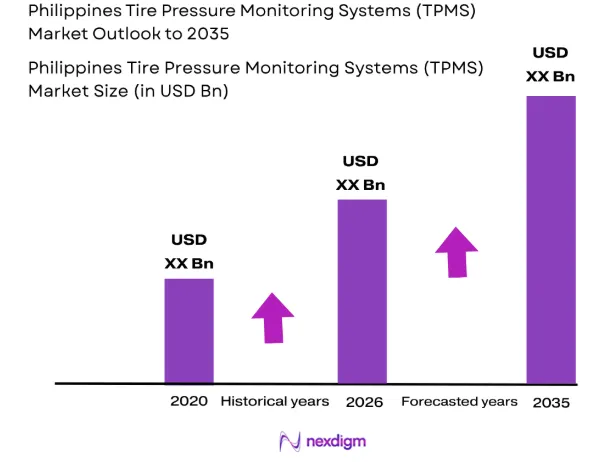
The Philippines Tire Pressure Monitoring Systems (TPMS) market is projected to reach USD ~ billion based on recent historical assessment, driven by the growing adoption of advanced safety technologies in vehicles and the need for fuel efficiency. Rising awareness about vehicle safety, particularly in urban areas, is encouraging the implementation of TPMS as a standard feature in both passenger and commercial vehicles. Government regulations on vehicle safety and infrastructure improvements are further stimulating market growth.
Metro Manila, Cebu, and Davao are the leading cities driving the adoption of TPMS in the Philippines. These urban centers face increasing traffic congestion and are witnessing higher vehicle penetration, which drives the need for advanced safety features like TPMS. The demand for TPMS is further supported by the increasing focus on vehicle maintenance and safety, as well as the presence of global automotive brands offering vehicles equipped with TPMS technologies in these regions.
Market Segmentation
By Product Type
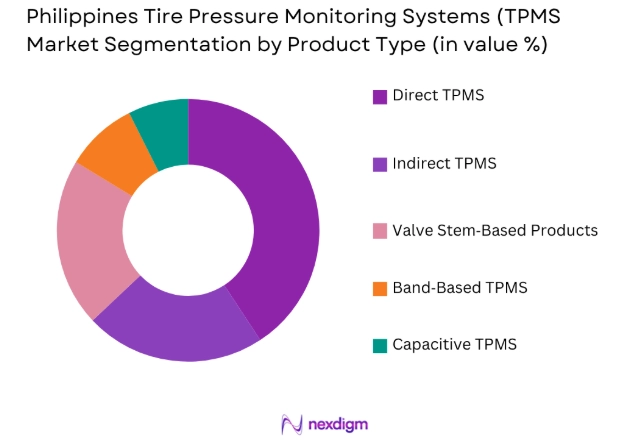
The Philippines Tire Pressure Monitoring Systems market is segmented by product type into direct TPMS and indirect TPMS. The direct TPMS has gained a dominant market share due to its superior accuracy in monitoring tire pressure, along with the ability to alert drivers immediately to any potential issues. Direct TPMS provides real-time pressure readings from each tire, contributing to enhanced safety and maintenance. The increasing availability of vehicles equipped with direct TPMS at competitive prices, along with its ability to prevent tire blowouts and improve fuel efficiency, has strengthened its dominance in the market.
By Vehicle Type
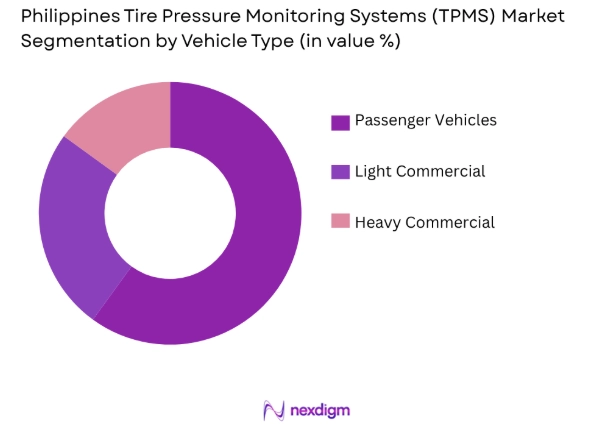
The market is segmented by vehicle type into passenger vehicles, light commercial vehicles, and heavy commercial vehicles. The passenger vehicle segment holds a dominant share in the Philippines market due to the growing consumer demand for safety features and the increasing affordability of advanced technologies in mid-range vehicles. As consumer awareness of road safety and tire maintenance grows, the adoption of TPMS in passenger vehicles continues to rise, driving the segment’s growth. Additionally, regulatory changes requiring more safety features in passenger vehicles are expected to support the segment’s expansion.
Competitive Landscape
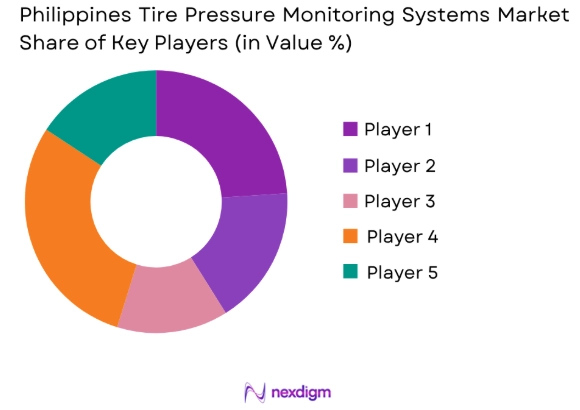
The Philippines Tire Pressure Monitoring Systems market is moderately competitive, with a mix of global and local players driving innovation and adoption. Major global automotive suppliers dominate the market, offering advanced TPMS solutions that comply with international safety standards. As demand for safety technologies increases, partnerships with automakers, along with the introduction of cost-effective solutions, are key strategies for market expansion. The market is witnessing a trend toward the integration of TPMS into more vehicle models, including mid-range and budget vehicles, which will further boost market competition.
| Company Name | Establishment Year | Headquarters | Technology Focus | Market Reach | Key Products | Revenue (USD Billion) | Market-Specific Parameter |
| Bosch | 1886 | Germany | ~ | ~ | ~ | ~ | ~ |
| Continental AG | 1871 | Germany | ~ | ~ | ~ | ~ | ~ |
| Denso Corporation | 1949 | Japan | ~ | ~ | ~ | ~ | ~ |
| Sensata Technologies | 1906 | US | ~ | ~ | ~ | ~ | ~ |
| ZF Friedrichshafen | 1915 | Germany | ~ | ~ | ~ | ~ | ~ |
Philippines Tire Pressure Monitoring Systems Market Analysis
Growth Drivers
Rising Consumer Awareness about Vehicle Safety
The Philippines Tire Pressure Monitoring Systems market is experiencing growth due to increasing consumer awareness about the importance of vehicle safety. As the automotive market becomes more sophisticated, consumers are demanding advanced safety features, including TPMS, to prevent accidents caused by underinflated tires. TPMS helps drivers avoid hazardous situations such as tire blowouts and improves fuel efficiency. The Philippine government’s support for road safety, coupled with rising concerns over maintenance costs and the need to optimize vehicle performance, is contributing to the growing adoption of TPMS. Furthermore, the availability of affordable vehicles equipped with these systems is also driving consumer adoption. The widespread use of digital media and consumer education initiatives by automotive companies is further accelerating the awareness of TPMS as a crucial safety feature.
Regulatory Push for Safer Vehicles
Government regulations and policies aimed at improving vehicle safety standards are a major driver for the Philippines Tire Pressure Monitoring Systems market. The Philippines government has increasingly focused on ensuring vehicle safety to reduce road accidents. As a part of this effort, the implementation of safety features like TPMS has been encouraged, and vehicles without such features are often subject to regulatory scrutiny. Additionally, international standards for vehicle safety, such as the United Nations Economic Commission for Europe (UNECE) regulations, are influencing the automotive market in the Philippines. The government is expected to continue supporting safety technology through incentives and regulations that drive automakers to include TPMS in more vehicle models, fostering further market growth.
Market Challenges
Inconsistent Road Infrastructure and Environmental Factors
One of the key challenges affecting the Philippines Tire Pressure Monitoring Systems market is the inconsistency in road infrastructure, particularly in rural and remote areas. TPMS relies heavily on well-maintained tires, and road conditions such as potholes, debris, and poor road markings can accelerate tire wear, reducing the effectiveness of TPMS. Moreover, the Philippines’ tropical climate, characterized by high humidity and rainfall, further exacerbates tire conditions and monitoring accuracy. The lack of proper infrastructure and maintenance in some regions reduces the widespread adoption and performance reliability of TPMS. Until there is a sustained improvement in road conditions, the potential of TPMS will be limited in certain areas, thus hindering market growth.
High Initial Cost of Adoption
The cost of adopting TPMS remains a significant barrier for many consumers, particularly in the lower-income segments. While TPMS is increasingly being integrated into new vehicles, it is still often seen as an additional expense, especially in mid-range and budget vehicles. Despite the long-term benefits of TPMS, such as improved fuel efficiency and increased vehicle safety, the upfront cost of the system remains a challenge. The market is also hindered by consumer reluctance to pay for systems they perceive as non-essential. Manufacturers face the challenge of making TPMS more affordable and demonstrating its value to cost-conscious consumers. Until TPMS becomes a standard feature across all vehicle types, its penetration in the market will remain constrained.
Opportunities
Integration of TPMS with Other Vehicle Safety Features
The integration of Tire Pressure Monitoring Systems with other vehicle safety technologies presents a significant opportunity for market growth in the Philippines. Automakers are increasingly looking for ways to offer comprehensive safety packages that incorporate various advanced driver assistance systems (ADAS) alongside TPMS. By integrating TPMS with lane departure warning systems, adaptive cruise control, and other safety features, automotive manufacturers can provide a more holistic approach to vehicle safety. This integration would make TPMS more appealing to consumers who are increasingly seeking vehicles equipped with multiple safety features. The opportunity for automakers to offer bundled safety features will further drive the demand for TPMS in the Philippines market.
Growth in Electric and Hybrid Vehicles
The rising adoption of electric and hybrid vehicles (EVs and HEVs) in the Philippines presents a new opportunity for the Tire Pressure Monitoring Systems market. EVs and HEVs are often equipped with advanced safety technologies, including TPMS, as part of their eco-friendly and safety-conscious appeal. As more consumers turn to electric and hybrid vehicles due to their environmental benefits and cost savings, the demand for TPMS systems will increase in these vehicle categories. Furthermore, government incentives for EVs and HEVs, along with growing infrastructure for electric vehicle charging, will continue to support the adoption of these technologies. As EVs and HEVs become more mainstream in the Philippines, the market for TPMS will expand, driven by both regulatory incentives and consumer demand for safety in eco-friendly vehicles.
Future Outlook
The Philippines Tire Pressure Monitoring Systems market is expected to see steady growth over the next five years. Advancements in sensor technology, increasing vehicle safety regulations, and rising consumer demand for vehicles with enhanced safety features are driving the market. The market will also benefit from the growing presence of electric and hybrid vehicles in the region. As TPMS becomes a standard feature in more vehicle categories, particularly in mid-range and budget segments, the market’s reach will expand significantly. Additionally, the government’s continued focus on road safety and infrastructure development will provide a favorable environment for TPMS adoption.
Major Players
- Bosch
- Continental AG
- Denso Corporation
- Sensata Technologies
- ZF Friedrichshafen
- Aptiv
- Valeo
- NXP Semiconductors
- Infineon Technologies
- Panasonic Automotive
- Mobileye
- Hyundai Mobis
- Autoliv
- Veoneer
- Hitachi Astemo
Key Target Audience
- Investment & venture capital firms
- Government & regulatory bodies
- Automotive OEMs
- Automotive component manufacturers
- Vehicle importers & distributors
- Fleet operators
- Automotive technology providers
Research Methodology
Step 1: Identification of Key Variables
Key variables such as consumer demand, vehicle safety trends, regulations, and technology adoption rates were identified to form the basis for market estimation.
Step 2: Market Analysis and Construction
The market was segmented by product type and vehicle category, focusing on key drivers and competitive dynamics. Factors influencing the adoption of TPMS were evaluated.
Step 3: Hypothesis Validation and Expert Consultation
Experts from the automotive industry, including engineers and market analysts, were consulted to validate the research assumptions and ensure market relevance.
Step 4: Research Synthesis and Final Output
The final report was synthesized based on data, expert insights, and historical trends to deliver a comprehensive outlook of the Philippines TPMS market.

- Executive Summary
- Research Methodology (Definitions, Scope, Industry Assumptions, Market Sizing Approach, Primary & Secondary Research Framework, Data Collection & Verification Protocol, Analytic Models & Forecast Methodology, Limitations & Research Validity Checks)

- Market Definition and Scope
- Value Chain & Stakeholder Ecosystem
- Regulatory / Certification Landscape
- Sector Dynamics Affecting Demand

- Growth Drivers
Increasing Demand for Vehicle Safety Systems
Rising Awareness of Tire Maintenance
Government Regulations on Vehicle Safety - Market Challenges
High Initial System Costs
Lack of Consumer Awareness in Emerging Markets
Integration with Existing Vehicle Systems - Market Opportunities
Expansion in Electric Vehicle Segments
Government Incentives for Safety Features
Growth in Fleet Management and Commercial Vehicle Safety - Trends
Integration of TPMS with Smart Vehicle Systems
Increased Focus on Fuel Efficiency and Tire Lifespan - Government Regulations
- SWOT Analysis
- Porter’s Five Forces

- By Market Value, 2020-2025
- By Installed Units, 2020-2025
- By Average System Price, 2020-2025
- By System Complexity Tier, 2020-2025

- By System Type (In Value%)
Direct TPMS
Indirect TPMS
Hybrid TPMS
Tire Pressure Monitoring for Electric Vehicles
Advanced TPMS - By Platform Type (In Value%)
Passenger Vehicles
Commercial Vehicles
Electric Vehicles
Luxury Vehicles - By Fitment Type (In Value%)
OEM Fitment
Aftermarket Fitment
Integrated Systems
Modular Systems - By End User Segment (In Value%)
Private Vehicle Owners
Fleet Operators
Logistics and Transport Companies

- Market Share Analysis of Key Competitors
- Cross Comparison Parameters (System Type, Platform Type, Procurement Channel, End User Segment, Fitment Type, Sensor Technology, System Accuracy)
- SWOT Analysis of Key Competitors
- Pricing & Procurement Analysis
- Key Players
Bosch
Continental AG
Denso Corporation
ZF Friedrichshafen
Valeo
Aptiv
Magna International
Hyundai Mobis
Autoliv
Mobileye
Hitachi Astemo
Nidec Corporation
Hella GmbH
Texas Instruments
Infineon Technologies

- Increasing Adoption by Private Vehicle Owners
- Fleet Operators’ Focus on Vehicle Safety
- Transport Companies’ Adoption for Fuel Efficiency
- Government’s Role in Promoting TPMS Regulations

- Forecast Market Value, 2026-2035
- Forecast Installed Units, 2026-2035
- Price Forecast by System Tier, 2026-2035
- Future Demand by Platform, 2026-2035


 Request a Sample
 Ask for Customization
 Get a Quote
 Enquire Now