

 Download PDF
Market Overview
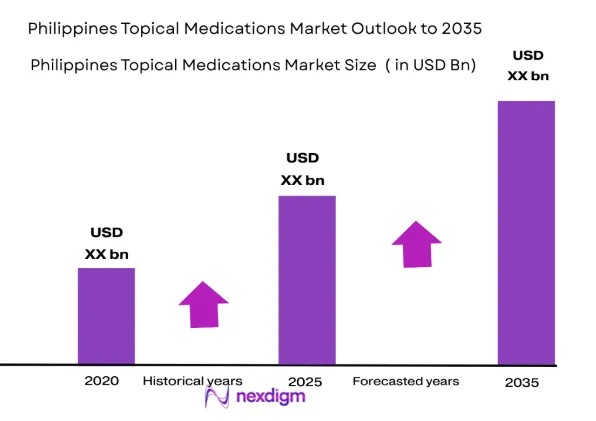
The Philippines Topical Medications market size is valued at approximately USD ~ billion, reflecting significant growth driven by increasing consumer demand for topical treatments. This surge is mainly fueled by the growing prevalence of dermatological issues and the rising adoption of over-the-counter (OTC) topical medications. The market’s expansion is also supported by a robust healthcare infrastructure and greater consumer awareness about skin health. Additionally, advancements in formulation technology and increased investment in dermatological research contribute to the market’s momentum.
The Philippines has emerged as a key player in the regional market, with Metro Manila and Cebu being the dominant cities in terms of market concentration. These urban centers are characterized by a high population density, better healthcare access, and a growing middle class, driving demand for topical medications. Moreover, the demand in these cities is supported by the presence of a wide range of pharmaceutical retail outlets and online platforms, making it easier for consumers to access these products. The country’s market growth is also influenced by government initiatives to improve healthcare services.
Market Segmentation
By Product Type
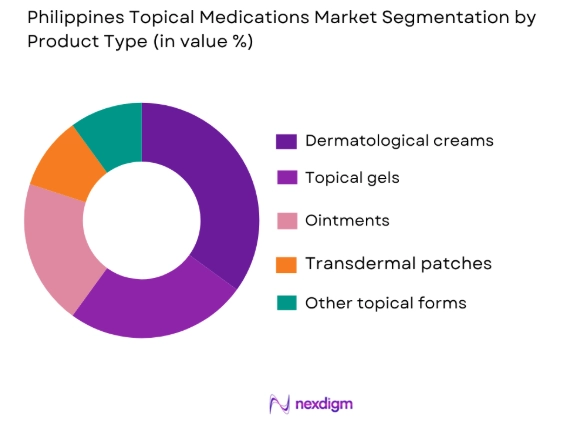
The Philippines Topical Medications market is segmented by product type into dermatological creams, topical gels, ointments, transdermal patches, and other topical forms. Recently, dermatological creams have dominated the market share due to factors such as their versatility in treating various skin conditions, broad consumer acceptance, and the convenience they offer. Creams are commonly used for both therapeutic and cosmetic purposes, which boosts their popularity in both urban and rural settings. Moreover, the availability of a wide variety of branded and generic products in this category, along with lower price points, strengthens their dominance in the market.
By Platform Type
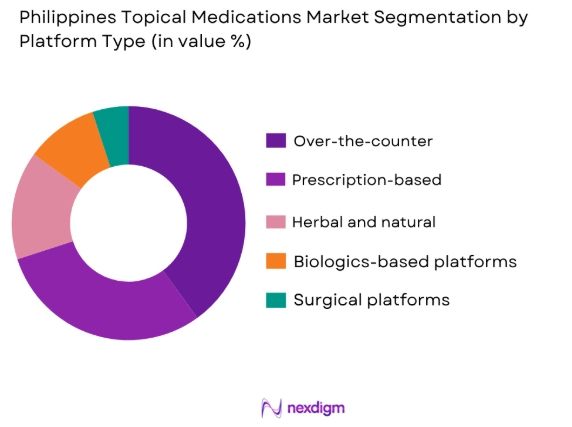
The market is further segmented by platform type into prescription-based, over-the-counter, herbal and natural formulations, biologics-based platforms, and surgical platforms. Recently, over-the-counter products have been dominating the market due to increasing consumer self-medication and preference for easily accessible treatments. The availability of a wide range of OTC topical medications in local pharmacies, coupled with consumer confidence in these products’ effectiveness, supports the continued growth of this sub-segment. OTC products are particularly attractive due to their convenience and affordability, contributing to their large share in the market.
Competitive Landscape
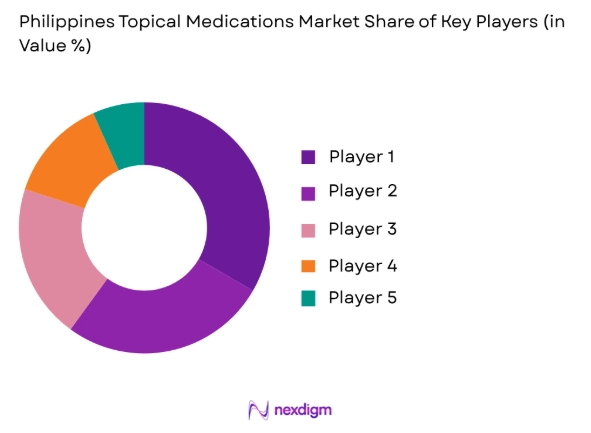
The competitive landscape in the Philippines Topical Medications market is marked by a blend of established global players and local manufacturers. Market consolidation is seen as several companies expand their product portfolios through acquisitions and collaborations. Major pharmaceutical companies are increasingly focusing on product differentiation, pricing strategies, and expanding their distribution channels. These efforts aim to capture the growing demand for dermatological treatments driven by a rising number of skin-related health concerns.
| Company Name | Establishment Year | Headquarters | Technology Focus | Market Reach | Key Products | Revenue (USD) |
| GSK Philippines | 1997 | Makati, Philippines | ~ | ~ | ~ | ~ |
| Johnson & Johnson | 1943 | Quezon City, PH | ~ | ~ | ~ | ~ |
| L’Oréal Philippines | 1996 | Makati, Philippines | ~ | ~ | ~ | ~ |
| Pfizer Philippines | 1953 | Taguig, Philippines | ~ | ~ | ~ | ~ |
| Mylan Pharmaceuticals | 2008 | Mandaluyong, PH | ~ | ~ | ~ | ~ |
Philippines Topical Medications Market Analysis
Growth Drivers
Rising Incidence of Skin Diseases
The Philippines continues to experience a high burden of skin diseases, which drives demand for topical medications. Data from the Philippine Dermatological Society indicate there are approximately 1,345 board‑certified dermatologists practicing in the country, with most concentrated in urban centres, reflecting a substantial caseload that requires professional management. Scabies alone has been identified as the second most common cause of disability due to skin disease in the Philippines, underscoring the persistent prevalence of dermatological conditions requiring topical treatment. This elevated disease incidence sustains the need for accessible topical creams, ointments, and medicated gels across healthcare settings.
Increasing Consumer Preference for Over‑the‑Counter Medications
Consumer behavior in the Philippines reflects a growing reliance on over‑the‑counter (OTC) topical medications for common skin conditions such as acne, dermatitis, and fungal infections, supported by broader access to healthcare information and retail availability. The Philippines had about 86.98 million internet users as of early 2024, improving patient access to health education and online ordering of OTC treatments. Rising internet penetration strengthens consumer autonomy in self‑care decisions and parallels increased pharmacy foot traffic for OTC dermatological products, particularly in densely populated regions with high digital connectivity.
Challenges
High Cost of Advanced Topical Medications
Advanced topical medications, including prescription dermatological formulations for conditions like severe psoriasis or atopic dermatitis, present affordability barriers in the Philippines. Despite a growing healthcare infrastructure, household income levels remain constrained, with average monthly earnings around USD 500, limiting the ability of many consumers to pay for high‑tier topical treatments. The imbalance between treatment necessity and purchasing power places pressure on public and private payers, potentially slowing adoption rates for newer, clinically advanced topical therapies compared to more affordable alternatives in over‑the‑counter categories.
Regulatory Hurdles in Product Approval
Regulatory processes for topical medications in the Philippines can be protracted, as the Food and Drug Administration (FDA) requires comprehensive safety and efficacy documentation before granting approval for new dermatological products. This process often causes delays in market entry for innovative topical formulations, particularly those incorporating novel active pharmaceutical ingredients. Manufacturers must navigate requirements for clinical data submission and product testing, which increases time to launch and can limit the variety of advanced treatments available to patients in a timely manner.
Opportunities
Expanding E‑commerce Platforms for Sales
The expansion of e‑commerce in the Philippines offers a significant opportunity for the topical medications market by facilitating broader distribution and consumer access. The Philippine e‑commerce sector reached an estimated USD 15.64 billion in 2024, supported by a digital economy wherein more than 85 million people use the internet, enabling online sales of health and wellness products, including topical medicines. This online channel allows brands to reach consumers beyond traditional pharmacy locations, particularly appealing to tech‑savvy urban residents and younger demographics.
Growing Demand for Organic and Natural Products
Consumer interest in organic and natural health products is rising in the Philippines as awareness of chemical sensitivities and long‑term skin health increases. This trend is reflected in broader retail behaviour, with health‑oriented product categories gaining traction across e‑commerce and physical retail channels that cater to the country’s 86.98 million internet users, who increasingly research ingredient safety and alternative therapeutic options online. Demand for naturally formulated topical treatments aligns with global preferences for plant‑based and gentler dermatological solutions, presenting an opportunity for manufacturers to differentiate offerings within the market.
Future Outlook
The future outlook for the Philippines Topical Medications market over the next five years is optimistic, with continued growth expected. Technological advancements in drug delivery systems, along with increased consumer demand for effective and accessible treatments, are set to fuel market expansion. The Philippines’ expanding healthcare infrastructure and government support for health initiatives are expected to create a favorable environment for market development. Additionally, the rising focus on skin health and dermatology will likely drive the adoption of topical treatments, further enhancing the market’s potential.
Major Players
- GSK Philippines
- Johnson & Johnson
- L’Oréal Philippines
- Pfizer Philippines
- Mylan Pharmaceuticals
- Novartis Philippines
- Sanofi Philippines
- UnilabPhilippines
- Bayer Philippines
- AbbVie Philippines
- Reckitt Benckiser Philippines
- Merck Philippines
- Beiersdorf Philippines
- Astellas Pharma Philippines
- Galderma Philippines
Key Target Audience
- Investments and venture capitalist firms
- Government and regulatory bodies
- Pharmaceutical companies
- Dermatology clinics
- Hospitals and healthcare providers
- Retail pharmacy chains
- E-commerce platforms
- Drug distributors
Research Methodology
Step 1: Identification of Key Variables
Identification of essential market variables, such as product types, key players, and consumer trends, is the first step in the research process.
Step 2: Market Analysis and Construction
Market dynamics are analyzed using primary and secondary research methods, ensuring a comprehensive understanding of the industry structure and competitive landscape.
Step 3: Hypothesis Validation and Expert Consultation
Expert consultations are conducted to validate assumptions and ensure the accuracy of market predictions.
Step 4: Research Synthesis and Final Output
The final report is synthesized, incorporating all research findings, to deliver a comprehensive analysis of the market.

- Executive Summary
- Research Methodology (Market Definitions and Assumptions, Abbreviations, Topical Categorization Logic, Primary vs. Secondary Data Sources, Top‑Down & Bottom‑Up Sizing Methodologies, Data Triangulation Logic, Research Limitations)

- Market Definition and Scope
- Value Chain & Stakeholder Ecosystem
- Regulatory / Certification Landscape
- Sector Dynamics Affecting Demand
- Strategic Initiatives & Infrastructure Growth

- Growth Drivers
Rising incidence of skin diseases
Increasing consumer preference for over-the-counter medications
Growing awareness of dermatological treatments - Market Challenges
High cost of advanced topical medications
Regulatory hurdles in product approval
Limited access in rural areas - Market Opportunities
Expanding e-commerce platforms for sales
Growing demand for organic and natural products
Advancements in delivery systems for better absorption - Trends
Shift towards home healthcare
Increased investment in dermatological R&D
Focus on eco-friendly packaging
- Government Regulations
- SWOT Analysis of Key Competitors
- Porter’s Five Forces

- By Market Value, 2020-2025
- By Installed Units, 2020-2025
- By Average System Price, 2020-2025
- By System Complexity Tier, 2020-2025

- By Product Type (In Value%)
Dermatological creams
Topical gels
Ointments
Transdermal patches
Other topical forms - By Platform Type (In Value%)
Prescription-based
Over-the-counter
Herbal and natural formulations
Biologics-based platforms
Surgical platforms - By Fitment Type (In Value%)
Topical use
Systemic absorption
Targeted therapy
Combination therapy
Other fitments - By EndUser Segment (In Value%)
Hospitals
Clinics
Homecare
Pharmacies
Online sales - By Procurement Channel (In Value%)
Direct sales
Distributors
Wholesalers
Retailers
E-commerce platforms

- Market Share Analysis
- Cross Comparison Parameters (Market Share, Growth Rate, Regulatory Complianc, Distribution Network , Consumer Reach, Institutional Penetration, Pricing Strategy & Average Selling Price, Variance Product Portfolio Breadth, Manufacturing Footprint & Local Production Capacity, Channel Penetration Index ,R&D Focus & Innovation Pipeline, Supply Chain Efficiency, Digital Presence & E‑Commerce Integration, Brand Equity & Awareness in Topical Medications Healthcare Professional, Preference Endorsement Market Access Support )
- SWOT Analysis of Key Competitors
- Pricing & Procurement Analysis
- Detailed Company profiles
Pfizer Inc.
Novartis AG
Galderma Laboratories
Unilever Philippines
Johnson & Johnson Philippines
GlaxoSmithKline Philippines
Bayer Healthcare
Sanofi Philippines
Sagent Pharmaceuticals
Southstar Drug
CJ HealthCare
Perrigo
Beiersdorf AG
DermArc

- Healthcare facilities demand
- Retail pharmacy demand
- Increasing homecare treatments
- Rising e-commerce retail in medications

- By Market Value, 2026-2035
- By Installed Units, 2026-2035
- By Average System Price, 2026-2035
- By System Complexity Tier, 2026-2035


 Request a Sample
 Ask for Customization
 Get a Quote
 Enquire Now