

 Download PDF
 Download PDF
Market Overview
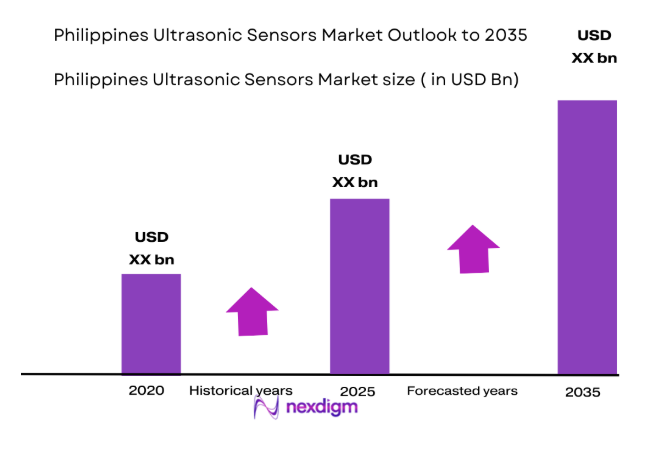
The Philippines Ultrasonic Sensors Market is estimated to experience steady growth driven by rising demand across various industries such as automotive, industrial automation, and healthcare. The market size is expected to reach USD ~ million based on a recent historical assessment. The increasing use of ultrasonic sensors for safety, proximity detection, and industrial automation has propelled market expansion. Technological advancements and the integration of ultrasonic sensors in diverse applications are expected to continue fueling growth, with robust adoption across key sectors like automotive and healthcare.
The market is primarily dominated by key cities such as Manila, Cebu, and Davao. These regions are experiencing significant industrialization and infrastructure development, driving the demand for advanced sensor technologies. Manila, being the capital, leads in automotive and industrial automation, while Cebu and Davao are growing rapidly due to their expanding manufacturing and healthcare sectors. The government’s focus on infrastructure development and the adoption of smart technologies in urban areas are major factors contributing to the region’s market dominance.
Market Segmentation
By Product Type
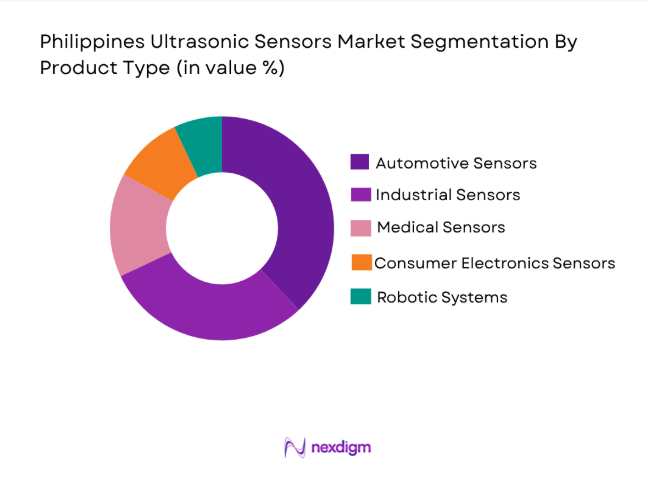
Philippines Ultrasonic Sensors market is segmented by product type into industrial sensors, automotive sensors, medical sensors, consumer electronics sensors, and robotic sensors. Recently, automotive sensors have taken a dominant share of the market due to the rising demand for safety features in vehicles. The integration of ultrasonic sensors in advanced driver-assistance systems (ADAS) such as parking assist and collision detection has led to a significant increase in demand. With the Philippines seeing a surge in automotive production and sales, this sub-segment is projected to continue its dominance due to its crucial role in enhancing vehicle safety and driving the overall growth in sensor adoption across the region.
By Platform Type
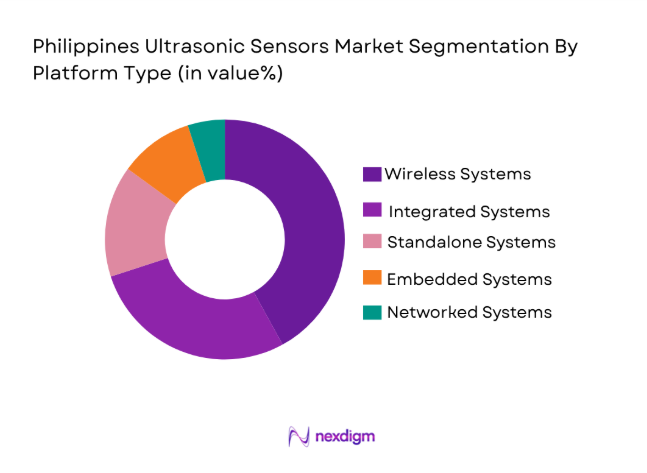
Philippines Ultrasonic Sensors market is segmented by platform type into standalone systems, integrated systems, embedded systems, wireless systems, and networked systems. Recently, wireless systems have been the dominant sub-segment. The rise of smart technologies and the increasing integration of the Internet of Things (IoT) has driven the adoption of wireless ultrasonic sensors. These sensors offer greater flexibility and convenience in applications such as industrial automation, smart homes, and healthcare devices. As industries continue to shift towards wireless networks and remote monitoring, the demand for wireless systems is expected to grow significantly, reinforcing its dominance in the market.
Competitive Landscape
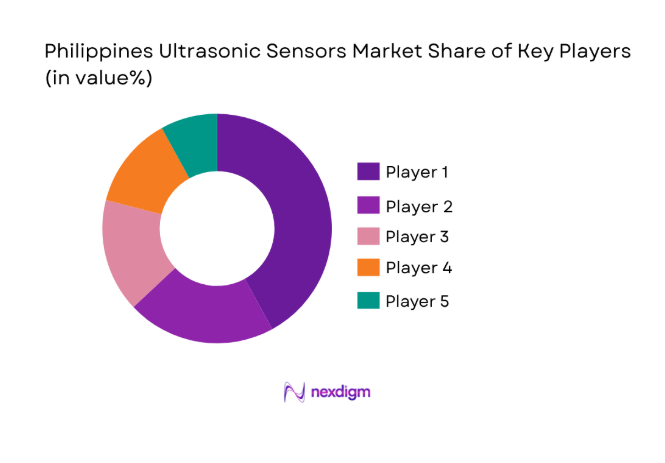
The competitive landscape of the Philippines Ultrasonic Sensors Market is marked by a strong presence of both global and regional players. Consolidation in the market is evident as companies focus on expanding their product portfolios and technological capabilities. Major players are continually investing in R&D to develop more advanced sensor solutions, catering to industries like automotive, industrial automation, and healthcare. The market is becoming increasingly competitive, with companies seeking to gain market share through strategic partnerships, acquisitions, and product innovation.
| Company Name | Establishment Year | Headquarters | Technology Focus | Market Reach | Key Products | Revenue | Additional Market-Specific Parameter |
| Analog Devices | 1965 | USA | ~ | ~ | ~ | ~ | ~ |
| TE Connectivity | 2007 | Switzerland | ~ | ~ | ~ | ~ | ~ |
| Honeywell International | 1906 | USA | ~ | ~ | ~ | ~ | ~ |
| Murata Manufacturing | 1944 | Japan | ~ | ~ | ~ | ~ | ~ |
| Bosch Sensortec | 1999 | Germany | ~ | ~ | ~ | ~ | ~ |
Philippines Ultrasonic Sensors Market Analysis
Growth Drivers
Technological Advancements in Sensor Technology
The Philippines Ultrasonic Sensors Market is experiencing significant growth due to continuous advancements in sensor technology. With the integration of more precise and durable sensors, applications in automotive safety systems, industrial automation, and healthcare have expanded. The use of ultrasonic sensors in proximity detection, parking assistance, and quality control is increasing as they provide accurate and reliable results. The ongoing research and development efforts to enhance sensor sensitivity, range, and efficiency are driving the widespread adoption of these sensors across multiple sectors. Manufacturers are focusing on miniaturization, making the sensors more cost-effective and efficient. Furthermore, advancements in wireless technology have opened up new opportunities for the remote monitoring and control of systems, making them an attractive choice for industries aiming for digital transformation.
Increasing Demand for Automation in Manufacturing
The second growth driver is the increasing demand for automation in the Philippines’ manufacturing sector. With the rise of Industry 4.0, there is a growing need for precision and real-time data collection, which ultrasonic sensors provide. Automation systems that integrate ultrasonic sensors for quality control, monitoring, and defect detection are becoming more common. The ability to detect objects and measure distances accurately and efficiently is crucial in industries such as electronics, food processing, and automotive manufacturing. As businesses focus on improving production efficiency, lowering costs, and enhancing safety, ultrasonic sensors are becoming a vital part of the automation landscape. The demand for these sensors is expected to rise as more industries adopt automation technologies, further driving market growth.
Market Challenges
High Cost of Advanced Sensors
One of the main challenges in the Philippines Ultrasonic Sensors Market is the high cost associated with advanced sensors. While ultrasonic sensors offer significant benefits such as precision and reliability, their advanced versions can be costly to develop, manufacture, and integrate into systems. The initial investment for businesses to adopt these sensors can be a deterrent, especially for smaller companies or those with limited budgets. Additionally, the ongoing maintenance and calibration of these sensors require skilled labor, adding to operational costs. The high price point of high-end ultrasonic sensors can make it difficult for industries with tight budgets to fully embrace the technology, limiting market penetration in certain sectors.
Limited Awareness and Technical Expertise
Another challenge in the market is the limited awareness and technical expertise related to ultrasonic sensor applications. While industries such as automotive and healthcare are becoming more familiar with ultrasonic sensors, many businesses in other sectors are not fully aware of their potential applications. Additionally, the integration of these sensors requires specialized knowledge and expertise in both the technology and its implementation. The lack of skilled workers in the field of sensor technology presents a barrier to the widespread adoption of ultrasonic sensors. As the market grows, there will be a need for more training and education programs to address this skills gap and facilitate the adoption of these advanced technologies.
Opportunities
Expansion of Smart Cities Initiatives
The growth of smart city initiatives presents significant opportunities for the Philippines Ultrasonic Sensors Market. As urbanization continues to accelerate, there is an increased demand for technologies that can enhance infrastructure, improve safety, and optimize resource management. Ultrasonic sensors are being used in applications such as traffic management, waste management, and smart parking systems. Their ability to detect objects, measure distances, and enable automation makes them ideal for smart city environments. The Philippine government has made efforts to implement smart city projects, and as these initiatives expand, the demand for ultrasonic sensors will likely increase, creating new market opportunities.
Growing Adoption of Ultrasonic Sensors in Healthcare Applications
Another opportunity in the market lies in the growing adoption of ultrasonic sensors in healthcare applications. The healthcare sector is increasingly using ultrasonic sensors for diagnostic imaging, monitoring patient conditions, and improving medical equipment performance. As the demand for non-invasive, accurate, and real-time medical technologies increases, ultrasonic sensors are being integrated into more healthcare devices. This trend is expected to continue as the Philippine healthcare industry expands and modernizes, creating a significant growth opportunity for manufacturers of ultrasonic sensors in the medical field. The need for advanced diagnostic equipment and patient monitoring systems will drive the demand for these sensors.
Future Outlook
The future of the Philippines Ultrasonic Sensors Market looks promising, with strong growth expected in the next five years. The market is poised to benefit from ongoing technological advancements, particularly in wireless connectivity, automation, and the increasing adoption of smart systems across industries. As the demand for more sophisticated safety systems in the automotive sector and automation in manufacturing rises, ultrasonic sensors will continue to play a crucial role. Moreover, government support for smart city initiatives and healthcare modernization will further propel the growth of ultrasonic sensors, driving the market’s expansion.
Major Players
- Analog Devices
- TE Connectivity
- Honeywell International
- Murata Manufacturing
- Bosch Sensortec
- NXP Semiconductors
- Infineon Technologies
- Texas Instruments
- Broadcom
- Vishay Intertechnology
- Toshiba Corporation
- Renesas Electronics
- Microchip Technology
- Omron Corporation
- STMicroelectronics
Key Target Audience
- Investments and venture capitalist firms
- Government and regulatory bodies
- Automotive manufacturers
- Industrial automation companies
- Healthcare technology providers
- Consumer electronics manufacturers
- System integrators
Research Methodology
Step 1: Identification of Key Variables
The first step in our research methodology is to identify the key variables that drive the ultrasonic sensors market. These include technological advancements, market trends, regulatory factors, and consumer demand.
Step 2: Market Analysis and Construction
Once the key variables are identified, we conduct a thorough market analysis to construct a detailed market model. This includes evaluating historical market data, identifying growth trends, and assessing industry-specific challenges.
Step 3: Hypothesis Validation and Expert Consultation
To validate our hypotheses and assumptions, we engage with industry experts and conduct primary research through surveys and interviews to gather qualitative insights.
Step 4: Research Synthesis and Final Output
The final step is to synthesize the collected data, verify the findings, and compile them into a comprehensive market report. This report provides actionable insights and forecasts for market growth and opportunities.

- Executive Summary
- Research Methodology (Definitions, Scope, Industry Assumptions, Market Sizing Approach, Primary & Secondary Research Framework, Data Collection & Verification Protocol, Analytic Models & Forecast Methodology, Limitations & Research Validity Checks)

- Market Definition and Scope
- Value Chain & Stakeholder Ecosystem
- Regulatory / Certification Landscape
- Sector Dynamics Affecting Demand
- Strategic Initiatives & Infrastructure Growth

- Growth Drivers
Increased adoption in automotive safety systems
Rising demand for industrial automation
Technological advancements in sensor miniaturization - Market Challenges
High initial investment costs for advanced systems
Lack of skilled professionals for sensor integration
Challenges in sensor calibration and maintenance - Market Opportunities
Growing demand for ultrasonic sensors in healthcare
Expansion of the industrial automation sector
Development of new applications in consumer electronics - Trends
Integration of IoT with ultrasonic sensors
Shift towards wireless sensor networks - Government Regulations
- SWOT Analysis
- Porter’s Five Forces

- By Market Value, 2020-2025
- By Installed Units, 2020-2025
- By Average System Price, 2020-2025
- By System Complexity Tier, 2020-2025

- By System Type (In Value%)
Industrial Sensors
Automotive Sensors
Medical Sensors
Consumer Electronics Sensors
Robotic Sensors - By Platform Type (In Value%)
Standalone Systems
Integrated Systems
Embedded Systems
Wireless Systems
Networked Systems - By Fitment Type (In Value%)
On-premise Solutions
Cloud-based Solutions
Hybrid Solutions
Modular Solutions - By End User Segment (In Value%)
Automotive
Industrial Manufacturing
Healthcare
Consumer Electronics

- Market Share Analysis
- Cross Comparison Parameters (System Type, Platform Type, End User Segment, Fitment Type, System Complexity Tier, Price Point, Market Value)
- SWOT Analysis of Key Competitors
- Pricing & Procurement Analysis
- Key Players
Analog Devices
TE Connectivity
Honeywell International
Murata Manufacturing
STMicroelectronics
Bosch Sensortec
NXP Semiconductors
Infineon Technologies
Texas Instruments
Broadcom
Vishay Intertechnology
Toshiba Corporation
Renesas Electronics
Microchip Technology
Omron Corporation

- Automotive sector’s increasing use of ultrasonic sensors for safety and convenience features
- Industrial manufacturing leveraging sensors for quality control and efficiency
- Healthcare applications using sensors for non-invasive diagnostics
- Consumer electronics sector’s demand for sensors in smart devices

- Forecast Market Value, 2026-2035
- Forecast Installed Units, 2026-2035
- Price Forecast by System Tier, 2026-2035
- Future Demand by Platform, 2026-2035


 Request a Sample
 Ask for Customization
 Get a Quote
 Enquire Now