
 Download PDF
Market Overview
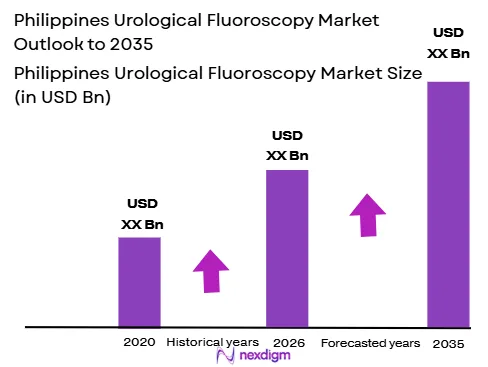
The Philippines Urological Fluoroscopy market is valued at approximately USD ~ billion in 2024. This market is primarily driven by the increasing incidence of urological diseases such as kidney stones, prostate conditions, and urinary tract infections. The rising demand for minimally invasive diagnostic and surgical procedures, alongside the adoption of advanced imaging technologies, has contributed to the growth of the market. Additionally, the growing healthcare infrastructure and government investment in medical technologies further enhance the market’s expansion, particularly within urban hospitals and diagnostic centers.
Metro Manila is the dominant region in the Philippines Urological Fluoroscopy market, owing to its high concentration of healthcare facilities, advanced medical technologies, and skilled professionals. The region’s dominance is bolstered by the presence of leading hospitals and clinics offering urological imaging services. Other key cities like Cebu and Davao are also growing markets due to increased healthcare awareness and the expansion of private healthcare facilities, enabling better access to advanced diagnostic and treatment options.
Market Segmentation
By Application Type
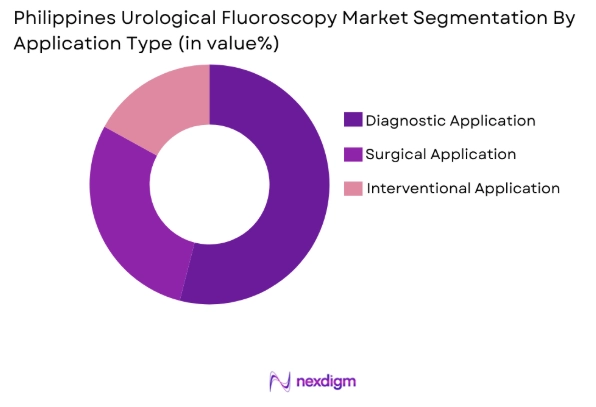
The Philippines Urological Fluoroscopy market is segmented by application into diagnostic applications, surgical applications, and interventional applications. Among these, diagnostic applications dominate the market due to the increasing burden of urological disorders such as kidney stones, urinary tract infections, and prostate-related conditions. Fluoroscopy plays a critical role in real-time imaging, enabling accurate diagnosis of urinary tract abnormalities. Hospitals and diagnostic centers increasingly rely on fluoroscopic imaging for procedures like voiding cystourethrograms and retrograde pyelography. Additionally, the rising emphasis on early disease detection and preventive healthcare has strengthened the demand for diagnostic imaging. The shift toward outpatient diagnostics and reduced hospital stays further supports the dominance of this segment, as fluoroscopy allows quick and precise evaluation without invasive procedures.
By End-User Type
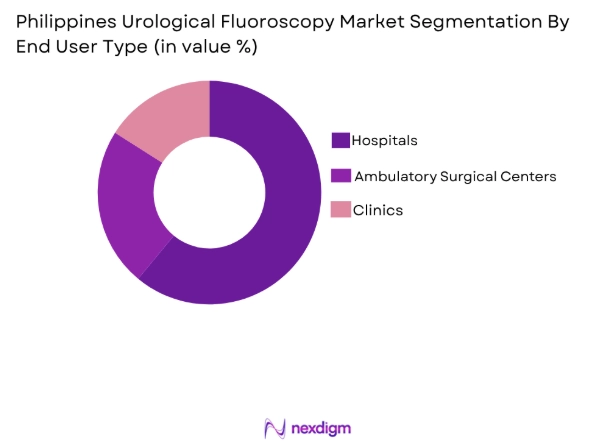
The Philippines Urological Fluoroscopy market is segmented by end-user into hospitals, ambulatory surgical centers, and clinics. Hospitals hold the dominant market share due to their advanced infrastructure, higher patient inflow, and availability of specialized urology departments. Large hospitals in regions such as Metro Manila are equipped with high-end fluoroscopy systems used for both diagnostic and surgical procedures. These facilities also have trained radiologists and urologists capable of handling complex imaging requirements. Moreover, hospitals receive higher funding and insurance reimbursements, enabling them to invest in advanced imaging technologies. While ambulatory surgical centers are growing due to the rise in minimally invasive procedures, and clinics are expanding access to basic imaging, hospitals continue to lead due to their comprehensive service offerings and ability to manage complex urological cases.
Competitive Landscape
The Philippines Urological Fluoroscopy market is characterized by a competitive landscape dominated by key global and regional players. Major players include Philips Healthcare, GE Healthcare, Siemens Healthineers, Canon Medical Systems, and Shimadzu Corporation. These companies leverage advanced imaging technologies and strong distribution networks to capture significant market share. The competition in the market is driven by product innovations, partnerships with local healthcare providers, and the growing demand for high-quality diagnostic and surgical equipment in hospitals and clinics across the Philippines.
| Company Name | Establishment Year | Headquarters | Product Portfolio | Technological Innovations | Revenue (2024) | Market Strategy |
| Philips Healthcare | 1891 | Netherlands | ~ | ~ | ~ | ~ |
| GE Healthcare | 1892 | USA | ~ | ~ | ~ | ~ |
| Siemens Healthineers | 1847 | Germany | ~ | ~ | ~ | ~ |
| Canon Medical Systems | 1937 | Japan | ~ | ~ | ~ | ~ |
| Shimadzu Corporation | 1875 | Japan | ~ | ~ | ~ | ~ |
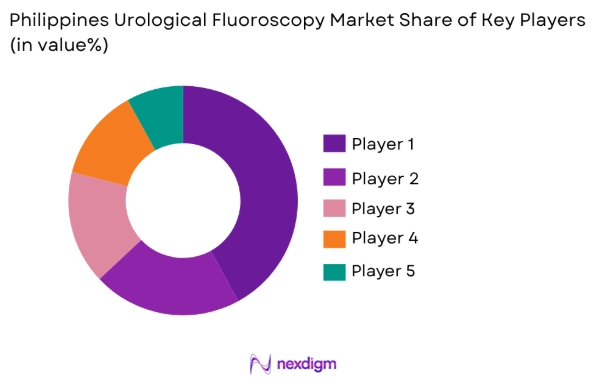
Philippines Urological Fluoroscopy Market Analysis
Growth Drivers
Increasing Prevalence of Urological Disorders
Demand for urological fluoroscopy in the Philippines is supported by a measurable rise in the clinical burden that typically requires image-guided diagnosis or intervention. The Department of Health-linked Bicol Medical Center states that chronic kidney disease is already the 7th leading cause of mortality in the country and affects about 120 persons per million population per year, while another DOH source notes that the Philippine Renal Disease Registry tracks around 100,000 Filipinos living with chronic kidney disease in 2025. For oncology-related urology demand, the IARC-Globo can 2022 Philippines fact sheet recorded 9,764 new prostate cancer cases in 2022, making it the 3rd most common cancer among males, within a national total of 188,976 new cancer cases. This disease mix matters for the fluoroscopy market because ureteric obstruction, nephrolithiasis work-up, stenting, nephrostomy access, retrograde studies, and oncology-linked urinary interventions all depend on radiology capacity. Macroeconomic support also exists: World Bank data show Philippine GDP at USD 461.62 billion in 2024, GDP per capita at USD 3,984.8 in 2024, and PSA data show per-capita health spending rising to PHP 11,083 in 2023, which improves the system’s ability to absorb more diagnostic and interventional volume in tertiary care.
Advancements in Fluoroscopy Technology
Technology upgrading is becoming a real demand-side driver, not a generic trend, because the Philippine provider base is actively budgeting and procuring more advanced imaging infrastructure. The Department of Budget and Management allocated PHP 28.58 billion to the Health Facilities Enhancement Program for 2024, above PHP 26.81 billion in 2023, and the program explicitly covers the upgrading of government facilities and the purchase of medical equipment. The Philippine Statistics Authority further reported that health capital formation expenditure in 2023 rose by 113.6, while health spending per capita increased to PHP 11,083 from PHP 10,238 in 2022. On the ground, a 2024 public bidding document from Bataan General Hospital and Medical Center specified procurement of a fluoroscopy radiography machine with flat-panel configuration, showing that facility-level demand is already shifting toward newer digital platforms rather than older analog workflows. For the urological fluoroscopy market, this matters because flat-panel and digitally integrated systems improve visualization during retrograde pyelography, ureteric stenting, stone-related procedures, and combined endourology workflows, while also fitting better into hospital digitization plans. The broader macro setting is supportive: the World Bank places Philippine GDP growth at 5.7 in 2024, which supports public and private capex planning for imaging modernization.
Market Challenges
High Initial Investment Costs
High upfront capital intensity remains a material brake on the Philippines urological fluoroscopy market because hospitals are still balancing equipment modernization against broader service delivery needs. PSA reported total health expenditure of PHP 1.20 trillion in 2022, yet in 2023 households still financed 44.4 of current health expenditure out of pocket, while per-capita health spending was PHP 11,083. This means provider expansion is occurring in a system where financing pressure is still shared heavily by households and institutions, limiting how quickly hospitals can add specialized fluoroscopy rooms, shielding works, software integration, and service contracts. Public procurement behavior also reflects this capex hurdle: 2024 hospital bidding activity cited procurement of a single fluoroscopy radiography unit rather than broad fleet replacement, indicating that purchases are often phased. On the macro side, the IMF projected average inflation at 3.2 in 2024, while World Bank data show GDP per capita at USD 3,984.8. That combination implies improving but still finite purchasing power for both hospitals and patients, especially for equipment categories that sit above routine radiography in installation complexity. In practical market terms, the challenge is not lack of clinical need; it is the size and timing of capital allocation required to commission compliant fluoroscopy suites for urology.
Regulatory and Compliance Constraints
Regulation is another market-specific barrier because fluoroscopy systems in the Philippines sit at the intersection of medical device rules, facility licensing, radiation safety oversight, and workforce training requirements. FDA Circular No. 2024-003 extended regulatory flexibility for certain Class B, C, and D medical devices that were not yet in the registrable list, which shows that the regulatory environment for medical devices was still being actively adjusted in 2024. At the same time, FDA Advisory No. 2025-0189 required all licensed medical device establishments to use the eServices Portal for initial Class A CMDN applications starting 10 March 2025, while the FDA also held a regulatory workshop and system update on 13 to 15 March 2024 specifically for medical device establishments and products. On the radiation side, PNRI license application rules require authorization to possess or operate radiation facilities, and PNRI’s 2024 draft safety regulation sets a maximum interval of 10 years for periodic safety reviews of facilities. DBM’s 2025 HFEP details also earmarked PHP 40 million for the DOH Health Facilities and Services Regulatory Bureau, underscoring that compliance administration itself needs dedicated funding. For urological fluoroscopy vendors and hospitals, these overlapping layers lengthen deployment timelines, documentation cycles, and commissioning readiness.
Market Opportunities
Emerging Demand for Hybrid Systems
Hybrid system demand represents a concrete growth opportunity because Philippine hospitals are already expanding operating-room models that integrate imaging with interventional care. The Philippine Heart Center stated in a 2024 procurement document that it has 10 operating rooms, including 8 cardiac-dedicated rooms, 1 Hybrid Operating Room, and 1 pediatric-dedicated operating room. In 2024, Bicol Regional Hospital and Medical Center highlighted its hybrid cardio operating room and cardiac catheterization laboratory during fellowship accreditation activities. Jose B. Lingad Memorial General Hospital’s 2024 bidding documents also called for 3 units of MIS or arthroscopy Hybrid Operating Room equipment, and the Amang Rodriguez Memorial Medical Center trauma center plan included 2 operating rooms, with 1 designed as a Hybrid OR. These are not urology-only purchases, but they are directly relevant because hybrid-room adoption normalizes capital spending on integrated imaging, sterility, workflow software, and interventional architecture that urological fluoroscopy can leverage, especially in tertiary centers performing endourology, oncology-related urinary procedures, and complex stone care. The opportunity is reinforced by expanding tertiary capacity: the PPP pipeline listed a 300-bed UP-PGH Manila Cancer Center project in 2024 that includes procurement and replacement of medical equipment.
Rise in Preventative Healthcare Trends
Preventive care expansion is a forward-looking opportunity for the Philippines urological fluoroscopy market because earlier screening for diabetes, hypertension, cancer, and kidney-risk conditions typically increases formal referral into imaging-led diagnosis before complications become catastrophic. PhilHealth’s 2024 statistics show 27,803,622 people registered under the Konsulta benefit package, including 20,251,843 members and 7,551,779 dependents. The same release recorded 3,149 accredited Konsulta providers, with coverage in 88 of cities and municipalities nationwide, and 6,370,149 first patient encounters. PhilHealth also raised the Konsulta maximum per-capita amount to PHP 1,700 beginning 1 January 2024. This matters for urological fluoroscopy because preventive primary care captures patients with uncontrolled diabetes, hypertension, recurrent urinary complaints, hematuria, or chronic kidney disease risk earlier, which increases downstream demand for hospital-based evaluation and interventional imaging when obstruction, reflux, stones, or malignancy are suspected. WHO’s 2024 Philippines results page explicitly links primary care NCD screening with prevention of complications, and DOH regional public health content in 2024 continued to prioritize chronic kidney disease prevention and control. With World Bank 2024 GDP at USD 461.62 billion, the macro backdrop supports continued formalization of preventive pathways that ultimately widen the fluoroscopy-addressable patient funnel.
Future Outlook
Over the next six years, the Philippines Urological Fluoroscopy market is expected to experience steady growth, driven by technological advancements in imaging, an increase in urological diseases, and the expanding healthcare infrastructure. As more hospitals and diagnostic centers adopt advanced fluoroscopic systems, there will be greater demand for precise and minimally invasive diagnostic and surgical procedures. Furthermore, the growing preference for outpatient diagnostics and the integration of artificial intelligence (AI) in medical imaging are expected to revolutionize the market, improving diagnostic accuracy and operational efficiency.
Major Players
- Philips Healthcare
- GE Healthcare
- Siemens Healthineers
- Canon Medical Systems
- Shimadzu Corporation
- Hitachi Medical Systems
- Hologic Inc.
- Carestream Health
- Medtronic
- Varian Medical Systems
- Samsung Medison
- Toshiba Medical Systems
- Mindray Medical
- Konica Minolta Healthcare
- Fujifilm Healthcare
Key Target Audience
- Healthcare Providers
- Medical Equipment Distributors
- Investments and Venture Capitalist Firms
- Government and Regulatory Bodies
- Healthcare Facility Managers
- Urologists and Surgeons
- Medical Technology Innovators and Manufacturers
- Private Healthcare Institutions
Research Methodology
Step 1: Identification of Key Variables
The initial phase involves identifying key factors affecting the Philippines Urological Fluoroscopy market, including regulatory environments, technological advancements, and healthcare infrastructure. This stage relies on secondary research, utilizing databases from global health organizations, market reports, and government publications.
Step 2: Market Analysis and Construction
In this phase, historical data on market size, product penetration, and regional healthcare distribution are analyzed. The focus is on gathering insights into the adoption rates of fluoroscopy systems in various applications such as diagnostics and surgery, using a combination of primary surveys and secondary data.
Step 3: Hypothesis Validation and Expert Consultation
Hypotheses developed from initial findings are validated through consultations with industry experts, including radiologists, urologists, and medical equipment suppliers. These consultations help ensure that the conclusions drawn align with current market realities and future trends.
Step 4: Research Synthesis and Final Output
The final phase combines all findings from primary and secondary research, including in-depth product segment analysis and key trends shaping the future of the market. Validation from consultations ensures that the data is robust and actionable, providing a clear picture of the market outlook for stakeholders.

- Executive Summary
- Research Methodology (Market Definitions and Assumptions, Abbreviations, Market Sizing Approach, Consolidated Research Approach, Understanding Market Potential Through In-Depth Industry Interviews, Primary Research Approach, Limitations and Future Conclusions)

- Definition and Scope
- Market Genesis and Evolution
- Key Industry Trends and Developments
- Business Cycle and its Impact on Urological Fluoroscopy
- Supply Chain and Value Chain Analysis
- Urological Fluoroscopy Technology Landscape

- Growth Drivers
Increasing Prevalence of Urological Disorders
Advancements in Fluoroscopy Technology - Market Challenges
High Initial Investment Costs
Regulatory and Compliance Constraints - Market Opportunities
Emerging Demand for Hybrid Systems
Rise in Preventative Healthcare Trends - Trends
Integration of AI in Fluoroscopy Systems
Shift Towards Minimally Invasive Surgeries - Government Regulations and Policies
Compliance with Health Standards
Import Tariffs and Duties for Medical Equipment - SWOT Analysis
- Porter’s Five Forces
- Market Competition Ecosystem

- By Value, 2023-2035
- By Volume, 2023-2035
- By Average Price, 2023-2035

- By Application Type, (In Value %)
Diagnostic Application
Surgical Application
Interventional Application - By End-User Type, (In Value %)
Hospitals
Ambulatory Surgical Centers
Clinics - By Region, (In Value %)
Metro Manila
Northern Luzon
Southern Luzon
Visayas
Mindanao - By Technology Type, (In Value %)
Conventional Fluoroscopy Systems
Digital Fluoroscopy Systems

- Market Share Analysis
- Cross Comparison Parameters (Company Overview, Business Strategies, Recent Developments, Strengths, Weaknesses, Organizational Structure, Revenues, Revenue by Equipment Type, Number of Touchpoints, Distribution Channels, Number of Dealers and Distributors, Margins, Production Plant, Unique Value Offering, and Others)
- SWOT Analysis of Major Players
- Pricing Analysis
- Key Players
Philips Healthcare
Siemens Healthineers
GE Healthcare
Canon Medical Systems
Hitachi Medical Systems
Shimadzu Corporation
Toshiba Medical Systems
Fujifilm Holdings Corporation
Hologic Inc.
Carestream Health Mindray Medical
Becton Dickinson
Samsung Medison
Varian Medical Systems
United Imaging Healthcare

- Market Demand and Utilization by End Users
- Purchasing Power and Budget Allocations
- Regulatory and Compliance Requirements for End Users
- Needs, Desires, and Pain Point Analysis
- Decision-Making Process

- By Value, 202-2030
- By Volume, 2025-2030
- By Average Price, 2025-2030


 Request a Sample
 Ask for Customization
 Get a Quote
 Enquire Now