
 Download PDF
 Download PDF
Market Overview
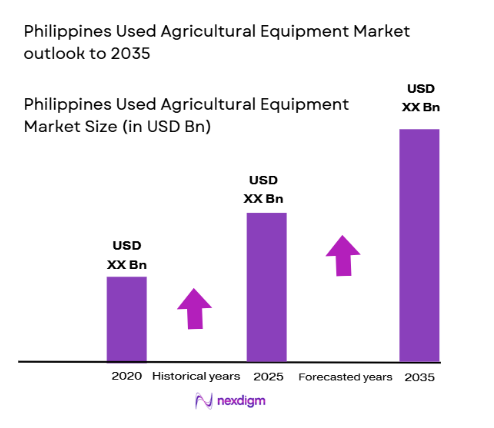
Based on a recent historical assessment, the Philippines used agricultural equipment market size is estimated to be valued at approximately USD ~ billion. This market is primarily driven by an increasing demand for cost-effective farming solutions and rising agricultural productivity. The market also benefits from government support in rural areas, driving the adoption of used equipment due to its affordability compared to new models. Furthermore, increased financing options and favorable regulatory conditions have also contributed to this growth.
The Philippines’ key regions dominating the used agricultural equipment market include areas like Central Luzon and Mindanao, which are home to significant agricultural activities. Central Luzon benefits from its proximity to the capital, Manila, and its role as the rice-producing region, while Mindanao, with its large agricultural production of fruits and vegetables, drives demand for various farming equipment. Both areas benefit from established infrastructure, including agricultural supply chains, facilitating easier access to used equipment for local farmers.
Market Segmentation
By Product Type:
Philippines Used Agricultural Equipment Market is segmented by product type into tractors, harvesters, plows, cultivators, and irrigation systems. Recently, tractors have dominated the market share due to their widespread use across a variety of farming activities, including land preparation, tilling, and plowing. The accessibility of second-hand tractors in good condition at affordable prices has made them highly popular in rural areas, where farmers often seek cost-effective solutions to increase their productivity. Additionally, many of these used tractors come with extended warranties or refurbished components, increasing their reliability.

By Platform Type:
Philippines Used Agricultural Equipment Market is segmented by platform type into land-based equipment, self-propelled equipment, towable equipment, electric-powered equipment, and hybrid equipment. Recently, land-based equipment, specifically tractors and plows, has held the dominant market share. This is primarily due to the large areas of farmland that require such equipment for fieldwork. Land-based equipment is the backbone of smallholder and large-scale farms alike, ensuring its sustained demand. The affordability and availability of used land-based equipment have further driven its widespread use among Filipino farmers who prioritize operational efficiency at minimal costs.

Competitive Landscape
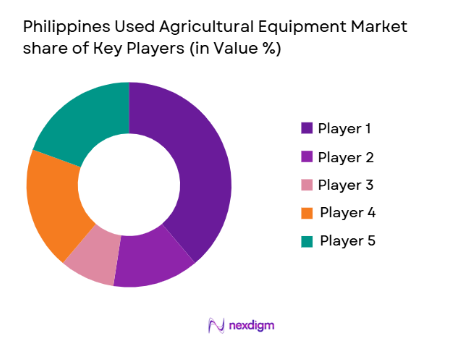
The Philippines used agricultural equipment market is competitive, with several international and local players dominating the sector. Major players influence market dynamics through consolidation, partnerships with local dealers, and product diversification. These players leverage economies of scale and extensive distribution networks to cater to both large farms and smallholders. The market has seen the emergence of a few dominant players, contributing to increased competition and price variations. The sector also benefits from robust support from agricultural finance institutions that help lower the cost barrier for farmers.
| Company Name | Establishment Year | Headquarters | Technology Focus | Market Reach | Key Products | Revenue (USD) | Additional Parameter |
| John Deere | 1837 | Moline, Illinois | ~ | ~ | ~ | ~ | ~ |
| Kubota Corporation | 1890 | Osaka, Japan | ~ | ~ | ~ | ~ | ~ |
| AGCO Corporation | 1990 | Duluth, Georgia | ~ | ~ | ~ | ~ | ~ |
| CNH Industrial | 2013 | London, UK | ~ | ~ | ~ | ~ | ~ |
| Mahindra & Mahindra | 1945 | Mumbai, India | ~ | ~ | ~ | ~ | ~ |
Philippines Used Agricultural Equipment Market Analysis
Growth Drivers
Rising Government Support for Agricultural Modernization:
One key growth driver in the Philippines used agricultural equipment market is the increasing government support for agricultural modernization. The Philippine government has introduced various initiatives aimed at improving the agricultural sector’s productivity, such as financial aid programs and subsidies for purchasing farming equipment. These programs help alleviate the financial burden on smallholder farmers who find it difficult to afford new agricultural machinery. Furthermore, these government policies ensure a steady demand for used agricultural equipment as farmers opt for affordable solutions to upgrade their farming practices. By creating an environment conducive to agricultural development, the government has contributed to the growing demand for used agricultural machinery. This has led to improved crop yields and greater adoption of mechanized farming techniques across the country.
Improved Access to Financing:
Another significant growth driver is the increasing availability of financing options for farmers. As the Philippine agricultural sector faces challenges like low productivity and labor shortages, the demand for more efficient equipment rises. Farmers, especially in rural areas, are often unable to afford the high upfront costs of new agricultural machinery. However, with the introduction of flexible financing schemes, including loans and installment payment plans, more farmers are able to acquire used equipment. This access to affordable financing has accelerated the growth of the used agricultural equipment market, as it allows small farmers to purchase higher-quality equipment that enhances their farming practices. This driver is expected to continue fueling the growth of the used equipment market in the coming years, as more farmers seek ways to improve productivity without the financial strain of buying new machines.
Market Challenges
High Maintenance and Repair Costs:
One of the challenges facing the Philippines used agricultural equipment market is the high maintenance and repair costs associated with older machinery. While used agricultural equipment offers an affordable initial purchase price, many buyers often overlook the ongoing costs related to upkeep and repair. As equipment ages, the likelihood of mechanical failure increases, leading to expensive repairs that can quickly offset the initial savings. This can discourage farmers from investing in used equipment, especially when they are unsure of the long-term viability of the machinery. Furthermore, the lack of readily available spare parts and skilled technicians in rural areas can increase downtime, further adding to the cost burden for farmers. This challenge is compounded by the fact that some parts of the used machinery may not be compatible with modern farming techniques, resulting in inefficiency and additional costs.
Limited Access to Spare Parts:
Limited access to spare parts is another challenge faced by the used agricultural equipment market in the Philippines. While the availability of used equipment has increased, the procurement of spare parts for maintenance and repairs remains a significant obstacle for many farmers. In some cases, especially in rural areas, spare parts may be difficult to obtain, forcing farmers to rely on second-hand components, which could further complicate the repair process. This problem is particularly pronounced for older models of equipment, which may no longer be in production, making sourcing parts a challenge. Additionally, the lack of a robust distribution network for spare parts further exacerbates the problem, leading to prolonged periods of downtime for farmers who depend on their equipment for daily operations. This makes it difficult for the market to expand as quickly as it otherwise could, as farmers hesitate to invest in used equipment due to concerns over maintenance and repair costs.
Opportunities
Growth in Agricultural Exports:
An opportunity in the Philippines used agricultural equipment market lies in the growing demand for agricultural exports. As global demand for food products increases, the Philippines has seen a rise in agricultural production, especially in sectors like rice, corn, and tropical fruits. This expansion in production presents an opportunity for farmers to increase the scale of their operations. The use of advanced machinery, even if purchased second-hand, can help farmers meet the increasing demand for exports. As such, there is an opportunity for the market to expand as more farmers and agribusinesses look for efficient, cost-effective ways to boost their productivity and meet international standards. The growing focus on agricultural exports in the Philippines opens the door for used agricultural equipment to play a crucial role in this sector’s continued growth.
Technological Advancements in Farming Equipment:
The adoption of new technologies in agricultural machinery presents another significant opportunity for the used agricultural equipment market in the Philippines. As advancements in farming equipment such as GPS systems, precision agriculture tools, and automated machinery become more prevalent, the demand for used equipment that incorporates these technologies is expected to rise. Farmers in the Philippines are increasingly seeking used equipment that offers these advanced features to improve productivity and reduce labor costs. This presents an opportunity for market players to offer refurbished or second-hand equipment with modern technologies, providing farmers with a cost-effective way to improve their farming practices.
Future Outlook
The Philippines used agricultural equipment market is expected to see continued growth over the next five years. With rising demand for efficient farming practices, the market is poised to benefit from government support, technological advancements, and expanding financing options. Increasing crop production and exports will drive demand for cost-effective equipment solutions, while ongoing modernization efforts in rural regions will further expand the adoption of used machinery. The future outlook indicates steady growth as both smallholders and larger agricultural operations seek ways to enhance productivity without incurring the high costs associated with new machinery.
Major Players
- John Deere
- Kubota Corporation
- AGCO Corporation
- CNH Industrial
- Mahindra & Mahindra
- Yanmar Co. Ltd.
- New Holland Agriculture
- CLAAS Group
- SDF Group
- Case IH
- Massey Ferguson
- Doosan Infracore
- Zoomlion
- Zoomlion Heavy Industry
- Tractors and Farm Equipment Ltd.
Key Target Audience
- Agricultural equipment dealers
- Agricultural machinery manufacturers
- Investment firms and venture capitalists
- Government and regulatory bodies
- Exporters of agricultural products
- Large-scale commercial farmers
- Smallholder farmers
- Agricultural technology firms
Research Methodology
Step 1: Identification of Key Variables
In this step, key variables such as market size, growth drivers, challenges, and opportunities are identified and analyzed.
Step 2: Market Analysis and Construction
Data is gathered through primary and secondary research to construct an accurate model of the market.
Step 3: Hypothesis Validation and Expert Consultation
The market model is validated through consultations with industry experts and key stakeholders to ensure its accuracy.
Step 4: Research Synthesis and Final Output
The final output synthesizes all gathered data and insights to present a comprehensive report.

- Executive Summary
- Research Methodology(Definitions, Scope, Industry Assumptions, Market Sizing Approach, Primary & Secondary Research Framework, Data Collection & Verification Protocol, Analytic Models & Forecast Methodology, Limitations & Research Validity Checks)

- Market Definition and Scope
- Value Chain & Stakeholder Ecosystem
- Regulatory / Certification Landscape
- Sector Dynamics Affecting Demand
- Strategic Initiatives & Infrastructure Growth

- Growth Drivers
Rising Demand for Efficient Farming Solutions
Government Support for Agricultural Modernization
Increase in Agricultural Output
Adoption of Sustainable Farming Practices
Availability of Financing Options for Equipment - Market Challenges
High Maintenance Costs of Used Equipment
Limited Access to Spare Parts
Uncertainties in Weather Patterns
Economic Pressures on Farmers
Regulatory Hurdles in Equipment Importation - Market Opportunities
Expanding Rural Electrification Initiatives
Technological Innovations in Equipment Efficiency
Growing Export Demand for Agricultural Products - Trends
Increased Adoption of Automation in Agriculture
Shift Towards Energy-Efficient Equipment
Growth in Precision Agriculture Tools
Rising Popularity of Equipment Leasing
Advancements in Data-Driven Agricultural Equipment - Government Regulations & Defense Policy
Import Regulations on Used Equipment
Government Grants for Agricultural Innovation
Agricultural Safety Standards - SWOT Analysis
- Stakeholder and Ecosystem Analysis
- Porter’s Five Forces Analysis
- Competition Intensity and Ecosystem Mapping

- By Market Value, 2020-2025
- By Installed Units, 2020-2025
- By Average System Price, 2020-2025
- By System Complexity Tier, 2020-2025

- By System Type (In Value%)
Tractors
Harvesters
Plows
Cultivators
Irrigation Systems - By Platform Type (In Value%)
Land-Based Equipment
Self-Propelled Equipment
Towable Equipment
Electric-Powered Equipment
Hybrid Equipment - By Fitment Type (In Value%)
Pre-Owned Equipment
Refurbished Equipment
Customized Equipment
Rental Equipment
Leased Equipment - By EndUser Segment (In Value%)
Farmers
Agricultural Contractors
Government Agencies
Private Agriculture Firms
Exporters - By Procurement Channel (In Value%)
Direct Procurement
Dealer Networks
Online Marketplaces
Auctions
Third-Party Distributors - By Material / Technology (In Value%)
Metal Equipment
Plastic Components
Advanced Sensor Technology
Electric Power Systems
Hydraulic Systems

- Market structure and competitive positioning
- Market share snapshot of major players
- CrossComparison Parameters (System Type, Platform Type, Procurement Channel, EndUser Segment, Fitment Type, Material/Technology, Market Value, Installed Units, Price, System Complexity)
- SWOT Analysis of Key Players
- Pricing & Procurement Analysis
- Key Players
Caterpillar Inc.
John Deere
Kubota Corporation
CNH Industrial
CLAAS Group
Massey Ferguson
AGCO Corporation
Mahindra & Mahindra
New Holland Agriculture
SDF Group
Yanmar Co. Ltd.
Tractor Supply Company
Kubota Philippines
Case IH
Zoomlion

- Farmers’ Growing Demand for Cost-Effective Equipment
- Increased Role of Government in Agricultural Support
- Need for Modernization in Small-Scale Farms
- Adoption of Digital Tools by Agricultural Firms

- Forecast Market Value, 2026-2035
- Forecast Installed Units, 2026-2035
- Price Forecast by System Tier, 2026-2035
- Future Demand by Platform, 2026-2035


 Request a Sample
 Ask for Customization
 Get a Quote
 Enquire Now