

 Download PDF
 Download PDF
Market Overview
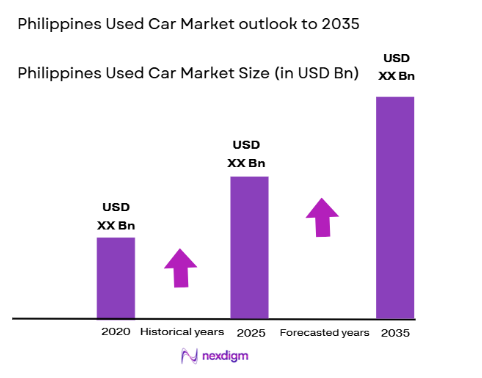
The Philippines Used Car Market has witnessed substantial growth, driven by rising disposable income and increasing consumer demand for affordable vehicles. The market is valued at approximately USD ~ billion, with strong consumer preference for used cars due to cost savings, especially as new car prices continue to rise. Factors such as a growing middle class, financing options, and the rise of online sales platforms are propelling this expansion. The demand for used cars remains robust, particularly in the context of urbanization and greater vehicle affordability.
Metro Manila, Cebu, and Davao are key markets for used cars, driven by rising vehicle sales, expanding infrastructure, and a large urban population. These cities have seen a shift toward used car purchases as consumers seek affordable alternatives to new cars. The Philippines’ growing automotive sector, alongside increasing vehicle fleet size and demand for premium pre-owned vehicles, contributes to the market’s dominance. Additionally, the rise in e-commerce platforms facilitating car sales has bolstered the market in major urban hubs, making it accessible to a larger consumer base.
Market Segmentation
By Product Type:
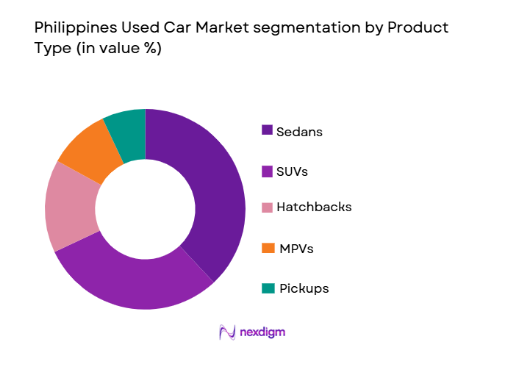
The Philippines Used Car Market is segmented by product type into sedans, SUVs, hatchbacks, MPVs, and pickups. Recently, sedans have the dominant market share due to their fuel efficiency, affordability, and suitability for urban environments. Consumers, particularly in Metro Manila, prefer sedans as they are easy to maintain and cost-effective for daily commutes. Additionally, the increasing availability of financing options and the growing middle class have made sedans the preferred choice among budget-conscious buyers. The demand for these vehicles continues to increase as more buyers seek affordable, reliable cars that meet both practical and aesthetic requirements.
By Platform Type:
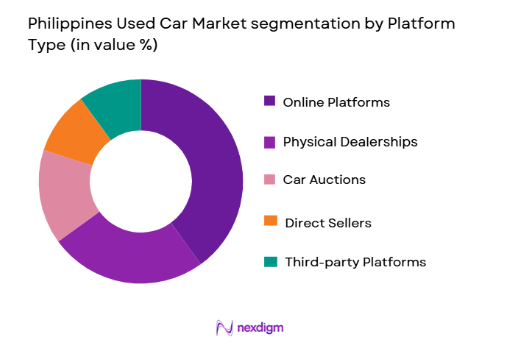
The Philippines Used Car Market is segmented by platform type into online platforms, physical dealerships, car auctions, direct sellers, and third-party platforms. Online platforms have seen a significant increase in market share due to their convenience, transparency, and wide selection. Platforms like AutoDeal and Carousell provide consumers with an extensive list of options, often accompanied by detailed car information, reviews, and financing options. The ease of comparing different models and prices has led to a preference for these platforms, especially among younger, tech-savvy consumers. The digital transformation in the automotive sales sector is anticipated to continue growing as more platforms emerge.
Competitive Landscape
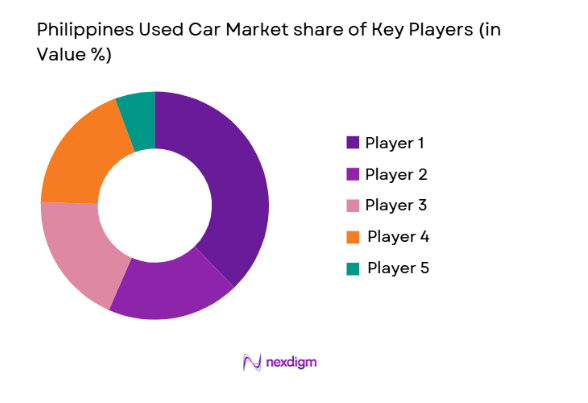
The competitive landscape of the Philippines Used Car Market is characterized by a mix of established dealerships, e-commerce platforms, and independent sellers. Major players dominate through physical dealerships, while online platforms are increasingly shaping the competitive environment, providing consumers with more accessible and transparent options. These players influence the market by improving car availability, transparency, and financing options, fostering a competitive ecosystem. The market is consolidating as more players integrate digital strategies, and new entrants seek to gain market share by focusing on customer experience and advanced technological offerings.
| Company Name | Establishment Year | Headquarters | Technology Focus | Market Reach | Key Products | Revenue (USD) | Market-specific Parameter |
| Toyota Motor Philippines | 1988 | Manila, Philippines | ~ | ~ | ~ | ~ | ~ |
| Honda Cars Philippines | 1990 | Quezon City, Philippines | ~ | ~ | ~ | ~ | ~ |
| Ford Philippines | 1997 | Makati, Philippines | ~ | ~ | ~ | ~ | ~ |
| Mitsubishi Motors Philippines | 1963 | Manila, Philippines | ~ | ~ | ~ | ~ | ~ |
| Carousell Philippines | 2015 | Makati, Philippines | ~ | ~ | ~ | ~ | ~ |
Philippines Used Car Market Analysis
Growth Drivers
Rising Disposable Income:
Rising disposable income among the middle class in the Philippines is a key driver of growth in the used car market. As economic conditions improve, more consumers have the financial flexibility to afford vehicles, including used cars, which offer a cost-effective alternative to new models. Increased purchasing power is creating a larger consumer base, especially in urban areas, where public transportation systems are often overcrowded and unreliable. With more people entering the workforce and benefiting from improved job prospects, the demand for personal vehicles has surged, further fueling the used car market. Additionally, the growth of online platforms and financing options has made car ownership more accessible, making it easier for individuals to secure loans and purchase vehicles that meet their needs. As incomes continue to rise, the demand for used cars, particularly fuel-efficient and affordable models, is expected to maintain its upward trajectory in the coming years.
Technological Advancements in E-commerce:
The increasing use of online platforms has revolutionized the way used cars are bought and sold in the Philippines. Platforms like AutoDeal, OLX, and Carousell have made the process of purchasing used vehicles easier, faster, and more transparent. These platforms allow consumers to browse listings, compare prices, and access detailed information about car conditions, all from the comfort of their homes. Moreover, these platforms often provide financing options, making it easier for consumers to purchase cars through flexible payment plans. The technological advancements in e-commerce, such as the integration of AI and machine learning for better user experience, are streamlining the car-buying process. Additionally, the rise of virtual car showrooms and digital platforms is attracting younger consumers who are more comfortable with online transactions. The increasing availability of digital tools to enhance vehicle purchasing is further accelerating the growth of the used car market.
Market Challenges
Limited Financing Options:
One of the significant challenges in the Philippines Used Car Market is the limited availability of financing options, particularly for lower-income buyers. While there has been an increase in the number of financing schemes, many consumers still face difficulties in obtaining loans due to high-interest rates and stringent credit requirements. This poses a barrier to entry for many potential buyers who may be interested in purchasing used cars but are unable to secure the necessary financing. As the demand for affordable vehicles grows, the inability to access affordable credit could slow the market’s expansion. Additionally, some financial institutions are reluctant to offer loans for used cars due to concerns about the vehicles’ depreciation, which makes it harder for consumers to obtain favorable loan terms. To overcome this challenge, there is a need for greater financial inclusion and more accessible financing options to cater to a wider consumer base.
Lack of Standardization and Trust Issues:
Another challenge in the Philippines Used Car Market is the lack of standardization and transparency in the condition of used vehicles. Many consumers remain cautious when buying used cars due to concerns over hidden defects, maintenance history, and the reliability of the vehicle. While certification programs have been introduced by some dealerships and platforms, there is no uniform standard for used car quality, leading to discrepancies in car conditions. This lack of standardization has resulted in trust issues between buyers and sellers, with many consumers opting to buy from authorized dealerships where they feel more secure. This has created an imbalance in the market, where only a portion of used car transactions are certified or come with guarantees. To address this, there is a need for more robust vehicle certification programs and clear standards that enhance transparency and build trust between buyers and sellers.
Opportunities
Expansion of Certified Pre-Owned Vehicles:
One significant opportunity in the Philippines Used Car Market is the growing demand for certified pre-owned (CPO) vehicles. As consumers become more discerning about the condition of used cars, there is a rising preference for vehicles that come with certifications or warranties, assuring quality and reliability. The popularity of CPO vehicles is especially high among middle- and upper-income consumers who are looking for more affordable yet high-quality alternatives to new cars. This trend presents a significant opportunity for dealerships and online platforms to expand their offerings of CPO vehicles and enhance the customer experience by offering detailed reports on vehicle condition, service history, and other relevant information. Additionally, the rise of CPO vehicles has the potential to increase the overall value of used cars, as consumers are willing to pay a premium for certified models. This growing segment is expected to drive market growth by attracting a larger pool of buyers who prioritize vehicle quality and long-term reliability.
Adoption of Electric and Hybrid Used Cars:
The shift toward electric and hybrid vehicles presents a significant opportunity for the Philippines Used Car Market. With increasing environmental concerns and government incentives for electric vehicles (EVs), there is growing interest in second-hand EVs and hybrids. These vehicles are seen as more affordable options for environmentally conscious consumers who want to reduce their carbon footprint without the high upfront cost of new EVs. The market for used electric and hybrid vehicles is expected to expand as the infrastructure for EV charging stations improves and the availability of such vehicles increases. As governments around the world, including the Philippines, continue to support the adoption of green technologies, the demand for electric and hybrid vehicles is expected to rise. This shift will likely lead to new opportunities for both dealerships and consumers, with more options becoming available in the used car market.
Future Outlook
The future outlook of the Philippines Used Car Market is optimistic, with continued growth driven by increasing disposable income, the rising popularity of online platforms, and a growing middle class. The market is expected to see strong demand for certified pre-owned vehicles, as consumers seek affordable alternatives to new cars while ensuring quality. Technological advancements, particularly in e-commerce and financing, will play a crucial role in expanding access to vehicles for a broader consumer base. Government initiatives promoting environmental sustainability and the adoption of electric vehicles will also shape the market’s future, creating opportunities for the sale of electric and hybrid used cars. With the expansion of digital platforms and financing options, the Philippines Used Car Market is poised for steady growth over the next few years.
Major Players
- Toyota Motor Philippines
- Honda Cars Philippines
- Ford Philippines
- Mitsubishi Motors Philippines
- Carousell Philippines
- Suzuki Philippines
- Nissan Philippines
- Isuzu Philippines Corporation
- Hyundai Philippines
- Mazda Philippines
- BMW Philippines
- Chevrolet Philippines
- AutoDeal
- OLX Philippines
- Petronas Car Dealership
Key Target Audience
- Car Dealerships
- Vehicle Leasing Companies
- E-commerce Platforms
- Government Agencies
- Car Rental Firms
- Financial Institutions
- Automotive Manufacturers
- Car Insurance Providers
Research Methodology
Step 1: Identification of Key Variables
The first step is identifying key market variables such as product types, consumer behavior, and industry trends.
Step 2: Market Analysis and Construction
This step involves the analysis of market data from primary and secondary sources, which is then synthesized to form the market structure.
Step 3: Hypothesis Validation and Expert Consultation
Hypotheses about market dynamics are tested through consultations with industry experts and stakeholders to ensure accuracy and relevance.
Step 4: Research Synthesis and Final Output
Finally, all data is consolidated, analyzed, and presented in a comprehensive report that includes insights and projections based on the research.

- Executive Summary
- Research Methodology (Definitions, Scope, Industry Assumptions, Market Sizing Approach, Primary & Secondary Research Framework, Data Collection & Verification Protocol, Analytic Models & Forecast Methodology, Limitations & Research Validity Checks)

- Market Definition and Scope
- Value Chain & Stakeholder Ecosystem
- Regulatory / Certification Landscape
- Sector Dynamics Affecting Demand
- Strategic Initiatives & Infrastructure Growth

- Growth Drivers
Rising Disposable Income
Increase in Vehicle Lifespan
Growing Demand for Affordable Transport
Expansion of E-commerce Platforms
Shifting Consumer Preferences - Market Challenges
Regulatory Barriers in Vehicle Imports
Lack of Standardization
Supply Chain Constraints
Consumer Trust Issues
Limited Access to Financing - Market Opportunities
Rising Demand for Certified Pre-Owned Vehicles
Growing Popularity of Online Platforms
Expansion of Financing Options - Trends
Growing Adoption of Electric Used Vehicles
Increasing Popularity of Online Sales Platforms
Focus on Car Customization
Rising Adoption of Subscription Models
Technological Advancements in Used Car Management - Government Regulations & Defense Policy
Emission Control Regulations
Vehicle Safety Standards
Financing Regulations for Used Cars - SWOT Analysis
- Stakeholder and Ecosystem Analysis
- Porter’s Five Forces Analysis
- Competition Intensity and Ecosystem Mapping

- By Market Value, 2020-2025
- By Installed Units, 2020-2025
- By Average System Price, 2020-2025
- By System Complexity Tier, 2020-2025

- By System Type (In Value%)
Sedans
SUVs
Hatchbacks
MPVs
Pickups - By Platform Type (In Value%)
Online Platforms
Physical Dealerships
Car Auctions
Direct Sellers
Third-Party Platforms - By Fitment Type (In Value%)
Used Cars from Authorized Dealers
Used Cars from Independent Dealers
Certified Pre-Owned Vehicles
Private Seller Vehicles
Fleet / Leasing Companies - By EndUser Segment (In Value%)
Private Buyers
Leasing Companies
Corporate Buyers
Car Rental Companies
Government Buyers - By Procurement Channel (In Value%)
Direct Sales
Brokerage Services
Online Marketplaces
Car Auctions
Third-Party Dealerships - By Material / Technology (in Value%)
Internal Combustion Engine Vehicles
Electric Vehicles
Hybrid Vehicles
Certified Pre-Owned Technology
Telematics and Infotainment Systems

- Market structure and competitive positioning
- Market share snapshot of major players
- CrossComparison Parameters (Vehicle Type, Platform Type, Fitment Type, EndUser Segment, Procurement Channel, Technology Integration, Price Range, Vehicle Condition, Warranty Terms, Financing Availability)
- SWOT Analysis of Key Players
- Pricing & Procurement Analysis
- Key Players
Toyota Motor Philippines
Honda Cars Philippines
Mitsubishi Motors Philippines
Ford Philippines
Nissan Philippines
Isuzu Philippines Corporation
Hyundai Philippines
Suzuki Philippines
Kia Motors Philippines
Chevrolet Philippines
Mazda Philippines
BMW Philippines
AutoDeal
Carousell Philippines
Philippine International Trading Corporation

- Private Buyers’ Preference for Affordability
- Rising Leasing Demand from Corporate Buyers
- Growth in Demand from Car Rental Companies
- Government Initiatives to Boost Vehicle Access

- Forecast Market Value, 2026-2035
- Forecast Installed Units, 2026-2035
- Price Forecast by System Tier, 2026-2035
- Future Demand by Platform, 2026-2035


 Request a Sample
 Ask for Customization
 Get a Quote
 Enquire Now