
 Download PDF
 Download PDF
Market Overview
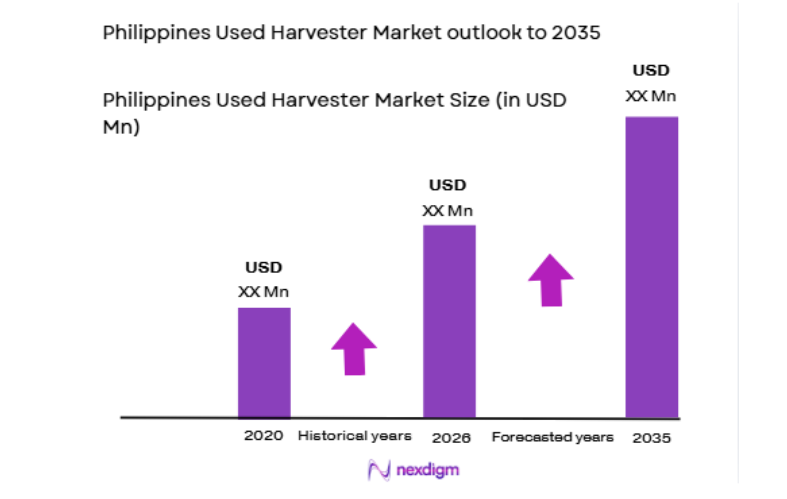
The Philippines Used Harvester market is valued at approximately USD ~ million, driven by increasing demand for cost-effective harvesting solutions, particularly in the agricultural sector. As the Philippines is a major agricultural hub, farmers are increasingly turning to used harvesters to reduce upfront costs, given the high prices of new equipment. With technological improvements in used machines, these products are now seen as reliable alternatives, further contributing to the market’s growth.
The market is predominantly driven by agricultural regions such as Mindanao, Visayas, and Luzon, where rice, corn, and sugarcane are major crops. These regions are home to large farming communities that have a high demand for harvesters, both new and used. The accessibility of maintenance services and spare parts for these machines in these areas also encourages farmers to invest in used equipment, helping maintain the market’s dominance in these regions.
Market Segmentation
By Product Type
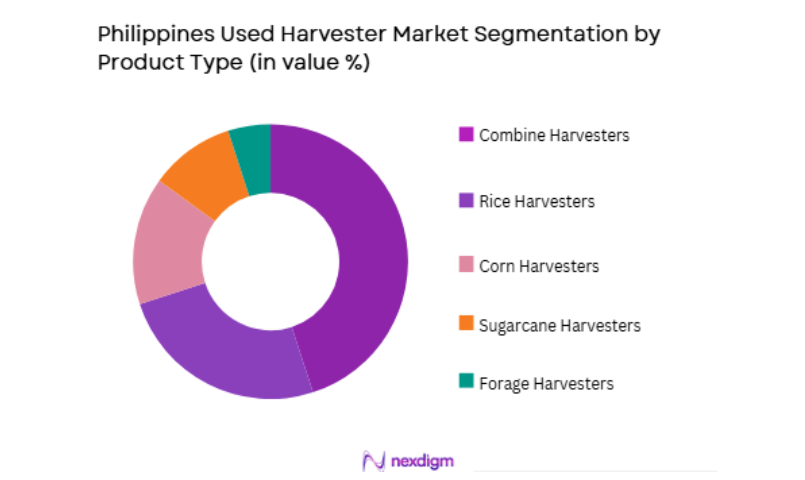
The Philippines Used Harvester market is segmented by product type into combine harvesters, rice harvesters, corn harvesters, sugarcane harvesters, and forage harvesters. Among these, combine harvesters dominate the market due to their versatility in harvesting a wide range of crops, including rice, corn, and wheat. Combine harvesters are in high demand due to their efficiency in reducing labor costs and harvesting time. The significant infrastructure development in the agricultural sector, along with the increasing use of mechanized farming techniques, has driven the high adoption rate of combine harvesters.
By Platform Type
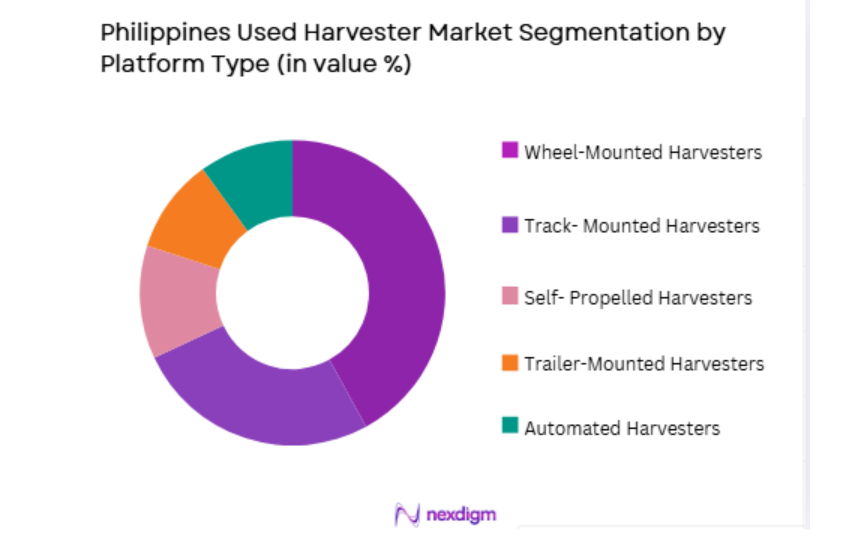
The market is segmented by platform type into wheel-mounted harvesters, track-mounted harvesters, self-propelled harvesters, trailer-mounted harvesters, and automated harvesters. Wheel-mounted harvesters currently hold the largest market share due to their affordability, ease of use, and adaptability to various types of terrain. These machines are favored by small to medium-scale farmers who require a cost-effective solution for efficient harvesting. Their durability and maintenance accessibility further contribute to their popularity in rural agricultural areas of the Philippines.
Competitive Landscape
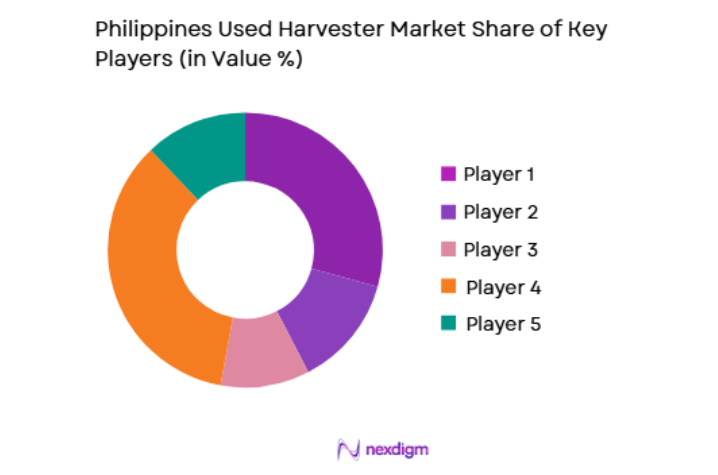
The Philippines Used Harvester market is characterized by the presence of numerous players, with key international and local companies vying for market share. While consolidation has been observed with large distributors controlling significant portions of the market, small local vendors continue to cater to niche segments. The market is highly competitive, with players focusing on offering refurbished equipment, warranties, and after-sales services to enhance customer satisfaction and drive sales.
| Company Name | Establishment Year | Headquarters | Technology Focus | Market Reach | Key Products | Revenue (USD Million) | Additional Market-Specific Parameter |
| Kubota Corporation | 1890 | Osaka, Japan | ~ | ~ | ~ | ~ | ~ |
| John Deere | 1837 | Moline, IL, USA | ~ | ~ | ~ | ~ | ~ |
| Massey Ferguson | 1847 | Beauvais, France | ~ | ~ | ~ | ~ | ~ |
| CLAAS | 1913 | Harsewinkel, Germany | ~ | ~ | ~ | ~ | ~ |
| Yanmar Co. | 1912 | Osaka, Japan | ~ | ~ | ~ | ~ | ~ |
Philippines Used Harvester Market Analysis
Growth Drivers
Increase in Agricultural Production and Demand for Efficiency
The growth in agricultural production is a significant driver for the Philippines Used Harvester market. As the country’s agricultural output expands, especially in major crops like rice, corn, and sugarcane, the need for efficient harvesting solutions becomes more critical. Used harvesters provide an affordable alternative to new machinery, which is increasingly in demand by farmers looking to improve efficiency and productivity. With the rising labor costs in agriculture, mechanization through harvesting machines allows farmers to reduce manual labor, increase harvest speed, and improve crop quality. This shift towards mechanization has been further supported by the government’s push for agricultural modernization, ensuring a growing need for harvesting equipment, both new and used.
Government Initiatives and Support for Mechanization
Government initiatives focused on improving agricultural practices through mechanization are driving the growth of the used harvester market in the Philippines. With increasing support for farm modernization and rural development, programs aimed at subsidizing the purchase of agricultural equipment have been instrumental in promoting the adoption of harvesting machines. As part of its agriculture development strategy, the government provides financial support to small and medium-scale farmers, helping them access the equipment they need. This, coupled with favorable financing options for used harvesters, has encouraged more farmers to invest in such machines, thereby driving the market’s growth. The implementation of such policies aligns with the broader goal of improving food security and rural economic development in the country.
Market Challenges
High Maintenance Costs of Used Harvesters
One of the major challenges in the Philippines Used Harvester market is the high maintenance costs associated with used equipment. Although used harvesters are more affordable upfront compared to new machines, they often require extensive repairs, replacement of parts, and periodic servicing. These additional costs can add up over time, leading to higher total ownership costs. The lack of readily available spare parts for older models can further exacerbate this issue, forcing farmers to spend more on maintenance. Farmers in remote areas may find it difficult to access authorized repair services, which could lead to prolonged downtime during peak harvest periods. As a result, some farmers may opt for newer models, limiting the growth potential for the used harvester market.
Limited Access to Financing for Small-Scale Farmers
Access to financing is a significant barrier for small-scale farmers looking to purchase used harvesters in the Philippines. Many small farmers face difficulty in securing loans or financial assistance for purchasing agricultural equipment due to the lack of collateral, high interest rates, and restrictive lending terms. While there are some government programs aimed at helping farmers acquire machinery, the bureaucratic process and limited outreach of these programs have hindered their widespread adoption. Consequently, many small-scale farmers are left with few options for purchasing used harvesters, reducing the market’s potential for growth in this segment.
Opportunities
Growth in Agricultural Equipment Rental Market
One of the key opportunities in the Philippines Used Harvester market is the expansion of the agricultural equipment rental market. With many small and medium-scale farmers unable to afford the upfront cost of purchasing a used harvester, rental services provide an affordable alternative. Equipment rental services are becoming increasingly popular in rural regions, allowing farmers to rent harvesters for a specific period during peak harvest seasons. This model allows farmers to access modern and well-maintained equipment without the burden of ownership costs, further driving demand for used harvesters. The growth of rental services also supports the widespread adoption of mechanization in agriculture, contributing to the market’s overall expansion.
Technological Upgrades and Refurbishing of Used Harvesters
There is a growing opportunity in refurbishing used harvesters to meet the increasing demand for high-performance equipment at a lower cost. By upgrading and modernizing older models with the latest technology, manufacturers and dealers can offer used harvesters with enhanced capabilities, improved efficiency, and longer lifespans. This would make used harvesters more attractive to farmers looking for cost-effective solutions that do not compromise on performance. As technology continues to advance, the demand for refurbished harvesters is expected to rise, providing a significant growth opportunity for companies involved in the refurbishing process.
Future Outlook
The Philippines Used Harvester market is expected to grow steadily in the coming years, driven by rising agricultural productivity, government support for mechanization, and the growing adoption of equipment rental services. Technological improvements in used harvesters and the increasing availability of financing options will further support market growth. As the agricultural sector continues to modernize, used harvesters will remain an affordable and viable solution for many farmers, creating a strong demand for these machines. Government policies aimed at facilitating agricultural development and enhancing mechanization will continue to be key drivers for the market’s long-term growth.
Major Players
- Kubota Corporation
- John Deere
- Massey Ferguson
- CLAAS
- Yanmar Co.
- Case IH
- New Holland Agriculture
- Sampo Rosenlew
- AGCO Corporation
- Foton Lovol International Heavy Industry
- SDF Group
- Mahindra & Mahindra
- Zoomlion Heavy Industry
- Doosan Corporation
- Manitou Group
Key Target Audience
- Investments and venture capitalist firms
- Government and regulatory bodies
- Agricultural machinery manufacturers
- Farming co-operatives
- Agricultural equipment distributors
- Agricultural machinery leasing companies
- Large-scale farming operations
- Agricultural service providers
Research Methodology
Step 1: Identification of Key Variables
Identifying critical factors influencing the market such as demand for specific harvester types, financial constraints, and government initiatives.
Step 2: Market Analysis and Construction
Data collection and analysis of the market using both primary and secondary research methods to understand the size, trends, and growth patterns.
Step 3: Hypothesis Validation and Expert Consultation
Engaging with industry experts and stakeholders to validate market assumptions and ensure the accuracy of the analysis.
Step 4: Research Synthesis and Final Output
Compiling and synthesizing the data into a comprehensive market report, highlighting actionable insights for key stakeholders.

- Executive Summary
- Research Methodology (Definitions, Scope, Industry Assumptions, Market Sizing Approach, Primary & Secondary Research Framework, Data Collection & Verification Protocol, Analytic Models & Forecast Methodology, Limitations & Research Validity Checks)

- Market Definition and Scope
- Value Chain & Stakeholder Ecosystem
- Regulatory / Certification Landscape
- Sector Dynamics Affecting Demand

- Growth Drivers
Increase in Agricultural Production and Demand for Efficiency
Government Support for Agricultural Mechanization
Technological Advancements in Harvesting Equipment - Market Challenges
High Maintenance Costs of Used Harvesters
Lack of After-Sales Support for Used Equipment
Limited Access to Financing for Small Scale Farmers - Market Opportunities
Growth of the Agricultural Equipment Rental Market
Rising Demand for Sustainable and Low-Cost Harvesting Solutions
Technological Upgrades and Refurbishing of Used Harvesters - Trends
Rising Popularity of Autonomous Harvesters
Increasing Adoption of IoT and Smart Technology in Harvesters
Shift Towards Environmentally Sustainable Harvesting Methods - Government regulations
- SWOT analysis
- Porters 5 forces

- By Market Value, 2020-2025
- By Installed Units, 2020-2025
- By Average System Price, 2020-2025
- By System Complexity Tier, 2020-2025

- By System Type (In Value%)
Combine Harvesters
Cotton Harvesters
Sugar Cane Harvesters
Rice Harvesters
Forage Harvesters - By Platform Type (In Value%)
Wheel-mounted Harvesters
Track-mounted Harvesters
Self-propelled Harvesters
Trailer-mounted Harvesters
Automated Harvesters - By Fitment Type (In Value%)
Aftermarket Harvesters
OEM Harvesters
Customized Harvesters
Standardized Harvesters
Refurbished Harvesters - By End User Segment (In Value%)
Large Scale Farms
Small Scale Farms
Agricultural Co-operatives
Government and Public Sector

- Market Share Analysis
- Cross Comparison Parameters (System Type, Platform Type, Procurement Channel, EndUser Segment, Fitment Type, Market Share, Brand Loyalty, Technological Advancements, Cost of Ownership, After-Sales Support)
- SWOT Analysis of Key Competitors
- Pricing & Procurement Analysis
- Key Players
Kubota Corporation
John Deere
Case IH
Massey Ferguson
New Holland Agriculture
Claas
AGCO Corporation
Sampo Rosenlew
Mahindra & Mahindra
Yanmar Co.
Zoomlion Heavy Industry
Dongfeng Agricultural Machinery
LiuGong Machinery
Jiangsu Yueda Intelligent Agricultural Equipment
Foton Lovol International Heavy Industry

- Large scale farms increasing demand for cost-effective machinery
- Government and co-operatives supporting agricultural mechanization
- Small scale farmers’ preference for affordable, refurbished equipment
- Rental services providing affordable options for smaller farms

- Forecast Market Value, 2026-2035
- Forecast Installed Units, 2026-2035
- Price Forecast by System Tier, 2026-2035
- Future Demand by Platform, 2026-2035


 Request a Sample
 Ask for Customization
 Get a Quote
 Enquire Now