
 Download PDF
Market Overview
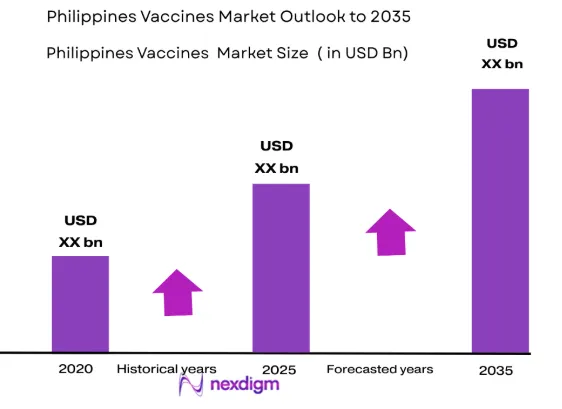
The Philippines vaccines market has been growing significantly, supported by government-led vaccination programs and rising health awareness among the population. In 2023, the market was valued at USD ~ billion, driven by an expansion of vaccination coverage under initiatives like the Expanded Program on Immunization (EPI). The market is propelled by the increasing demand for routine immunizations and specialized vaccines for infectious diseases like influenza, hepatitis, and HPV. The entry of advanced vaccine technologies such as mRNA also contributes to the market’s growth, along with efforts to boost vaccination coverage in underserved regions.
Metro Manila, Cebu, and Davao are the dominant regions in the Philippines vaccines market, primarily due to their large population density and well-established healthcare infrastructure. Metro Manila serves as the epicenter for most healthcare facilities, pharmaceutical distributors, and government health programs. Cebu and Davao, with their significant urban growth, also contribute to the growing demand for vaccines, particularly in the private healthcare sector. These cities play a crucial role in the distribution and access to vaccines, supported by both public health agencies and private sector involvement.
Market Segmentation
By Vaccine Type
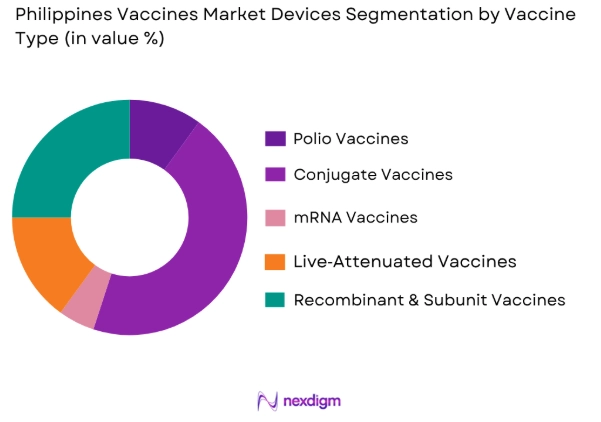
The Philippines vaccines market is segmented by vaccine type into polio vaccines, conjugate vaccines, mRNA vaccines, live‑attenuated vaccines, and recombinant & subunit vaccines. Conjugate vaccines, particularly those targeting pneumococcal, Hib, and meningococcal diseases, dominate the market share. This dominance is due to their widespread use in pediatric immunization programs, which are heavily subsidized by the government. Conjugate vaccines’ effectiveness in preventing severe diseases among children and their ability to provide long-term immunity contribute to their strong position in the market. Vaccines such as the pneumococcal vaccine are also part of the national immunization program, further solidifying their prevalence.
By Target Age Group
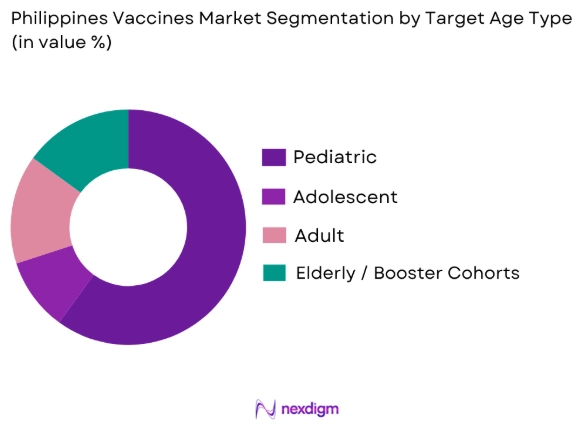
The vaccines market in the Philippines is also segmented by target age group: pediatric, adolescent, adult, and elderly/booster cohorts. Pediatric vaccines dominate the market share due to the robust government programs targeting immunization of children against diseases like polio, hepatitis B, and measles. These vaccines are part of the routine immunization schedule and are delivered through national healthcare services. The Philippine government’s initiatives, such as the EPI, ensure broad access to vaccines for children, making the pediatric segment a significant contributor to the market.
Competitive Landscape
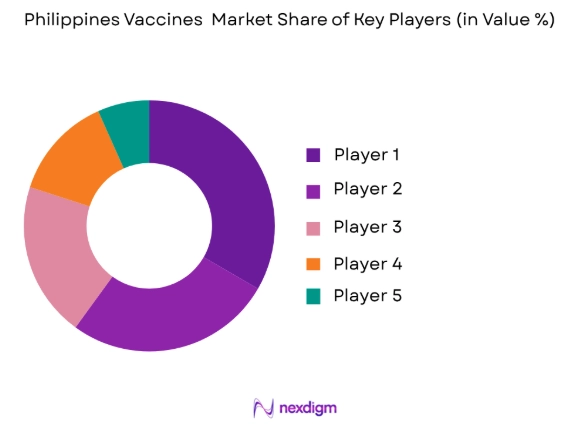
The Philippines vaccines market is dominated by a few major players, including both global pharmaceutical giants and local distributors. Companies such as Sanofi Pasteur, GlaxoSmithKline, and Merck & Co. are key players, with significant market influence due to their broad vaccine portfolios and strong distribution networks. Additionally, local players like Glovax Biotech Corp. contribute to the market by distributing internationally recognized vaccines, ensuring widespread availability across the country. The consolidation of these key players in the market indicates the growing importance of vaccine accessibility, affordability, and comprehensive immunization programs.
| Company | Establishment Year | Headquarters | Market Share (%) | Key Product Categories | Distribution Reach | Regulatory Approvals |
| Sanofi Pasteur | 2004 | Paris, France | ~ | ~ | ~ | ~ |
| GlaxoSmithKline | 2000 | London, UK | ~ | ~ | ~ | ~ |
| Merck & Co. | 1925 | Kenilworth, USA | ~ | ~ | ~ | ~ |
| Glovax Biotech Corp. | 1995 | Manila, Philippines | ~ | ~ | ~ | ~ |
| Serum Institute of India | 1966 | Pune, India | ~ | ~ | ~ | ~ |
Philippines Vaccines Market Analysis
Growth Drivers
Government Immunization Initiatives
Government vaccination initiatives in the Philippines play a crucial role in driving the demand for vaccines. The Department of Health (DOH) has ramped up efforts to immunize the population through the Expanded Program on Immunization (EPI). As of 2023, over 80% of children in the Philippines have received basic vaccines under the EPI, including vaccines for polio, diphtheria, tetanus, and pertussis (DTaP), among others. The government continues to focus on eliminating vaccine-preventable diseases through nationwide immunization campaigns. In 2022, the DOH’s immunization coverage reached 80%, with major progress in rural areas. This widespread effort is critical in achieving herd immunity and controlling preventable diseases.
Rising Preventive Healthcare Awareness
Rising awareness of preventive healthcare is a significant driver for the vaccines market in the Philippines. The World Health Organization (WHO) reported a 17% increase in the number of Filipinos opting for preventive healthcare measures in the past two years. This growing inclination towards preventive measures has contributed to higher vaccination rates, especially for childhood immunizations. Furthermore, in 2023, the Philippine government allocated more than 10 billion PHP for preventive health programs, reflecting the government’s increasing focus on disease prevention. This growing demand for preventive healthcare is expected to continue fueling the vaccines market’s growth as more individuals prioritize vaccination over treatment.
Market Challenges
Import Reliance and FX Exposure
A significant challenge facing the vaccines market in the Philippines is the country’s reliance on imported vaccines. According to the Philippine Statistics Authority, approximately 90% of vaccines are imported, exposing the market to fluctuations in foreign exchange (FX) rates. This heavy reliance on imports makes vaccine prices sensitive to currency fluctuations. For instance, a 1% depreciation of the Philippine peso against the US dollar in 2023 resulted in a 3.5% increase in vaccine costs. As the peso weakens against global currencies, the cost of imported vaccines increases, potentially leading to higher financial burdens for both government programs and the private sector.
Cold Chain Cost and Last-Mile Delivery Constraints
Cold chain logistics and last-mile delivery remain significant challenges for the Philippines’ vaccine distribution infrastructure. Due to its archipelagic geography, ensuring that vaccines are transported and stored at the correct temperatures remains a logistical hurdle. In 2022, the government reported that cold chain costs account for approximately 30% of the total vaccine distribution costs in the Philippines. Additionally, vaccines are often delayed or compromised in regions with inadequate infrastructure, such as remote islands and mountainous areas. The Philippines has an ongoing challenge in improving its cold chain infrastructure, especially in rural and underserved regions, which hinders efficient vaccine distribution.
Opportunities
Expansion of Private Vaccination Programs
There is a growing opportunity for private vaccination programs in the Philippines, particularly due to the increased awareness of vaccination’s importance for disease prevention. In 2022, more than 15 million Filipinos received their vaccinations through private healthcare providers, showing a significant shift towards private-sector involvement in immunization programs. As the population becomes more health-conscious, private companies have started to offer more diverse vaccine options, such as flu shots and travel vaccines, contributing to market growth. Furthermore, with the rising demand for personalized healthcare, private vaccination programs are expected to see continued expansion in the coming years, addressing the needs of individuals seeking more convenience and options.
Local Manufacturing Initiatives
The Philippines is focusing on local vaccine production to reduce its dependence on imports, offering significant growth potential for the vaccines market. The Philippine government is making substantial investments in establishing local manufacturing plants for vaccines. In 2023, the government provided a 2.5 billion PHP fund to support the development of domestic vaccine production capabilities. This initiative is aimed at ensuring the long-term sustainability and security of the vaccine supply, particularly in the face of global vaccine shortages. The establishment of domestic vaccine manufacturing plants is expected to reduce import costs, increase vaccine availability, and create local jobs, driving both economic and public health benefits for the country.
Future Outlook
Over the next five years, the vaccines market in the Philippines is expected to show significant growth driven by continuous government support, advancements in vaccine technologies, and increasing consumer awareness about the importance of vaccination. The Philippine government has been increasing its efforts to improve vaccination coverage, especially for preventable diseases in underserved regions. The introduction of new vaccine technologies, such as mRNA vaccines, and partnerships with global pharmaceutical companies will further boost market growth. Additionally, the increased focus on immunization during global health crises will provide further momentum to the market’s growth.
Major Players
- Sanofi Pasteur
- GlaxoSmithKline
- Merck & Co.
- Glovax Biotech Corp.
- Serum Institute of India
- Bharat Biotech International
- Pfizer Inc.
- Johnson & Johnson (Janssen)
- Bio Farma
- Moderna
- AstraZeneca
- VBI Vaccines
- Inovio Pharmaceuticals
- Takeda Pharmaceutical Company
- CSL Limited
Key Target Audience
- Investments and Venture Capitalist Firms
- Government and Regulatory Bodies
- Hospitals and Healthcare Providers
- Pharmaceutical Manufacturers and Distributors
- Non-governmental Organizations
- Public Health Agencies
- Private Healthcare Clinics and Pharmacies
- Immunization Program Coordinators
Research Methodology
Step 1: Identification of Key Variables
The initial phase involves identifying critical market variables, including government vaccination programs, vaccine types, target demographics, and distribution channels. This phase utilizes secondary data from government publications, industry reports, and relevant healthcare databases. The goal is to understand the macroeconomic factors driving the demand for vaccines and identify key market drivers.
Step 2: Market Analysis and Construction
Historical market data is gathered from reputable sources, including health authorities and pharmaceutical reports, to assess market penetration and vaccine usage trends. This phase includes estimating vaccine demand by population segment and calculating the share of each vaccine type in the market. The market analysis also includes a deep dive into distribution channels to determine their impact on accessibility and coverage.
Step 3: Hypothesis Validation and Expert Consultation
Hypotheses about market trends and dynamics are developed and validated through consultations with industry experts, including healthcare providers, pharmaceutical distributors, and government health authorities. These experts offer insights into the operational and financial landscape of the market, contributing to refining the market projections and ensuring the reliability of the estimates.
Step 4: Research Synthesis and Final Output
The final phase synthesizes all research findings and incorporates feedback from expert consultations. This stage includes validating assumptions about market penetration and growth through direct discussions with stakeholders such as vaccine manufacturers, distributors, and public health bodies. The outcome is a comprehensive and validated market report, ensuring the accuracy and credibility of the insights.

- Executive Summary
- Research Methodology (Market Definitions, Assumptions & EPI, Primary and Secondary Research Framework, Vaccine Demand Sizing Method, Data Consolidation and Forecast Model, Limitations, Bias Controls, and Future Inference Logic)

- Market Definition & Product Scope
- Public Sector Immunization Programs
- Private Healthcare & Vaccination Access Landscape
- Vaccine Procurement & Import Dependency
- Supply Chain Architecture
- Value Chain and Stakeholder Mapping

- Growth Drivers
Government Immunization Initiatives
Rising Preventive Healthcare Awareness
Urban Population & Birth Rate Dynamics
Emerging Technology Platforms - Market Challenges
Import Reliance and FX Exposure
Cold Chain Cost and Last‑Mile Delivery Constraints
Vaccine Hesitancy and Education Gaps - Opportunities
Expansion of Private Vaccination Programs
Local Manufacturing Initiatives
Cross‑segment Clinical Innovation - Market Trends
Conjugate & Multivalent Vaccine Uptake
Digital Immunization Tracking & Digital Health
Premium Pricing Tier Growth - Government Regulation & Policy Impact
DOH Licensing and Regulatory Landscape
Procurement Policies and EPI Mandates
Quality Standards & WHO Prequalification Incentives - SWOT Analysis
- Ecosystem Interaction
- Porter’s Five Forces
- Competitive Ecosystem Structure

- By Market Value, 2020-2025
- By Vaccine Volume, 2020-2025
- By Procurement Channel, 2020-2025
- By Cold Chain Infrastructure Capacity and Utilization, 2020-2025
- By Immunization Coverage Metrics, 2020-2025

- By Vaccine Type (In Value %)
Polio Vaccines
Conjugate Vaccines
mRNA Vaccines
Live‑Attenuated Vaccines
Recombinant & Subunit Vaccines - By Target Age Group (In Value %)
Pediatric
Adolescent
Adult
Elderly / Booster Cohorts - By Technology Platform (In Value %)
Traditional Attenuated/Inactivated
Conjugate & Recombinant
mRNA / Viral Vector
Combination Vaccines - By Distribution Channel (In Value %)
Public Health Clinics / DOH Programs
Hospitals & Specialty Centers
Retail Pharmacies & Private Clinics
Direct Procurement by Corporates / NGOs - By Region (In Value %)
Luzon
Visayas
Mindanao
Rural & Island Provinces

- Market Share by Value and Volume
- Cross Comparison Parameters (Product Portfolio Breadth, Public Sector Contract Penetration, Distribution Network Reach, Cold Chain Asset Footprint, Price per Dose Tiering and Pricing Strategy, Market Segment, Focus (Pediatric/Adult/Travel, Regulatory Approvals & Local Licensing Status, Innovation & R&D Pipeline Presence)
- Company SWOT Profiles
- Pricing Analysis by SKU and Segment
- Detailed Profiles of Major Companies
Sanofi Pasteur (Vaccines)
GlaxoSmithKline plc
Pfizer Inc.
Merck & Co., Inc.
Serum Institute of India Pvt. Ltd.
Bharat Biotech International
Takeda Pharmaceutical Company
Johnson & Johnson (Janssen)
Bio Farma
Moderna / mRNA Focused Entities
AstraZeneca (Where Applicable)
Glovax Biotech Corp. (PH Domestic Distributor/Importer)
CSL Limited
VBI Vaccines
Inovio Pharmaceuticals

- Healthcare Facility Demand & Utilization Patterns
- Vaccination Budgeting & Reimbursement Norms
- Purchasing Behaviour
- Unmet Need & Coverage Gaps
- Decision Drivers for Buyers

- By Market Value, 2026-2035
- By Vaccine Volume, 2026-2035
- By Procurement Channel, 2026-2035
- By Cold Chain Infrastructure Capacity and Utilization, 2026-2035
- By Immunization Coverage Metrics, 2026-2035


 Request a Sample
 Ask for Customization
 Get a Quote
 Enquire Now