
 Download PDF
Market Overview
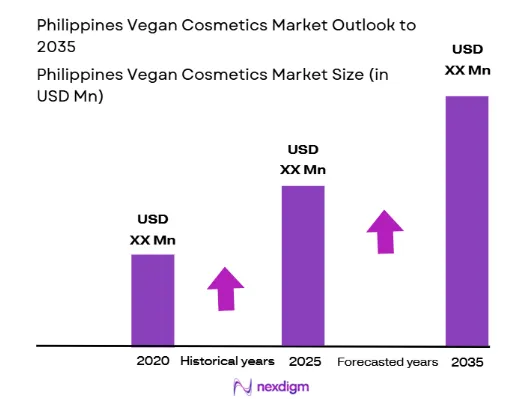
The Philippines vegan cosmetics market is valued at approximately USD ~million in 2025. This market has experienced a substantial growth trajectory, driven by a rising consumer awareness about ethical beauty, a growing inclination toward cruelty-free and plant-based products, and the increasing availability of such products across both online and physical retail channels. Consumer demand for environmentally sustainable, cruelty-free beauty solutions is pushing brands to invest in innovation, especially with the adoption of vegan formulations. Additionally, government initiatives focusing on sustainability have supported this growth, as Filipino consumers place greater emphasis on products that align with their values and lifestyle.
Metro Manila, Cebu, and Davao are the dominant regions for vegan cosmetics in the Philippines. Metro Manila, being the capital and the most urbanized area, leads due to its concentration of consumers with higher disposable incomes who are willing to invest in ethical beauty products. Cebu and Davao, as growing economic hubs, also contribute significantly to the demand for vegan cosmetics, driven by increasing consumer awareness, a growing middle class, and the popularity of eco-conscious beauty trends. The consumer base in these cities is highly influenced by global trends, especially through social media platforms that advocate for cruelty-free beauty.
Market Segmentation
By Product Type
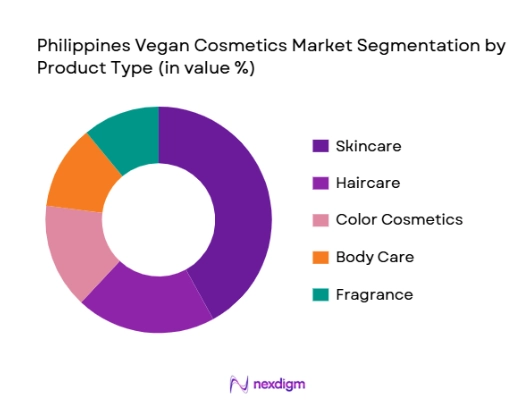
The Philippines vegan cosmetics market is segmented by product type into skincare, haircare, color cosmetics, body care, and fragrance. Among these, the skincare segment dominates due to increasing consumer preferences for plant-based formulations that promise skin benefits without harmful chemicals. Products like vegan moisturizers, serums, and facial oils are gaining traction due to the growing concerns over skin health and sensitivity.
Skincare continues to hold a dominant position because Filipino consumers are highly focused on skincare routines, seeking natural, non-toxic, and cruelty-free alternatives. Vegan skincare brands offer products infused with natural ingredients like coconut, aloe vera, and rice bran oil, which are widely trusted for their skin benefits. Additionally, the accessibility of skincare items through both online and physical retail platforms has further accelerated the segment’s growth.
By Distribution Channel
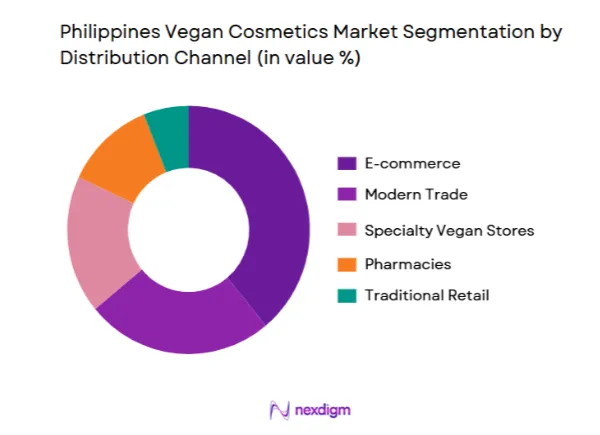
The vegan cosmetics market in the Philippines is segmented by distribution channels into e-commerce, modern trade (supermarkets, department stores), specialty vegan stores, pharmacies, and traditional retail. The e-commerce segment has a strong dominance, driven by the convenience and growth of online shopping in the region. Consumers increasingly prefer to purchase vegan beauty products online due to a broad selection, direct-to-consumer options, and frequent promotions.
E-commerce platforms such as Lazada and Shopee have enabled brands to reach a wider audience, particularly in regional areas, offering consumers easier access to vegan beauty products. Social media platforms also act as key marketing channels, driving sales through influencer marketing and online promotions. The flexibility and ease of purchasing through these channels make e-commerce an attractive option for Filipino consumers.
Competitive Landscape
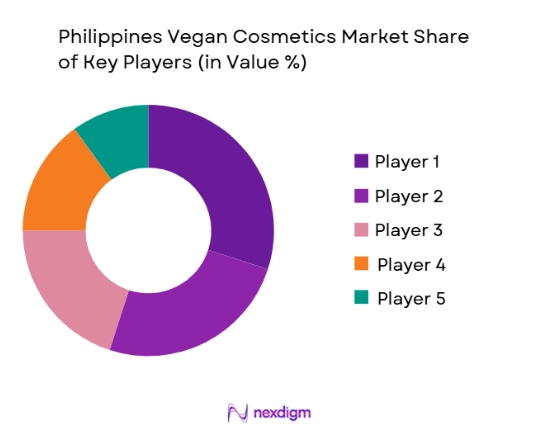
The Philippine vegan cosmetics market is competitive, with a mix of local and international players. Key local brands like GRWM Cosmetics and Issy & Co. are successfully carving out a niche in the market by offering skincare and makeup products that cater to the growing demand for vegan and cruelty-free solutions. At the same time, global brands like The Body Shop and Pacifica Beauty also play a significant role, capitalizing on their strong brand equity and trust built over years.The competitive landscape is dominated by a few key players, with both local and international brands contributing to a dynamic market environment. These players focus heavily on online and social media-driven marketing strategies to reach a broad base of Filipino consumers. Additionally, sustainability and eco-friendly packaging have become critical competitive factors, leading many brands to emphasize the environmental benefits of their products.
| Company | Establishment Year | Headquarters | Vegan Product Portfolio | Revenue from Vegan Products | Market Focus | Online Presence | Sustainability Initiatives |
| GRWM Cosmetics | 2018 | Quezon City, Philippines | ~ | ~ | ~ | ~ | ~ |
| Issy & Co. | 2019 | Quezon City, Philippines | ~ | ~ | ~ | ~ | ~ |
| The Body Shop | 1995 | UK | ~ | ~ | ~ | ~ | ~ |
| Pacifica Beauty | 1996 | USA | ~ | ~ | ~ | ~ | ~ |
| Herbivore Botanicals | 2011 | USA | ~ | ~ | ~ | ~ | ~ |
Philippines Vegan Cosmetics Market Dynamics
Growth Drivers
Rise in Ethical Consumption and Sustainability Concern (Cruelty‑Free Priority)
The growing concern for ethical consumption is a major driver in the Philippine vegan cosmetics market. According to a study by the Philippine Statistics Authority, the Philippines has seen an increase in awareness about animal welfare, with more Filipinos choosing cruelty-free alternatives. The increase in disposable income, up to an estimated average of USD 744 per month for urban households in 2024, has also led to more consumers spending on products that align with their ethical values. Consumers, particularly in Metro Manila and urban areas, are more likely to support brands with ethical sourcing and cruelty-free certification. This growing ethical concern is shaping consumer decisions, with many turning to vegan-certified brands, influencing both domestic and international brands to tailor their offerings to this demand. Furthermore, government policies promoting sustainability, such as the “Green Jobs Act of 2022,” continue to reinforce this demand.
Influence of Social Media & Beauty Influencers on Consumption
Social media platforms, particularly Instagram, TikTok, and Facebook, are major drivers of the vegan cosmetics trend in the Philippines. With over 80 million internet users in 2024 (source: We Are Social), the Filipino market is heavily influenced by digital content. Beauty influencers and celebrities advocating for cruelty-free and vegan beauty products contribute significantly to consumer behavior. A report by Rappler in 2024 indicated that over 70% of Filipino beauty product purchases are influenced by social media posts, especially from trusted influencers and public figures. Platforms such as Instagram and TikTok have played an essential role in shaping the consumption of plant-based and cruelty-free beauty products, highlighting the significance of online beauty culture. Social media’s ability to educate consumers on the benefits of vegan products is contributing to the rise in ethical consumerism. Source: We Are Social.
Market Challenges
Supply Chain and Certification Fragmentation
The Philippines faces challenges in the fragmented supply chain for vegan cosmetics. The country imports a significant portion of its raw materials for cosmetic products, and the complex regulatory environment further exacerbates this issue. In 2024, the Philippines’ import of cosmetic ingredients is valued at approximately USD 65 million, with complex import duties and certification requirements. Local production is constrained by the lack of standardization and access to high-quality vegan-certified ingredients. The Department of Trade and Industry (DTI) has been working towards improving the regulatory framework, but inconsistencies in certification standards across regions and international markets continue to complicate market entry for some brands. The varying standards for cruelty-free and vegan certifications across different agencies also hinder smooth operations for businesses attempting to market their products domestically and abroad. Source: Department of Trade and Industry, Philippines.
Price Sensitivity in Mass Market
Price sensitivity remains a significant challenge in the Filipino market for vegan cosmetics, particularly among the mass-market segment. While urban consumers are increasingly seeking plant-based alternatives, the premium pricing of vegan products is a barrier for a large portion of the population. The average household income in the Philippines is estimated at USD 363.83 per month in 2024 (source: Philippine Statistics Authority), making it difficult for many consumers to afford higher-priced vegan cosmetics compared to conventional options. Despite the rising middle class, a majority of the population in rural areas is still primarily price-sensitive and focuses on affordability over ethical considerations. This limits the market for vegan cosmetics to higher-income groups and urban areas, leaving the broader market untapped for many brands. Additionally, the general price of vegan-certified products remains 15% to 20% higher than regular alternatives due to ingredient sourcing and manufacturing costs. Source: Philippine Statistics Authority.
Market Opportunities
Indigenous Botanical Ingredient Utilization
The Philippines is rich in indigenous botanical resources, which are becoming central to the country’s vegan cosmetics market. The demand for natural skincare solutions has increased, driven by the availability of locally sourced ingredients such as coconut, aloe vera, and papaya. The Philippine Coconut Authority reports that coconut production in the country reached over 14 million metric tons in 2024 (source: Philippine Coconut Authority), establishing the coconut as one of the country’s key exports and a major ingredient in vegan beauty products. Aloe vera, another local ingredient, is used widely in moisturizers and skin creams, with cultivation expanding across various provinces. These ingredients are not only sought after for their natural properties but also for their sustainability. The use of locally sourced and plant-based ingredients presents a significant opportunity for growth in the vegan cosmetics market, providing brands with the chance to position their products as eco-friendly and natural. Source: Philippine Coconut Authority.
Product Customization Based on Filipino Skin Tones
The increasing trend of customized beauty products in the Philippines is another promising opportunity in the vegan cosmetics market. Filipino consumers, known for their diverse skin tones, seek products tailored to their specific needs. As more consumers in the Philippines become conscious of the benefits of natural ingredients for their skin, the demand for vegan cosmetics that cater to these unique skin tones is rising. In 2024, the Philippine skincare market’s focus on pigmentation and skin health continues to grow, with many consumers preferring products designed for local skin types, such as those with melanin-rich tones. The popularity of shade-inclusive makeup lines is seen as a driving factor in the demand for customized solutions. Filipino women, in particular, are now favoring brands that offer a wide range of shades that suit their skin tones. Brands that invest in product customization based on these preferences are poised to tap into an expanding market segment.
Future Outlook
The Philippines vegan cosmetics market is expected to experience robust growth over the next decade, driven by a combination of factors including the rise in ethical consumerism, greater availability of vegan beauty products, and an expanding e-commerce infrastructure. The consumer base is shifting towards natural, non-toxic beauty solutions, leading to a continuous increase in demand for vegan cosmetics. Additionally, the growing social media influence, coupled with the Philippines’ increased interest in environmental sustainability, will further accelerate market penetration. Innovations in vegan product formulations and eco-conscious packaging will also play a pivotal role in shaping the market’s future landscape.
The market is projected to grow at a CAGR of 9.5% from 2026 to 2035, with increased market participation from both international and local brands looking to meet the demand for ethical and cruelty-free beauty products.
Major Players in the Market
- GRWM Cosmetics
- Issy & Co.
- The Body Shop
- Pacifica Beauty
- Herbivore Botanicals
- e.l.f. Cosmetics
- Burt’s Bees
- Lush Fresh Handmade Cosmetics
- Dr. Bronner’s
- Alima Pure
- Tarte Cosmetics
- Youth to the People
- ILIA Beauty
- Kjaer Weis
- Andalou Naturals
Key Target Audience
- Investments and Venture Capitalist Firms
- Government and Regulatory Bodies (e.g., Department of Trade and Industry (DTI), Food and Drug Administration (FDA) Philippines)
- Domestic Vegan Beauty Retailers
- International Vegan Cosmetic Brands
- Manufacturers of Natural and Organic Beauty Ingredients
- E-commerce Platforms (Lazada, Shopee, Zalora)
- Beauty Retail Chains (SM Beauty, Watsons)
- Cosmetics Distributors and Wholesalers
Research Methodology
Step 1: Identification of Key Variables
The research begins with identifying key variables impacting the Philippines vegan cosmetics market. This includes primary data from consumer surveys, secondary data from industry reports, and insights from local distributors and beauty retailers. The goal is to understand consumer purchasing behavior, growth drivers, and emerging trends in the market.
Step 2: Market Analysis and Construction
This phase involves analyzing historical data on product sales, consumer behavior trends, and market growth trajectories. In-depth evaluations of distribution channels and regional market potential are conducted to determine how these factors contribute to market dynamics.
Step 3: Hypothesis Validation and Expert Consultation
Market hypotheses are validated through consultations with key industry experts, including local beauty brand founders, skincare influencers, and retail executives. These consultations provide operational and financial insights that help refine the market model.
Step 4: Research Synthesis and Final Output
The final research output is synthesized by combining top-down and bottom-up analysis, ensuring that the market insights, growth forecasts, and competitive intelligence are robust and reliable. This final output is presented to clients to aid in decision-making processes.

- Executive Summary
- Research Methodology (Market Definitions and Assumptions, Abbreviations, Market Sizing Approach, Primary Data Collection Framework, Secondary Data Sources, Forecasting Techniques, Limitations and Research Caveats)

- Definition and Scope
- Market Genesis and Evolution in Philippines
- Ethical Beauty Adoption Curve (Cruelty‑Free & Plant‑Based Adoption)
- Supply Chain Overview (Ingredient Sourcing, Manufacturing, Certification)
- Value Chain and Retail Chain Mapping

- Growth Drivers (Rise in Ethical Consumption and Sustainability Concern (Cruelty‑Free Priority), Influence of Social Media & Beauty Influencers on Consumption, Urbanization and Disposable Income Rise, Expansion of E‑commerce & Social Commerce Buying Patterns)
- Market Challenges (Supply Chain and Certification Fragmentation, Price Sensitivity in Mass Market, Ingredient Availability and Import Dependencies)
- Market Opportunities (Indigenous Botanical Ingredient Utilization (e.g., coconut, aloe extracts), Product Customization Based on Filipino Skin Tones, Retail Expansion via Social Commerce)
- Industry Trends (Clean Beauty & Transparency in Ingredient Labeling, Eco‑Packaging and Circular Initiatives, Localization of Vegan Formulations)
- Regulatory & Policy Landscape (Cosmetics Registration and Labeling Norms, Ethical/Animal Welfare Requirements, Quarantine & Import Tariff Implications)
- Supply Chain Risk Analysis (Raw Material Volatility, Packaging Dependency, Counterfeit Leakage, Cross-Border Sourcing Risk, Last-Mile Service Levels)
- Porter’s Five Forces
- SWOT Analysis
- Market Attractiveness Matrix (Category Profit Pool, White Space Depth, Entry Complexity, Brand-Build Cost, Channel Scalability)

- By Market Value (2020-2025)
- By Historical Growth Trends (2020-2025)
- By Average Selling Price Trends (2020-2025)
- By Demand vs. Supply Dynamics (2020-2025)
- By Regional Demand Hotspots (2020-2025)

- By Product Category (In Value%)
Skin Care
Hair Care
Color Cosmetics
Body Care
Fragrance & Personal Care - By Distribution Channel (In Value %)
E‑commerce & Social Commerce Channels
Modern Trade (Department Stores, Supermarkets, Malls)
Specialty Vegan/Organic Stores
Pharmacies and Beauty Clinics
Traditional Retail - By Certification Standard (In Value %)
Vegan Certified Labels
Cruelty‑Free Labels (Leaping Bunny, PETA)
Organic/Plant‑Based Certifications
Uncertified/Local Standards - By Consumer Demographic (In Value%)
Gen Z (18–25) Preferences
Millennials (26–40)
Male Grooming Segment
Unisex Usage
Premium vs. Mass Vegan Consumer - By Price Tier (In Value%)
Luxury Vegan Cosmetics
Mid‑Tier Vegan Brands
Mass/Value Segment Vegan Products

- Market Share Analysis (Value & Volume)
- Cross‑Comparison Parameters (Company Overview, Product Portfolio Breadth, Vegan Certification Presence, Distribution Reach, Marketing & Social Strategy, Retail Touchpoints, Revenue & Growth Rates, Price Positioning, R&D Investment, Brand Awareness Index)
- Competitive Benchmarking Metrics (SKU Breadth by Category, Official Store Presence Across Shopee-TikTok Shop-Lazada, Live-Commerce / Influencer Activation Intensity, Refill / Sustainable Packaging Adoption)
- SWOT Analysis of Major Players (Brand Trust, Certification Moat, Channel Reach, Pricing Power, Localization Strength, Innovation Speed)
- Pricing Analysis Basis SKUs for Major Players in Vietnam Vegan Cosmetics Market (Cleanser, Serum, Moisturizer, Sunscreen, Shampoo, Body Wash, Lip Balm, Mask)
- Detailed Profiles of Key Market Players
GRWM Cosmetics
Issy & Co.
e.l.f. Cosmetics (Vegan & Cruelty‑Free SKU Lines)
The Body Shop (Philippines Vegan & Animal Welfare Commitment)
Pacifica Beauty
Herbivore Botanicals
Urban Decay (Vegan SKU Range)
BareMinerals
Acure Organic Beauty
Dr. Bronner’s
Andalou Naturals
EO Products
Shea Terra Organics
Modern Mineral Makeup
Zuzu Luxe

- Insights on Ethical Purchasing Preferences
- Buyer Journey Map (Research to Purchase)
- Price Elasticity and Brand Loyalty Patterns
- Social Influence & Platform Adoption (TikTok/Instagram)
- Consumer Pain Points and Satisfaction Drivers

- By Value (2026-2035)
- By Volume (2026-2035)
- By Average Selling Price (2026-2035)
- By Per Capita Spend (2026-2035)
- By Online vs. Offline Mix (2026-2035)
- By Import Value Contribution (2026-2035)


 Request a Sample
 Ask for Customization
 Get a Quote
 Enquire Now