
 Download PDF
Market Overview
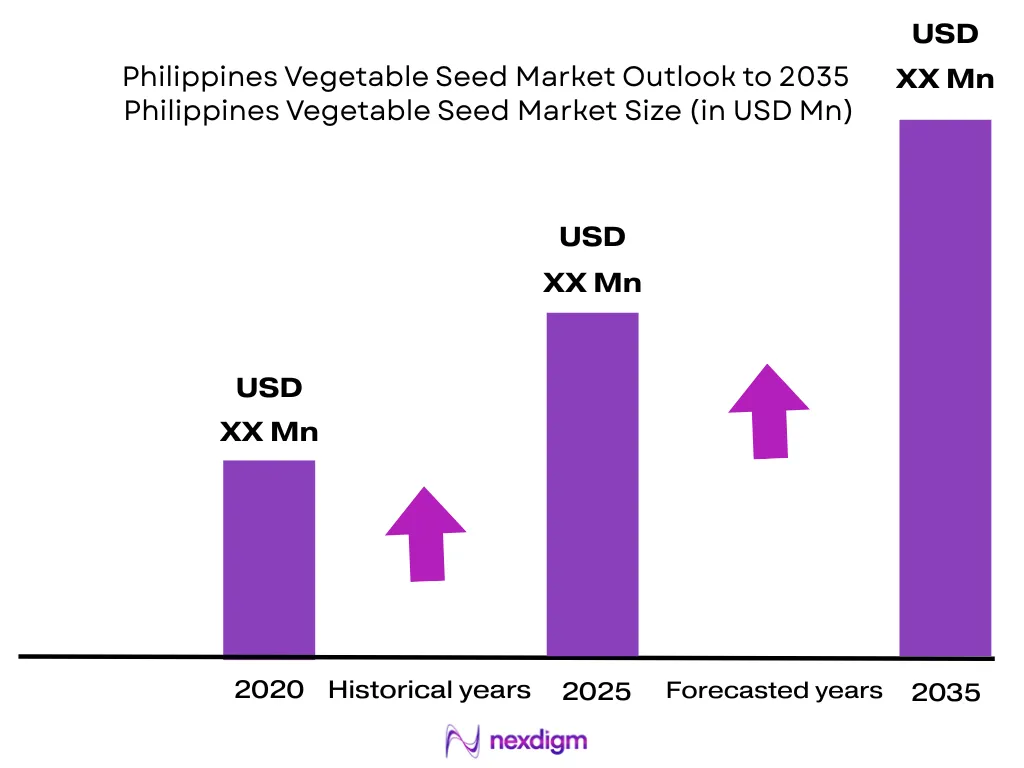
The Philippines vegetable seed market is valued at USD ~ million, based on internal triangulation from the country’s USD ~ million seed market and vegetable-seed demand indicators across hybrid tomato, eggplant, cabbage, onion, cucumber, watermelon, sweet pepper, lettuce and hot pepper. The market is driven by commercial vegetable farming, hybrid seed replacement, urban demand for fresh produce, greenhouse cultivation, and government-backed crop productivity programs. The broader seed market moved from nearly USD 850 million in the previous annual cycle to USD 861 million in the latest annual cycle. Luzon dominates the Philippines vegetable seed market because major vegetable production clusters, seed dealers, greenhouse operators and institutional procurement channels are concentrated across Central Luzon, CALABARZON, Cordillera Administrative Region and Metro Manila-linked peri-urban markets. Cordillera alone produced 413,121.5 MT of vegetables in the previous annual cycle and 432,068.1 MT in the latest annual cycle, with Benguet producing 371,151.5 MT. Mindanao also remains important due to Bukidnon, Davao and Northern Mindanao’s commercial vegetable farms and large crop production base.
Market Segmentation
By Seed Type
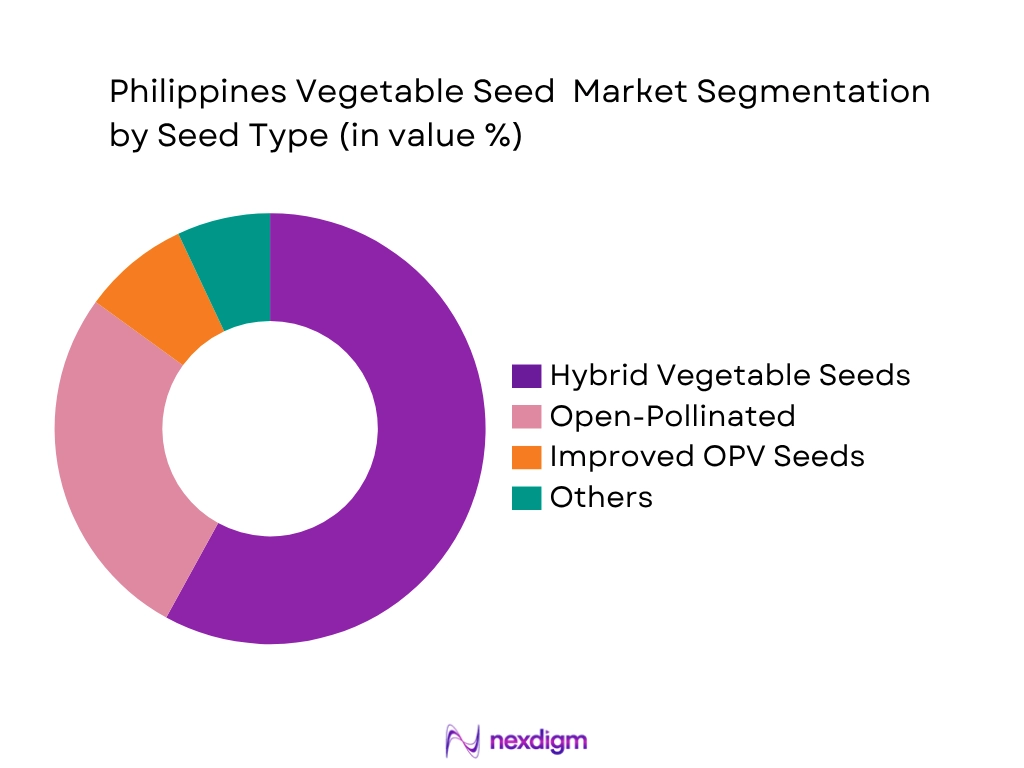
The Philippines vegetable seed market is segmented by seed type into hybrid vegetable seeds, open-pollinated varieties, improved OPV seeds, treated or primed seeds, and organic or specialty vegetable seeds. Hybrid vegetable seeds dominate the market because commercial growers prioritize yield, uniformity, disease resistance and predictable produce quality. Tomato, eggplant, cabbage, cucumber, watermelon, sweet pepper and hot pepper growers increasingly prefer hybrids where crop failure risk is high and where marketable yield directly affects farm income. Hybrid adoption is also reinforced by demo farms, seed derbies, dealer recommendation networks and private agronomist support. Open-pollinated seeds remain important among smallholders and home gardeners because of affordability, but hybrid seeds lead revenue due to higher average selling prices, repeat commercial purchase cycles and stronger demand from nursery operators serving vegetable clusters.
By Vegetable Crop Type
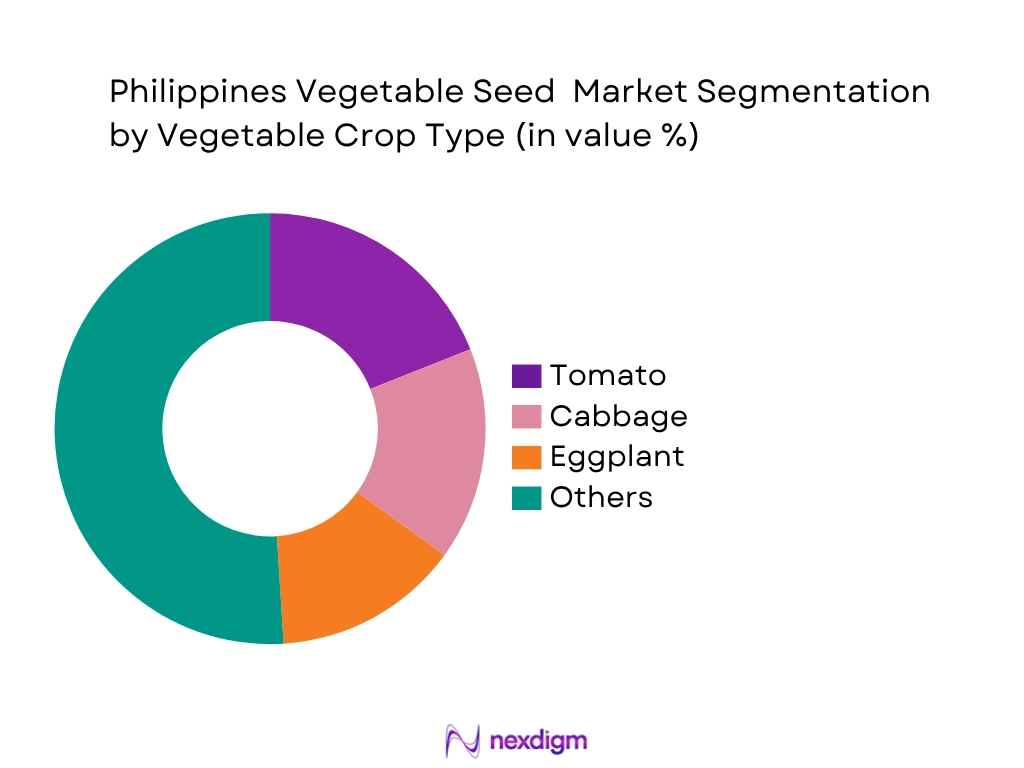
The Philippines vegetable seed market is segmented by crop type into tomato, cabbage and Chinese cabbage, eggplant, cucurbits, onion, hot pepper and sweet pepper, lettuce and leafy vegetables, watermelon and melon, and others. Tomato holds a dominant position because it is widely cultivated across lowland and peri-urban farming belts and is highly responsive to hybrid seed performance. Farmers value tomato seeds with bacterial wilt resistance, heat tolerance, fruit firmness, uniform size and transportability. Tomato also serves retail, foodservice and processing-linked demand, which makes seed quality commercially critical. Cabbage and Chinese cabbage follow due to Cordillera and highland production clusters, while eggplant and cucurbits benefit from year-round lowland cultivation and recurring farmer demand.
Competitive Landscape
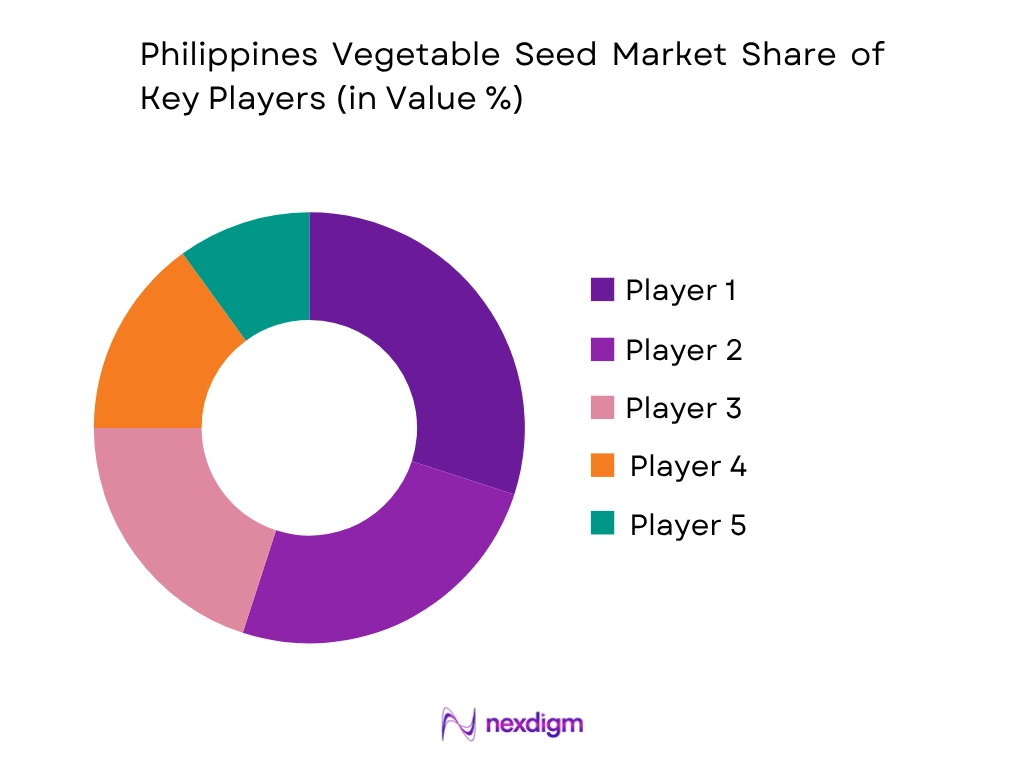
The Philippines vegetable seed market is moderately fragmented, with a mix of multinational seed companies, regional Asian breeders, domestic seed firms and importer-distributor networks. East-West Seed, Allied Botanical, Ramgo, Bayer/Seminis and Syngenta are among the most visible players due to broad vegetable crop portfolios, dealer reach and farmer-facing demonstration programs. Competition is increasingly based on disease resistance, tropical adaptability, seed germination reliability, sachet affordability, regional distributor coverage and agronomic after-sales support.
| Company | Establishment Year | Headquarters | Core Crop Strength | Seed Technology Focus | Distribution Model | Farmer Support Model | Philippines Positioning | Key Differentiator |
| East-West Seed Philippines | 1982 | Nonthaburi, Thailand | ~ | ~ | ~ | ~ | ~ | ~ |
| Allied Botanical Corporation | 1984 | Quezon City, Philippines | ~ | ~ | ~ | ~ | ~ | ~ |
| Ramgo International Corporation | 1966 | Pasig City, Philippines | ~ | ~ | ~ | ~ | ~ | ~ |
| Bayer CropScience / Seminis | 1863 | Leverkusen, Germany | ~ | ~ | ~ | ~ | ~ | ~ |
| Syngenta Philippines | 2000 | Basel, Switzerland | ~ | ~ | ~ | ~ | ~ | ~ |
Philippines vegetable seed market Analysis
Growth Drivers
Commercial vegetable clusters are expanding demand for hybrid and high-vigor vegetable seeds
The Philippines vegetable seed market is supported by dense commercial vegetable belts where growers require predictable germination, varietal uniformity and crop-specific disease tolerance. Cordillera Administrative Region recorded 432,068.1 MT of vegetable production from 25,824.5 hectares, while Benguet alone produced 371,151.5 MT from 18,910.0 hectares, making the region a critical demand base for cabbage, broccoli, cauliflower, carrots, bell pepper, tomato and other highland vegetable seeds. Benguet’s selected high-value vegetable crops reached 253,543.95 MT across 13,116.22 hectares, confirming the role of intensive vegetable farming in driving demand for premium seed lots, nursery-grade seed packs and field-tested varieties. The macroeconomic base also supports input adoption: the World Bank records the Philippines’ GDP at USD 461.62 billion and GDP per capita at USD 3,984.8, indicating a broad domestic economy that sustains fresh-produce demand and formal agri-input distribution.
Large regional crop volumes are sustaining recurring seed replacement across vegetables
Recurring seed demand is reinforced by the scale of vegetable output across key regions and crops. Ilocos Region produced 90,224 MT of eggplant, 53,527 MT of onion, 15,974 MT of squash fruit, 12,414 MT of string beans and 10,790 MT of ampalaya, creating continuous demand for solanaceae, cucurbit, legume and bulb-crop seed portfolios. In Cordillera, major vegetables generated 208,158.7 MT of output, while other vegetables added 223,909.4 MT, showing that seed demand is not concentrated in only one crop family but spread across brassicas, tomatoes, onions, root crops, leafy vegetables and other commercial vegetables. The Philippines’ population is 115,843,670, according to the World Bank, which strengthens the consumption base for fresh vegetables and supports grower incentives to keep planting high-yielding seed varieties. This crop-volume base encourages seed companies to maintain wide SKU availability across tomato, eggplant, onion, squash, bitter gourd, cabbage and leafy vegetable seeds.
Market Challenges
Climate shocks are increasing field-performance risk for vegetable seed companies and growers
The Philippines vegetable seed market faces high climate exposure because vegetable farms are concentrated in open-field and highland systems that are sensitive to rainfall, typhoons and crop disease pressure. Typhoon Kristine caused 283,528 MT of agricultural product losses, affected 143,065 farmers and covered 117,509 hectares, creating direct risks for seed replanting cycles, farmer cash flow and dealer receivables. Another reported cyclone impact caused 50,913 MT of agricultural losses across 24,247 hectares, affecting 26,217 farmers, which highlights repeated production disruption for high-value crop zones and seed-dependent vegetable farms. Typhoon Aghon caused crop losses of 2,568 MT, affected 1,482 farmers and covered 948 hectares, with high-value crops accounting for the largest reported damage category in that event. These shocks reduce farmer willingness to buy premium hybrid seeds immediately after losses and increase demand for climate-resilient, short-duration, disease-tolerant seed varieties. The World Bank reports Philippine CO₂ emissions excluding LULUCF at 1.5 tCO₂e per capita, underscoring climate-risk relevance in agri-sector planning.
Regional crop concentration creates logistical, inventory and channel-risk pressure
Vegetable seed demand is highly regional, which creates logistics and inventory-planning risk for seed companies, especially when production clusters are concentrated in mountainous, island and typhoon-exposed areas. In Cordillera, Benguet produced 371,151.5 MT out of the region’s 432,068.1 MT vegetable output, while Mountain Province produced 31,896.3 MT and Kalinga only 1,666.9 MT, showing a sharp concentration of demand around specific provinces and dealer routes. Benguet’s vegetable area reached 22,621.82 hectares, and selected high-value vegetables covered 13,116.22 hectares, increasing the need for timely seed availability before planting windows. In Ilocos Region, eggplant output reached 90,224 MT, while onion output reached 53,527 MT, creating separate inventory requirements for fruit-vegetable seeds and bulb-crop seeds. The World Bank records Philippine land area at 300,000 sq. km in WDI tables, and the country’s archipelagic geography makes last-mile agri-input distribution more complex for provincial seed dealers.
Market Opportunities
Climate-resilient and disease-tolerant vegetable seed portfolios have clear expansion potential
Climate-resilient vegetable seeds represent a strong opportunity because current production data shows large commercial crop exposure in regions where weather and disease affect output. Benguet’s selected high-value vegetable production reached 253,543.95 MT, with broccoli, cauliflower, radish, bell pepper, celery, sweet peas, cabbage and carrots identified among key crops, creating a strong opportunity for seed companies offering heat-tolerant, rain-tolerant and disease-resistant varieties suited to highland and transition climates. Cordillera’s total vegetables output of 432,068.1 MT and harvested area of 25,824.5 hectares provide a concentrated testing and commercialization base for cabbage, tomato, onion and ampalaya varieties with better yield stability. Ilocos Region’s 53,527 MT onion output and 90,224 MT eggplant output create crop-specific white spaces for improved onion seed, bacterial-wilt-tolerant eggplant seed and resilient cucurbit varieties. Public-sector germplasm development also supports future seed innovation, with UPLB-IPB receiving 2,228 vegetable seed accessions from World Vegetable Center.
Nursery, protected cultivation and urban vegetable channels can widen premium seed adoption
The opportunity for premium vegetable seeds is expanding beyond traditional open-field farmers into nurseries, demo farms, urban growers and protected cultivation channels. Ramgo’s field activity showcased pechay, lettuce and cucumber varieties through live demo plots and seedling access, indicating that leafy vegetable and cucumber seed demand is increasingly supported by demonstration-based conversion rather than only dealer shelf sales. The Department of Agriculture’s High Value Crops Development Program states that it produces and procures high-quality, high-yielding varieties, planting materials and seeds for distribution to target beneficiaries, creating institutional demand pathways for vegetable seed packs and planting material programs. The World Bank records the Philippines’ GDP at USD 461.62 billion, GDP per capita at USD 3,984.8 and population at 115,843,670, indicating a large food-consumption base and a formal economy capable of supporting organized agri-input channels. Current vegetable production depth in Benguet, at 253,543.95 MT of selected high-value vegetables, supports nursery-grade seed demand for transplanted crops such as lettuce, cabbage, broccoli, cauliflower, celery and bell pepper.
Future Outlook
The Philippines vegetable seed market is expected to expand steadily as commercial vegetable farmers shift from low-cost OPVs to hybrid seeds with stronger field performance. Growth will be supported by rising demand for vegetables, greenhouse and net-house cultivation, higher adoption of seed treatment, and stronger distribution through agri-input dealers and digital platforms. Demand for tomato, eggplant, cabbage, onion, cucumber, lettuce and pepper seeds will remain central to growth. Over the long term, climate-resilient and disease-resistant varieties will become the most important differentiator for seed companies. Seed companies are expected to prioritize tropicalized hybrids suitable for heat, humidity, bacterial wilt, excess rainfall and changing planting cycles. Protected cultivation will create a premium market for lettuce, tomato, cucumber, sweet pepper and melon seeds, while small pack formats will continue to support penetration among smallholder growers. Local distribution strength will remain critical because farmers rely heavily on dealers, demo plots and regional agronomists before switching varieties. The market is forecast to grow at a CAGR of 7.4% during the forecast period.
Major Players
- East-West Seed Philippines
- Allied Botanical Corporation
- Ramgo International Corporation
- Pilipinas Kaneko Seeds Corporation
- SeedWorks Philippines Inc.
- Syngenta Philippines Inc.
- Bayer CropScience / Seminis Philippines
- Corteva Agriscience Philippines
- Known-You Seed Philippines / Harvest Seeds Channel
- Chia Tai Philippines
- UPL Philippines / Advanta Seeds
- Condor Quality Seeds / Sakata Seed Channel
- Bioseed Research Philippines / AgriGold
- Enza Zaden Philippines
- Rijk Zwaan Philippines Channel
Key Target Audience
- Vegetable seed manufacturers and breeders
- Agri-input distributors and provincial seed dealers
- Commercial vegetable growers and grower cooperatives
- Greenhouse, net-house and hydroponic farm operators
- Seed importers and authorized seed distributors
- Investments and venture capitalist firms
- Government and regulatory bodies
- Food processors, supermarket sourcing teams and institutional vegetable buyers
Research Methodology
Step 1: Identification of Key Variables
The initial phase involves constructing an ecosystem map covering seed breeders, importers, distributors, agri-input retailers, vegetable farmers, nursery operators, greenhouse growers and government procurement agencies. The objective is to identify variables such as hybrid adoption, seed replacement, crop-wise demand, distribution reach, pricing, pack size and regulatory certification.
Step 2: Market Analysis and Construction
The second phase involves compiling historical and current data on the Philippines seed market, vegetable production clusters, crop-wise acreage indicators, dealer channel behavior and imported seed flows. Market construction is conducted through top-down allocation from the broader seed industry and bottom-up validation using crop-specific seed consumption patterns.
Step 3: Hypothesis Validation and Expert Consultation
Market hypotheses are validated through interviews with seed companies, agri-input distributors, nursery operators, commercial vegetable growers and crop specialists. These discussions help validate hybrid seed penetration, crop-specific pricing, regional demand pockets, farmer switching behavior, dealer margins and disease-resistance priorities.
Step 4: Research Synthesis and Final Output
The final phase consolidates secondary research, trade indicators, company portfolio mapping and primary insights into a validated market model. The output includes market size, segmentation, competitive benchmarking, growth drivers, challenges, future outlook and strategic recommendations for companies operating in the Philippines vegetable seed market.

- Executive Summary
- Research Methodology (Market Definitions and Assumptions, Vegetable Seed Scope, Hybrid and OPV Classification, Crop Family Mapping, Seed Volume Conversion, Pack-Size Normalization, Germination Rate Assumptions, Seed Replacement Rate, Dealer Margin Assumptions, Farmer Adoption Assumptions, Market Sizing Approach, Top-Down Approach, Bottom-Up Approach, Demand-Side Validation, Supply-Side Validation, Primary Interviews with Seed Companies and Distributors, Interviews with Vegetable Growers and Nursery Operators, Limitations and Future Conclusions)

- Definition and Scope
- Market Genesis and Evolution
- Structure of the Philippines Vegetable Seed Ecosystem
- Formal vs Informal Vegetable Seed System
- Hybrid Seed vs Open-Pollinated Variety Adoption Landscape

- Growth Drivers (Food Security Push, Vegetable Production Expansion, Hybrid Seed Adoption, Disease Pressure, Climate Resilience, Government Seed Support, Protected Cultivation, Retail Vegetable Demand)
- Market Challenges (Low Seed Replacement Rate, Price Sensitivity, Informal Seed Use, Import Dependence, Counterfeit Seeds, Germination Risk, Climate Volatility, Distribution Fragmentation)
- Market Opportunities (Hybrid Conversion, Disease-Resistant Portfolio, Protected Cultivation Seeds, Onion Seed Opportunity, Seedling Nursery Integration, Digital Agronomy, Institutional Procurement, Regional Dealer Expansion)
- Market Trends (Tropical Breeding, Seed Treatment, Digital Farmer Outreach, Crop-Specific Hybrids, Demo-Based Selling, Urban Gardening, Sustainability, Traceability)
- SWOT Analysis
- Porter’s Five Forces
- PESTLE Analysis

- By Value (2020-2025)
- By Volume (2020-2025)
- By Average Selling Price (2020-2025)

- By Crop Family (In Value %)
Solanaceae
Cucurbits
Brassicas
Leafy Vegetables
Root and Bulb Vegetables - By Farm Type (In Value %)
Smallholder Vegetable Farmers
Commercial Growers
Nursery and Seedling Operators
Government and Institutional Buyers - By Distribution Channel (In Value %)
Agri-Input Dealers and Retail Stores
Provincial Distributors and Sub-Dealers
Direct Company Sales and Field Teams
Digital and Online Channels - By Region (In Value %)
Luzon
Visayas
Mindanao

- Market Share of Major Players (Hybrid Vegetable Seeds, OPV Seeds, Crop Family Revenue, Dealer Reach, Regional Sales Mix)
- Cross Comparison Parameters (Crop Portfolio Coverage, Hybrid vs OPV Portfolio Mix, Disease and Climate-Resilient Trait Strength, NSIC/BPI Registration and Compliance Status, Dealer and Provincial Distributor Reach, Demo Farm and Seed Derby Presence, Pack-Size and SKU Strategy, Farmer Agronomy and After-Sales Support)
- SWOT Analysis of Major Players
- Detailed Profiles of Major Companies
East-West Seed Philippines
Allied Botanical Corporation
Ramgo International Corporation
Pilipinas Kaneko Seeds Corporation
SeedWorks Philippines Inc.
Syngenta Philippines Inc.
Bayer Crop Science / Seminis Philippines
Corteva Agriscience Philippines
Known-You Seed Philippines / Harvest Seeds Channel
Chia Tai Philippines
UPL Philippines / Advanta Seeds
Condor Quality Seeds / Sakata Seed Channel
Bioseed Research Philippines / AgriGold
Enza Zaden Philippines
Rijk Zwaan Philippines Channel

- Farmer Demand and Utilization Analysis
- Purchasing Power and Budget Allocation
- Farmer Needs, Pain Points and Decision Criteria
- Decision-Making Process
- Nursery Operator Analysis

- By Value (2026-2035)
- By Volume (2026-2035)
- By Average Selling Price (2026-2035)


 Request a Sample
 Ask for Customization
 Get a Quote
 Enquire Now