
 Download PDF
Market Overview
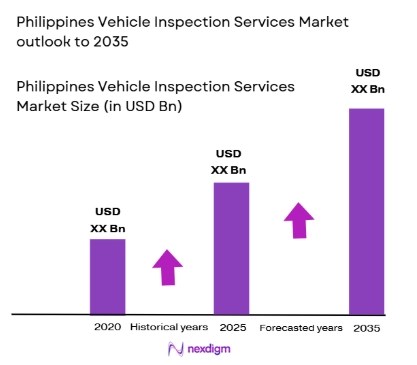
The Philippines Vehicle Inspection Services market is valued at approximately USD ~ billion, driven by the growing regulatory pressure to meet safety and environmental standards. Rising vehicle ownership, government initiatives, and advancements in inspection technologies fuel the market’s expansion. Inspection services cover a broad spectrum, from safety inspections to emission testing, addressing both public and private sector needs. Market growth is also supported by increased awareness about vehicle maintenance and the adoption of modernized inspection centers.
Metro Manila stands as the central hub for vehicle inspection services, due to its dense population and heightened traffic issues. Other key regions include Cebu and Davao, where rapid urbanization and increased vehicle registration numbers drive demand. These areas benefit from improved infrastructure, government investments in regulatory compliance, and a growing automotive sector, positioning the Philippines as a significant player in Southeast Asia for vehicle inspection services.
Market Segmentation
By Product Type:
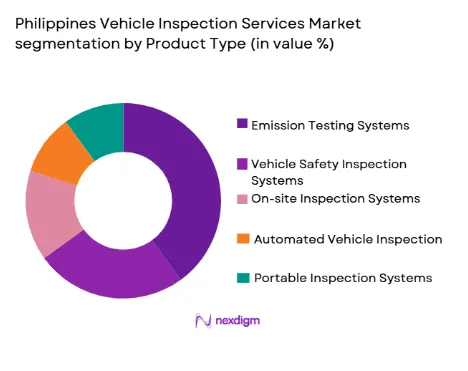
The Philippines Vehicle Inspection Services market is segmented by product type into emission testing systems, vehicle safety inspection systems, on-site inspection systems, automated vehicle inspection systems, and portable inspection systems. Recently, emission testing systems dominate the market share due to increasing government regulations surrounding vehicle emissions and environmental protection. The demand for eco-friendly practices and the need for adherence to international environmental standards contribute significantly to the expansion of this sub-segment.
By Platform Type:
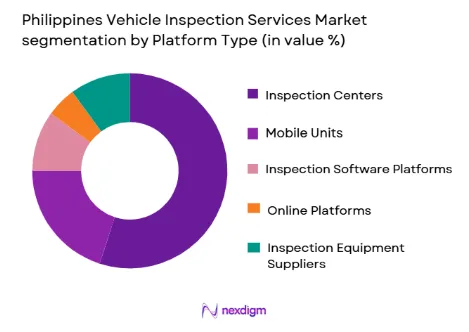
The market is segmented by platform type into inspection centers, mobile units, inspection software platforms, online platforms, and inspection equipment suppliers. Recently, inspection centers have a dominant market share due to their widespread accessibility and government partnerships. These centers serve both regulatory and commercial purposes, providing an essential service for public vehicle fleets and personal vehicle owners seeking compliance with safety and emissions standards.
Competitive Landscape
The competitive landscape of the Philippines Vehicle Inspection Services market is characterized by significant consolidation. Major players dominate the market by offering a wide range of services and investing heavily in inspection technology. Market competition is focused on expanding service offerings, enhancing inspection speed, and maintaining compliance with evolving regulations. Key players are increasingly exploring partnerships with government bodies to ensure market presence and meet the demands of urbanization.
| Company Name | Establishment Year | Headquarters | Technology Focus | Market Reach | Key Products | Revenue (USD) | Additional Parameter |
| Bureau of Vehicle Inspection | 1990 | Manila, Philippines | ~ | ~ | ~ | ~ | ~ |
| AutoInspec Inc. | 2005 | Cebu, Philippines | ~ | ~ | ~ | ~ | ~ |
| Vehicle Testing Center | 2000 | Davao, Philippines | ~ | ~ | ~ | ~ | ~ |
| Rizal Vehicle Testing Services | 2010 | Rizal, Philippines | ~ | ~ | ~ | ~ | ~ |
| TransCorp Vehicle Inspections | 2008 | Manila, Philippines | ~ | ~ | ~ | ~ | ~ |
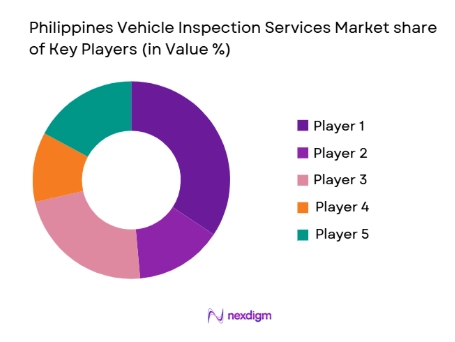
Philippines Vehicle Inspection Services Market Analysis
Growth Drivers
Government Regulations and Emissions Compliance:
Government regulations regarding vehicle emissions have been a significant growth driver in the Philippines Vehicle Inspection Services market. The Philippine government has implemented strict environmental regulations, leading to an increased demand for vehicle emission testing services. These regulations are aimed at reducing pollution, improving air quality, and ensuring compliance with global environmental standards. Government programs, such as the Clean Air Act, have heightened the need for regular inspection and certification of vehicle emissions, driving growth for services that provide these inspections. Furthermore, the introduction of policies mandating the adoption of modern vehicle inspection technology has also fueled growth. Vehicle owners are now required to ensure their vehicles meet environmental standards, resulting in a surge in inspection demand. This growth is evident across both urban and rural regions of the country. The presence of government mandates ensures continued demand for inspection services, creating opportunities for the expansion of inspection centers and mobile units.
Technological Advancements in Inspection Systems:
Technological advancements in vehicle inspection systems have further boosted market growth. Innovations such as automated vehicle inspection systems, which utilize artificial intelligence (AI) and machine learning for faster and more accurate assessments, have made inspection processes more efficient and reliable. These advancements are particularly beneficial in meeting regulatory compliance for safety and emissions standards. The ability to conduct inspections remotely, combined with the integration of software platforms and diagnostic equipment, allows for quicker and more accurate results. Additionally, automated inspection systems reduce the potential for human error, increasing the efficiency and credibility of inspections. Technological advancements in diagnostic tools and testing equipment also play a crucial role in market growth, as these innovations are enabling service providers to meet the growing demand for more specialized and precise inspections. As these technologies evolve, the cost-effectiveness of inspections improves, providing further opportunities for market expansion.
Market Challenges
High Initial Investment in Infrastructure:
One of the key challenges facing the Philippines Vehicle Inspection Services market is the high capital expenditure required to set up inspection infrastructure. Establishing vehicle inspection centers involves significant investment in advanced diagnostic tools, automated systems, and skilled personnel. Smaller companies and new entrants may struggle with these upfront costs, creating barriers to entry in the market. Additionally, maintaining and upgrading the technology required for modern inspections is a continuous financial commitment. This challenge is particularly pronounced in rural areas, where the cost of infrastructure development and maintenance may not be easily justified due to lower demand. Despite the potential for long-term returns, these capital-intensive requirements hinder the growth of new players in the market. Furthermore, the market’s dependency on government incentives and regulatory support adds a layer of uncertainty to the financial feasibility of establishing inspection centers. Smaller businesses may struggle to compete with established players who have already invested heavily in the necessary infrastructure.
Lack of Standardization in Inspection Processes:
Another major challenge facing the market is the lack of standardization in vehicle inspection processes across different regions. While there are national regulations in place, their enforcement and implementation can vary significantly between local jurisdictions. This inconsistency leads to confusion among vehicle owners and service providers. In some regions, outdated inspection equipment may still be in use, resulting in inaccurate assessments that do not meet the requirements set by the government. The lack of uniformity in inspection procedures also complicates the expansion of vehicle inspection services into new areas. Moreover, discrepancies in inspection results can lead to disputes between vehicle owners and inspection centers, further complicating the industry’s regulatory framework. Standardizing inspection practices, ensuring uniformity in training and certification, and harmonizing equipment across inspection centers are essential for the long-term stability and reliability of the market. Without these measures, market growth may remain fragmented, limiting its potential.
Opportunities
Expansion of Government-Supported Inspection Programs:
The Philippine government’s continued focus on improving environmental standards provides significant opportunities for the Vehicle Inspection Services market. Government-funded programs that promote the establishment of inspection centers in rural areas or underserved regions can drive growth. These programs are particularly beneficial in facilitating access to inspection services for vehicle owners who might otherwise struggle to meet compliance requirements. The government’s emphasis on vehicle inspection as part of its environmental and road safety agenda will likely result in more inspection programs being rolled out nationwide. These programs can help drive demand for services and infrastructure, creating more opportunities for both private and public sector involvement. As the demand for green technologies and emissions reductions increases, government-backed programs may also extend to include new types of inspections, such as for electric vehicles (EVs) or autonomous vehicles, further expanding the market’s scope. This government support will also help stabilize the market and encourage greater participation from smaller businesses.
Technological Integration of Vehicle Inspections:
The integration of advanced technologies such as artificial intelligence (AI), machine learning, and IoT-based solutions into vehicle inspections presents new market opportunities. These technologies can help make the inspection process more efficient and reliable by automating tasks, reducing human error, and speeding up the inspection process. For instance, the use of AI-powered systems can automate emissions testing, while IoT solutions can track vehicle performance data in real-time, leading to more accurate diagnostics. These advancements are expected to be widely adopted in both government-run and private inspection centers. Technological integration will also help reduce operational costs for vehicle inspection centers, improving their profitability. Furthermore, the rise of remote inspections and online platforms creates opportunities to serve a larger audience, particularly in regions where physical inspection centers are scarce. The growing need for eco-friendly solutions and the rise of electric vehicles (EVs) will also prompt innovation in the inspection space, presenting additional avenues for market growth.
Future Outlook
The future outlook for the Philippines Vehicle Inspection Services market is promising, with expected growth driven by continued regulatory support and technological advancements. Over the next five years, the market is poised for substantial expansion as the demand for emissions testing and vehicle safety inspections continues to rise. The integration of advanced technologies like AI and IoT into vehicle inspection processes will further streamline operations and enhance efficiency. Additionally, government initiatives aimed at promoting eco-friendly vehicles and reducing emissions are expected to contribute significantly to market growth. Rising vehicle ownership in urban and rural areas will continue to be a key demand driver, as the need for regular inspections increases across the country.
Major Players
- Bureau of Vehicle Inspection
- AutoInspec Inc.
- Vehicle Testing Center
- Rizal Vehicle Testing Services
- TransCorp Vehicle Inspections
- CarCheck Solutions
- SafeDrive Auto Inspection
- RoadTech Inspections
- GreenTech Testing Solutions
- Philippine Road Safety Corp.
- SmartAuto Inspection Services
- Elite Vehicle Testing Centers
- Metro Inspection Services
- Precision Auto Inspections
- Phoenix Vehicle Testing Solutions
Key Target Audience
- Investments and venture capitalist firms
- Government and regulatory bodies
- Automotive manufacturers
- Fleet operators and managers
- Insurance companies
- Vehicle rental and leasing companies
- Automotive parts suppliers
- Vehicle repair and maintenance service providers
Research Methodology
Step 1: Identification of Key Variables
The first step is to identify the critical factors influencing the vehicle inspection services market, including regulatory frameworks, technological advancements, and consumer demand patterns.
Step 2: Market Analysis and Construction
Next, we conduct a thorough market analysis using primary and secondary data sources to assess current market conditions, competition, and growth trends.
Step 3: Hypothesis Validation and Expert Consultation
We validate our findings by consulting with industry experts and stakeholders to refine our understanding of the market dynamics and future projections.
Step 4: Research Synthesis and Final Output
The final step involves synthesizing all gathered data into a comprehensive report that provides actionable insights and forecasts for the Philippines Vehicle Inspection Services market.

- Executive Summary
- Research Methodology (Definitions, Scope, Industry Assumptions, Market Sizing Approach, Primary & Secondary Research Framework, Data Collection & Verification Protocol, Analytic Models & Forecast Methodology, Limitations & Research Validity Checks)

- Market Definition and Scope
- Value Chain & Stakeholder Ecosystem
- Regulatory / Certification Landscape
- Sector Dynamics Affecting Demand
- Strategic Initiatives & Infrastructure Growth

- Growth Drivers
Government regulations and enforcement of vehicle emissions standards
Growing vehicle fleet size and need for inspection services
Technological advancements in automated vehicle inspection
Rising demand for safety and environmental compliance
Increasing insurance requirements for vehicle inspections - Market Challenges
High initial capital expenditure for inspection infrastructure
Lack of standardization in inspection processes
Regulatory delays and challenges in enforcement
Limited availability of trained professionals for inspections
Technological integration and interoperability issues - Market Opportunities
Expansion of government-supported vehicle inspection programs
Growth in vehicle fleet management services
Technological innovations in remote inspection and automation - Trends
Adoption of AI and machine learning in vehicle inspection
Integration of IoT and sensors for real-time vehicle diagnostics
Increased adoption of mobile and on-site inspection services - Government Regulations & Defense Policy
Implementation of stricter environmental standards
Government funding and incentives for inspection infrastructure
Regulatory push for safer and more eco-friendly vehicles - SWOT Analysis
- Stakeholder and Ecosystem Analysis
- Porter’s Five Forces Analysis
- Competition Intensity and Ecosystem Mapping

- By Market Value, 2020-2025
- By Installed Units, 2020-2025
- By Average System Price, 2020-2025
- By System Complexity Tier, 2020-2025

- By System Type (In Value%)
Emission Testing Systems
Vehicle Safety Inspection Systems
On-site Inspection Systems
Automated Vehicle Inspection Systems
Portable Inspection Systems - By Platform Type (In Value%)
Inspection Centers
Mobile Units
Inspection Software Platforms
Online Platforms
Inspection Equipment Suppliers - By Fitment Type (In Value%)
On-site Inspection Services
Remote Inspection Services
Station-Based Inspection
Hybrid Inspection Solutions
Full-service Inspection Centers - By EndUser Segment (In Value%)
Government Regulatory Bodies
Fleet Operators
Insurance Companies
Vehicle Manufacturers
Automotive Aftermarket Services - By Procurement Channel (In Value%)
Direct Procurement
Government Tenders
Private Sector Procurement
Partnerships with Auto Dealerships
Third-party Distributors - By Material / Technology (in Value%)
Emission Control Technology
Inspection Software & Automation
Vehicle Diagnostics Equipment
Data Collection Tools
Inspection Sensors & Equipment

- Market structure and competitive positioning
- Market share snapshot of major players
- CrossComparison Parameters (System Type, Platform Type, Procurement Channel, EndUser Segment, Fitment Type, Material/Technology, Geographic Coverage, Service Speed, Technology Integration, Regulatory Compliance)
- SWOT Analysis of Key Players
- Pricing & Procurement Analysis
- Key Players
Bureau of Vehicle Inspection
AutoInspec Inc.
Vehicle Testing Center
Philippine Vehicle Inspection Services Inc.
Rizal Vehicle Testing Services
Meralco Vehicle Inspection
TransCorp Vehicle Inspections
GreenTech Testing Solutions
Philippine Road Safety Corp.
SmartAuto Inspection Services
CarCheck Solutions
RoadTech Inspections
SafeDrive Auto Inspection
Elite Vehicle Testing Centers
Metro Inspection Services

- Increasing regulatory pressure on fleet operators to comply with safety standards
- Insurance companies’ growing reliance on vehicle inspection data
- Government bodies pushing for environmental compliance and safety
- Automotive manufacturers integrating inspection into production processes

- Forecast Market Value, 2026-2035
- Forecast Installed Units, 2026-2035
- Price Forecast by System Tier, 2026-2035
- Future Demand by Platform, 2026-2035


 Request a Sample
 Ask for Customization
 Get a Quote
 Enquire Now