

 Download PDF
 Download PDF
Market Overview
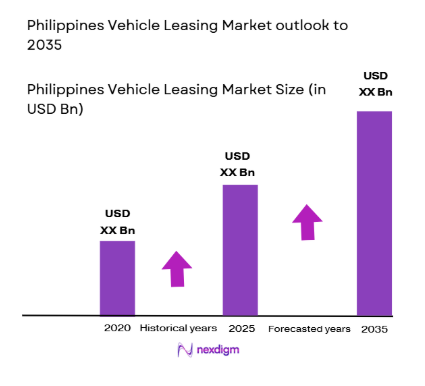
The Philippines Vehicle Leasing Market is valued at approximately USD ~ billion based on a recent historical assessment. This market is primarily driven by the growing demand for flexible transportation options and the increasing preference for fleet leasing services by businesses. As the country’s automotive sector continues to expand, especially in urban areas, more individuals and companies are opting for vehicle leasing over purchasing, fueling market growth. The rise of digital platforms has also further catalyzed the adoption of vehicle leasing.
The Philippines stands as a dominant player in Southeast Asia within the vehicle leasing market due to its expanding urban infrastructure and growing middle-class population. Cities like Metro Manila, Cebu, and Davao have witnessed substantial demand for vehicle leasing services, driven by high mobility needs, an increase in corporate fleets, and the growing preference for greener alternatives like electric vehicles. These urban centers are the key hubs for businesses and individuals looking for cost-effective, flexible transportation solutions.
Market Segmentation
By Product Type:
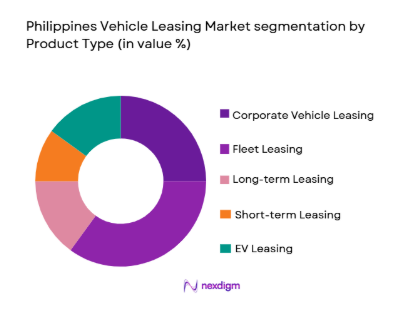
The Philippines Vehicle Leasing Market is segmented by product type into corporate vehicle leasing, fleet leasing, long-term leasing, short-term leasing, and EV leasing. Recently, fleet leasing has dominated the market share due to the growing preference of businesses for operational flexibility and the need for cost-effective solutions to manage their transportation needs. This shift is attributed to the increase in businesses opting to outsource vehicle ownership to reduce capital expenditure while having access to a well-maintained fleet. Fleet leasing also provides companies with flexibility regarding vehicle upgrades, maintenance, and repairs, making it an ideal option for industries with fluctuating demand for transportation.
By Platform Type:
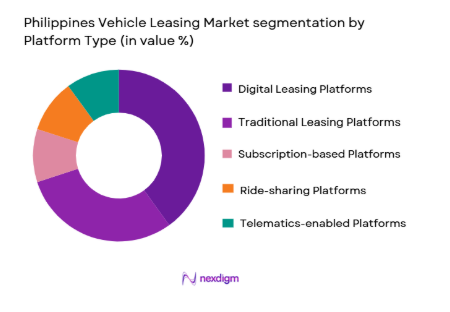
The market is also segmented by platform type into digital leasing platforms, traditional leasing platforms, subscription-based platforms, ride-sharing platforms, and telematics-enabled platforms. Digital leasing platforms have emerged as the dominant segment, owing to the rapid adoption of online services and the growing preference for seamless, paperless transactions. Consumers and businesses alike are turning to digital platforms for ease of access, real-time availability, and the convenience of managing leases from mobile devices. Additionally, the ability to compare different leasing options and flexible terms offered by digital platforms further enhances their attractiveness in the competitive landscape.
Competitive Landscape
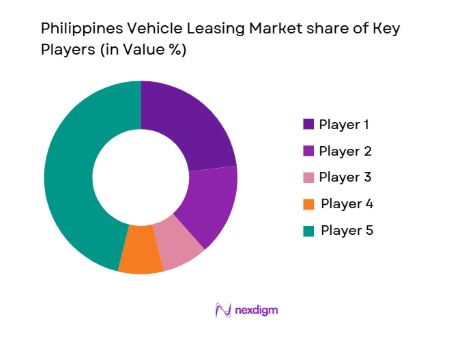
The Philippines vehicle leasing market is highly competitive, with a mix of both established players and new entrants. Key players continue to focus on expanding their fleets, optimizing pricing strategies, and improving customer service to retain market leadership. As the market moves towards digitalization, companies that integrate telematics and digital platforms are gaining a competitive edge. This trend has led to consolidation within the industry, with larger players acquiring smaller firms to strengthen their digital offerings and fleet management capabilities.
| Company Name | Establishment Year | Headquarters | Technology Focus | Market Reach | Key Products | Revenue | Fleet Management Capability |
| ALD Automotive | 1980 | Netherlands | ~ | ~ | ~ | ~ | ~ |
| Hertz Philippines | 2000 | USA | ~ | ~ | ~ | ~ | ~ |
| Toyota Leasing | 1985 | Japan | ~ | ~ | ~ | ~ | ~ |
| Mitsubishi Motors | 1975 | Japan | ~ | ~ | ~ | ~ | ~ |
| Enterprise Rent-A-Car | 1957 | USA | ~ | ~ | ~ | ~ | ~ |
Philippines Vehicle Leasing Market Analysis
Growth Drivers
Rising Demand for Flexible Transportation Solutions:
The Philippines has seen a significant rise in demand for flexible transportation options, especially in urban areas like Metro Manila. Businesses are increasingly adopting vehicle leasing as a cost-effective alternative to purchasing vehicles outright. Flexible leasing terms, including short-term and long-term options, enable businesses to scale their fleets according to seasonal demands without the burden of high upfront costs. Additionally, individual consumers are opting for leasing solutions for convenience and affordability, especially as income levels in the country continue to rise. As urbanization continues to accelerate, vehicle leasing is increasingly seen as a practical solution to meet mobility needs in cities with high traffic congestion.
Government Incentives for EV Adoption:
Another key driver for the Philippines vehicle leasing market is the government’s push for electric vehicle (EV) adoption. The government has introduced several policies aimed at promoting green transportation solutions, including tax incentives for businesses and individuals adopting electric vehicles. These policies are designed to reduce the environmental impact of traditional internal combustion engine (ICE) vehicles, making EV leasing a viable and attractive option. The growing emphasis on sustainability aligns with the increasing availability of electric vehicles within leasing fleets, further driving the demand for EV leasing in the market.
Market Challenges
High Initial Capital Investment:
One of the major challenges in the Philippines vehicle leasing market is the high initial capital investment required to purchase vehicles for leasing fleets. Leasing companies must maintain large fleets of vehicles, which often requires significant upfront capital expenditures. This creates financial constraints, particularly for smaller leasing companies that may struggle to secure the funding necessary to expand their fleets. The cost of maintaining and servicing a diverse fleet also adds to the overall financial burden. This high capital requirement can limit the entry of new players into the market and hinder the growth potential of existing companies.
Regulatory Compliance and Policy Changes:
Regulatory compliance remains a significant challenge for vehicle leasing companies in the Philippines. The government periodically revises tax codes and vehicle-related regulations, which can impact leasing terms, vehicle pricing, and overall market operations. The inconsistency of policy implementation can create uncertainty for leasing companies, making it difficult for them to forecast long-term financial stability. Additionally, changes in policies related to vehicle emissions standards or fleet management can increase operational costs, forcing leasing companies to adjust their business models and pass on costs to consumers.
Opportunities
Emerging Demand for Electric Vehicle Leasing:
One of the most promising opportunities in the Philippines vehicle leasing market is the rising demand for electric vehicle leasing. With increasing environmental awareness and government incentives for EV adoption, more businesses and consumers are turning to electric vehicles as part of their fleets or personal use. The government has been encouraging the shift toward greener transportation by offering subsidies and tax exemptions for electric vehicle purchases and leases. As a result, leasing companies that offer a portfolio of electric vehicles are well-positioned to capture the growing demand. This shift to EV leasing presents an opportunity for leasing companies to differentiate themselves in the market by providing sustainable, cost-effective transportation solutions.
Partnerships with Ride-Sharing Platforms:
Another opportunity in the Philippines vehicle leasing market lies in partnerships with ride-sharing platforms like Grab and Uber. These platforms have seen rapid growth in the country, and their demand for vehicles continues to increase. Vehicle leasing companies can tap into this growing market by offering fleets to these ride-sharing services, providing vehicles that are both affordable and well-maintained. By entering partnerships with ride-sharing platforms, leasing companies can secure long-term contracts and increase their revenue streams while providing ride-sharing platforms with flexible fleet options. This collaboration also helps meet the demand for cost-effective, fuel-efficient vehicles in the Philippines’ competitive ride-sharing market.
Future Outlook
The future of the Philippines vehicle leasing market looks promising, with anticipated growth driven by technological advancements and an increasing shift toward electric vehicles. Regulatory support and government incentives are expected to accelerate EV adoption, creating new opportunities for leasing companies to offer sustainable fleets. Demand for flexible leasing options is expected to continue growing, particularly in urban areas with high transportation demands. Technological developments, such as telematics and digital platforms, will further streamline the leasing process, offering consumers greater convenience and driving market expansion.
Major Players
- ALD Automotive
- Hertz Philippines
- Toyota Leasing
- Mitsubishi Motors
- Enterprise Rent-A-Car
- Budget Car Rental
- Avis Rent a Car
- Car Lease Philippines
- UCAR Philippines
- LeasePlan Philippines
- Europcar Philippines
- Sixt Philippines
- Thrifty Car Rental
- AVIS Fleet Solutions
- Globe Leasing
Key Target Audience
- Investments and venture capitalist firms
- Government and regulatory bodies
- Fleet management companies
- Ride-sharing platforms
- Corporate organizations
- Small and medium-sized businesses
- Automotive leasing service providers
- E-commerce and delivery service companies
Research Methodology
Step 1: Identification of Key Variables
The first step involves identifying and defining the key variables impacting the vehicle leasing market, such as consumer behavior, fleet management, government policies, and economic factors affecting leasing demand.
Step 2: Market Analysis and Construction
Data from primary and secondary sources is gathered and analyzed to build a comprehensive market model, focusing on trends, segmentation, and growth projections.
Step 3: Hypothesis Validation and Expert Consultation
Expert consultations and industry surveys are conducted to validate hypotheses and refine market predictions based on insights from key industry players and stakeholders.
Step 4: Research Synthesis and Final Output
The final step is synthesizing all findings into a detailed report, ensuring the accuracy of market size, growth drivers, and forecasts, while maintaining a clear focus on actionable insights.

- Executive Summary
- Research Methodology (Definitions, Scope, Industry Assumptions, Market Sizing Approach, Primary & Secondary Research Framework, Data Collection & Verification Protocol, Analytic Models & Forecast Methodology, Limitations & Research Validity Checks)

- Market Definition and Scope
- Value Chain & Stakeholder Ecosystem
- Regulatory / Certification Landscape
- Sector Dynamics Affecting Demand
- Strategic Initiatives & Infrastructure Growth

- Growth Drivers
Rising Demand for Flexible Transportation Solutions
Government Incentives for EV Adoption
Increase in Fleet Management by Corporates
Urbanization and Infrastructure Development
Growth of E-commerce and Ride-sharing Services - Market Challenges
High Initial Capital Investment
Regulatory Compliance and Policy Changes
Competition from Car Rental and Subscription Services
Limited EV Infrastructure
Supply Chain Constraints in Vehicle Manufacturing - Market Opportunities
Emerging Demand for Electric Vehicle Leasing
Partnerships with Ride-sharing Platforms
Expansion of Leasing Options for E-commerce Delivery Fleets - Trends
Adoption of Electric Vehicles in Leasing Fleets
Growth of Digital Vehicle Leasing Platforms
Integration of Telematics for Fleet Management
Customization in Leasing Plans for Corporates
Rise of Subscription-based Car Leasing Models - Government Regulations & Defense Policy
Implementation of EV Tax Incentives
Leasing Regulations for Foreign Investors
New Licensing and Compliance Standards for Leasing Firms - SWOT Analysis
- Stakeholder and Ecosystem Analysis
- Porter’s Five Forces Analysis
- Competition Intensity and Ecosystem Mapping

- By Market Value, 2020-2025
- By Installed Units, 2020-2025
- By Average System Price, 2020-2025
- By System Complexity Tier, 2020-2025

- By System Type (In Value%)
Corporate Vehicle Leasing
Fleet Leasing
Long-term Leasing
Short-term Leasing
EV Leasing - By Platform Type (In Value%)
Digital Leasing Platforms
Traditional Leasing Platforms
Subscription-based Platforms
Ride-sharing Platforms
Telematics-enabled Platforms - By Fitment Type (In Value%)
On-demand Leasing
Pre-scheduled Leasing
Hybrid Leasing
Integrated Fleet Leasing
Lease-to-own Programs - By EndUser Segment (In Value%)
Small and Medium Enterprises
Large Corporations
Government Agencies
Private Individuals
Ride-sharing Service Providers - By Procurement Channel (In Value%)
Direct Procurement
Leasing Brokers
Online Bidding Platforms
Automotive Dealerships
Third-party Distributors - By Material / Technology (In Value%)
Battery Electric Vehicles (BEVs)
Hybrid Vehicles
Internal Combustion Engine (ICE) Vehicles
Autonomous Vehicles
Telematics & IoT Integration

- Market structure and competitive positioning
- Market share snapshot of major players
- CrossComparison Parameters (Fleet Management Capability, Service Coverage, Pricing Model, EV Leasing Options, Platform Technology Integration, Fleet Size, Customer Support, Leasing Duration Flexibility, Sustainability Practices, Regulatory Compliance)
- SWOT Analysis of Key Players
- Pricing & Procurement Analysis
- Key Players
ALD Automotive
DriveNow
Hertz Philippines
Enterprise Rent-A-Car
Toyota Leasing
Mitsubishi Motors Philippines
Honda Cars Philippines
Philippine National Bank Leasing
UCAR Philippines
EZRentCar Philippines
Car Lease Philippines
Budget Rent A Car Philippines
Lease Plan Philippines
Global Auto Lease Philippines
Asia Leasing Corporation

- Growing Adoption of Fleet Leasing by SMEs
- Rise in Demand for Subscription-based Leasing Models
- Government and Corporate Demand for Green Fleets
- Individual Consumers’ Interest in Flexible Vehicle Leasing

- Forecast Market Value, 2026-2035
- Forecast Installed Units, 2026-2035
- Price Forecast by System Tier, 2026-2035
- Future Demand by Platform, 2026-2035


 Request a Sample
 Ask for Customization
 Get a Quote
 Enquire Now