
 Download PDF
 Download PDF
Market Overview
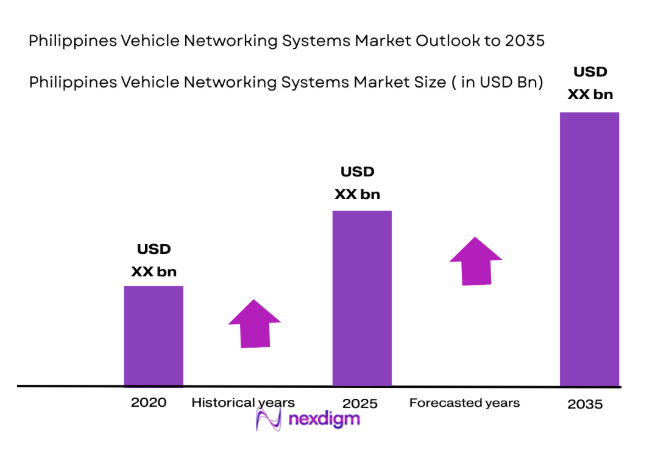
The Philippines Vehicle Networking Systems market is poised for significant growth, with a projected market size of USD ~ billion based on a recent historical assessment. This growth is driven by increasing investments in smart mobility solutions, including vehicle-to-everything (V2X) technology and autonomous driving systems. The rise in consumer demand for connected vehicles, coupled with advancements in 5G and telematics, has further fueled the demand for innovative vehicle networking solutions. As more automotive manufacturers and tech companies invest in these technologies, the market is expected to expand rapidly, with the Philippines becoming a key player in the smart mobility sector in Southeast Asia.
The dominant cities in the Philippines driving this market include Manila, Cebu, and Davao, where urbanization, infrastructure development, and government support for smart city initiatives are prominent. These cities are seeing significant investments in intelligent transport systems, smart roads, and electric vehicle infrastructure, making them key hubs for vehicle networking technologies. The Philippine government is actively promoting smart city projects, which include the integration of connected vehicles and advanced mobility solutions. This urban focus, combined with rising demand for EVs and autonomous technologies, ensures continued growth for vehicle networking systems in the country.
Market Segmentation
By Product Type
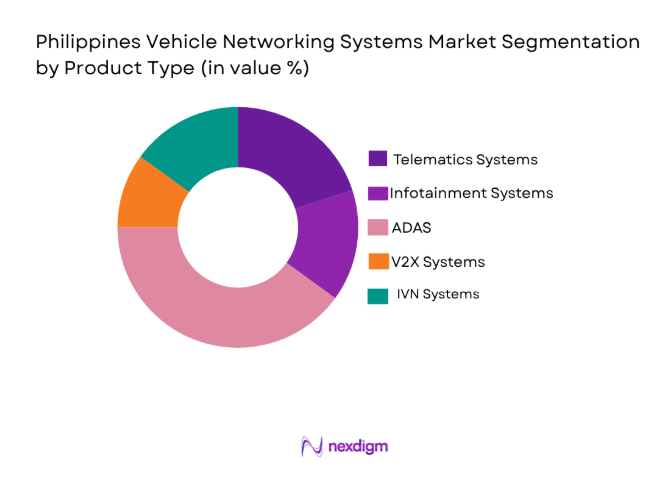
Philippines Vehicle Networking Systems market is segmented by product type into telematics systems, infotainment systems, advanced driver assistance systems (ADAS), vehicle-to-everything (V2X) systems, and in-vehicle networking (IVN) systems. The advanced driver assistance systems (ADAS) segment dominates the market share due to the growing demand for safety technologies and autonomous driving solutions. ADAS has gained traction owing to its ability to significantly enhance vehicle safety and driver convenience. Factors such as increasing traffic incidents, government regulations mandating advanced safety features, and consumer awareness about vehicle safety have led to the rapid adoption of ADAS technologies.
By Platform Type
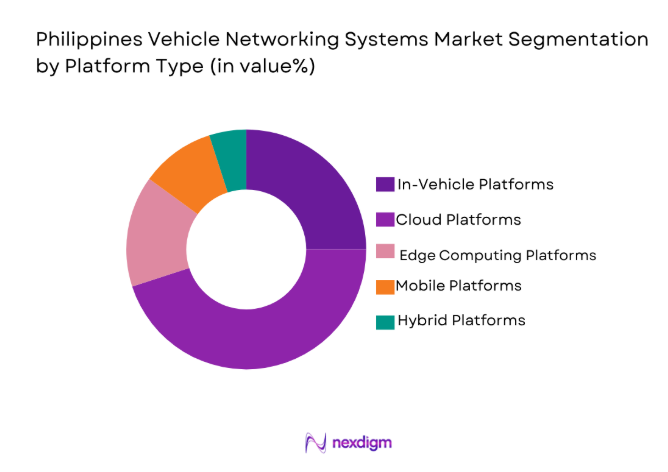
Philippines Vehicle Networking Systems market is segmented by platform type into in-vehicle platforms, cloud platforms, edge computing platforms, mobile platforms, and hybrid platforms. Cloud platforms currently lead the market due to their ability to store vast amounts of data and enable real-time communication between vehicles and infrastructure. Cloud computing enhances connectivity, supports over-the-air updates, and enables data analytics, making it highly favorable for smart vehicles and fleet management systems. The growing availability of 5G networks and strong governmental initiatives on smart city projects further propel the adoption of cloud platforms in the automotive industry.
Competitive Landscape
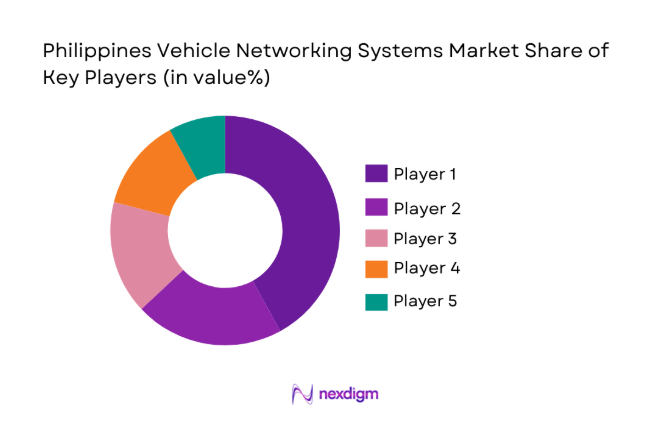
The competitive landscape of the Philippines Vehicle Networking Systems market is marked by a mix of multinational automotive manufacturers, technology firms, and startups that provide connectivity solutions for the automotive sector. These players are focusing on consolidating their market positions through strategic partnerships, collaborations, and technological innovations. Major players are actively involved in the development of telematics systems, V2X communications, and connected vehicle technologies to cater to the growing demand for smart mobility solutions. The entry of new players is also intensifying the competitive dynamics in the market.
| Company Name | Establishment Year | Headquarters | Technology Focus | Market Reach | Key Products | Revenue | Connectivity Solutions |
| Toyota Motor Corp | 1937 | Japan | ~ | ~ | ~ | ~ | ~ |
| Qualcomm | 1985 | USA | ~ | ~ | ~ | ~ | ~ |
| Bosch | 1886 | Germany | ~ | ~ | ~ | ~ | ~ |
| Intel | 1968 | USA | ~ | ~ | ~ | ~ | ~ |
| NXP Semiconductors | 1953 | Netherlands | ~ | ~ | ~ | ~ | ~ |
Philippines Vehicle Networking Systems Market Analysis
Growth Drivers
Government Support for Smart Infrastructure
The Philippine government is focusing on building smart cities with integrated vehicle connectivity solutions, which is driving demand for vehicle networking systems. The government is making substantial investments in infrastructure upgrades, including the integration of Internet of Things (IoT) connectivity, autonomous driving technologies, and vehicle-to-everything (V2X) systems. These investments are part of the broader goal to create efficient urban mobility networks that incorporate smart traffic management, electric vehicle charging systems, and connected vehicles. The Philippines’ commitment to sustainable transportation is further reflected in the development of green urban spaces and clean mobility solutions. This push towards creating connected, intelligent urban infrastructure will ensure that vehicle networking systems become a critical component of the country’s transportation ecosystem. Moreover, these smart infrastructure projects are expected to fuel the adoption of connected vehicles, enhancing the demand for vehicle networking technologies across both private and commercial sectors. With more cities in the Philippines focusing on building smart mobility solutions, the market for vehicle networking systems is poised for significant expansion. The integration of connected cars into the overall transportation network, coupled with the continued development of V2X technologies, will contribute to a seamless transportation ecosystem that is both more efficient and sustainable. As the Philippines strives to become a leader in smart city initiatives in Southeast Asia, the growing demand for advanced vehicle networking systems will be a key factor in realizing the vision of interconnected, intelligent urban spaces.
Technological Advancements in 5G and Telematics
The rollout of 5G networks across the Philippines is expected to create significant growth opportunities for the vehicle networking systems market. With faster data transmission speeds and lower latency, 5G will enable real-time vehicle-to-vehicle (V2V) and vehicle-to-infrastructure (V2I) communication, which is critical for the development of autonomous driving solutions, intelligent traffic systems, and connected transportation networks. 5G technology will support large-scale data exchanges between vehicles, infrastructure, and the cloud, enhancing vehicle performance, safety, and efficiency. The integration of 5G technology will significantly improve the reliability and speed of vehicle connectivity, making it easier for drivers and fleets to access real-time traffic data, road conditions, and predictive maintenance alerts. Additionally, advancements in telematics systems and connected vehicle platforms will accelerate as consumers increasingly demand seamless connectivity and enhanced vehicle performance. Telecommunication companies and automotive manufacturers will continue to collaborate, driving innovations in telematics and vehicle networking technologies. This technological progression will contribute significantly to the growth of the market, as it will unlock new use cases and applications in the automotive sector, such as autonomous driving, predictive maintenance, and real-time traffic management. As 5G adoption increases across the Philippines, it will serve as a catalyst for the widespread integration of vehicle networking systems, enabling more efficient and smarter transportation solutions for both private vehicle owners and fleet operators.
Market Challenges
High Infrastructure Costs for Connectivity
One of the significant challenges faced by the Philippines Vehicle Networking Systems market is the high infrastructure costs required for widespread connectivity. The implementation of vehicle networking systems, particularly those relying on advanced 5G and edge computing technologies, requires substantial investments in both infrastructure and technology. The development of robust, nationwide communication networks capable of supporting real-time vehicle-to-vehicle and vehicle-to-infrastructure communication is costly and resource-intensive. For many automotive companies, telecom service providers, and government entities, the financial burden of upgrading infrastructure for connected vehicles can be prohibitive, potentially delaying the widespread adoption of vehicle networking systems. Although the Philippines is gradually upgrading its infrastructure to support smart mobility, the required investments are significant. The government’s support for such upgrades may be critical in driving the market, but challenges remain in balancing the needs of public and private sector participants to ensure that these technologies are implemented efficiently. The continued rollout of 5G networks and the expansion of edge computing capabilities, while essential for the market’s long-term success, will require high capital expenditures. Additionally, integrating existing road systems with new technologies, such as autonomous driving solutions and vehicle-to-everything communication, adds to the complexity and cost of implementing these systems. As the market for vehicle networking systems continues to grow, managing these high infrastructure costs will remain a critical challenge for market participants.
Cybersecurity and Data Privacy Risks
As the Philippines Vehicle Networking Systems market grows, so does the concern over cybersecurity and data privacy risks. With an increasing number of connected vehicles, the amount of data transmitted between vehicles, infrastructure, and cloud platforms also increases, creating more opportunities for cyber-attacks and data breaches. Vehicles that rely on interconnected systems and communication networks, such as vehicle-to-everything (V2X), are particularly vulnerable to hacking and malicious interference. Securing vehicle data, including location information, driving behavior, and personal details of vehicle owners, is critical for building consumer trust and complying with data protection regulations. With connected vehicles storing and transmitting large amounts of sensitive data, including vehicle performance metrics and user preferences, the need for robust cybersecurity measures is more critical than ever. The risk of data theft, vehicle hijacking, and privacy violations poses significant challenges for both manufacturers and service providers in the vehicle networking systems space. Ensuring data privacy and securing communication channels between vehicles, infrastructure, and the cloud is vital for the success of the market. Cybersecurity concerns may delay the adoption of vehicle networking technologies and could lead to increased regulatory scrutiny. The complexity of implementing robust security measures while ensuring seamless functionality and interoperability across various vehicle systems further complicates the situation. As the market grows, addressing cybersecurity risks will be essential to maintaining public confidence in connected vehicles and fostering the continued development of the vehicle networking systems market.
Opportunities
Integration of Electric Vehicles (EVs) and Networking Systems
The increasing adoption of electric vehicles (EVs) in the Philippines presents a significant opportunity for vehicle networking systems. As EVs gain popularity, the demand for advanced connectivity solutions that support autonomous driving, smart charging, and vehicle-to-grid (V2G) systems is expected to grow. The integration of vehicle networking systems with EV infrastructure, such as smart charging stations, energy-efficient solutions, and renewable energy sources, will play a key role in supporting the transition to a sustainable transportation system. The need for improved charging infrastructure, especially in urban centers, will drive the demand for advanced connectivity solutions that allow for real-time data exchange between EVs, charging stations, and the grid. Manufacturers of EVs and vehicle networking technologies will collaborate to develop integrated systems that ensure seamless communication between vehicles and charging infrastructure, optimizing energy usage and improving overall system efficiency. As EVs continue to become a central part of the Philippine transportation network, the integration of advanced vehicle networking systems will be crucial for ensuring the success of the electric vehicle market. This opportunity also opens doors for companies specializing in V2G technology, as the ability for EVs to interact with the power grid will enhance the utility of renewable energy sources and support grid stability.
Adoption of Autonomous Vehicles
The emergence of autonomous vehicles in the Philippines presents an exciting opportunity for vehicle networking systems. Autonomous vehicles will require an advanced, highly reliable, and secure networking infrastructure to enable safe, efficient, and seamless interaction with both infrastructure and other vehicles. With the potential for safer transportation, improved traffic flow, and enhanced mobility, autonomous vehicles will rely heavily on vehicle networking systems to communicate in real time with other vehicles, traffic management systems, and cloud platforms. These advanced systems will support functions such as real-time data exchange, remote monitoring, and autonomous navigation, enabling a safer and more efficient transportation ecosystem. The Philippines’ regulatory environment is evolving to accommodate self-driving vehicles, creating a favorable market for the growth of autonomous driving technologies and their supporting networks. As more players in the automotive industry focus on the development and commercialization of autonomous vehicles, the demand for sophisticated vehicle networking systems is expected to rise sharply. This creates a significant opportunity for technology providers to develop the infrastructure and systems needed to support these vehicles, with a strong focus on enhancing vehicle safety, traffic efficiency, and overall consumer experience. As the regulatory landscape becomes more supportive of self-driving vehicles, the Philippines will likely see rapid advancements in this space, driving market growth in vehicle networking systems.
Future Outlook
The Philippines Vehicle Networking Systems market is expected to witness substantial growth over the next five years. Technological developments, such as the rollout of 5G networks and advancements in AI, will drive innovation and demand for connected vehicles. Government initiatives supporting smart infrastructure and EV adoption will further support market growth. Regulatory frameworks will play a crucial role in shaping the market dynamics, with a growing emphasis on vehicle safety and environmental sustainability. The integration of autonomous vehicles and connected systems will be key drivers of demand during this period.
Major Players
- Toyota Motor Corp
- Qualcomm
- Bosch
- Intel
- NXP Semiconductors
- Harman International
- Denso Corporation
- Hyundai Motor Group
- Ford Motor Company
- Ericsson
- Panasonic Automotive
- ZF Friedrichshafen AG
- Valeo
- Aptiv PLC
- Continental AG
Key Target Audience
- Investments and venture capitalist firms
- Government and regulatory bodies
- Automotive manufacturers
- Fleet operators
- Telecom service providers
- Infrastructure developers
- Vehicle technology suppliers
Research Methodology
Step 1: Identification of Key Variables
Identify key variables affecting the vehicle networking systems market in the Philippines, including technological advancements, regulatory frameworks, and consumer adoption patterns.
Step 2: Market Analysis and Construction
Analyze market data, segmentation, and trends, constructing a comprehensive market model based on the identified variables.
Step 3: Hypothesis Validation and Expert Consultation
Validate the market model hypotheses by consulting with industry experts, stakeholders, and technology providers.
Step 4: Research Synthesis and Final Output
Synthesize data and findings into a comprehensive report that addresses the market’s current state, opportunities, and future outlook.

- Executive Summary
- Research Methodology (Definitions, Scope, Industry Assumptions, Market Sizing Approach, Primary & Secondary Research Framework, Data Collection & Verification Protocol, Analytic Models & Forecast Methodology, Limitations & Research Validity Checks)

- Market Definition and Scope
- Value Chain & Stakeholder Ecosystem
- Regulatory / Certification Landscape
- Sector Dynamics Affecting Demand
- Strategic Initiatives & Infrastructure Growth

- Growth Drivers
Growth of Connected Vehicle Technologies
Increasing Consumer Demand for In-Vehicle Connectivity
Advancements in 5G and Edge Computing Technologies - Market Challenges
High Costs of Network Infrastructure
Cybersecurity Risks in Connected Vehicles
Integration and Standardization Issues - Market Opportunities
Rise in Electric Vehicle Adoption and Smart Charging
Government Initiatives for Smart City and Mobility Infrastructure
Partnerships with Telecom Providers for Enhanced Connectivity - Trends
Increased Deployment of Autonomous Vehicles
Advancement of Vehicle-to-Everything (V2X) Communication Technologies - Government Regulations
Data Protection and Privacy Regulations
Vehicle Safety Standards and Connectivity Requirements
Telecommunications Infrastructure Development for V2X - SWOT Analysis
- Porter’s Five Forces

- By Market Value, 2020-2025
- By Installed Units, 2020-2025
- By Average System Price, 2020-2025
- By System Complexity Tier, 2020-2025

- By System Type (In Value%)
Telematics Systems
Infotainment Systems
Advanced Driver Assistance Systems (ADAS)
Vehicle-to-Everything (V2X) Systems
In-Vehicle Networking (IVN) Systems - By Platform Type (In Value%)
In-Vehicle Platforms
Cloud Platforms
Edge Computing Platforms
Mobile Platforms
Hybrid Platforms - By Fitment Type (In Value%)
OEM Solutions
Aftermarket Solutions
Integrated Systems
Modular Solutions - By End User Segment (In Value%)
Automotive Manufacturers
Tier 1 Suppliers
Fleet Operators
Private Vehicle Owners

- Market Share Analysis
- Cross Comparison Parameters (System Type, Platform Type, Procurement Channel, EndUser Segment, Fitment Type, Technology Adoption, Pricing Strategy)
- SWOT Analysis of Key Competitors
- Pricing & Procurement Analysis
- Key Players
STMicroelectronics
Qualcomm Technologies
Bosch Automotive
Continental AG
NXP Semiconductors
Delphi Technologies
Harman International
Denso Corporation
Infineon Technologies
Texas Instruments
Aptiv PLC
Renesas Electronics
Zebra Technologies
BlackBerry QNX
Vodafone Automotive

- Growing Demand from Fleet Operators
- Increased Adoption by Automotive OEMs for Smart Features
- Role of Tier 1 Suppliers in System Integration
- Private Vehicle Owners’ Shift Toward Connected Vehicle Technologies

- Forecast Market Value, 2026-2035
- Forecast Installed Units, 2026-2035
- Price Forecast by System Tier, 2026-2035
- Future Demand by Platform, 2026-2035


 Request a Sample
 Ask for Customization
 Get a Quote
 Enquire Now