

 Download PDF
 Download PDF
Market Overview
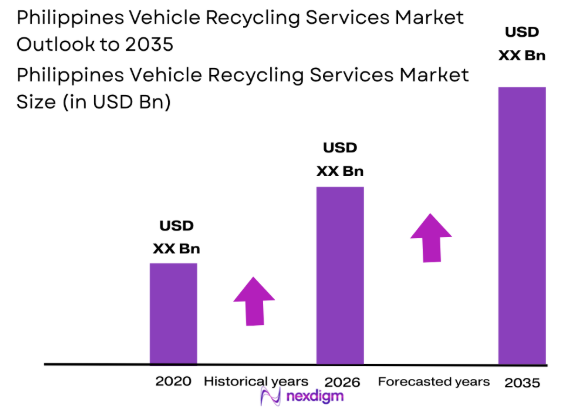
The Philippines Vehicle Recycling Services market is projected to grow significantly, driven by an increasing demand for sustainable waste management practices, regulatory support, and rising environmental concerns. As the country continues to focus on improving recycling infrastructure, the market size is set to experience notable growth, reaching USD ~ billion based on a recent historical assessment. Key factors driving this market include governmental initiatives, advancing recycling technologies, and the automotive sector’s increasing focus on sustainability.
Dominant cities in the Philippines, such as Metro Manila, Cebu, and Davao, lead the market due to their high vehicle populations and industrial activities. These cities are equipped with the necessary infrastructure and support systems to facilitate vehicle recycling operations. The local government’s commitment to green policies, the rise of electric vehicles, and increased investments in recycling technologies further contribute to the country’s strong position in the market.
Market Segmentation
By System Type
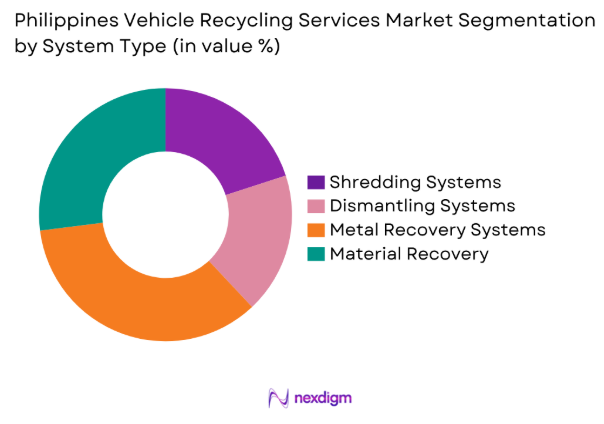
The Philippines Vehicle Recycling Services market is segmented by system type into various sub-segments such as shredding systems, dismantling systems, metal recovery, and material recovery systems. Recently, metal recovery systems have dominated the market due to the demand for raw materials for manufacturing and construction industries. These systems are more cost-effective and efficient, making them highly preferred in the Philippines’ growing automotive recycling sector. Their ability to recover valuable metals like steel and aluminum from vehicles enhances their appeal, contributing significantly to market growth.
By Platform Type
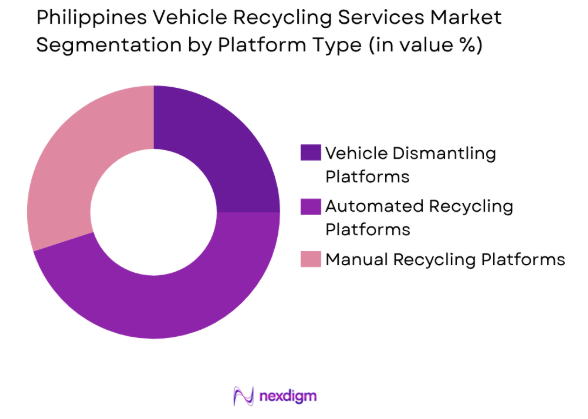
The Philippines Vehicle Recycling Services market is also segmented by platform type into vehicle dismantling platforms, automated recycling platforms, and manual recycling platforms. Among these, automated recycling platforms have gained significant traction in recent years. The growing emphasis on reducing human labor costs, improving efficiency, and enhancing the overall effectiveness of the recycling process has made automated platforms a dominant choice. Their ability to handle a higher volume of materials with greater precision and safety makes them the preferred option for large-scale operations.
Competitive Landscape
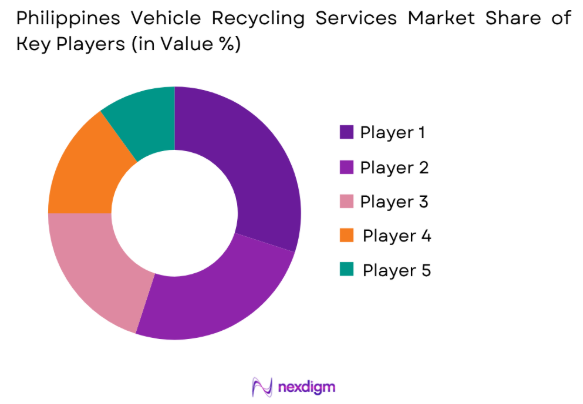
The competitive landscape of the Philippines vehicle recycling services market is shaped by key players who are constantly innovating and enhancing recycling technologies. Companies such as Toyota Tsusho, Honda, and local players like Green Tech Solutions are making significant investments in automation and sustainability. Consolidation is expected to continue, as players seek to expand their reach and improve operational efficiencies. The market remains competitive, with advancements in regulatory frameworks and environmental policies playing a significant role in influencing industry dynamics.
| Company Name | Establishment Year | Headquarters | Technology Focus | Market Reach | Key Products | Revenue (USD) | Additional Parameter |
| Toyota Tsusho | 1948 | Japan | ~ | ~ | ~ | ~ | ~ |
| Green Tech Solutions | 2005 | Philippines | ~ | ~ | ~ | ~ | ~ |
| Honda Motor Co. | 1948 | Japan | ~ | ~ | ~ | ~ | ~ |
| JFE Engineering | 2003 | Japan | ~ | ~ | ~ | ~ | ~ |
| ALBA Group | 1968 | Germany | ~ | ~ | ~ | ~ | ~ |
Philippines Vehicle Recycling Services Market Analysis
Growth Drivers
Government Support for Recycling Infrastructure
The growth of the vehicle recycling services market in the Philippines is significantly driven by government policies promoting waste management and environmental sustainability. With a focus on reducing landfill waste and enhancing resource recovery, the government has introduced stricter recycling regulations that incentivize the development of recycling facilities. These initiatives, including tax breaks and subsidies, have encouraged both public and private investments in recycling infrastructure, boosting operational capacities in the sector. The supportive regulatory environment and the push for sustainable practices have made the recycling industry more attractive, fostering a steady growth trajectory and facilitating greater market participation from new players.
Technological Advancements in Recycling
The adoption of advanced recycling technologies is a key growth driver in the Philippines vehicle recycling services market. Automated systems like robotic dismantling platforms and intelligent shredding systems have greatly improved recycling efficiency. These innovations lower labor costs and increase the precision of material recovery, ensuring better sorting and higher-value output. As these technologies become more affordable and widely available, their implementation is expected to accelerate. The shift towards automation will enhance operational capabilities, reduce processing times, and improve sustainability, further contributing to the sector’s growth. This technological evolution is expected to shape the future of the vehicle recycling industry in the Philippines.
Market Challenges
High Capital Investment for Advanced Systems
A significant challenge in the Philippines vehicle recycling services market is the high capital investment needed for advanced recycling systems. Automated systems, shredding technologies, and material recovery platforms are costly, making it difficult for small and medium-sized enterprises to adopt these technologies. While larger companies can afford to invest in modern equipment, smaller players struggle with high initial costs, limiting their ability to enter or expand in the market. This financial disparity restricts access to efficient technology, forcing some companies to rely on outdated systems. As a result, the overall efficiency of recycling processes may be reduced, slowing market growth and technological progress.
Regulatory Compliance and Environmental Challenges
Another major challenge in the Philippines vehicle recycling services market is the complexity of regulatory compliance. While the government has introduced laws to support recycling, inconsistent enforcement remains an issue. Recycling facilities must meet stringent environmental standards, including waste disposal regulations, emissions controls, and safety protocols. Failure to comply with these requirements can result in penalties or shutdowns. Ensuring adherence to these regulations demands significant investments in resources and infrastructure, which can be a financial burden for smaller companies. The high costs associated with compliance, coupled with the regulatory uncertainty, may deter new entrants and limit the ability of existing players to scale, hindering overall market growth.
Opportunities
Rise of Electric Vehicle Recycling
One of the most significant opportunities in the Philippines vehicle recycling services market is the increasing need for electric vehicle (EV) recycling. As the Philippines accelerates its adoption of electric vehicles, the demand for specialized recycling services for EVs is expected to rise. EV batteries, in particular, require careful handling and disposal, creating an opportunity for businesses to develop and implement recycling technologies tailored to the needs of the electric vehicle market. The development of battery recycling systems and the recovery of rare earth metals from EV batteries will play a pivotal role in reducing the environmental impact of electric vehicles, making this an exciting growth avenue.
Collaboration with Automotive Manufacturers
Collaborations between vehicle recycling firms and automotive manufacturers offer a key opportunity for market growth. As manufacturers prioritize sustainability, there is growing interest in developing end-of-life vehicle recycling programs. By partnering with recycling services, automakers can ensure responsible vehicle disposal, aligning with corporate social responsibility goals. These collaborations facilitate the creation of closed-loop recycling systems, where valuable materials from end-of-life vehicles are repurposed for new vehicle production. This process not only reduces waste but also minimizes resource consumption, supporting both environmental and economic sustainability. Such partnerships contribute to a more circular economy, offering long-term benefits to both the automotive and recycling industries.
Future Outlook
Over the next five years, the Philippines vehicle recycling services market is expected to experience continued growth, driven by advancements in technology, increased government support, and the rise of electric vehicles. As the recycling infrastructure improves and automation becomes more prevalent, the industry is likely to see increased efficiency and profitability. The regulatory environment will continue to support sustainable practices, and the demand for eco-friendly solutions will drive the market further. This upward trajectory is expected to position the Philippines as a regional leader in vehicle recycling.
Major Players
- Toyota Tsusho
- Green Tech Solutions
- Honda Motor Co.
- JFE Engineering
- ALBA Group
- Mitsubishi Motors
- Sims Metal Management
- Auto Recycling Corporation
- LiftecEquipment
- Genset Philippines
- Waste Management, Inc.
- Carmine GreenTechnologies
- Eltek Recycling Systems
- Republic Services
- Universal Recyclers
Key Target Audience
- Investments and venture capitalist firms
- Government and regulatory bodies
- Automotive manufacturers
- Recycling companies
- Environmental consultants
- Vehicle fleet owners
- Third-party waste management companies
- Automotive parts suppliers
Research Methodology
Step 1: Identification of Key Variables
Identification of critical market drivers, challenges, and opportunities based on industry reports, interviews, and market research.
Step 2: Market Analysis and Construction
Detailed analysis of market segments, drivers, and competitors, along with data collection from primary and secondary sources.
Step 3: Hypothesis Validation and Expert Consultation
Validation of market assumptions with industry experts and stakeholders through interviews and consultations.
Step 4: Research Synthesis and Final Output
Integration of data and insights into a comprehensive market report, followed by validation and refinement for final output.

- Executive Summary
- Research Methodology (Definitions, Scope, Industry Assumptions, Market Sizing Approach, Primary & Secondary Research Framework, Data Collection & Verification Protocol, Analytic Models & Forecast Methodology, Limitations & Research Validity Checks)

- Market Definition and Scope
- Value Chain & Stakeholder Ecosystem
- Regulatory / Certification Landscape
- Sector Dynamics Affecting Demand
- Strategic Initiatives & Infrastructure Growth

- Growth Drivers
Government Initiatives for Recycling
Advances in Recycling Technologies
Growth in Automotive Industry
Environmental Awareness
Supportive Regulatory Frameworks - Market Challenges
High Capital Investment Requirements
Limited Awareness of Recycling Benefits
Complexity of Vehicle Dismantling
Fluctuating Prices of Recycled Materials
Regulatory Compliance Issues - Market Opportunities
Expansion of EV Recycling
Partnerships with Automotive Manufacturers
Rising Demand for Recycled Auto Parts - Trends
Integration of Automation in Recycling
Growth of Electric Vehicle Recycling
Sustainability and Circular Economy Focus
Government Regulations
SWOT Analysis of Key Competitors
Porter’s Five Forces

- By Market Value, 2020-2025
- By Installed Units, 2020-2025
- By Average System Price, 2020-2025
- By System Complexity Tier, 2020-2025

- By System Type (In Value%)
End-of-life Vehicles (ELVs)
Shredding and Dismantling Systems
Recycling Technology Systems
Refurbishment and Reuse Solutions
Metal Recovery Systems - By Platform Type (In Value%)
Vehicle Dismantling Platforms
Automated Recycling Systems
Manual Recycling Platforms
De-pollution Platforms
Material Recovery Platforms - By Fitment Type (In Value%)
On-site Solutions
Off-site Solutions
Mobile Recycling Units
Automated Fitment Solutions
Modular Systems - By End User Segment (In Value%)
Automotive Manufacturers
Vehicle Scrapyards
Recycling Plants
Government Recycling Initiatives
Third-Party Distributors - By Procurement Channel (In Value%)
Direct Procurement
Public Tenders
Private Sector Procurement
Online Bidding Platforms
Third-party Distributors

- Market Share Analysis
- Cross Comparison Parameters (End-of-life Vehicles, Shredding Systems, Recycling Technologies, End-user Segments, Procurement Channels)
- SWOT Analysis of Key Competitors
- Pricing & Procurement Analysis
- Key Players
Toyota Tsusho Corporation
Philippine Recyclers, Inc.
JFE Engineering Corporation
Sims Metal Management
Honda Philippines, Inc.
Mitsubishi Motors Corporation
ALBA Group
Hitachi Zosen Corporation
Liftec Equipment
Genset Philippines, Inc.
Waste Management, Inc.
Carmel Green Technologies
R-Vision, Inc.
Auto Recycling Corporation
Green Tech Solutions

- Increasing Adoption of End-of-life Vehicle Recycling
- Growing Interest from Automotive Manufacturers
- Government Role in Recycling
- Third-party Waste Management Solutions

- Forecast Market Value, 2026-2035
- Forecast Installed Units, 2026-2035
- Price Forecast by System Tier, 2026-2035
- Future Demand by Platform, 2026-2035


 Request a Sample
 Ask for Customization
 Get a Quote
 Enquire Now