
 Download PDF
 Download PDF
Market Overview
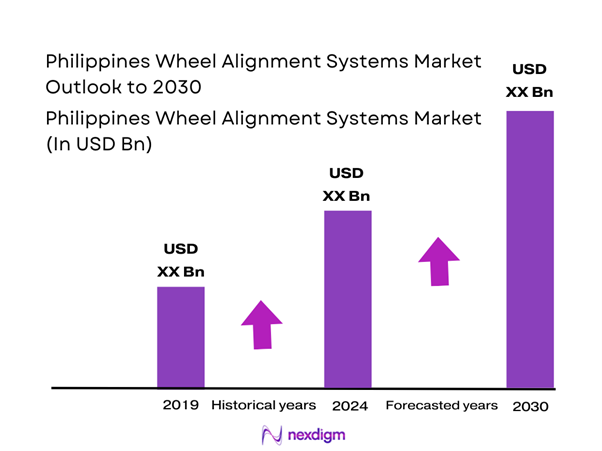
Philippines Wheel Alignment Systems Market is valued at USD ~ million, reflecting its role as a core enabler of vehicle safety, tire lifecycle optimization, and suspension integrity across the country’s expanding automotive parc. Structural demand is driven by sustained growth in registered vehicles, extended vehicle ownership cycles, and uneven road conditions that accelerate alignment drift. Wheel alignment systems function as repeat-use workshop assets rather than one-time installations, anchoring their demand to service frequency rather than new vehicle sales alone. Preventive maintenance adoption among private vehicle owners and commercial fleets has increased alignment checks during tire replacement, suspension repair, and periodic servicing. Additionally, rising fuel efficiency awareness and safety compliance requirements are reinforcing alignment as a non-negotiable service line, making equipment uptime and accuracy critical for workshop profitability and customer retention.
Demand concentration is highest in Metro Manila due to vehicle density, traffic intensity, and the presence of dealership-led and organized multi-brand service networks. Luzon corridors surrounding industrial and logistics hubs follow, supported by commercial fleet activity, while Visayas and Mindanao show steady penetration through regional service chains. Global equipment manufacturers dominate system technology and calibration software, influencing local adoption standards through authorized distributors. Domestic players mainly participate as integrators, installers, and service partners rather than core technology developers. Global vendors shape accuracy benchmarks, upgrade cycles, and training protocols, while local distributors influence pricing structures, financing access, and aftermarket reach, together defining the competitive structure of the market.
Market Segmentation
By Technology Type
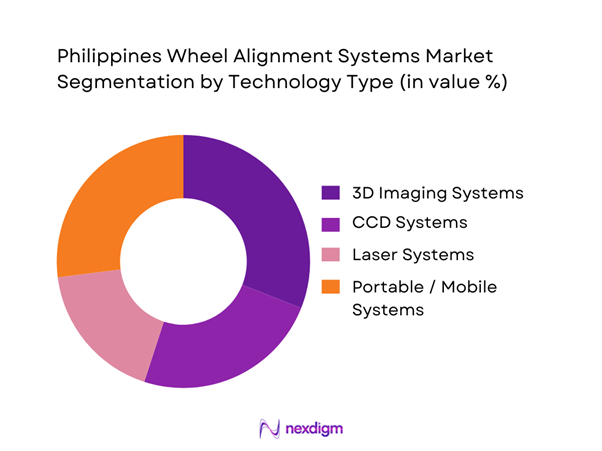
3D imaging alignment systems dominate the Philippines wheel alignment systems market due to their superior accuracy, faster service turnaround, and compatibility with modern vehicle architectures. As vehicle suspensions become more complex and customer expectations shift toward measurable precision, workshops increasingly prioritize 3D systems over manual or laser-based alternatives. These systems enable real-time measurements, digital reporting, and reduced dependency on highly specialized technician judgment, which is particularly important in markets facing skill constraints. 3D platforms also support integration with wheel balancing and diagnostic workflows, allowing workshops to upsell bundled services and improve bay productivity. Dealership service centers and high-volume independent workshops are the primary adopters, as they require consistency across multiple vehicle models. Over time, declining relative complexity of installation and improved distributor support have further strengthened the position of 3D systems within the local market.
By End User Type
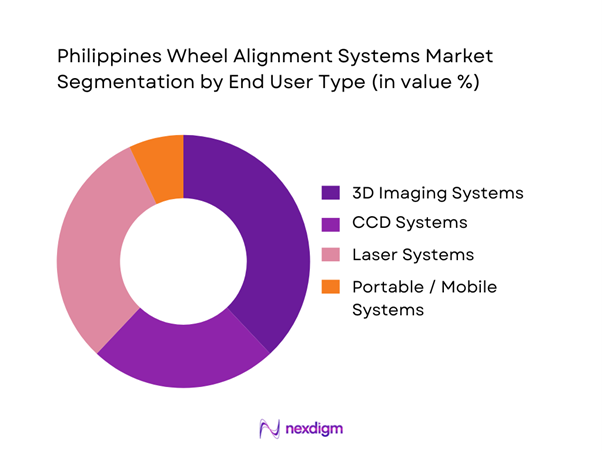
Private vehicle owners represent the largest share of end-user demand, driven by the country’s large base of personal vehicles and rising awareness of preventive maintenance benefits. Alignment services are typically consumed during tire replacement, suspension repair, or periodic servicing, making this segment structurally resilient. While commercial fleets demonstrate higher service frequency, the sheer volume of private vehicles sustains consistent workshop utilization. Consumer preference for smoother ride quality and tire cost optimization further reinforces demand. Independent multi-brand workshops capture a significant portion of this segment by offering competitively priced alignment services compared to dealerships. As urban traffic congestion and road surface variability increase wear rates, private owners increasingly view alignment as a necessary maintenance activity rather than an optional service, strengthening long-term demand fundamentals.
Competitive Landscape
The Philippines Wheel Alignment Systems market is dominated by a few major players, including Hunter Engineering Company and global or regional brands like Bosch Automotive Service Solutions, Snap-on Equipment, and Launch Tech. This consolidation highlights the significant influence of these key companies.
| Company | Establishment Year | Headquarters | Product Breadth (Alignment Range) | Typical Buyer Type | After-Sales Model Strength | Software/Database Updates | Training Enablement | ADAS / Alignment Integration Readiness |
| Hunter Engineering | 1946 | USA | ~ | ~ | ~ | ~ | ~ | ~ |
| Snap-on / John Bean / Hofmann | 1920 | USA | ~ | ~ | ~ | ~ | ~ | ~ |
| Bosch Automotive Service Solutions | 1886 | Germany | ~ | ~ | ~ | ~ | ~ | ~ |
| Launch Tech | 1992 | China | ~ | ~ | ~ | ~ | ~ | ~ |
| Ravaglioli (Vehicle Service Group ecosystem) | 1958 | Italy | ~ | ~ | ~ | ~ | ~ | ~ |
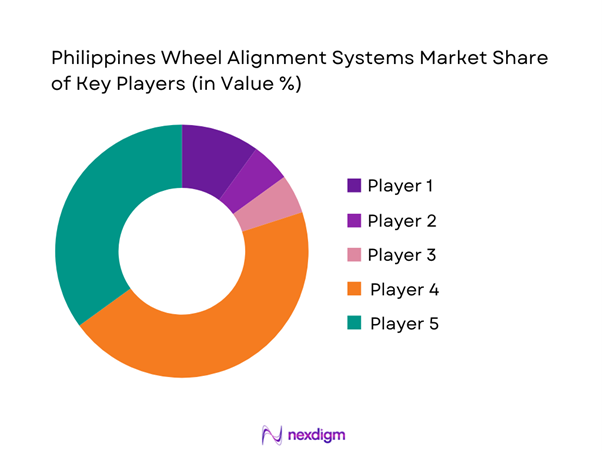
Philippines Wheel Alignment Systems Market Analysis
Growth Drivers
Rising Vehicle Parc and Extended Ownership Cycles
Sustained growth in the national vehicle parc combined with longer vehicle retention periods is increasing cumulative suspension wear across passenger and commercial vehicles. As vehicles age, misalignment becomes more frequent due to bushing degradation, shock absorber wear, and road impact stress. This directly elevates alignment service frequency, particularly outside warranty periods when owners shift from dealerships to independent workshops. For service providers, higher vehicle age translates into predictable, repeat demand, justifying investment in alignment systems with higher throughput and consistency. The structural outcome is a shift from reactive alignment checks to routine preventive service inclusion, strengthening long-term utilization rates of installed systems.
Expansion of Organized Automotive Service Infrastructure
The steady expansion of dealership service networks and organized multi-brand workshop chains is accelerating equipment standardization across the country. These operators prioritize service repeatability, digital reporting, and technician-independent accuracy, which favors advanced alignment systems over manual alternatives. As organized players expand beyond Metro Manila into secondary cities, they carry uniform service protocols that mandate alignment capability. This not only increases system installations but also raises the baseline technology expectation across the broader workshop ecosystem, indirectly pressuring smaller players to upgrade.
Challenges
High Capital Intensity for Advanced Alignment Systems
Modern 3D and imaging-based alignment systems require significant upfront investment, including calibration infrastructure and periodic software updates. For small independent workshops operating on thin margins, this capital intensity delays adoption despite clear service demand. Financing constraints and uncertain payback periods outside high-traffic urban locations further compound the issue. As a result, market penetration remains uneven across regions, limiting total addressable demand for high-end systems.
Technician Skill Gaps and Utilization Inefficiencies
Effective deployment of alignment systems depends on technician competency in setup, interpretation, and corrective procedures. Skill gaps lead to underutilization, inaccurate readings, and longer service times, reducing return on investment. Inconsistent training availability across regions restricts operational efficiency, particularly for independent workshops, creating a bottleneck that slows technology diffusion even where equipment demand exists.
Opportunities
Upgrade Cycle Toward 3D and Digitally Integrated Systems
A significant opportunity lies in replacement and upgrade cycles as workshops move from manual, laser, or CCD platforms to 3D systems. Digital alignment reporting, faster bay turnaround, and integration with wheel balancing and diagnostic tools enable service bundling and higher average ticket values. Vendors offering modular upgrades, financing, and training support can accelerate adoption among mid-tier workshops.
Fleet Maintenance Contract Expansion
Commercial fleets increasingly seek predictable maintenance outcomes and reduced downtime. Alignment system providers can capitalize by partnering with fleet service operators to deploy high-throughput systems under long-term maintenance contracts. This model shifts revenue emphasis from one-time equipment sales to recurring service alignment demand, improving market stability and visibility.
Future Outlook
The Philippines wheel alignment systems market is expected to evolve toward higher precision, digitally integrated platforms aligned with workshop productivity goals and preventive maintenance models. Technology differentiation, service support, and training ecosystems will become as critical as hardware capability. Market expansion will be driven less by first-time adoption and more by replacement cycles and upgrades to advanced systems, particularly in organized service networks and fleet-focused workshops.
Major Players
- Hunter Engineering Company
- Bosch Automotive Service Solutions
- Snap-on Equipment
- Launch Tech
- Ravaglioli
- Hofmann
- John Bean
- Beissbarth
- Corghi
- Mahle Aftermarket
- Werther International
- Bright Technology
Key Target Audience
- Automotive service equipment manufacturers
- Independent multi-brand workshop chains
- Automotive dealership groups
- Commercial fleet operators
- Logistics and delivery companies
- Tire and suspension service specialists
- Investments and venture capitalist firms
- Government and regulatory bodies (Philippines)
Research Methodology
Step 1: Identification of Key Variables
Assessment of vehicle parc characteristics, service frequency drivers, workshop density, and equipment utilization patterns specific to wheel alignment systems.
Step 2: Market Analysis and Construction
Mapping of demand across service formats, technology types, and regions, combined with revenue attribution across installation and service use cases.
Step 3: Hypothesis Validation and Expert Consultation
Validation through interviews with workshop owners, equipment distributors, and service technicians to refine adoption drivers and barriers.
Step 4: Research Synthesis and Final Output
Integration of quantitative structure and qualitative insights to produce a cohesive market narrative aligned with client decision-making needs.

- Executive Summary
- Research Methodology (Market Definitions and Inclusions/Exclusions, Abbreviations, Topic-Specific Taxonomy, Market Sizing Framework, Revenue Attribution Logic Across Use Cases or Care Settings, Primary Interview Program Design, Data Triangulation and Validation, Limitations and Data Gaps)

- Definition and Scope
- Market Genesis and Evolution
- Wheel Alignment Usage and Automotive Service Value-Chain Mapping
- Business Cycle and Demand Seasonality
- Philippines Automotive Service and Workshop Delivery Architecture

- Growth Drivers
Rising Vehicle Parc and Aging Fleet Dynamics
Expansion of Organized Automotive Service Chains
Urban Road Conditions and Alignment Wear Frequency
Commercial Fleet Utilization Intensity
Technology Upgrade in Service Workshops - Challenges
High Capital Cost of Advanced Alignment Systems
Fragmented Independent Workshop Landscape
Skill Gaps and Technician Training Constraints
Price Sensitivity in Preventive Maintenance
Infrastructure Variability Across Regions - Opportunities
Penetration of 3D and Digital Alignment Systems
Growth of Fleet Maintenance Contracts
Dealership Network Expansion Outside Metro Areas
Integration with Diagnostic and ADAS Calibration
Aftermarket Service Formalization - Trends
Shift Toward 3D Imaging Alignment Platforms
Bundling Alignment with Tire and Suspension Services
Workshop Digitization and Data Logging
Mobile Alignment for Fleet Operators
OEM-Recommended Preventive Alignment Intervals - Regulatory & Policy Landscape
- SWOT Analysis
- Stakeholder & Ecosystem Analysis
- Porter’s Five Forces Analysis
- Competitive Intensity & Ecosystem Mapping

- By Value, 2019–2024
- By Installed Base, 2019–2024
- By Average System Price, 2019–2024

- By Alignment Type (in Value %)
Camber Alignment
Caster Alignment
Toe Alignment
Four-Wheel Alignment
Thrust Angle Alignment - By Vehicle Type (in Value %)
Passenger Cars
Light Commercial Vehicles
Medium Commercial Vehicles
Heavy Commercial Vehicles
Two-Wheelers - By Technology / Product Type (in Value %)
Manual Alignment Systems
CCD Alignment Systems
3D Imaging Alignment Systems
Laser Alignment Systems
Mobile Alignment Systems - By Deployment / Distribution Model (in Value %)
OEM-Authorized Workshops
Independent Multi-Brand Workshops
Dealership Service Centers
Fleet and Commercial Service Centers - By End-Use Industry / Customer Type (in Value %)
Private Vehicle Owners
Commercial Fleet Operators
Public Transport Operators
Automotive Dealerships
Logistics and Delivery Companies - By Region (in Value %)
Metro Manila
Luzon (Excluding Metro Manila)
Visayas
Mindanao

- Competition ecosystem overview
- Cross Comparison Parameters (installation footprint, alignment accuracy tolerance, calibration frequency, software upgrade cycle, service turnaround time, technician training support, aftermarket compatibility, lifecycle operating cost)
SWOT analysis of major players - Pricing and commercial model benchmarking
- Detailed Profiles of Major Companies
Hunter Engineering Company
Bosch Automotive Service Solutions
Snap-on Equipment
Launch Tech
Ravaglioli
Hofmann
John Bean
Beissbarth
Corghi
Mahle Aftermarket
Werther International
Bright Technology
AutoChek Systems
Sun Auto
Sice

- Buyer personas and decision-making units
- Procurement and contracting workflows
- KPIs used for evaluation
- Pain points and adoption barriers

- By Value, 2025–2030
- By Installed Base, 2025–2030
- By Average System Price, 2025–2030


 Request a Sample
 Ask for Customization
 Get a Quote
 Enquire Now