

 Download PDF
Market Overview
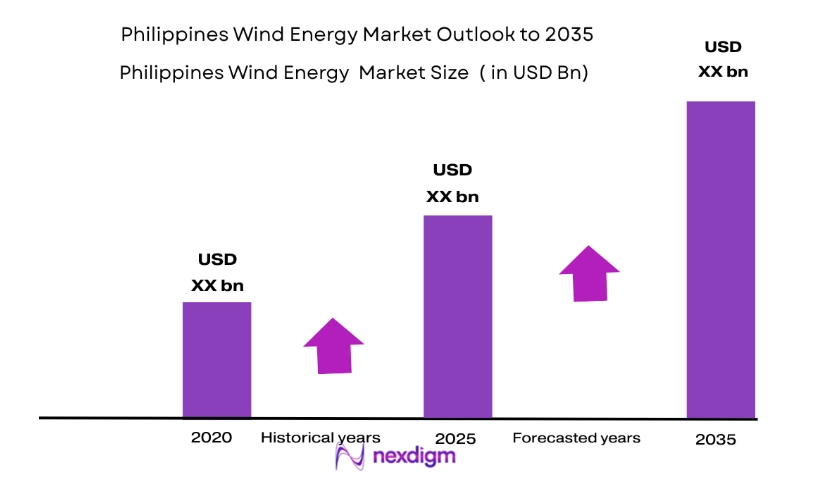
The Philippines Wind Energy Market has been witnessing significant growth due to the country’s push toward renewable energy adoption. As of a recent historical assessment, the market is valued at approximately USD ~ billion, driven by government policies, growing demand for clean energy, and advancements in wind turbine technology. The wind energy sector has become a key player in the country’s renewable energy mix, with several projects under development and more expected in the coming years. As the country seeks to meet its renewable energy targets, wind energy is positioned to play an increasingly important role in energy generation.
The dominant cities in the Philippines driving the wind energy market include areas with favorable geographical features such as Ilocos Norte, Capiz, and Batanes. These regions offer the ideal conditions for wind energy generation, including high average wind speeds and large land areas suitable for wind farms. The government’s proactive support, including favorable policies and incentives, has made these areas more attractive for investment. Furthermore, foreign companies have been actively partnering with local developers to bring advanced wind technology and infrastructure to the region, boosting overall market growth.
Market Segmentation
By System Type:
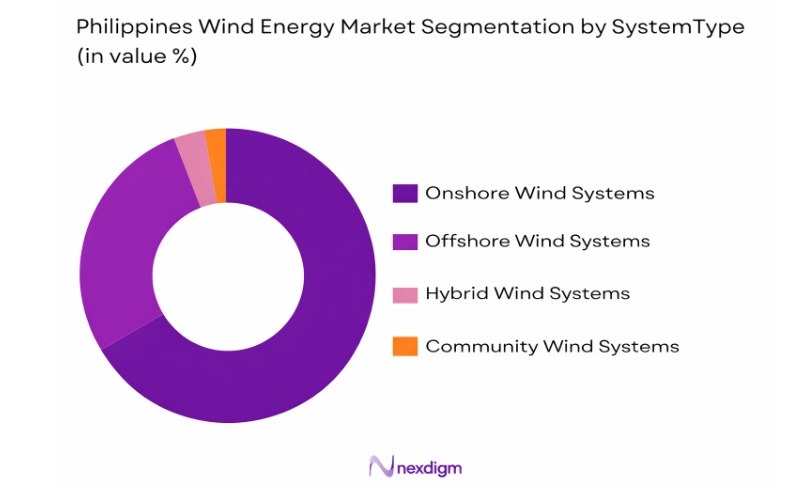
The Philippines Wind Energy market is segmented by system type into onshore wind systems, offshore wind systems, and hybrid wind systems. Recently, onshore wind systems have dominated the market share due to their lower capital investment compared to offshore systems. These systems are being deployed in regions like Ilocos Norte, where wind conditions are optimal for land-based turbines. The increasing preference for onshore systems is also driven by better infrastructure availability and the reduced complexity of integration with existing grids, which makes them more cost-effective and quicker to deploy.
By Platform Type:
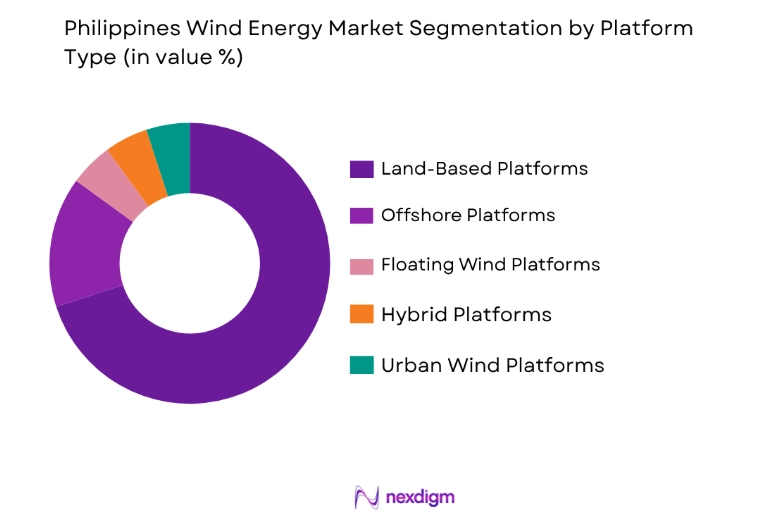
The Philippines Wind Energy market is segmented by platform type into land-based platforms, offshore platforms, and floating wind platforms. Among these, land-based platforms hold a dominant share in the market, driven by the availability of vast land areas in regions with high wind potential. These platforms are more economically viable due to the lower construction costs compared to offshore platforms. With the country’s topography and infrastructure supporting land-based wind farms, they remain the preferred choice for investors and energy producers.
Competitive Landscape
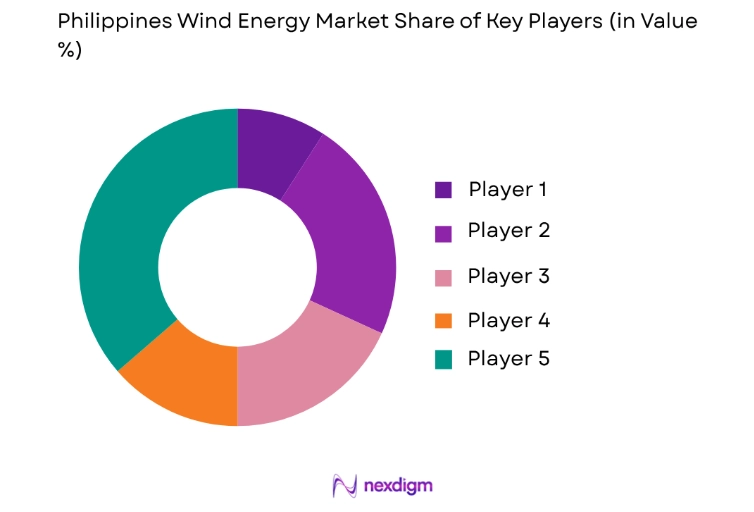
The Philippines Wind Energy Market is experiencing increased consolidation as major players in the renewable energy sector form strategic partnerships and joint ventures. Several multinational companies, in collaboration with local players, are scaling up operations to meet the country’s renewable energy targets. Key players are focusing on technological advancements and improving cost efficiency to remain competitive in a growing market. The presence of strong regulatory support is also influencing the competitive dynamics, allowing companies to expand their footprint in the Philippines’ promising wind energy market.
| Company Name | Establishment Year | Headquarters | Technology Focus | Market Reach | Key Products | Revenue | Additional Parameter |
| Vestas | 1945 | Denmark | ~ | ~ | ~ | ~ | ~ |
| Siemens Gamesa | 1976 | Spain | ~ | ~ | ~ | ~ | ~ |
| GE Renewable Energy | 1892 | USA | ~ | ~ | ~ | ~ | ~ |
| Nordex Group | 1985 | Germany | ~ | ~ | ~ | ~ | ~ |
| First Gen Corporation | 1998 | Philippines | ~ | ~ | ~ | ~ | ~ |
Philippines Wind Energy Market Analysis
Growth Drivers
Government Support for Renewable Energy:
The Philippines government has been proactive in supporting the growth of renewable energy, especially wind energy, through various incentives and policies. The Renewable Energy Act of 2008 and the recent establishment of the Renewable Energy Roadmap 2020-2040 have laid a strong foundation for wind energy development in the country. Government support through feed-in tariffs, tax incentives, and grants for wind projects has made investments in the sector more attractive. Additionally, the country’s goal of increasing renewable energy’s share in its energy mix has accelerated the development of wind farms. With the ongoing push to meet international climate commitments, the government’s commitment to wind energy as a reliable and sustainable power source is expected to continue to drive market growth.
Technological Advancements in Wind Energy:
Technological innovations in wind turbine technology, particularly in turbine efficiency and performance, have significantly contributed to the growth of the wind energy sector. The continuous improvement in turbine design and materials has led to more efficient energy generation, even in areas with lower wind speeds. Additionally, the development of larger and more powerful turbines has enabled wind farms to generate higher output, making them more economically viable. These technological advancements have lowered the cost of wind power, making it competitive with other forms of energy generation. As turbine technology continues to evolve, the potential for expanding the wind energy market in the Philippines remains strong.
Market Challenges
High Initial Capital Investment:
One of the major challenges facing the Philippines wind energy market is the high upfront capital investment required to develop wind farms. Wind projects involve significant costs for land acquisition, turbine installation, infrastructure development, and grid integration. While operational costs are relatively low, the initial financial barrier remains a key challenge, particularly for smaller developers or companies with limited access to capital. Despite government incentives, the capital-intensive nature of wind energy projects can slow the pace of adoption, especially in a country with competing energy needs. This challenge is compounded by the lack of a robust financing mechanism for wind energy developers, which limits their ability to scale up operations.
Grid Integration Issues:
The Philippines faces challenges in integrating wind energy into its existing grid infrastructure. Wind power is intermittent, and managing the supply of electricity from wind farms to the grid can lead to grid stability issues. In regions with high wind potential, the local grid may not be equipped to handle large amounts of renewable energy, requiring significant upgrades to infrastructure. Additionally, the country’s fragmented power distribution system and high dependence on coal-fired power plants for base load energy generation can complicate efforts to expand the use of wind power. While there have been efforts to address these issues, the pace of grid modernization is slow, limiting the full potential of wind energy.
Opportunities
Offshore Wind Energy Development:
Offshore wind energy represents a significant growth opportunity for the Philippines as the country has vast untapped potential in its coastal areas. The Philippines is located in the Pacific Ring of Fire, where offshore wind speeds are ideal for generating electricity. The development of offshore wind farms can provide a clean and reliable source of energy while reducing land-use conflicts, which are common with onshore wind projects. With increasing global interest in offshore wind technology, the Philippines has the opportunity to attract foreign investments and technology partners to build and operate offshore wind farms, contributing to the country’s renewable energy goals.
Hybrid Wind-Solar Projects:
The integration of wind and solar energy systems into hybrid projects presents a major opportunity for the Philippines. Hybrid wind-solar farms can provide a more reliable and consistent energy supply by combining the complementary energy generation profiles of wind and solar power. While wind energy generation peaks during different hours than solar power, combining both sources can help smooth out the intermittency issues. Additionally, hybrid projects can reduce the overall cost of energy production by sharing infrastructure and operational costs. With the Philippines’ high solar and wind potential, hybrid projects are expected to play a major role in the country’s renewable energy strategy.
Future Outlook
The Philippines Wind Energy Market is poised for steady growth over the next five years, driven by government support, advancements in technology, and the increasing demand for clean energy. With the renewable energy sector becoming a key focus of national energy policy, the wind energy market is expected to attract continued investment. The development of offshore wind projects and hybrid wind-solar systems presents new opportunities for growth. The expansion of wind energy capacity will be supported by technological advancements that reduce the cost of energy generation and improve efficiency, ensuring that wind energy plays a significant role in the Philippines’ energy mix.
Major Players
- Vestas
- Siemens Gamesa
- GE Renewable Energy
- Nordex Group
- First Gen Corporation
- Suzlon Energy
- Orsted
- Goldwind
- Iberdrola
- Enel Green Power
- AC Energy
- Iberdrola
- First Wind
- Acciona
- NextEra Energy
Key Target Audience
- Investments and venture capitalist firms
- Government and regulatory bodies
- Independent power producers
- Energy utilities
- Commercial developers
- Environmental NGOs
- Corporate buyers of renewable energy
- Energy consultants
Research Methodology
Step 1: Identification of Key Variables
Identification of the key factors influencing the wind energy market, including regulatory frameworks, technological advancements, and investment trends.
Step 2: Market Analysis and Construction
Analysis of historical data, current trends, and future projections, focusing on key wind energy market dynamics in the Philippines.
Step 3: Hypothesis Validation and Expert Consultation
Consultation with industry experts and stakeholders to validate market assumptions and ensure the accuracy of the findings.
Step 4: Research Synthesis and Final Output
Compilation of research results, synthesis of insights, and final report generation based on the findings.

- Executive Summary
- Research Methodology (Definitions, Scope, Industry Assumptions, Market Sizing Approach, Primary & Secondary Research Framework, Data Collection & Verification Protocol, Analytic Models & Forecast Methodology, Limitations & Research Validity Checks)

- Market Definition and Scope
- Value Chain & Stakeholder Ecosystem
- Regulatory / Certification Landscape
- Sector Dynamics Affecting Demand

- Growth Drivers
Government Incentives and Support for Renewable Energy
Advancements in Wind Turbine Technology
Increasing Demand for Sustainable Energy Solutions - Market Challenges
High Initial Investment Costs
Grid Integration and Infrastructure Challenges
Regulatory and Compliance Issues - Market Opportunities
Expansion of Offshore Wind Projects
Collaboration with International Investors
Increasing Adoption of Hybrid Energy Systems - Trends
Growing Focus on Offshore Wind Power
Integration of AI in Wind Farm Management
Emerging Hybrid Wind-Solar Projects - Government Regulations
- SWOT Analysis of Key Competitors

- By Market Value, 2020-2025
- By Installed Units, 2020-2025
- By Average System Price, 2020-2025
- By System Complexity Tier, 2020-2025

- By System Type (In Value%)
Onshore Wind Systems
Offshore Wind Systems
Hybrid Wind Systems
Community Wind Systems
Utility-Scale Wind Systems - By Platform Type (In Value%)
Land-Based Platforms
Offshore Platforms
Floating Wind Platforms
Hybrid Platforms
Urban Wind Platforms - By Fitment Type (In Value%)
On-premise Solutions
Cloud-based Solutions
Hybrid Solutions
Modular Solutions
Integrated Solutions - By EndUser Segment (In Value%)
Government Agencies
Independent Power Producers
Energy Utilities
Industrial Consumers
Commercial Consumers

- Market Share Analysis
- CrossComparison Parameters (System Type, Platform Type, Procurement Channel, EndUser Segment, Fitment Type)
- SWOT Analysis of Key Competitors
- Pricing & Procurement Analysis
- Porter’s Five Forces
- Key Players
Vestas
Siemens Gamesa
GE Renewable Energy
Nordex Group
Suzlon Energy
Goldwind
Orsted
First Gen Corporation
AC Energy
Philippine Wind Energy Association
Sunseap Group
MGen Renewable Energy
EDC (Energy Development Corporation)
San Miguel Corporation
Power Sector Assets and Liabilities Management Corporation

- Government Support for Renewable Energy Projects
- Increasing Investment by Independent Power Producers
- Growing Role of Energy Utilities in Wind Projects
- Rising Demand from Industrial and Commercial Sectors

- Forecast Market Value, 2026-2035
- Forecast Installed Units, 2026-2035
- Price Forecast by System Tier, 2026-2035
- Future Demand by Platform, 2026-2035


 Request a Sample
 Ask for Customization
 Get a Quote
 Enquire Now