
 Download PDF
 Download PDF
Market Overview
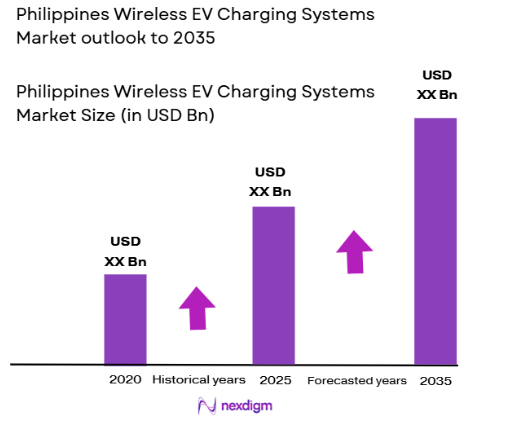
The Philippines Wireless EV Charging Systems Market is valued at approximately USD ~ billion based on a recent historical assessment, driven primarily by increasing electric vehicle adoption, government electrification initiatives, and investments in smart mobility infrastructure. The market is supported by pilot deployments of wireless charging in urban environments and public transport systems. Advancements in inductive charging technologies and integration with renewable energy systems are further accelerating demand for efficient, cable-free charging solutions.
Metro Manila, Cebu, and Davao are the dominant urban centers due to higher EV adoption, better infrastructure readiness, and strong government-backed smart city initiatives. These regions benefit from concentrated investments in transportation electrification and public-private partnerships. International influence from countries such as Japan and South Korea also supports technology transfer and infrastructure development, enabling these cities to lead in wireless charging adoption through advanced urban planning and higher consumer awareness.
Market Segmentation
By System Type
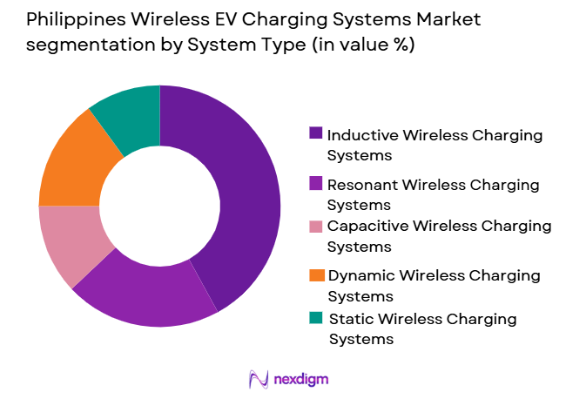
Philippines Wireless EV Charging Systems market is segmented by system type into inductive wireless charging systems, resonant wireless charging systems, capacitive wireless charging systems, dynamic wireless charging systems, and static wireless charging systems. Recently, inductive wireless charging systems have a dominant market share due to strong compatibility with existing EV platforms, proven reliability, and widespread pilot deployments. Infrastructure readiness and OEM alignment further support its dominance, as it requires less complex integration compared to emerging technologies. Consumer preference for stable and efficient charging solutions also reinforces its leading position.
By End User
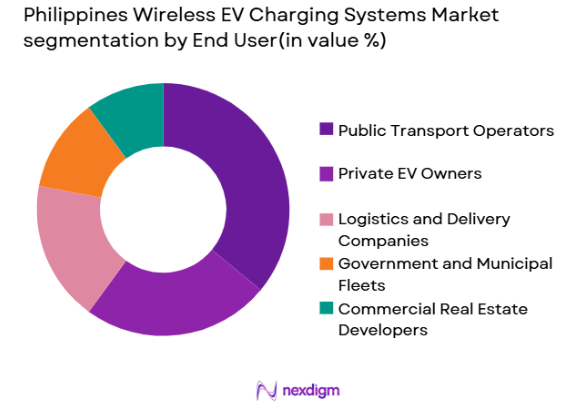
Philippines Wireless EV Charging Systems market is segmented by End User into private EV owners, public transport operators, logistics and delivery companies, government and municipal fleets, and commercial real estate developers. Recently, public transport operators have a dominant market share due to increasing electrification of bus fleets and government-backed initiatives promoting sustainable urban mobility. Continuous operation requirements and the need for efficient turnaround times make wireless charging highly suitable, while infrastructure investments in public transit hubs further accelerate adoption.
Competitive Landscape
The Philippines Wireless EV Charging Systems Market is moderately consolidated, with global technology providers collaborating with regional infrastructure developers. Major players influence market direction through innovation in inductive and dynamic charging technologies, while partnerships with governments and OEMs strengthen market presence. Competition is driven by efficiency, scalability, and integration capabilities.
| Company Name | Establishment Year | Headquarters | Technology Focus | Market Reach | Key Products | Revenue | Charging Efficiency Capability |
| WiTricity Corporation | 2007 | USA | ~ | ~ | ~ | ~ | ~ |
| ElectReon Wireless | 2013 | Israel | ~ | ~ | ~ | ~ | ~ |
| Momentum Dynamics | 2009 | USA | ~ | ~ | ~ | ~ | ~ |
| Plugless Power | 2010 | USA | ~ | ~ | ~ | ~ | ~ |
| HEVO Inc | 2011 | USA | ~ | ~ | ~ | ~ | ~ |
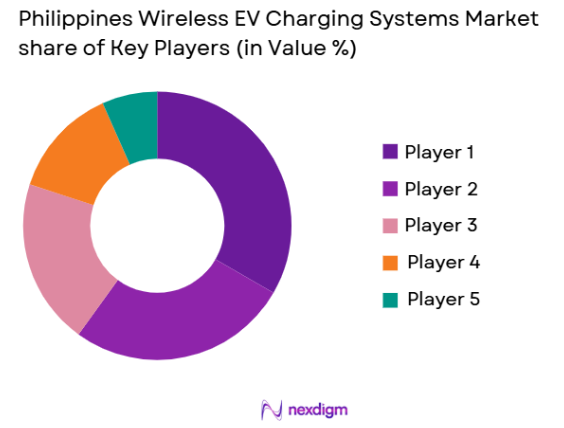
Philippines Wireless EV Charging Systems Market Analysis
Growth Drivers
Expansion of Electric Vehicle Adoption in Urban Transport Systems
Increasing adoption of electric vehicles across urban transport networks is a major driver for the Philippines Wireless EV Charging Systems Market, as cities aim to reduce emissions and modernize mobility infrastructure. Government-backed electrification programs are encouraging the replacement of traditional fuel-based vehicles with electric alternatives, particularly in public transportation sectors such as buses and taxis. Wireless charging systems are gaining traction due to their ability to minimize downtime and enhance operational efficiency for fleet operators. Infrastructure development aligned with smart city initiatives is also supporting the deployment of wireless charging technologies in key urban areas. The rising cost of fossil fuels further incentivizes fleet electrification, creating additional demand for innovative charging solutions. Consumer awareness regarding sustainable transportation is improving, which supports private EV adoption as well. Integration with renewable energy sources enhances the attractiveness of wireless charging systems. Continuous improvements in battery technology are also increasing the viability of wireless charging. As a result, the demand for efficient and automated charging infrastructure continues to grow across urban mobility ecosystems.
Government Initiatives Supporting Smart Mobility and EV Infrastructure
Strong policy support from the government is accelerating the development of wireless EV charging systems through incentives, subsidies, and infrastructure investments. National electrification goals and environmental sustainability targets are encouraging both public and private stakeholders to invest in advanced charging technologies. Regulatory frameworks are being developed to standardize wireless charging systems, improving interoperability and safety compliance. Public-private partnerships are facilitating large-scale infrastructure projects, particularly in metropolitan areas. Financial incentives for EV adoption indirectly boost demand for supporting charging infrastructure. Smart city programs are integrating wireless charging into urban planning, enhancing convenience and accessibility. Collaboration with international technology providers is enabling knowledge transfer and advanced system deployment. Infrastructure modernization efforts are focusing on reducing reliance on conventional energy sources. As a result, the policy environment is creating a strong foundation for sustained market growth and innovation.
Market Challenges
High Infrastructure Deployment Costs and Limited Scalability:
One of the primary challenges in the Philippines Wireless EV Charging Systems Market is the high initial investment required for infrastructure development. Wireless charging systems involve advanced components and installation processes that significantly increase capital expenditure compared to conventional charging systems. The need for specialized equipment and skilled labor further adds to the overall cost burden. Limited scalability in early-stage deployments also restricts widespread adoption across smaller cities and rural areas. Budget constraints among local governments can delay infrastructure expansion projects. Private investors may hesitate due to uncertain return on investment in emerging markets. Maintenance and operational costs also remain relatively high, impacting long-term sustainability. The lack of economies of scale further exacerbates cost challenges. Consequently, the financial barriers continue to limit the pace of market expansion.
Lack of Standardization and Interoperability Across Charging Systems:
The absence of uniform standards for wireless EV charging systems presents a significant barrier to market growth in the Philippines. Different manufacturers use varying technologies and specifications, leading to compatibility issues across vehicle models and charging infrastructure. This lack of standardization creates uncertainty for both consumers and infrastructure developers. It also complicates large-scale deployment, as systems may require customization for different applications. Regulatory frameworks are still evolving, which delays the establishment of industry-wide standards. Interoperability challenges can increase costs and reduce system efficiency. Consumer confidence is affected when compatibility issues arise. Collaboration among stakeholders is necessary to address these challenges, but progress remains gradual. As a result, the lack of standardization continues to hinder seamless adoption and integration of wireless charging technologies.
Opportunities
Development of Dynamic Wireless Charging Infrastructure for Public Roads:
The implementation of dynamic wireless charging systems embedded in road infrastructure presents a significant opportunity for the Philippines market. This technology allows vehicles to charge while in motion, reducing the need for large battery capacities and frequent charging stops. Urban areas with heavy traffic congestion can benefit from continuous charging solutions, improving energy efficiency and vehicle utilization. Government initiatives focused on smart transportation systems support the feasibility of such projects. Collaboration with international technology providers can accelerate deployment and innovation. Pilot projects in key cities can demonstrate the effectiveness of dynamic charging systems. Infrastructure integration with existing road networks enhances scalability potential. Reduced dependency on stationary charging stations can lower overall infrastructure costs in the long term. As urban mobility evolves, dynamic charging systems are expected to play a critical role in transforming transportation ecosystems.
Expansion of Wireless Charging Integration in Commercial Real Estate and Smart Cities
The growing development of smart cities and commercial real estate projects offers a substantial opportunity for wireless EV charging systems. Developers are increasingly incorporating advanced charging infrastructure into residential complexes, office buildings, and retail spaces to attract environmentally conscious consumers. Wireless charging enhances convenience by eliminating the need for physical connectors, making it ideal for high-traffic environments. Integration with smart grid technologies allows efficient energy management and optimization. Government incentives for green building initiatives further support the adoption of wireless charging systems. Partnerships between real estate developers and technology providers can accelerate deployment. Urban planning strategies are increasingly prioritizing sustainable infrastructure. Consumer demand for seamless and automated charging experiences continues to rise. This trend is expected to drive significant growth in the commercial segment of the market.
Future Outlook
The Philippines Wireless EV Charging Systems Market is expected to witness steady growth over the next five years, driven by increasing EV adoption and advancements in wireless charging technologies. Government support through infrastructure investments and policy frameworks will enhance market expansion. Technological improvements in efficiency and interoperability will further strengthen adoption. Rising demand for smart mobility solutions and sustainable transport systems will continue to shape market development.
Major Players
- WiTricity Corporation
- Plugless Power
- ElectReon Wireless
- Momentum Dynamics Corporation
- Qualcomm Halo Technologies
- HEVO Inc
- Wave Charging
- Toshiba Infrastructure Systems
- Daihen Corporation
- Continental AG
- Bosch eMobility Solutions
- ZF Friedrichshafen AG
- InductEV Technologies
- Siemens Mobility
- ABB E-mobility
Key Target Audience
- Automotive OEMs
- EV Charging Infrastructure Developers
- Government and regulatory bodies
- Investments and venture capitalist firms
- Public Transport Operators
- Logistics and Fleet Companies
- Real Estate Developers
- Energy and Utility Providers
Research Methodology
Step 1: Identification of Key Variables
Key variables such as EV adoption rates, infrastructure development, regulatory policies, and technology advancements were identified. These variables were mapped to understand their direct and indirect impact on market growth and demand patterns.
Step 2: Market Analysis and Construction
Comprehensive analysis was conducted using primary and secondary data sources to construct the market model. Supply-demand dynamics, pricing trends, and technology adoption were evaluated to establish accurate market estimates.
Step 3: Hypothesis Validation and Expert Consultation
Initial findings were validated through expert consultations with industry professionals, technology providers, and policymakers. Feedback was incorporated to refine assumptions and ensure accuracy in market projections.
Step 4: Research Synthesis and Final Output
All insights were consolidated to produce a structured market report. Data triangulation techniques were used to ensure consistency, and final outputs were aligned with market realities and industry trends.

- Executive Summary
- Research Methodology (Definitions, Scope, Industry Assumptions, Market Sizing Approach, Primary & Secondary Research Framework, Data Collection & Verification Protocol, Analytic Models & Forecast Methodology, Limitations & Research Validity Checks)

- Market Definition and Scope
- Value Chain & Stakeholder Ecosystem
- Regulatory / Certification Landscape
- Sector Dynamics Affecting Demand
- Strategic Initiatives & Infrastructure Growth

- Growth Drivers
Rising electric vehicle adoption supported by national electrification policies
Expansion of smart city initiatives across major urban centers
Growing investment in EV infrastructure by private and public stakeholders
Technological advancements improving charging efficiency and convenience
Increasing demand for cable free and automated charging solutions - Market Challenges
High initial infrastructure deployment costs limiting scalability
Lack of standardized wireless charging protocols across manufacturers
Limited awareness and adoption among consumers and fleet operators
Grid integration challenges in densely populated urban areas
Technological inefficiencies in long distance wireless power transfer - Market Opportunities
Development of dynamic wireless charging roads for public transport
Partnerships between energy providers and automotive manufacturers
Expansion of wireless charging infrastructure in commercial spaces - Trends
Integration of IoT enabled smart charging management systems
Growing focus on interoperability across EV platforms
Adoption of renewable energy powered wireless charging stations
Increasing pilot projects for dynamic charging highways
Advancements in high efficiency power electronics for reduced energy loss - Government Regulations & Defense Policy
Implementation of EV incentives and infrastructure subsidies
Standards development for wireless charging safety and efficiency
Urban transport electrification mandates supporting infrastructure growth - SWOT Analysis
- Stakeholder and Ecosystem Analysis
- Porter’s Five Forces Analysis
- Competition Intensity and Ecosystem Mapping

- By Market Value, 2020-2025
- By Installed Units, 2020-2025
- By Average System Price, 2020-2025
- By System Complexity Tier, 2020-2025

- By System Type (In Value%)
Inductive Wireless Charging Systems
Resonant Wireless Charging Systems
Capacitive Wireless Charging Systems
Dynamic Wireless Charging Systems
Static Wireless Charging Systems - By Platform Type (In Value%)
Passenger Electric Vehicles
Commercial Electric Vehicles
Electric Two Wheelers
Electric Buses
Fleet and Logistics Vehicles - By Fitment Type (In Value%)
Factory Installed Systems
Aftermarket Retrofitted Systems
Portable Wireless Chargers
Embedded Road Charging Systems
Parking Lot Integrated Systems - By EndUser Segment (In Value%)
Private EV Owners
Public Transport Operators
Logistics and Delivery Companies
Government and Municipal Fleets
Commercial Real Estate Developers - By Procurement Channel (In Value%)
Direct OEM Procurement
Government Tenders and Contracts
Private Infrastructure Partnerships
Distributor and Dealer Networks
Online Procurement Platforms - By Material / Technology (in Value %)
Magnetic Induction Technology
Resonant Magnetic Coupling Technology
High Frequency Power Electronics
Silicon Carbide Based Systems
Smart Grid Integrated Systems

- Market structure and competitive positioning
- Market share snapshot of major players
- Cross Comparison Parameters (Charging Efficiency, Installation Cost, System Scalability, Energy Transfer Distance, Compatibility with Vehicle Types, Infrastructure Integration, Maintenance Requirements, Technology Maturity, Grid Connectivity, Safety Standards Compliance)
- SWOT Analysis of Key Players
- Pricing & Procurement Analysis
- Key Players
WiTricity Corporation
Plugless Power
ElectReon Wireless
Momentum Dynamics Corporation
Qualcomm Halo Technologies
HEVO Inc
Wave Charging
Toshiba Infrastructure Systems
Daihen Corporation
Continental AG Wireless Charging Division
Bosch eMobility Solutions
ZF Friedrichshafen Wireless Systems
InductEV Technologies
Siemens Mobility Charging Solutions
ABB E-mobility Wireless Division

- Rising preference for convenient and automated charging among private EV users
- Public transport operators focusing on reducing downtime through wireless systems
- Logistics companies adopting wireless charging for operational efficiency
- Government entities promoting wireless charging in urban mobility projects

- Forecast Market Value, 2026-2035
- Forecast Installed Units, 2026-2035
- Price Forecast by System Tier, 2026-2035
- Future Demand by Platform, 2026-2035


 Request a Sample
 Ask for Customization
 Get a Quote
 Enquire Now