

 Download PDF
Market Overview
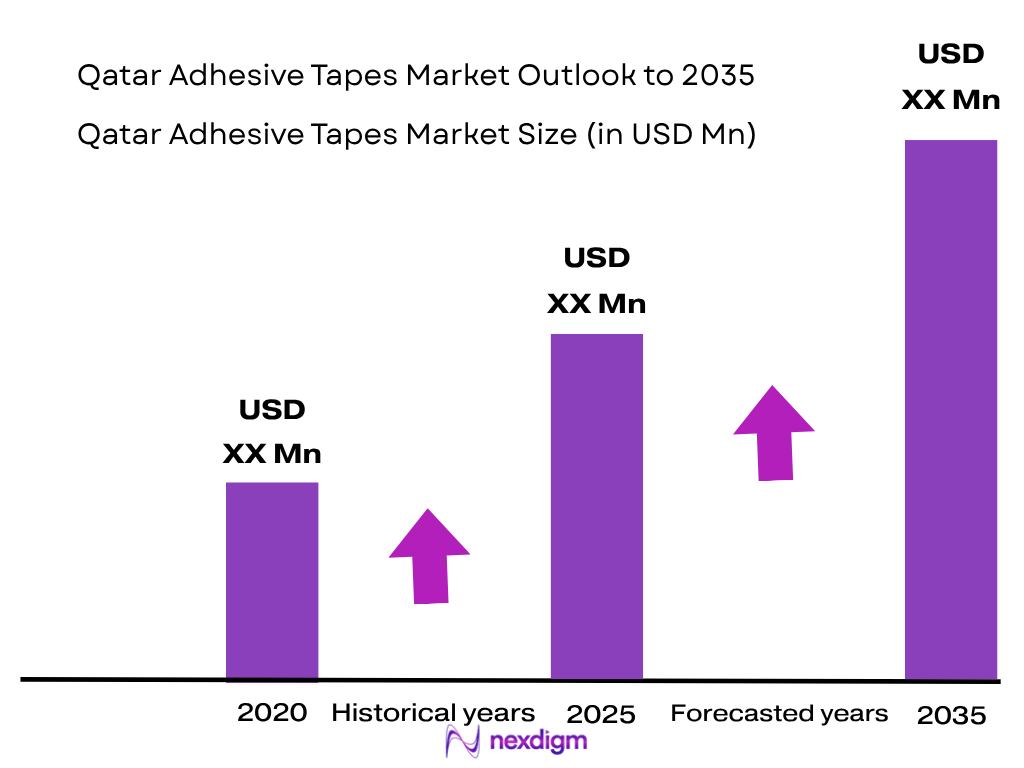
The Qatar Adhesive Tapes Market is valued at approximately USD ~ million, supported by construction, LNG, petrochemicals, packaging, logistics, HVAC and industrial maintenance. Qatar’s nominal GDP increased from QAR 775.3 billion to QAR 813.6 billion, while non-hydrocarbon GDP moved from QAR 470.8 billion to QAR 496.6 billion. Merchandise imports also reached QAR 34.4 billion in the first quarter, reinforcing demand for packaging, electrical, construction and industrial adhesive tapes across an import-intensive economy.
Doha, Ras Laffan, Mesaieed, Al Rayyan and Al Wakrah dominate Qatar’s adhesive tape demand because they combine commercial construction, logistics, LNG, petrochemicals, industrial maintenance and infrastructure activity. Doha and Al Rayyan contain most of the country’s population and commercial activity, while Ras Laffan spans 295 km² and hosts Qatar’s LNG processing base. Mesaieed covers approximately 104 km² and accommodates refining, petrochemicals and metals industries requiring high-performance maintenance, insulation and safety tapes.
Market Segmentation
By Product Type
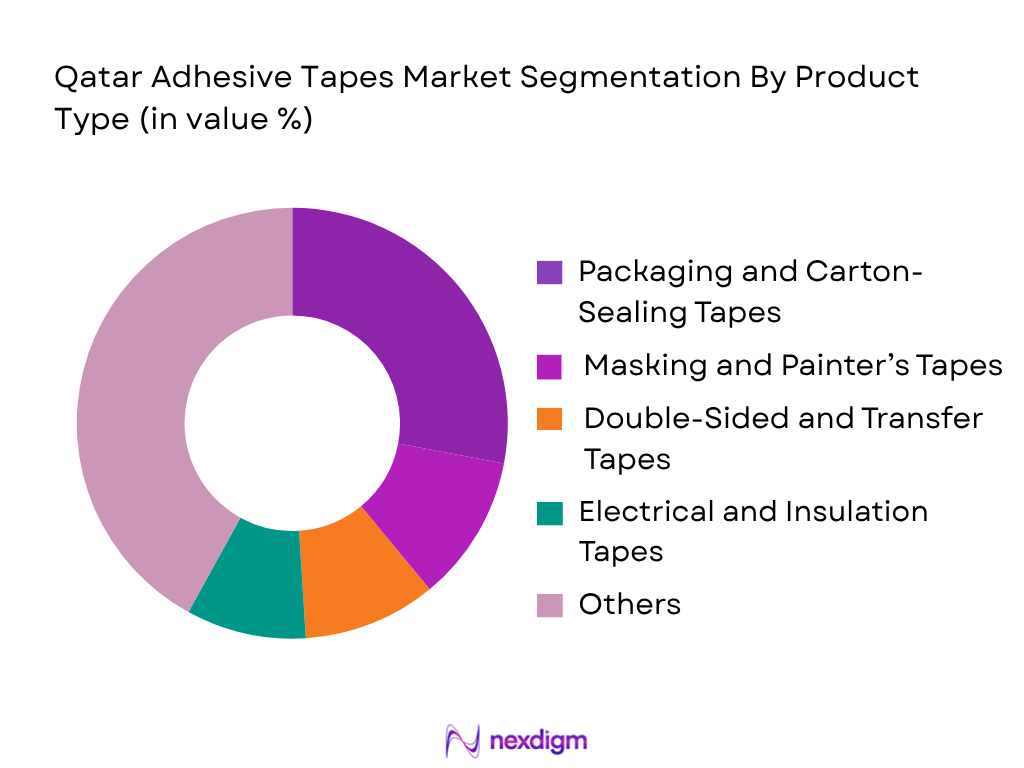
The Qatar Adhesive Tapes Market is segmented into packaging and carton-sealing tapes, masking tapes, double-sided tapes, duct and cloth tapes, electrical tapes, aluminum foil tapes, HVAC insulation tapes, foam tapes, pipe-wrapping tapes, automotive tapes, construction tapes and specialty industrial products. Packaging and carton-sealing tapes hold the dominant position because Qatar depends heavily on imported consumer, industrial and project materials. First-quarter merchandise imports reached QAR 34.4 billion, with machinery and transport equipment alone increasing by QAR 1.3 billion from the comparable period. Each imported product creates downstream requirements for cartons, warehouse handling, repacking, bundling and distribution. The growth of free-zone logistics infrastructure also supports recurring packaging-tape consumption. Hamad Port has connections to more than 40 ports, while Qatar Free Zones has expanded warehousing and regional distribution capacity. Specialty tapes remain strategically important because HVAC, oil and gas and construction applications require foil, insulation, corrosion-protection and high-temperature formats.
By End-Use Industry
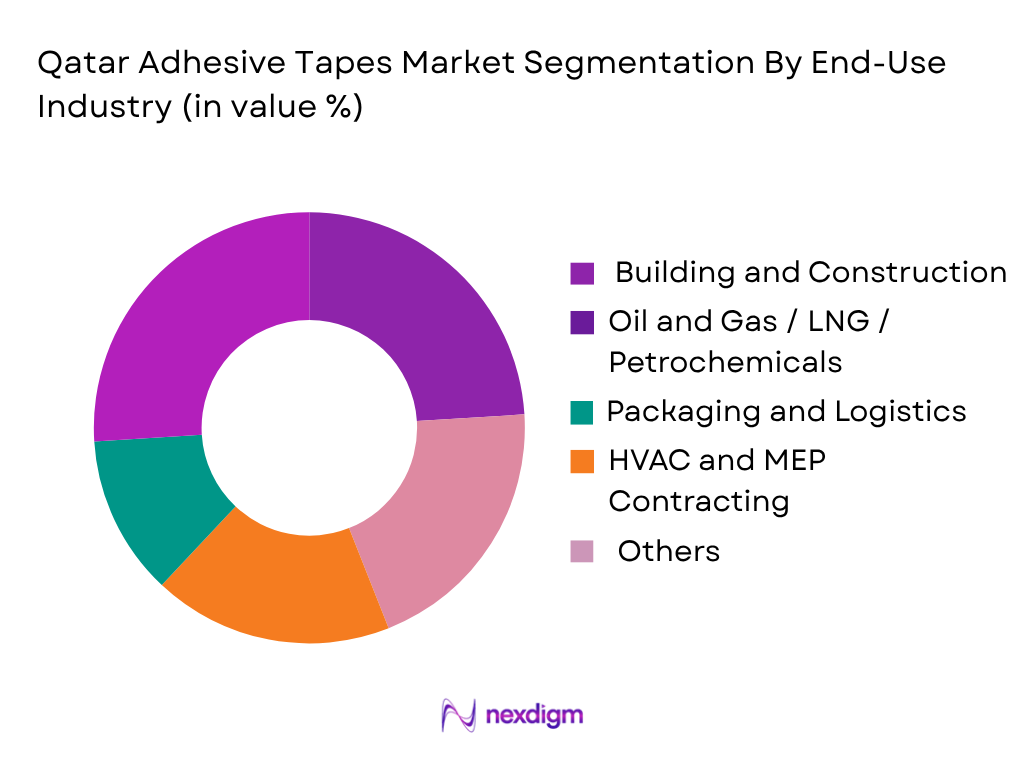
The Qatar Adhesive Tapes Market is segmented into building and construction, oil and gas, LNG and petrochemicals, packaging and logistics, HVAC and MEP contracting, automotive aftermarket, electrical applications, marine operations, healthcare and commercial facilities. Building and construction represent the leading end-use segment because adhesive tapes are widely used in HVAC ducting, insulation seaming, façade protection, painting, temporary surface protection, vapor barriers, floor marking and general MEP installation. Qatar’s National Planning Council continues to track building permits and completion certificates across all municipalities because construction remains an economically significant sector. Industrial demand is reinforced by LNG and petrochemicals. QatarEnergy’s Ras Laffan operations are being expanded from 77 million tonnes of LNG capacity toward 142 million tonnes, creating major requirements for maintenance materials, electrical insulation, corrosion protection, thermal insulation and safety identification. These applications generally require higher-performing tapes than standard packaging products.
Competitive Landscape
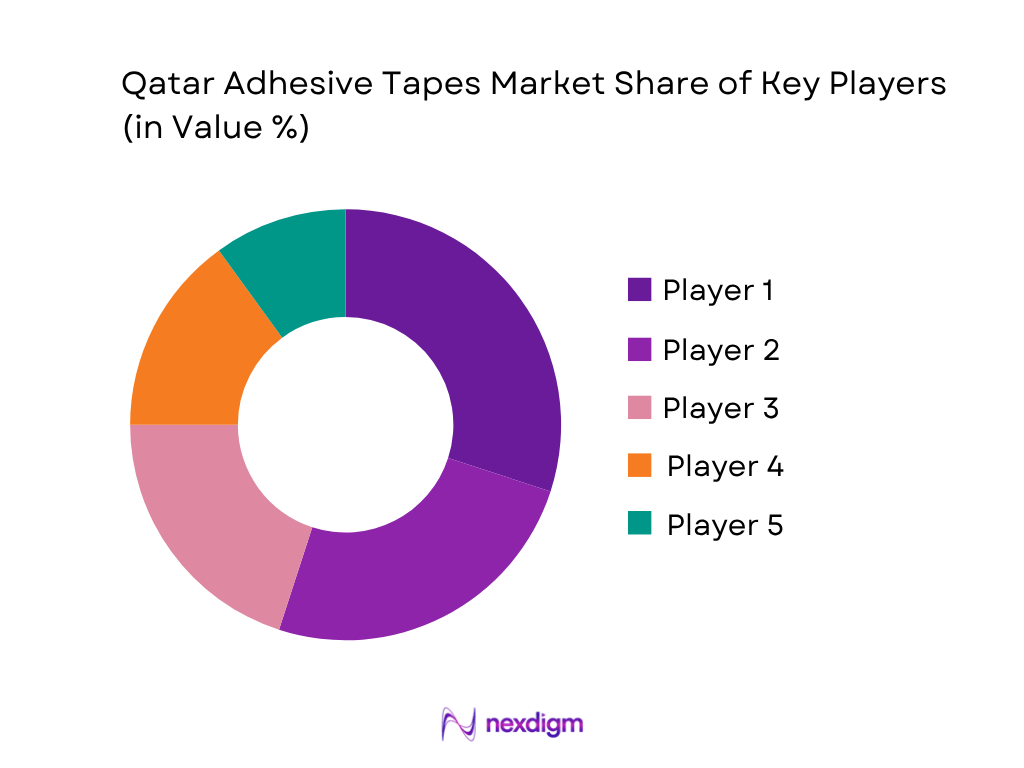
The Qatar Adhesive Tapes Market is characterized by global tape manufacturers supplying through regional offices, authorized distributors and specialist industrial suppliers. 3M, tesa, Nitto, Avery Dennison and Saint-Gobain compete primarily through product breadth, technical performance and application expertise, while regional and local distributors compete through immediate stock availability, project support and price responsiveness. Because many specialty applications require contractor or operator approval, the ability to provide datasheets, samples, compliance documentation and substitution guidance is an important competitive differentiator.
| Company | Establishment Year | Headquarters | Adhesive Technology Capability | Major Tape Portfolio | Key Qatar Applications | Qatar/GCC Presence | Technical Support Capability | Sustainability Positioning |
| 3M Company | 1902 | St. Paul, Minnesota, US | ~ | ~ | ~ | ~ | ~ | ~ |
| tesa SE | 2001 | Norderstedt, Germany | ~ | ~ | ~ | ~ | ~ | ~ |
| Nitto Denko Corporation | 1918 | Osaka, Japan | ~ | ~ | ~ | ~ | ~ | ~ |
| Avery Dennison Corporation | 1935 | Mentor, Ohio, US | ~ | ~ | ~ | ~ | ~ | ~ |
| Saint-Gobain Tape Solutions | 1665 | Courbevoie, France | ~ | ~ | ~ | ~ | ~ |
Qatar Adhesive Tapes Market Analysis
Growth Drivers
Expansion of LNG, Petrochemical and Industrial Maintenance Activity
Qatar’s expanding LNG and petrochemical infrastructure is strengthening the underlying consumption base for high-performance adhesive tapes used in insulation, electrical systems, pipe protection, identification, sealing and maintenance operations. IMF data place Qatar’s nominal hydrocarbon GDP at QAR 317.0 billion in 2024, while natural-gas production reached 118.7 million tonnes and crude-oil production stood at approximately 580,000 barrels per day. These operating volumes create substantial installed infrastructure requiring continuous inspection, maintenance and replacement materials. QatarEnergy’s North Field development is particularly relevant because the existing LNG system operates at 77 million tonnes per annum, while the North Field East development involves 4 additional LNG trains. The associated infrastructure includes processing trains, pipelines, electrical systems, storage facilities, utilities and supporting industrial installations where aluminum foil tapes, electrical insulation tapes, corrosion-protection tapes, glass-cloth tapes and high-temperature adhesive systems are applicable. Ras Laffan’s new petrochemical complex is also designed around a 1.9 million-tonne-per-annum ethane cracker, further broadening industrial maintenance requirements. Consequently, Qatar’s adhesive tape demand is increasingly linked not merely to construction cycles but to recurring maintenance requirements across a large hydrocarbon-processing asset base.
Construction, Packaging and Import-Dependent Commercial Activity
Qatar’s diversified non-hydrocarbon economy provides a second major demand engine for adhesive tapes through construction, packaging, warehousing, HVAC installation and commercial distribution. IMF data show nominal non-hydrocarbon GDP of QAR 496.6 billion in 2024, compared with QAR 470.8 billion in 2023, indicating an additional QAR 25.8 billion of nominal economic activity across sectors outside hydrocarbons. This is relevant to adhesive tapes because construction contractors consume masking, double-sided, foam, surface-protection, duct and aluminum-foil tapes, while wholesalers and logistics operators require carton-sealing, bundling and identification products. Qatar’s National Planning Council recorded merchandise imports of approximately QAR 34.4 billion during the first quarter of 2024, against exports of QAR 87.6 billion. Machinery and transport-equipment imports alone increased by approximately QAR 1.3 billion compared with the corresponding period. High merchandise inflows generate downstream carton handling, repacking, palletization, warehousing and distribution activity, supporting recurring packaging-tape consumption. Simultaneously, continuing building permits across Qatar’s municipalities maintain requirements for HVAC insulation tapes, electrical tapes, painter’s tapes and temporary surface-protection products, connecting adhesive-tape consumption directly with Qatar’s broader non-hydrocarbon investment and commercial ecosystem.
Market Challenges
High Import Dependence and Exposure to International Supply Chains
Qatar’s adhesive tapes industry remains highly dependent on imported finished tapes, specialty constructions, polymer films, adhesive systems and other industrial materials, creating procurement and inventory-management challenges for local distributors and end users. The National Planning Council recorded approximately QAR 34.4 billion of merchandise imports during the first quarter of 2024, demonstrating the scale of Qatar’s reliance on international supply channels for goods required across industrial and commercial activities. This structure is particularly important for specialized adhesive tapes because products used in LNG plants, electrical installations, HVAC systems and industrial maintenance frequently require specific temperature ratings, backing materials, adhesive chemistries and technical certifications that cannot readily be substituted with commodity alternatives. Qatar’s economy generated nominal GDP of QAR 813.6 billion in 2024, including QAR 317.0 billion from hydrocarbon activity and QAR 496.6 billion from non-hydrocarbon activity, meaning tape suppliers must serve a comparatively broad industrial economy despite limited domestic upstream tape manufacturing. Import dependence can therefore translate into longer replenishment cycles, higher safety-stock requirements and vulnerability to shipping disruptions. Specialized silicone, acrylic, polyimide, foil, foam and corrosion-protection products face greater supply complexity because application qualification limits the ability of industrial buyers to change products rapidly.
Harsh Operating Conditions and Technical Product Qualification Requirements
Qatar’s adhesive tape suppliers face a technically demanding operating environment because products deployed in LNG, petrochemical, construction, HVAC and outdoor infrastructure must maintain adhesion under heat, dust, moisture and prolonged environmental exposure. This challenge becomes more significant when considering the scale of the industrial assets requiring reliable materials. IMF data indicate 118.7 million tonnes of natural-gas production in 2024 and approximately 580,000 barrels per day of crude-oil production, while Qatar’s hydrocarbon GDP amounted to QAR 317.0 billion. These numbers demonstrate the extensive energy infrastructure within which specialty tapes may be used for electrical insulation, identification, thermal insulation, pipe wrapping, corrosion protection and maintenance. QatarEnergy’s existing LNG production infrastructure has 77 million tonnes per annum of capacity, making product reliability particularly important for suppliers serving industrial facilities. Standard commodity tapes may be unsuitable where substrates experience high temperatures, chemicals, UV radiation or sustained mechanical loads. Suppliers consequently need application-specific acrylic, silicone, foil, glass-cloth and corrosion-protection constructions. Product qualification, technical documentation and compatibility testing can extend sales cycles, while contractors must distinguish between inexpensive general-purpose products and technically approved tapes capable of maintaining performance throughout demanding industrial service conditions.
Market Opportunities
Specialty Tapes for LNG, HVAC and Industrial Infrastructure
Qatar’s large existing energy and infrastructure base creates an opportunity for suppliers to increase penetration of specialty adhesive tapes rather than relying primarily on commodity packaging products. Current economic indicators already provide a substantial demand foundation: IMF data record QAR 317.0 billion of nominal hydrocarbon GDP in 2024, natural-gas production of 118.7 million tonnes, and crude-oil production of approximately 580,000 barrels per day. QatarEnergy’s existing LNG infrastructure has 77 million tonnes per annum of production capacity, while North Field East includes 4 new LNG trains. Separately, the Ras Laffan petrochemical development incorporates a 1.9 million-tonne-per-annum ethane cracker. These current and committed industrial assets create a large installed base for maintenance, insulation, electrical and process-support materials. Tape manufacturers and distributors can therefore deepen portfolios in aluminum-foil HVAC tapes, high-temperature electrical tapes, glass-cloth products, corrosion-protection tapes, flame-retardant constructions, high-bond acrylic foam tapes and industrial identification products. The opportunity extends beyond initial project construction because LNG trains, petrochemical installations, pipelines, HVAC systems and electrical networks require ongoing maintenance. Suppliers offering local inventory, technical documentation, project qualification assistance and rapid replacement availability can capture recurring industrial demand more effectively.
Local Converting, Stocking and Packaging-Tape Solutions
Qatar’s combination of substantial merchandise imports and a large non-hydrocarbon economy creates an opportunity to develop local adhesive-tape converting, stocking, printing and application-specific distribution capabilities. Nominal non-hydrocarbon GDP reached QAR 496.6 billion in 2024, while total nominal GDP amounted to QAR 813.6 billion, demonstrating a sizeable economic base spanning construction, trade, transportation, hospitality, manufacturing and commercial services. Merchandise imports reached approximately QAR 34.4 billion in the first quarter of 2024, generating continuous movement of cartons, pallets, machinery, consumer goods and industrial inputs through Qatar’s logistics system. This creates an addressable customer base for BOPP carton-sealing tapes, printed security tapes, filament tapes, bundling tapes, warehouse floor-marking products and customized industrial rolls. Rather than establishing capital-intensive adhesive-coating plants, suppliers can pursue comparatively targeted localization through jumbo-roll importing, slitting, rewinding, printing and die-cutting. Such capabilities can reduce dependence on importing every finished roll specification while enabling customized widths, lengths, colors and printed formats for Qatar-based customers. Local stockholding can additionally support contractors and industrial maintenance teams requiring rapid replacement of foil, electrical, masking, foam and specialty tapes without waiting for international replenishment cycles.
Future Outlook
The Qatar Adhesive Tapes Market is forecast to expand at approximately ~X.X% CAGR during 2026–2035, with the final rate retained as a placeholder for the proprietary forecast. Future development will increasingly be supported by LNG expansion, petrochemical capacity, industrial maintenance, logistics infrastructure and continued non-hydrocarbon economic diversification. Specialty tapes capable of performing under high temperature, UV exposure, humidity and chemical contact should gradually gain greater commercial significance.
The most important structural opportunity comes from Qatar’s energy expansion. QatarEnergy is progressing North Field developments that will increase domestic LNG capacity from 77 million tonnes toward 142 million tonnes per annum. Its LNG fleet program also reached agreements covering 128 LNG carriers, indicating the scale of supporting logistics and marine infrastructure. Such developments require high-temperature tapes, electrical insulation, corrosion protection, HVAC products, safety marking and maintenance materials across plants, pipelines, warehouses and marine operations.
Major Players
- 3M Qatar
- tesa SE
- Nitto Denko Corporation
- Avery Dennison Corporation
- Saint-Gobain Tape Solutions
- Mativ / Scapa Industrial
- Intertape Polymer Group
- Shurtape Technologies
- Lohmann
- Advance Tapes International
- Barbhaya Industries
- AAB Industries LLC
- Protections W.L.L.
- World of Materials
- Aurexx Flexipackk Pvt. Ltd.
Key Target Audience
- Adhesive Tape Manufacturers
- Industrial and Specialty Tape Distributors
- Packaging, Logistics and Warehousing Companies
- Oil and Gas, LNG and Petrochemical Operators
- EPC, Construction, HVAC and MEP Contractors
- Raw Material, Film, Foam and Release-Liner Suppliers
- Investments and Venture Capitalist Firms
- Government and Regulatory Bodies (Ministry of Commerce and Industry, Qatar General Organization for Standards and Metrology, Ministry of Environment and Climate Change, Public Works Authority – Ashghal, Qatar Civil Defence, Qatar Free Zones Authority)
Research Methodology
Step 1: Identification of Key Variables
The initial phase involves creating a complete ecosystem map for the Qatar Adhesive Tapes Market, including global manufacturers, GCC distributors, local industrial suppliers, packaging users, EPC contractors, oil and gas operators and HVAC companies. Secondary research is used to identify critical variables such as product type, adhesive chemistry, backing materials, import dependency, application requirements, local stocking levels and end-user consumption patterns.
Step 2: Market Analysis and Construction
Historical market demand is assessed through top-down and bottom-up approaches. The top-down model evaluates construction activity, LNG and petrochemical operations, imports, logistics activity and non-hydrocarbon output, while the bottom-up model estimates supplier sales, imported volumes, distributor throughput and end-user consumption. Commodity packaging tapes are separated from specialty industrial products to reflect differences in application intensity and technical specification.
Step 3: Hypothesis Validation and Expert Consultation
Market hypotheses are validated through CATI and structured interviews with industrial distributors, contractors, packaging suppliers, oilfield procurement teams, HVAC suppliers and facility-management companies. Primary discussions evaluate purchasing cycles, brand preferences, project specifications, stock requirements, application failures, import lead times and willingness to accept equivalent products. These findings are used to refine preliminary market allocations and competitive positioning.
Step 4: Research Synthesis and Final Output
The final phase triangulates Qatar government statistics, international trade data, supplier information, infrastructure indicators and end-user application intensity. Product demand is cross-checked against construction, energy, logistics and maintenance activity. Forecast assumptions incorporate LNG expansion, non-hydrocarbon investment, local distribution development, sustainability requirements and the gradual adoption of higher-performance adhesive systems, creating the final market structure and strategic outlook.

- Executive Summary
- Research Methodology (Market Definition and Scope, Qatar Adhesive Tapes Taxonomy, Pressure-Sensitive Adhesive Tape Classification, Commodity and Specialty Tape Classification, Adhesive Chemistry Mapping, Backing Material Assessment, Tape Construction Framework, Adhesive Coating Technology Assessment, Application Mapping, Raw Material Assessment, Sustainable Tape Technology Evaluation, Market Sizing Framework)

- Definition and Scope
- Qatar Adhesive Tapes Industry Evolution and Pressure-Sensitive Adhesive Technology
- Development
- Adhesive Tape Manufacturing and Coating Process
- Adhesive Tape Value Chain Analysis
- Qatar Adhesive Tapes Supply Chain Analysis
- Adhesive Resin, Backing Material and Release-Liner Ecosystem Analysis
- Qatar Adhesive Tapes Import Dependency and Localization Assessment
- Industrial Adhesive Tape Application Architecture and Specialty Tape Solution Framework

- Growth Drivers (Expansion of LNG Projects, Growth of Petrochemical and Industrial Maintenance Activity, Construction and Infrastructure Development, Increasing HVAC and MEP Installations, Expansion of Packaging and Logistics Activity, Rising Oil and Gas Maintenance Requirements, Growth of Commercial Facilities, Increasing Adoption of High-Performance Specialty Tapes)
- Market Challenges (High Import Dependence, Limited Local Coating Capacity, Extreme Heat and UV Exposure, Price Competition in Commodity Packaging Tapes, Specialty Tape Lead-Time Constraints, Project-Based Demand Volatility, Oil and Gas Qualification Requirements, Fragmented Distribution Structure)
- Market Opportunities (LNG Facility Maintenance Tapes, Pipeline Corrosion Protection Tapes, HVAC Foil and Insulation Tapes, Sustainable Packaging Tapes, Locally Converted Printed BOPP Tapes, High-Bond Construction Tapes, Automotive Surface Protection Tapes, Specialized Marine and Industrial Tapes)
- Market Trends (High-Temperature Acrylic Tapes, UV-Resistant Outdoor Tapes, Printed Packaging Tapes, Aluminum Foil HVAC Tapes, High-Bond Foam Tapes, Paper-Based Packaging Tapes, Custom Roll Conversion, Application-Specific Industrial Tape Solutions)
- Regulatory and Standards Landscape (Qatar Civil Defence Fire Safety Requirements, Qatar Construction Specifications, Ashghal Project Material Approval Requirements, Qatar General Organization for Standards and Metrology Requirements, Electrical Installation Material Standards, Building Insulation and HVAC Material Requirements, Occupational Health and Safety Requirements, ASTM and ISO Adhesive Tape Testing Requirements)
- SWOT Analysis
- Porter’s Five Forces Analysis
- PESTLE Analysis
- Stakeholder Ecosystem
- Competition Ecosystem

- By Market Value (2020-2025)
- By Adhesive Tape Consumption Volume (2020-2025)
- By Coated Surface Area (2020-2025)
- By Domestic Conversion Volume (2020-2025)
- By Import Volume (2020-2025)
- By Re-Export Volume (2020-2025)
- By Average Selling Price (2020-2025)
- By Commodity Adhesive Tape Consumption (2020-2025)
- By Specialty Adhesive Tape Consumption (2020-2025)

- By Product Type (In Value %)
Packaging and Carton Sealing Tapes
Masking and Painter’s Tapes
Double-Sided Tapes
Transfer Tapes
Duct and Cloth Tapes
Electrical and Insulation Tapes
Aluminum Foil Tapes
HVAC Insulation Tapes
Foam Tapes
Filament and Strapping Tapes
Pipe Wrapping and Corrosion Protection Tapes
Automotive Adhesive Tapes
Construction and Building Tapes
Surface Protection Tapes
Specialty High-Performance Industrial Tapes - By Adhesive Chemistry (In Value %)
Acrylic Adhesives
Natural Rubber Adhesives
Synthetic Rubber Adhesives
Hot-Melt Rubber Adhesives
Silicone Adhesives
Butyl Adhesive Systems
Hybrid Adhesive Systems - By Backing Material (In Value %)
Biaxially Oriented Polypropylene Film
Polyethylene Film
Polyvinyl Chloride Film
Polyethylene Terephthalate Film
Paper
Cloth and Fabric
Aluminum Foil
Copper Foil
Foam
Nonwoven Materials
Polyimide Film
Glass Cloth
Bituminous and Protective Wrap Backings - By End-Use Industry (In Value %)
Building and Construction
Oil and Gas
LNG and Petrochemicals
Packaging and Logistics
HVAC and MEP Contracting
Automotive Aftermarket
Electrical and Electronics
Industrial Manufacturing
Marine and Ship Maintenance
Transportation and Rail
Warehousing and Distribution
Food and Beverage Packaging
Healthcare
Commercial Facilities - By Distribution Channel (In Value %)
Direct Manufacturer-to-Key Account Sales
Authorized Industrial Distributors
Adhesive Tape Converters
Packaging Material Distributors
Construction Material Distributors
HVAC and Insulation Material Suppliers
Oilfield and Industrial Supply Companies
Electrical Material Distributors
Automotive Aftermarket Distributors
Industrial MRO Suppliers - By Region (In Value %)
Doha
Al Rayyan
Al Wakrah
Umm Salal
Al Daayen
Al Khor and Al Thakhira
Al Shamal
Al Shahaniya
Ras Laffan Industrial City
Mesaieed Industrial City
Dukhan
Hamad Port and Logistics Zones

- Market Share of Major Players (By Revenue, Volume, Product Type, Adhesive Chemistry, Backing Material, End-Use Industry, Market Type, Distribution Channel)
- Cross Comparison Parameters (Adhesive Chemistry Breadth, High-Temperature and UV-Resistant Tape Capability, Qatar Stocking and Distribution Footprint, Oil and Gas and LNG Application Coverage, Construction and HVAC Specialty Tape Capability, Technical Application and Project Qualification Support, Custom Slitting and Converting Capability, Sustainable and Low-VOC Tape Portfolio)
- SWOT Analysis of Major Players
- Competitive Positioning Matrix
- Product and Technology Portfolio Benchmarking
- Pricing and Distribution Network Benchmarking
- Market Entry Strategy Assessment
- Detailed Profiles of Major Companies
3M Qatar
tesa SE
Nitto Denko Corporation
Avery Dennison Corporation
Saint-Gobain Tape Solutions
Mativ / Scapa Industrial
Intertape Polymer Group
Shurtape Technologies
Lohmann
Advance Tapes International
Barbhaya Industries
AAB Industries LLC
Protections W.L.L.
World of Materials
Aurexx Flexipackk Pvt. Ltd.

- Buyer Segmentation
- EPC Contractor Procurement Behaviour
- Supplier Selection Criteria
- Buyer Pain Points
- Technology Adoption Assessment
- Replacement and Repurchase Behaviour

- By Market Value (2026-2035)
- By Adhesive Tape Consumption Volume (2026-2035)
- By Coated Surface Area (2026-2035)
- By Domestic Conversion Volume (2026-2035)
- By Import Volume (2026-2035)
- By Re-Export Volume (2026-2035)
- By Average Selling Price (2026-2035)
- By Commodity Adhesive Tape Consumption (2026-2035)
- By Specialty Adhesive Tape Consumption (2026-2035)


 Request a Sample
 Ask for Customization
 Get a Quote
 Enquire Now