
 Download PDF
 Download PDF
Market Overview
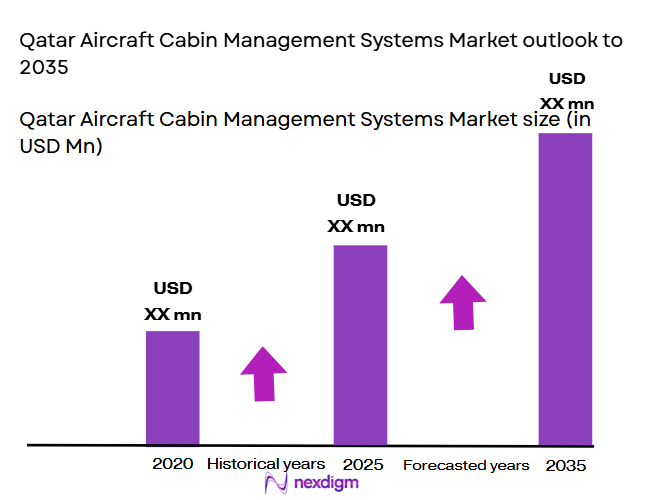
The Qatar Aircraft Cabin Management Systems market is valued at approximately USD ~ billion, driven by the increasing demand for enhanced passenger experiences and advancements in cabin technology. The market growth is primarily fueled by the rising adoption of innovative systems such as in-flight entertainment, lighting control, and energy-efficient cabin solutions. In addition, increased investments in modernizing older fleets and integrating advanced technologies in newer aircrafts contribute to the expanding market size. The growth is also supported by a focus on premium in-flight services to attract high-value passengers.
Qatar, along with other Gulf Cooperation Council (GCC) countries, leads the market due to its flourishing aviation sector and government investments in aviation infrastructure. Qatar Airways has been a prominent player, helping the country maintain its position as a hub for aviation services. Other influential countries in the region, such as the UAE and Saudi Arabia, also have substantial market shares due to their strong airline fleets and high demand for advanced cabin systems. Their robust infrastructure, combined with a growing number of air passengers, positions these nations as key players in the aircraft cabin management systems market.
Market Segmentation
By System Type
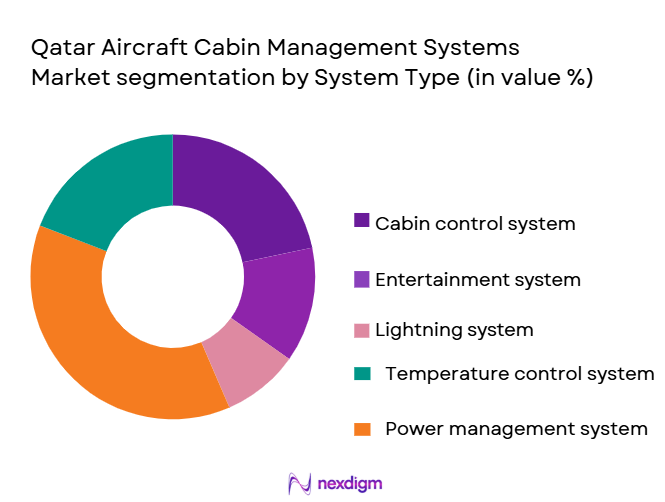
The Qatar Aircraft Cabin Management Systems market is segmented by system type into cabin control systems, entertainment systems, lighting systems, temperature control systems, and power management systems. Among these, cabin control systems dominate the market. This is due to the increasing need for integrated and smart cabin management solutions that allow passengers to control various aspects of their environment, such as lighting, temperature, and seat adjustments. Cabin control systems offer high levels of customization and personalization, making them a key feature in premium aircrafts. In addition, these systems are becoming increasingly advanced with wireless technology and automation, enhancing passenger comfort.
By Platform Type
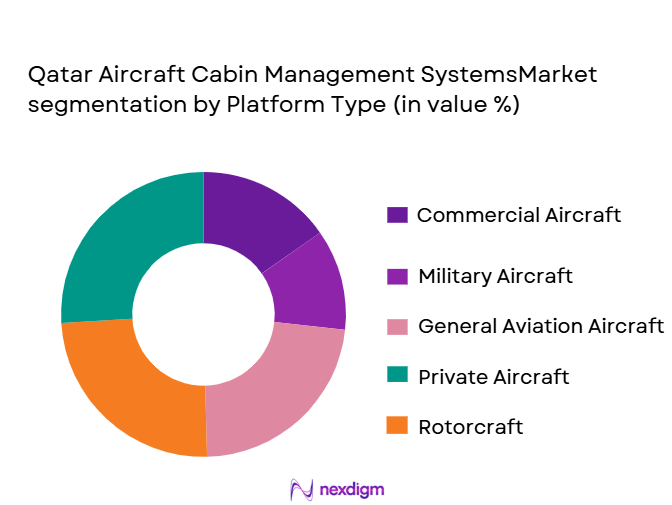
The market is segmented by platform type into commercial aircraft, private jets, cargo aircraft, regional aircraft, and military aircraft. The commercial aircraft segment holds the largest share, driven by the continuous growth in passenger air travel and the rising demand for more sophisticated cabin experiences. Commercial airlines are focusing on improving in-flight services to enhance passenger comfort, thereby increasing the demand for advanced cabin management systems. This segment is anticipated to maintain its dominance due to continuous investments in fleet upgrades and modernization, especially for long-haul flights.
Competitive Landscape
The Qatar Aircraft Cabin Management Systems market is highly competitive, with major global players such as Collins Aerospace, Honeywell Aerospace, and Thales Group dominating the industry. These companies leverage their extensive research and development capabilities and strong brand presence to provide advanced and reliable cabin management solutions to a wide range of aircraft platforms. The competition is further intensified by regional players who specialize in catering to the specific needs of Gulf-based airlines.
| Company Name | Establishment Year | Headquarters | R&D Investment | Product Portfolio | Regional Presence | Market Share |
| Collins Aerospace | 1934 | USA | ~ | ~ | ~ | ~ |
| Honeywell Aerospace | 1906 | USA | ~ | ~ | ~ | ~ |
| Thales Group | 1893 | France | ~ | ~ | ~ | ~ |
| Lufthansa Technik | 1995 | Germany | ~ | ~ | ~ | ~ |
| Panasonic Avionics | 1979 | USA | ~ | ~ | ~ | ~ |
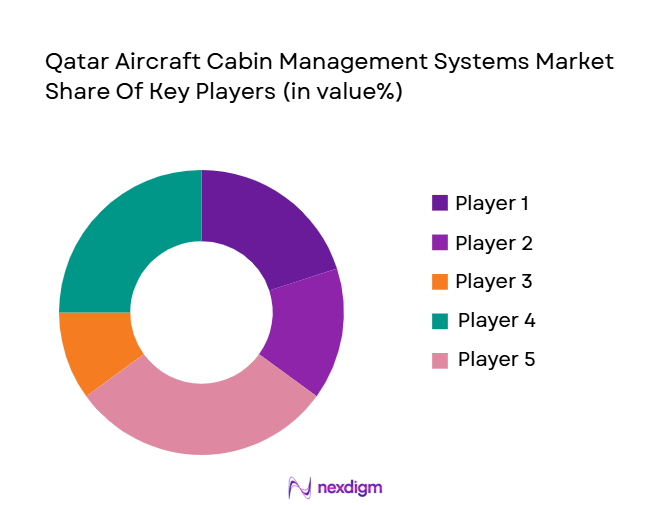
Qatar Aircraft Cabin Management Systems Market Analysis
Growth Drivers
Rising Passenger Comfort Expectations in Commercial Aviation
Passenger comfort expectations in commercial aviation have been consistently rising, leading airlines to prioritize cabin innovation. The global trend of enhancing in-flight experience is evident from the increasing spending on services like premium seating, advanced entertainment systems, and improved climate control. According to the International Civil Aviation Organization (ICAO), passenger traffic worldwide is expected to grow significantly, with over ~ billion passengers projected to fly in 2024, marking a rise from ~ billion in 2022. Airlines are investing heavily in aircraft cabin management systems to meet these expectations. The U.S. Federal Aviation Administration (FAA) reported that, as of 2023, approximately ~% of commercial airlines are in the process of upgrading their cabin environments, incorporating new technologies to improve both comfort and efficiency. Furthermore, passenger demand for improved amenities is leading to the development of more sophisticated, ergonomic cabin features.
Advancements in IoT and Connectivity Technologies
The rapid advancements in Internet of Things (IoT) and connectivity technologies have significantly impacted aircraft cabin management systems. The use of IoT-based solutions is enhancing passenger experience and operational efficiency. According to a 2024 report by the U.S. Department of Transportation, over ~% of commercial aircrafts now incorporate IoT-enabled systems that monitor cabin conditions, passenger needs, and maintenance schedules. The integration of ~G technology into aviation is also improving connectivity, allowing real-time monitoring and management of cabin systems. These technologies enable airlines to provide more personalized services, such as on-demand entertainment and tailored climate control. Additionally, with increased connectivity, airlines can now offer seamless communication between crew members, improving service efficiency.
Market Challenges
High Installation and Maintenance Costs
The high costs associated with the installation and maintenance of advanced cabin management systems remain a significant barrier for many airlines. The installation of modern, high-tech systems, such as in-seat entertainment, IoT integration, and enhanced climate control, requires significant upfront capital investment. According to the U.S. Federal Aviation Administration (FAA), airlines in North America and Europe reported average expenditure increases of ~% to `% per aircraft when upgrading their cabin management systems to state-of-the-art versions. Furthermore, maintenance costs for these systems can be substantial due to the complexity and integration of various technologies. As of 2024, airlines face growing pressure to balance these costs with competitive ticket pricing, especially in the wake of inflationary pressures and economic uncertainty.
Complexity in System Integration
The integration of modern aircraft cabin management systems with existing aircraft infrastructures remains a complex and challenging task. The systems require compatibility with various hardware components, software platforms, and internal airline systems. According to the European Aviation Safety Agency (EASA), around ~% of cabin management system installations face integration issues that delay deployment or lead to additional costs for customization. Airlines must often conduct extensive testing and re-certification procedures, which can result in costly delays. Additionally, airlines are working to ensure compatibility with legacy systems, leading to potential risks and uncertainties. These complexities are exacerbated by the rapid pace of technological evolution, which sometimes outpaces existing regulatory frameworks.
Market Opportunities
Growing Demand for Aircraft Modernization and Retrofit Projects
The global demand for aircraft modernization and retrofit projects is a key opportunity for cabin management system providers. As airlines seek to upgrade older fleets to remain competitive, retrofit projects that involve integrating modern cabin management systems are on the rise. The U.S. Department of Transportation reported that in 2024, over ~% of North American and European fleets are scheduled for retrofitting. These retrofits often involve the integration of new cabin management systems, such as advanced lighting, entertainment, and IoT-driven solutions. This growing trend is supported by the aging of the global fleet, with the average age of commercial jets now surpassing 11 years. Airlines are looking to extend the life of these aircraft by modernizing their cabins to meet evolving passenger expectations.
Technological Advancements in AI and Automation for Cabin Management
Technological advancements in artificial intelligence (AI) and automation are transforming the aircraft cabin management systems market. AI is being leveraged to improve customer personalization, optimize cabin temperature control, and predict maintenance needs. In 2024, the Federal Aviation Administration (FAA) noted a 10% year-on-year increase in AI-powered systems being adopted for cabin management. Automation technologies, such as self-adjusting lighting and climate systems, are increasingly being integrated to provide passengers with enhanced comfort. These innovations are expected to create new growth avenues for the market as airlines adopt AI-driven solutions to improve operational efficiency and service delivery.
Future Outlook
Over the next decade, the Qatar Aircraft Cabin Management Systems market is expected to experience continued growth, driven by increasing demand for high-quality passenger experiences and advancements in technology. The growing fleet size, particularly in commercial aircraft, will fuel the adoption of next-generation cabin management systems. Innovations in wireless connectivity, energy efficiency, and smart cabin solutions will further propel market growth. Additionally, the ongoing investment in retrofitting older aircraft fleets with modern cabin systems will create significant opportunities for manufacturers.
Major Players
- Collins Aerospace
- Honeywell Aerospace
- Thales Group
- Lufthansa Technik
- Panasonic Avionics
- Rockwell Collins
- Astronics Corporation
- Zodiac Aerospace
- Diehl Aviation
- Safran Cabin
- Embraer
- Garmin
- UTC Aerospace
- Teledyne Controls
- Boeing
Key Target Audience
- Investments and venture capitalist firms
- Government and regulatory bodies (e.g., Qatar Civil Aviation Authority, Civil Aviation Authority of UAE)
- Commercial airlines
- Aircraft manufacturers
- Aircraft maintenance providers
- Private jet owners
- Military and defense contractors
- OEM (Original Equipment Manufacturer) suppliers
Research Methodology
Step 1: Identification of Key Variables
In this phase, we will identify the key market variables that influence the growth and dynamics of the Qatar Aircraft Cabin Management Systems market. This will involve analyzing stakeholder interests, technological innovations, and regulatory frameworks that drive the market.
Step 2: Market Analysis and Construction
This step involves compiling and analyzing historical data for the Qatar Aircraft Cabin Management Systems market. The market analysis will focus on demand trends, growth drivers, and technological advancements within the aviation industry.
Step 3: Hypothesis Validation and Expert Consultation
Market hypotheses will be tested through consultations with industry experts, including those from leading manufacturers and airlines. These consultations will provide practical insights and validate assumptions made in the preliminary analysis.
Step 4: Research Synthesis and Final Output
The final research will include engagement with key stakeholders and market players to finalize data and insights. This step will ensure the accuracy and reliability of the forecast and provide a comprehensive understanding of the market.

- Executive Summary
- Research Methodology (Definitions, Scope, Industry Assumptions, Market Sizing Approach, Primary & Secondary Research Framework, Data Collection & Verification Protocol, Analytic Models & Forecast Methodology, Limitations & Research Validity Checks)

- Market Definition and Scope
- Value Chain & Stakeholder Ecosystem
- Regulatory / Certification Landscape
- Sector Dynamics Affecting Demand
- Strategic Initiatives & Infrastructure Growth

- Growth Drivers
Rising passenger comfort expectations in commercial aviation
Advancements in IoT and connectivity technologies
Increased demand for energy-efficient cabin management solutions - Market Challenges
High installation and maintenance costs
Complexity in system integration
Regulatory hurdles and certification processes - Market Opportunities
Growing demand for aircraft modernization and retrofit projects
Technological advancements in AI and automation for cabin management
Increasing investment in military aircraft and defense aviation - Trends
Integration of 5G connectivity for in-flight services
Shift towards wireless and touchless cabin management systems
Sustainability trends driving eco-friendly cabin designs

- By Market Value 2020-2025
- By Installed Units 2020-2025
- By Average System Price 2020-2025
- By System Complexity Tier 2020-2025

- By System Type (In Value%)
Cabin Control Systems
Lighting Systems
Entertainment Systems
Temperature Control Systems
Power Management Systems - By Platform Type (In Value%)
Commercial Aircraft
Private Jets
Cargo Aircraft
Regional Aircraft
Military Aircraft - By Fitment Type (In Value%)
Linefit
Retrofit
OEM (Original Equipment Manufacturer)
Aftermarket Installations
Custom Fitments - By EndUser Segment (In Value%)
Aircraft Manufacturers
Airline Operators
Aircraft Maintenance Providers
Aviation Technology Suppliers
Government & Military - By Procurement Channel (In Value%)
Direct Procurement
Third-Party Procurement
Distributor Networks
Online Procurement
Government Contracts

- Market Share Analysis
- Cross Comparison Parameters
(System Integration, System Complexity, Platform Types, Procurement Channel, Regional Demand) - SWOT Analysis of Key Competitors
- Pricing & Procurement Analysis
- Key Players
Collins Aerospace
Honeywell Aerospace
Thales Group
Lufthansa Technik
Panasonic Avionics
Rockwell Collins
Astronics Corporation
Zodiac Aerospace
Diehl Aviation
Safran Cabin
Embraer
Garmin
UTC Aerospace
Teledyne Controls
Boeing

- Commercial airlines investing in cabin upgrades
- Private jet owners seeking personalized cabin experiences
- Military forces focusing on next-generation cabin technology
- Airlines adapting to post-pandemic shifts in passenger needs

- Forecast Market Value 2026-2035
- Forecast Installed Units 2026-2035
- Price Forecast by System Tier 2026-2035
- Future Demand by Platform 2026-2035


 Request a Sample
 Ask for Customization
 Get a Quote
 Enquire Now