

 Download PDF
 Download PDF
Market Overview
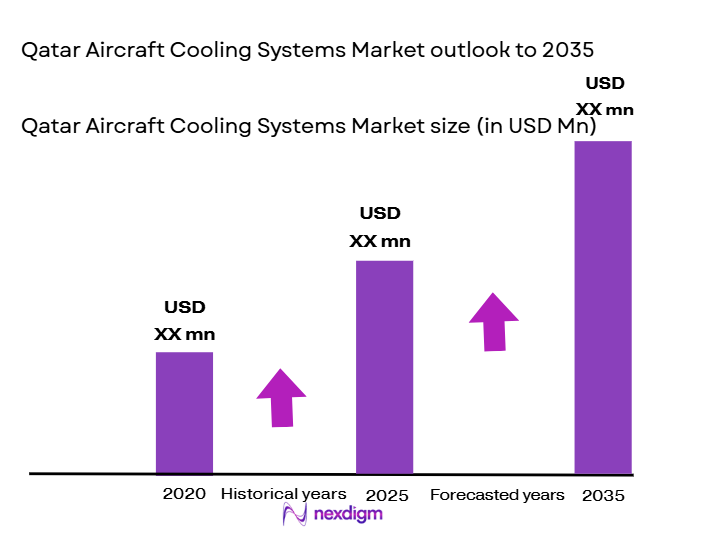
The Qatar Aircraft Cooling Systems market is driven by the rapid expansion of the aviation sector, propelled by increasing air traffic and fleet modernization efforts by airlines and governmental bodies. As of 2023, the market is valued at approximately USD ~ million, with a growth trajectory supported by technological advancements in cooling systems aimed at enhancing energy efficiency and reducing operating costs for aircraft operators. The sector’s growth is also influenced by government initiatives to modernize Qatar’s aviation infrastructure and adopt sustainable technologies, in line with Qatar’s National Vision 2030.
Qatar has emerged as a dominant player in the aircraft cooling systems market due to its strong aviation sector, with major international airlines operating in the region, including Qatar Airways. The strategic position of Qatar as a hub for air traffic between Europe, Asia, and Africa boosts the demand for advanced aircraft cooling systems, which are crucial in maintaining cabin comfort and system efficiency. Furthermore, the nation’s commitment to hosting global events, such as the FIFA World Cup 2022, has further accelerated the need for state-of-the-art aircraft technology.
Market Segmentation
By System Type
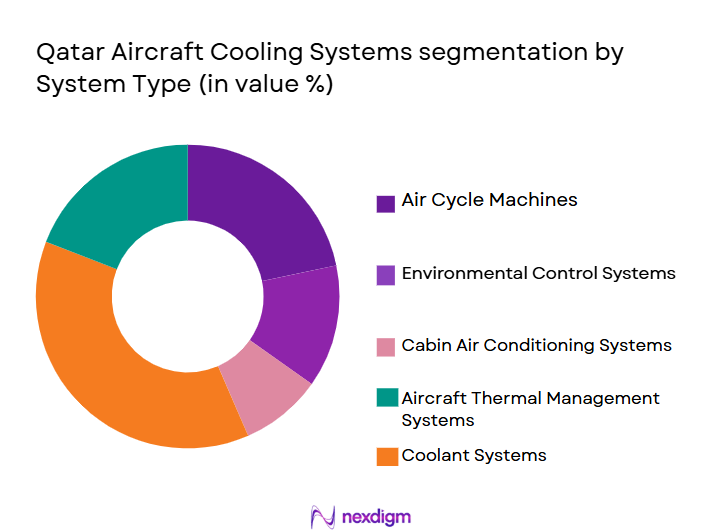
The Qatar Aircraft Cooling Systems market is segmented by system type into air cycle machines, environmental control systems, cabin air conditioning systems, aircraft thermal management systems, and coolant systems. The dominant segment in 2024 is expected to be air cycle machines, driven by their reliability, efficiency, and long operational lifespan. Air cycle machines play a vital role in maintaining cabin temperature and pressurization at high altitudes, making them a crucial component in modern aircraft, particularly in commercial and military aviation. These systems are widely used in Qatar’s aviation sector due to their ability to operate efficiently across various types of aircraft, ranging from commercial jets to military and private aircraft.
By Platform Type
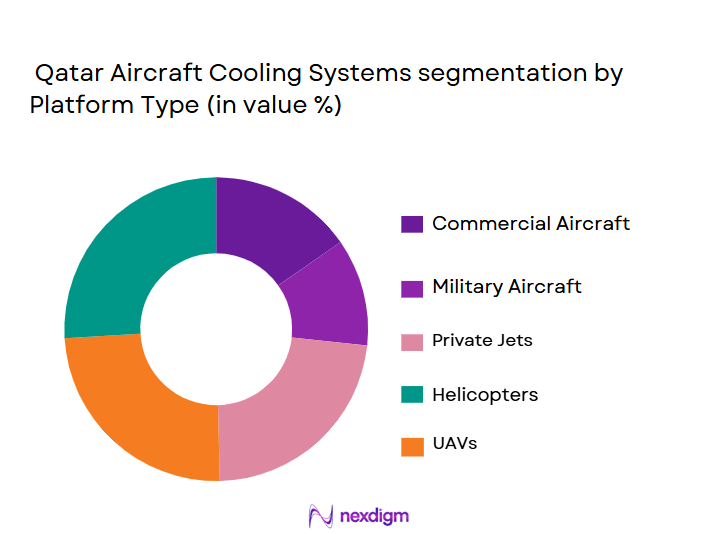
The platform type segment is divided into commercial aircraft, military aircraft, private jets, helicopters, and unmanned aerial vehicles (UAVs). The commercial aircraft segment is the largest in the market, accounting for the majority of the market share in 2024. This is largely due to the significant number of commercial flights operating through Qatar’s international airports, particularly Qatar Airways, which operates a large fleet of aircraft requiring sophisticated cooling systems for optimal performance. The need for consistent cabin temperature regulation and efficient thermal management in these high-demand aircraft ensures the dominance of this segment in the market.
Competitive Landscape
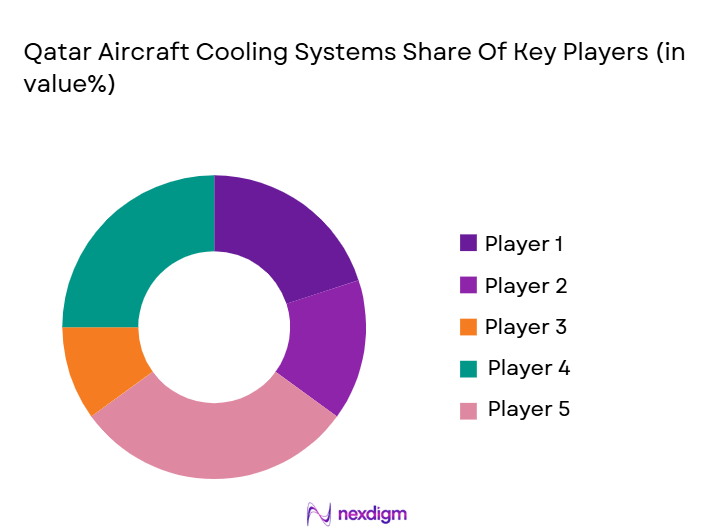
The Qatar Aircraft Cooling Systems market is dominated by a few major players, including both international manufacturers and regional companies. Key companies in the market include Rolls-Royce, Honeywell International, and Safran, all of which offer advanced cooling and environmental control systems. These companies leverage their global presence, technological expertise, and established relationships with aircraft manufacturers and airlines to maintain a stronghold in the region. The competitive landscape reflects the increasing consolidation of market players focusing on enhancing system performance and meeting the rigorous demands of the aerospace industry.
| Company Name | Establishment Year | Headquarters | Product Portfolio | Technology Integration | Market Presence | Innovation Focus |
| Rolls-Royce | 1904 | United Kingdom | ~ | ~ | ~ | ~ |
| Honeywell International | 1885 | United States | ~ | ~ | ~ | ~ |
| Safran | 2005 | France | ~ | ~ | ~ | ~ |
| Collins Aerospace | 2018 | United States | ~ | ~ | ~ | ~ |
| Lufthansa Technik | 1995 | Germany | ~ | ~ | ~ | ~ |
Qatar aircraft cooling systems Market Dynamics
Growth Drivers
Increasing air traffic and aircraft fleet expansion
The growth of international and domestic air travel in Qatar has led to an increase in the demand for aircraft. The expanding fleet of commercial and private jets requires advanced cooling systems to ensure optimal performance. As Qatar’s aviation industry continues to grow, air traffic and fleet expansion significantly contribute to the increasing need for modern aircraft cooling technologies.
Rising demand for energy-efficient aircraft systems
With a growing emphasis on sustainability and fuel efficiency, airlines are increasingly adopting energy-efficient aircraft systems. Aircraft cooling systems play a crucial role in this, as modern technologies help reduce fuel consumption and improve overall system efficiency. This shift is driving the demand for advanced, energy-efficient cooling solutions in Qatar’s aviation sector.
Market Challenges
High initial installation and maintenance costs
One of the major challenges in the Qatar Aircraft Cooling Systems market is the high cost associated with installing and maintaining advanced cooling systems. These systems require significant upfront investments, and ongoing maintenance can be expensive due to their complexity. These financial challenges can deter smaller operators or new entrants in the market from adopting the latest cooling technologies.
Complexities in system integration with aircraft
Integrating new aircraft cooling systems with existing aircraft can be a complex process. It involves adapting new technologies to match specific aircraft designs and ensuring compatibility with other onboard systems. This complexity can lead to delays, increased costs, and technical difficulties, making it a key challenge for companies in the market.
Market Opportunities
Development of eco-friendly and sustainable cooling systems
The growing focus on sustainability and environmental responsibility presents a significant opportunity for the development of eco-friendly cooling systems. By adopting refrigerants and materials that have a lower environmental impact, manufacturers can tap into the rising demand for greener solutions in the aviation sector, helping airlines meet sustainability goals while reducing operating costs. These countries prioritize military modernization, which boosts the market for innovative electronics, enhancing communication, surveillance, and targeting capabilities.
Rising demand for MRO services in the aviation sector
The growing number of aircraft in operation has increased the demand for maintenance, repair, and overhaul (MRO) services. As older aircraft are retrofitted or require ongoing maintenance, the need for updated cooling systems also rises. This presents an opportunity for MRO service providers to expand their offerings and cater to the growing demand for advanced aircraft cooling technologies. Breakthroughs in secure communication, real-time data transfer, and improved surveillance systems have become crucial for military operations, particularly in combat environments, further bolstering market growth.
Future Outlook
Over the next ~ years, the Qatar Aircraft Cooling Systems market is expected to show significant growth, driven by continuous improvements in system efficiency and increased investments in aviation infrastructure. The rising demand for eco-friendly and sustainable systems, along with the growing fleet of both commercial and military aircraft, is expected to push the market forward. Technological innovations such as AI and IoT integration into cooling systems, along with the increasing focus on reducing carbon emissions, will further enhance the growth of the market during this period.
Major Players
- Rolls-Royce
- Honeywell International
- Safran
- Collins Aerospace
- Lufthansa Technik
- MTU Aero Engines
- General Electric Aviation
- United Technologies Corporation
- Pratt & Whitney
- The Boeing Company
- Airbus
- AeroVironment
- Gulfstream Aerospace
- Embraer
- B/E Aerospace
Key Target Audience
- Airline operators
- Aviation infrastructure investors
- Military and defense agencies (e.g., Qatar Ministry of Defense)
- Private jet owners and operators
- Aircraft OEMs
- MRO service providers
- Aerospace suppliers
- Government and regulatory bodies (e.g., Civil Aviation Authority, Qatar)
Research Methodology
Step 1: Identification of Key Variables
The initial phase involves constructing an ecosystem map encompassing all major stakeholders within the Qatar Aircraft Cooling Systems market. This step is underpinned by extensive desk research, utilizing a combination of secondary and proprietary databases to gather comprehensive industry-level information. The primary objective is to identify and define the critical variables that influence market dynamics.
Step 2: Market Analysis and Construction
In this phase, we will compile and analyze historical data pertaining to the Qatar Aircraft Cooling Systems market. This includes assessing market penetration, the ratio of marketplaces to service providers, and the resultant revenue generation. Furthermore, an evaluation of service quality statistics will be conducted to ensure the reliability and accuracy of the revenue estimates.
Step 3: Hypothesis Validation and Expert Consultation
Market hypotheses will be developed and subsequently validated through computer-assisted telephone interviews (CATIS) with industry experts representing a diverse array of companies. These consultations will provide valuable operational and financial insights directly from industry practitioners, which will be instrumental in refining and corroborating the market data.
Step 4: Research Synthesis and Final Output
The final phase involves direct engagement with multiple aircraft manufacturers to acquire detailed insights into product segments, sales performance, consumer preferences, and other pertinent factors. This interaction will serve to verify and complement the statistics derived from the bottom-up approach, thereby ensuring a comprehensive, accurate, and validated analysis of the Qatar Aircraft Cooling Systems market.

- Executive Summary
- Qatar Aircraft Cooling Systems Market Research Methodology
(Definitions, Scope, Industry Assumptions, Market Sizing Approach, Primary & Secondary Research Framework, Data Collection & Verification Protocol, Analytic Models & Forecast Methodology, Limitations & Research Validity Checks)

- Market Definition and Scope
- Value Chain & Stakeholder Ecosystem
- Regulatory / Certification Landscape
- Sector Dynamics Affecting Demand
- Strategic Initiatives & Infrastructure Growth

- Growth Drivers
Increasing air traffic and aircraft fleet expansion
Rising demand for energy-efficient aircraft systems
Government investments in aviation infrastructure and modernization - Market Challenges
High initial installation and maintenance costs
Complexities in system integration with aircraft
Fluctuations in raw material prices and supply chain disruptions - Market Opportunities
Development of eco-friendly and sustainable cooling systems
Rising demand for MRO services in the aviation sector
Integration of IoT and smart technologies in cooling systems - Trends
Adoption of AI and machine learning for predictive maintenance
Growth in retrofitting and modernization of existing fleets
Technological advancements in thermal management systems
- Government Regulations & Defense Policy
FDI Rules
Offset Obligations
Export Licenses - SWOT Analysis (Capability Strengths, Cost Vulnerabilities, Competitive Pressures)
- Porter’s Five Forces (Procurement Power, Supplier Concentration, Substitutes, Barriers to Entry)

- By Market Value, 2020-2025
- By Installed Units, 2020-2025
- By Average System Price, 2020-2025
- By System Complexity Tier, 2020-2025

- By System Type (In Value%)
Air Cycle Machines
Environmental Control Systems
Cabin Air Conditioning Systems
Aircraft Thermal Management Systems
Coolant Systems - By Platform Type (In Value%)
Commercial Aircraft
Military Aircraft
Private Jets
Helicopters
Unmanned Aerial Vehicles (UAVs) - By Fitment Type (In Value%)
Linefit
Retrofit
OEM Fitments
Aftermarket Fitments
Modification Fitments - By EndUser Segment (In Value%)
Commercial Airlines
Government & Defense
Private Air Operators
Maintenance & Repair Organizations (MROs)
OEMs - By Procurement Channel (In Value%)
Direct Sales
Online Procurement
Third-Party Distributors
OEM Agreements
Aftermarket Services

- Market Share Analysis
- Cross Comparison Parameters
(Market share by key players, Technology adoption, System reliability, Innovation pipeline, Customer service excellence Service Network, Integration Compatibility with Legacy Platforms, R&D & Technical Innovation Index, Customization & Configuration Flexibility) - SWOT Analysis of Key Competitors
- Pricing & Procurement Analysis
- Key Players
Rolls-Royce
Honeywell International
United Technologies Corporation
MTU Aero Engines
Safran
Collins Aerospace
Lufthansa Technik
Gulfstream Aerospace
AeroVironment
Embraer
General Electric Aviation
Pratt & Whitney
The Boeing Company
Airbus
B/E Aerospace

- Commercial airlines seeking cost-efficient cooling solutions
- Government entities prioritizing defense aircraft cooling
- Private jet owners demanding luxury cabin comfort systems
- MROs expanding services for older aircraft fleets

- Forecast Market Value, 2026-2035
- Forecast Installed Units, 2026-2035
- Price Forecast by System Tier, 2026-2035
- Future Demand by Platform, 2026-2035


 Request a Sample
 Ask for Customization
 Get a Quote
 Enquire Now