
 Download PDF
 Download PDF
Market Overview
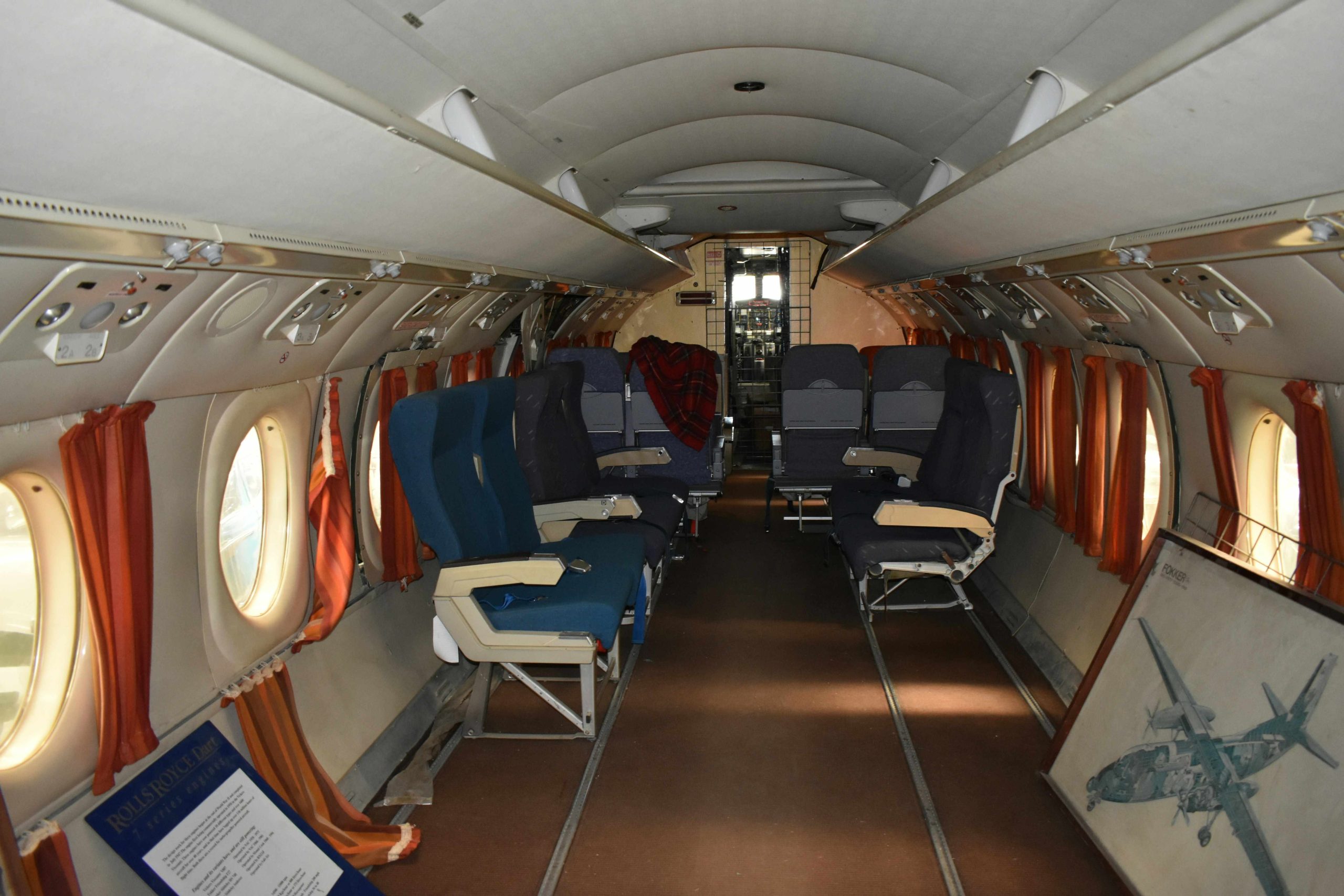
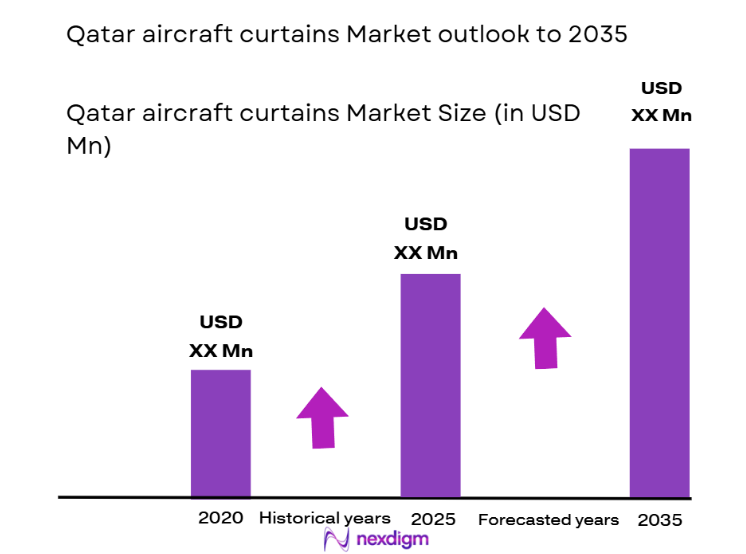
Based on a recent historical assessment, the Qatar Aircraft Curtains market is projected to reach a value of USD ~ million by the end of the assessment period. This growth is primarily driven by the increasing demand for customized and premium interiors in aircraft, particularly as the aviation industry continues to recover. Factors such as enhanced passenger experience expectations, growth in private aviation, and the trend toward sustainability in materials have further propelled the market’s expansion.
In terms of geographical dominance, Qatar has emerged as a key player due to its strategic location and the rapid growth of its aviation sector. The country’s capital, Doha, is home to major international airports, and with Qatar Airways being one of the largest airlines globally, there is a consistent demand for high-quality aircraft interiors, including curtains. Furthermore, the country’s ongoing investments in airport infrastructure and luxury travel have reinforced its position as a market leader in the Middle East.
Market Segmentation
By Product Type
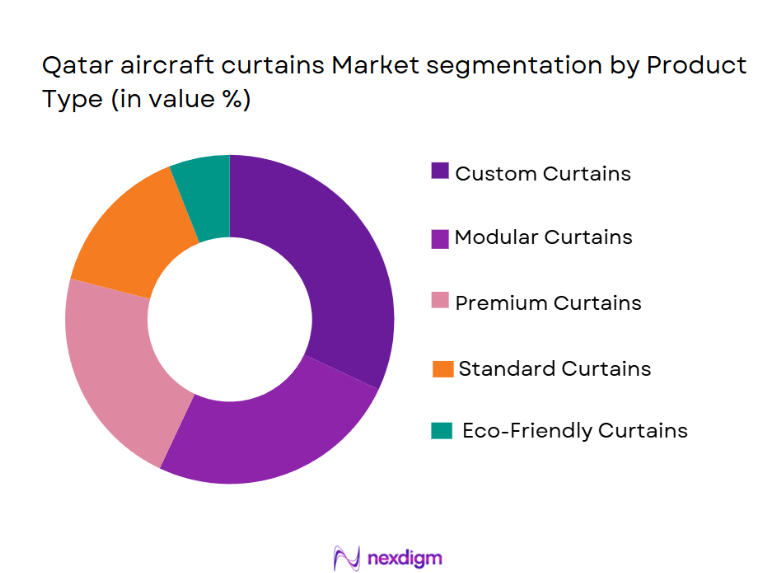
Qatar Aircraft Curtains market is segmented by product type into Custom Curtains, Modular Curtains, Premium Curtains, Standard Curtains, and Eco-Friendly Curtains. Recently, Custom Curtains have a dominant market share due to their tailored fit for luxury aircraft, offering enhanced aesthetics and comfort. This segment’s growth is fueled by rising demand for bespoke interior solutions that cater to premium air travelers and private jets.
By Platform Type
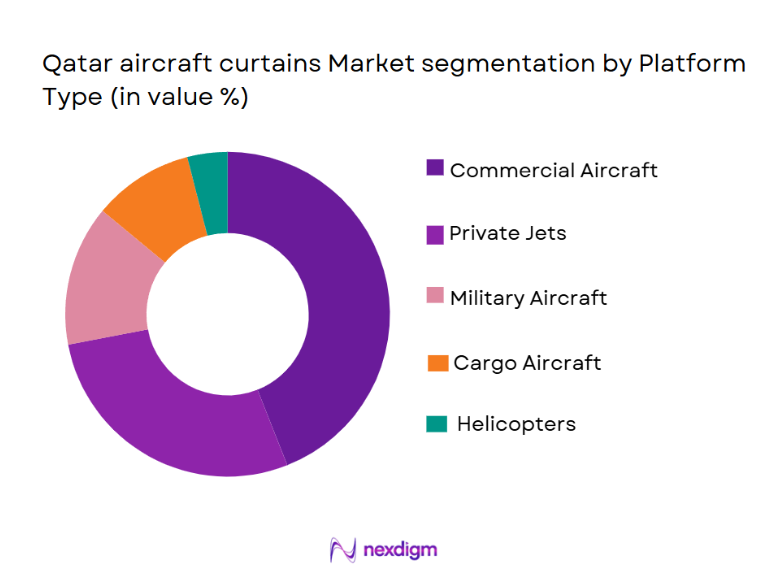
Qatar Aircraft Curtains market is segmented by platform type into Commercial Aircraft, Private Jets, Military Aircraft, Cargo Aircraft, and Helicopters. Recently, Commercial Aircraft has a dominant market share due to the continuous growth in international and domestic air travel. The increasing focus on enhancing passenger comfort in commercial flights and the demand for interior customization have driven the segment’s leadership in the market.
Competitive Landscape
The competitive landscape of the Qatar Aircraft Curtains market is characterized by consolidation, with key players establishing a strong presence through technological advancements and strategic partnerships. Major manufacturers are focusing on innovation in materials and design to cater to the growing demand for customized interiors. With the expansion of Qatar Airways and rising investments in aviation infrastructure, competition among established players is intensifying, resulting in continued market growth.
| Company Name | Establishment Year | Headquarters | Technology Focus | Market Reach | Key Products | Revenue (USD) | Additional Parameter |
| B/E Aerospace | 1985 | Dubai, UAE | ~ | ~ | ~ | ~ | ~ |
| Zodiac Aerospace | 1988 | Paris, France | ~ | ~ | ~ | ~ | ~ |
| Astronics Corporation | 1968 | Irvine, USA | ~ | ~ | ~ | ~ | ~ |
| Hella Automotive | 1908 | Lippstadt, Germany | ~ | ~ | ~ | ~ | ~ |
| Safran S.A. | 2005 | Paris, France | ~ | ~ | ~ | ~ | ~ |
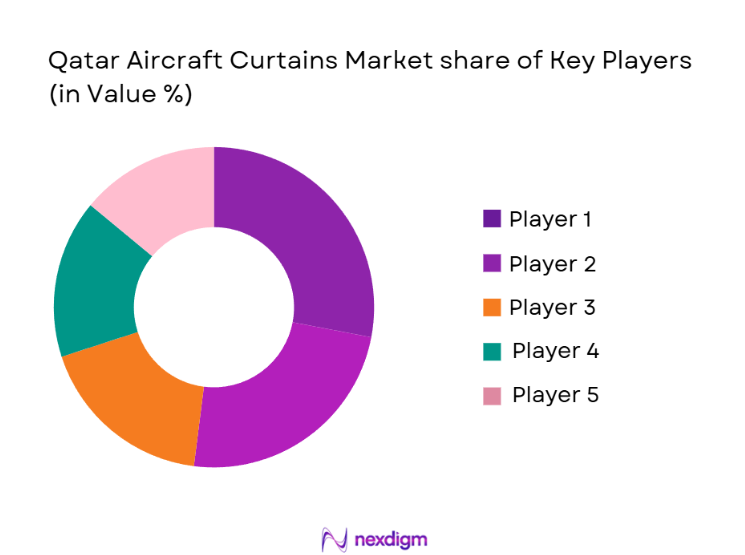
Qatar Aircraft Curtains Market Analysis
Growth Drivers
Increase in Air Travel Demand
The rising number of passengers globally is a significant driver of the Qatar aircraft curtains market. As more airlines operate long-haul and regional flights, the demand for high-quality aircraft interiors, including curtains, has increased. Aircraft curtains play a crucial role in enhancing passenger experience by providing comfort, privacy, and a sense of luxury. With the growing focus on customer satisfaction, airlines are investing more in upgrading their interiors, thus fostering the market’s expansion.
Technological Advancements in Materials
Advancements in fabric technology, such as fire-resistant, stain-resistant, and anti-microbial properties, are further driving the demand foraircraft curtains. Airlines are increasingly opting for high-performance materials that enhance safety and durability while maintaining aesthetic appeal. These technological improvements help meet stringent regulations and industry standards, offering both airlines and passengers more comfort and security. This, in turn, drives the growth of the Qatar aircraft curtains market.
Market Challenges
High Manufacturing Costs
The production of premium and custom-made aircraft curtains involves high material costs, skilled labor, and complex manufacturing processes. These factors contribute to the overall cost of aircraft interior products. Airlines may hesitate to invest in expensive custom curtains, especially with fluctuating fuel prices and financial pressures. This can hamper the market’s growth, especially for smaller carriers with limited budgets or those operating older fleets with less emphasis on interior upgrades.
Stringent Regulatory Standards
The aircraft interior market, including aircraft curtains, is subject to strict safety and regulatory standards imposed by aviation authorities such as the FAA (Federal Aviation Administration) and EASA (European Union Aviation Safety Agency). Compliance with these regulations can increase the cost and time associated with manufacturing and installing aircraft curtains. Manufacturers need to ensure their products meet these standards while balancing aesthetics, cost, and performance.
Opportunities
Growing Preference for Customization
Airlines are increasingly looking for customized solutions to reflect their brand identity, improve the passenger experience, and differentiate themselves in the competitive airline market. The growing demand for tailored products, including aircraft curtains, presents a significant opportunity for manufacturers. By offering flexible designs and materials, companies can capture a larger market share and strengthen their brand presence among airline operators looking for exclusivity.
Sustainability Trends in Aviation
Sustainability is becoming a major focus for airlines, and the growing emphasis on eco-friendly materials in aircraft interiors presents an opportunity for the aircraft curtains market. Sustainable fabric choices, such as recyclable and biodegradable materials, are gaining popularity as airlines strive to reduce their carbon footprint. Manufacturers that adopt and promote green initiatives in their products can attract airlines seeking to meet sustainability goals and cater to environmentally conscious passengers.
Future Outlook
Over the next five years, the Qatar Aircraft Curtains market is poised for steady growth, fueled by an expanding aviation sector and increasing demand for bespoke and high-quality interior solutions. Technological advancements in materials and designs are expected to drive market innovation, while regulatory support for sustainability will contribute to further product development. Demand for luxurious, personalized interiors will continue to rise, further expanding the market size and potential opportunities.
Major Players
- B/E Aerospace
- Zodiac Aerospace
- Astronics Corporation
- Hella Automotive
- Safran S.A.
- Rockwell Collins
- Avionics Specialist
- Aircraft Interior Products
- Dometic Group
- Honeywell Aerospace
- Thales Group
- Leonardo S.p.A.
- Lufthansa Technik AG
- Diehl Aerospace
- Boeing Company
Key Target Audience
- Airlines
- Private Jet Operators
- Aircraft Manufacturers
- Aircraft Maintenance and Repair Organizations (MROs)
- Aircraft Interior Designers
- Aviation Equipment Suppliers
- Investors and Venture Capitalist Firms
- Government and Regulatory Bodies
Research Methodology
Step 1: Identification of Key Variables
Key variables such as market trends, product innovations, and regulatory factors were identified through a combination of secondary research and expert consultations.
Step 2: Market Analysis and Construction
Market data was collected from verified sources, including government publications, industry reports, and company filings to create an accurate market model.
Step 3: Hypothesis Validation and Expert Consultation
Hypotheses regarding market growth and trends were validated by consulting with industry experts and stakeholders to refine our predictions.
Step 4: Research Synthesis and Final Output
The collected data and validated hypotheses were synthesized into a comprehensive report, offering actionable insights for stakeholders in the Qatar Aircraft Curtains market.

- Executive Summary
- Research Methodology (Definitions, Scope, Industry Assumptions, Market Sizing Approach, Primary & Secondary Research Framework, Data Collection & Verification Protocol, Analytic Models & Forecast Methodology, Limitations & Research Validity Checks)

- Market Definition and Scope
- Value Chain & Stakeholder Ecosystem
- Regulatory / Certification Landscape
- Sector Dynamics Affecting Demand
- Strategic Initiatives & Infrastructure Growth

- Growth Drivers
Rising Demand for Aircraft Customization
Increased Focus on Passenger Comfort
Growth in International Air Traffic - Market Challenges
High Manufacturing Costs
Strict Regulatory Requirements
Supply Chain Disruptions - Market Opportunities
Emerging Markets in the Middle East
Technological Innovations in Materials
Growth in Private Aviation - Trends
Adoption of Sustainable Materials
Increased Use of Automated Manufacturing
Customization Trends for Luxury Aircraft - Government Regulations
Safety Standards for Aircraft Interiors
Environmental Regulations on Materials
Certification Requirements for Aircraft Fitments

- By Market Value 2020-2025
- By Installed Units 2020-2025
- By Average System Price 2020-2025
- By System Complexity Tier 2020-2025

- By System Type (In Value%)
Custom Curtains
Modular Curtains
Premium Curtains
Standard Curtains
Eco-Friendly Curtains - By Platform Type (In Value%)
Commercial Aircraft
Private Jets
Military Aircraft
Cargo Aircraft
Helicopters - By Fitment Type (In Value%)
OEM Fitment
Retrofit Fitment
Aftermarket Fitment
Custom Fitment
Upgrade Fitment - By EndUser Segment (In Value%)
Airlines
Private Jet Operators
Military Entities
Aircraft Maintenance Companies
Aircraft Manufacturers - By Procurement Channel (In Value%)
Direct Sales
Distributors
OEMs
Online Retailers
Government Contracts

- Market Share Analysis
- CrossComparison Parameters
[Market Value, Installed Units, Average Price, Growth Rate, Supply Chain Efficiency] - SWOT Analysis of Key Competitors
- Pricing & Procurement Analysis
- Porter’s Five Forces
- Key Players
B/E Aerospace
Zodiac Aerospace
Astronics Corporation
Hella Automotive
Safran S.A.
Rockwell Collins
Avionics Specialist
Aircraft Interior Products
Dometic Group
Honeywell Aerospace
Thales Group
Leonardo S.p.A.
Lufthansa Technik AG
Diehl Aerospace
Boeing Company

- Airlines’ Demand for Custom Solutions
- Private Jet Market Growth and Customization Needs
- Military Applications of Aircraft Curtains
- Maintenance and Retrofit Market

- Forecast Market Value 2026-2035
- Forecast Installed Units 2026-2035
- Price Forecast by System Tier 2026-2035
- Future Demand by Platform 2026-2035


 Request a Sample
 Ask for Customization
 Get a Quote
 Enquire Now