
 Download PDF
 Download PDF
Market Overview
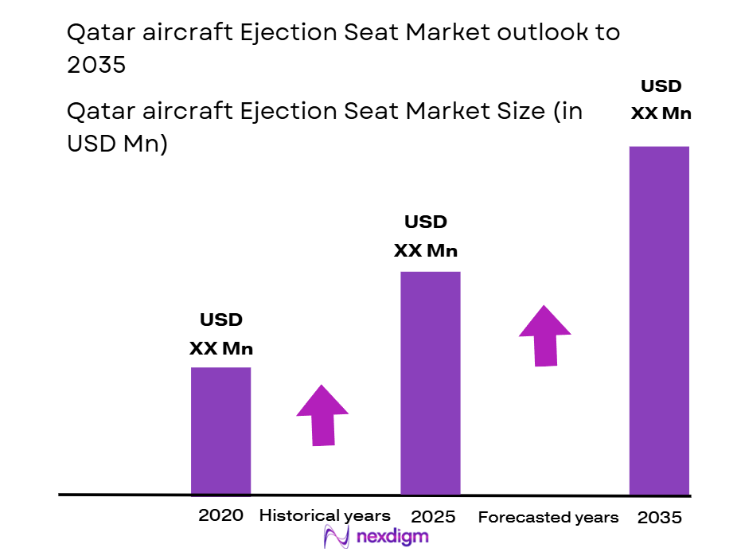
The Qatar Aircraft Ejection Seat Market is projected to be valued at USD ~ million based on a recent historical assessment. This growth is primarily driven by the increasing modernization of military aviation fleets, bolstered by Qatar’s expanding defense budget and its focus on enhancing the safety and reliability of its aircraft. The demand for advanced ejection seat technologies, especially zero-zero systems, is also gaining traction among military and defense sectors, contributing significantly to market expansion.
Qatar, along with several key Middle Eastern nations, has established itself as a dominant player in the defense sector due to strategic investments in military aviation. The country’s focus on maintaining advanced air fleets and collaborating with global aerospace companies plays a major role in its market position. This includes continued emphasis on defense procurement, infrastructure growth, and technological advancements, which enhances Qatar’s standing in the global aerospace industry.
Market Segmentation
By Product Type
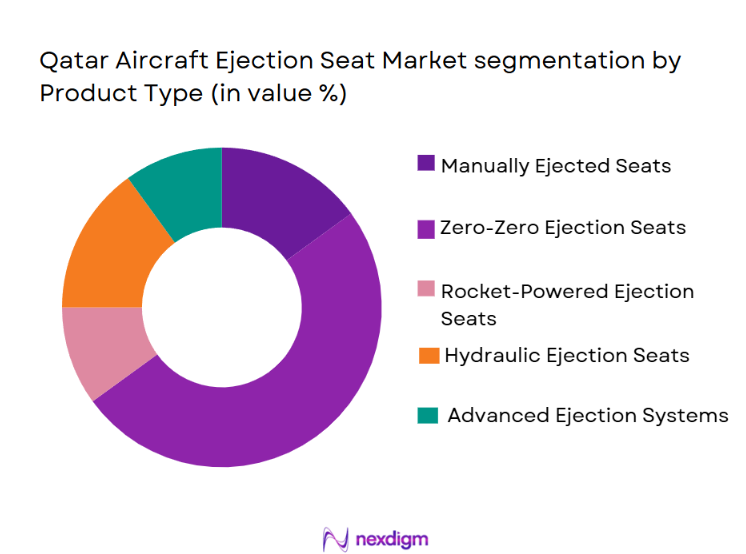
The Qatar Aircraft Ejection Seat market is segmented by product type into manually ejected seats, zero-zero ejection seats, rocket-powered ejection seats, hydraulic ejection seats, and advanced ejection systems. Zero-zero ejection seats currently dominate the market due to their high demand in modern military aircraft. These seats offer a higher level of safety, which is critical for pilots in emergency scenarios, making them a preferred choice for both new aircraft and retrofitted systems in the country’s defense fleet.
By Platform Type
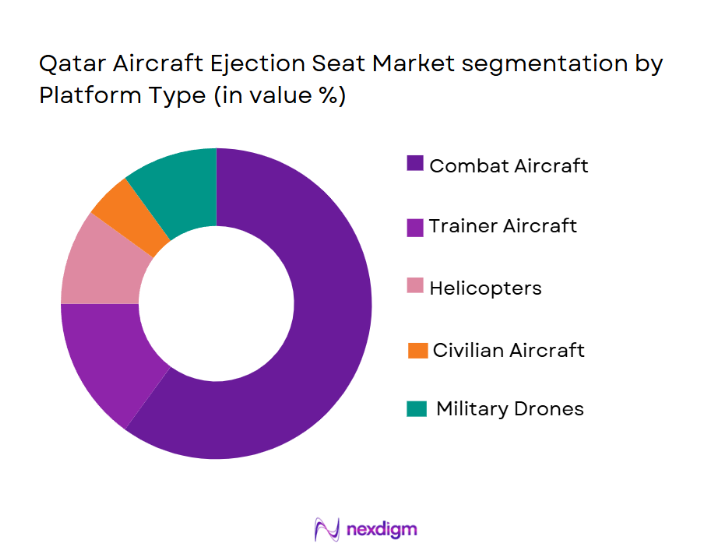
The market is also segmented by platform type into combat aircraft, trainer aircraft, helicopters, civilian aircraft, and military drones. Combat aircraft have the largest market share in Qatar, driven by the country’s defense policies and investments in advanced air combat capabilities. The need for improved pilot safety in combat scenarios has led to the growing preference for sophisticated ejection seat systems in these aircraft, enhancing both operational efficiency and personnel protection during emergencies.
Competitive Landscape
The Qatar Aircraft Ejection Seat market features intense competition among established global players and local entities. The major players are consolidating their positions through strategic partnerships, collaborations, and innovations in ejection seat technologies. Leading companies are focusing on the development of zero-zero ejection systems, which enhance pilot safety and are becoming increasingly vital in modern air forces. These efforts are expected to fuel further competition and technological advancements in the sector.
| Company Name | Establishment Year | Headquarters | Technology Focus | Market Reach | Key Products | Revenue (USD) | Key Technology Innovations |
| BAE Systems | 1999 | United Kingdom | ~ | ~ | ~ | ~ | ~ |
| Martin-Baker Aircraft | 1934 | United Kingdom | ~ | ~ | ~ | ~ | ~ |
| UTC Aerospace Systems | 1932 | United States | ~ | ~ | ~ | ~ | ~ |
| Safran | 2005 | France | ~ | ~ | ~ | ~ | ~ |
| Moog | 1951 | United States | ~ | ~ | ~ | ~ | ~ |
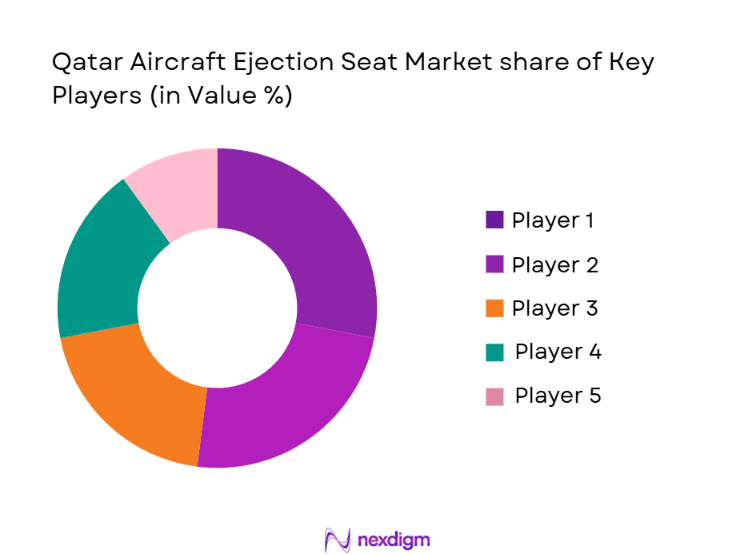
Qatar Aircraft Ejection Seat Market Analysis
Growth Drivers
Technological Advancements
The Qatar aircraft ejection seat market is experiencing rapid growth driven by advancements in aerospace technology. Innovations in materials, such as lightweight composites, and improved ejection mechanisms have enhanced the safety, comfort, and effectiveness of ejection seats. With modern fighter aircraft requiring more advanced safety systems, these technological upgrades play a vital role in increasing demand, especially among the military sector in Qatar. As the air force modernizes, demand for cutting-edge ejection seats continues to grow.
Defense Expenditures and Geopolitical Tensions
Geopolitical instability and the growing focus on defense have driven military spending in Qatar, thereby boosting the demand for aircraft ejection seats. The country’s strategic location in the Middle East, alongside heightened security concerns, has led to the adoption of state-of-the-art defense systems, including fighter jets equipped with advanced ejection seats. The rise in defense budgets fuels growth in procurement and defense-related technologies, providing a conducive environment for the expansion of the ejection seat market.
Market Challenges
High Production Costs
One of the key challenges faced by the Qatar aircraft ejection seat market is the high cost associated with manufacturing advanced ejection systems. The production of these highly specialized seats requires cutting-edge technology, materials, and precision engineering, which significantly increases production costs. These high costs can limit procurement rates, especially for small or less-developed air forces, and pose a financial burden on military budgets.
Limited Civilian Market
The Qatar aircraft ejection seat market faces a limitation in civilian applications. Ejection seats are primarily designed for military aircraft, and civilian aircraft rarely require such systems due to safety regulations and less risky operational environments. This reliance on military demand restricts overall market expansion, as there is a lower need for ejection seats in the non-defense sector.
Opportunities
Military Modernization Programs
Qatar’s ongoing military modernization program presents a significant opportunity for the aircraft ejection seat market. The country has been expanding its air force capabilities, which includes upgrading older fighter jets and procuring new aircraft. This presents a strong growth opportunity for ejection seat manufacturers as demand for enhanced safety features and advanced ejection systems increases in the defense sector.
Regional Defense Collaborations
Qatar’s partnerships with regional defense organizations and international contractors provide a unique opportunity for the aircraft ejection seat market to expand. As the country strengthens its defense relations with other Middle Eastern nations and global powers, the demand for high-quality ejection seats across multiple defense programs is expected to rise, offering new avenues for growth and technology transfer.
Future Outlook
Over the next five years, the Qatar Aircraft Ejection Seat market is expected to experience steady growth, driven by increasing investments in military aviation modernization and safety systems. The adoption of advanced technologies such as zero-zero ejection systems and the integration of smart technology into ejection seat designs will further fuel this growth. With continued support from government defense initiatives and a focus on technological advancements, the market is poised for expansion. Additionally, the growing emphasis on pilot safety and operational efficiency will contribute to a positive market outlook.
Major Players
- BAE Systems
- Martin-Baker Aircraft
- UTC Aerospace Systems
- Safran
- Moog
- Zodiac Aerospace
- Honeywell Aerospace
- Thales Group
- Rockwell Collins
- Northrop Grumman
- Harris Corporation
- Turbomeca
- Bell Helicopter
- Dassault Aviation
- Lockheed Martin
Key Target Audience
- Investments and venture capitalist firms
- Government and regulatory bodies
- Military contractors
- Aerospace & Defense manufacturers
- Aircraft OEMs
- Defense procurement agencies
- Maintenance, repair, and overhaul (MRO) companies
- Aircraft safety specialists
Research Methodology
Step 1: Identification of Key Variables
This step involves identifying and defining key factors influencing the Qatar Aircraft Ejection Seat market, including technological trends, regulatory requirements, and economic factors.
Step 2: Market Analysis and Construction
In this phase, data is collected, and a comprehensive analysis is conducted to build market models, including demand drivers, market size, and segmentation.
Step 3: Hypothesis Validation and Expert Consultation
Industry experts and key stakeholders are consulted to validate hypotheses, ensuring the accuracy of market projections and the relevancy of the findings.
Step 4: Research Synthesis and Final Output
The final step synthesizes all findings into a comprehensive report, summarizing market trends, challenges, and opportunities for key players in the Qatar Aircraft Ejection Seat market.

- Executive Summary
- Research Methodology (Definitions, Scope, Industry Assumptions, Market Sizing Approach, Primary & Secondary Research Framework, Data Collection & Verification Protocol, Analytic Models & Forecast Methodology, Limitations & Research Validity Checks)

- Market Definition and Scope
- Value Chain & Stakeholder Ecosystem
- Regulatory / Certification Landscape
- Sector Dynamics Affecting Demand
- Strategic Initiatives & Infrastructure Growth

- Growth Drivers
Growing Defense Budgets in Qatar
Advancements in Ejection Seat Technologies
Increasing Demand for Aircraft Modernization - Market Challenges
High Initial Costs of Ejection Systems
Regulatory Hurdles in Certification
Technological Limitations in System Integration - Market Opportunities
Expansion in Military Aviation
R&D Investment for Safer Systems
Collaborations with Global Defense Manufacturers - Trends
Increased Use of Zero-Zero Ejection Systems
Integration of Smart Technologies
Sustainability in Aircraft Safety Equipment - Government Regulations
Regulatory Certification from Aerospace Bodies
Safety and Operational Compliance
Military Aviation Safety Protocols

- By Market Value 2020-2025
- By Installed Units 2020-2025
- By Average System Price 2020-2025
- By System Complexity Tier 2020-2025

- By System Type (In Value%)
Manually Ejected Seats
Zero-Zero Ejection Seats
Rocket-Powered Ejection Seats
Hydraulic Ejection Seats
Advanced Ejection Systems - By Platform Type (In Value%)
Combat Aircraft
Trainer Aircraft
Helicopters
Civilian Aircraft
Military Drones - By Fitment Type (In Value%)
Forward-Fit
Retrofit
Upgrades
Aftermarket
OEM Fitments - By EndUser Segment (In Value%)
Defense Contractors
Government & Military
Private Sector
Research & Development
Maintenance & Repair Operators - By Procurement Channel (In Value%)
Direct Procurement
Indirect Procurement
Government Tenders
Commercial Procurement
OEM Partnerships

- Market Share Analysis
- CrossComparison Parameters (System Type, Platform Type, Procurement Channel, Market Value, Installed Units)
- SWOT Analysis of Key Competitors
- Pricing & Procurement Analysis
- Porter’s Five Forces
- Key Players
BAE Systems
Martin-Baker Aircraft Company
UTC Aerospace Systems
L3 Technologies
Safran
Moog
Zodiac Aerospace
Honeywell Aerospace
Thales Group
Grob Aircraft
Northrop Grumman
Rockwell Collins
Harris Corporation
Turbomeca
Bell Helicopter

- Demand for Ejection Seats in Military Aviation
- Growth in Commercial Aviation Safety Applications
- Collaborations with International Defense Contractors
- Aftermarket and Maintenance Demand

- Forecast Market Value 2026-2035
- Forecast Installed Units 2026-2035
- Price Forecast by System Tier 2026-2035
- Future Demand by Platform 2026-2035


 Request a Sample
 Ask for Customization
 Get a Quote
 Enquire Now