
 Download PDF
 Download PDF
Market Overview
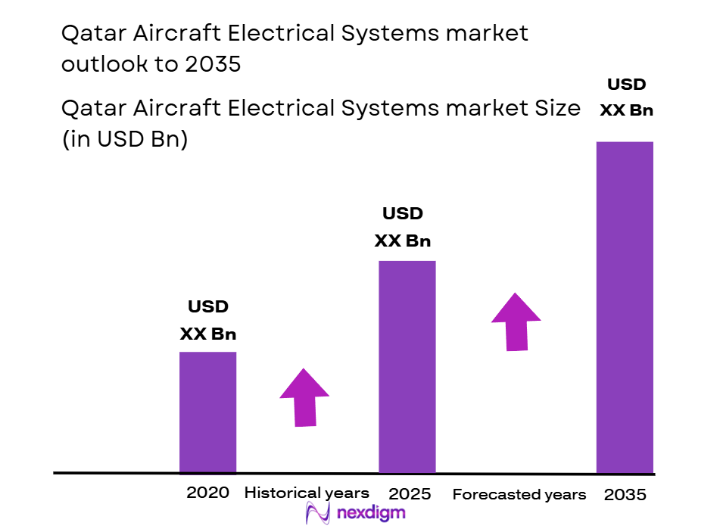
The Qatar Aircraft Electrical Systems market is projected to reach USD ~ billion based on a recent historical assessment. This market’s growth is primarily driven by the increasing demand for advanced electrical systems in the aerospace sector, alongside significant investments in modern aircraft. The growing need for energy-efficient and sustainable solutions is also propelling innovation and development in aircraft electrical systems. Furthermore, the Qatar aviation industry’s rapid growth, driven by expanding airports and the airline industry, is contributing to a robust market expansion.
The major drivers of market dominance are key cities and countries in the Gulf Cooperation Council (GCC) region, especially Qatar. As one of the world’s fastest-growing aviation hubs, Qatar benefits from high investment in aviation infrastructure, coupled with its strategic positioning for international air traffic. The country’s robust support for military and commercial aviation, along with its forward-looking regulatory environment, positions it as a leader in the region for advanced aircraft electrical systems.
Market Segmentation
By Product Type
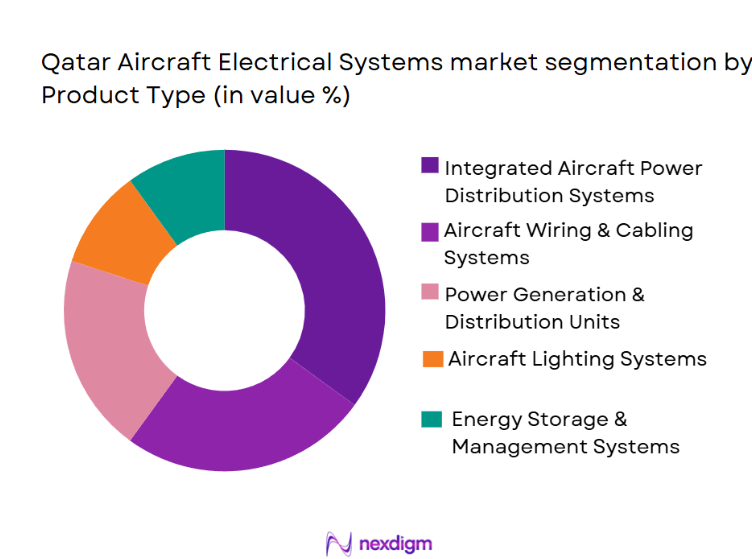
Qatar Aircraft Electrical Systems market is segmented by product type into integrated aircraft power distribution systems, aircraft wiring & cabling systems, power generation & distribution units, aircraft lighting systems, and energy storage & management systems. Recently, integrated aircraft power distribution systems have a dominant market share due to factors such as increasing aircraft fleet modernization, demand for efficient power management, and advancements in power distribution technologies. These systems are critical to ensuring stable and reliable energy delivery across various aircraft components.
By Platform Type
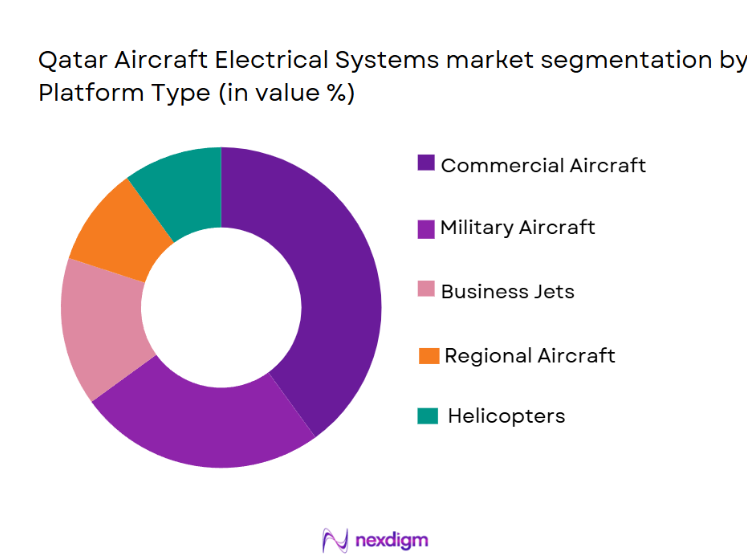
Qatar Aircraft Electrical Systems market is segmented by platform type into commercial aircraft, military aircraft, business jets, regional aircraft, and helicopters. Commercial aircraft platforms dominate the market share due to Qatar’s growing airline industry, a key player in global aviation. Commercial aircraft require sophisticated electrical systems to ensure operational efficiency, safety, and passenger comfort, driving demand for advanced aircraft electrical systems. Moreover, Qatar’s state-of-the-art airports and heavy investments in aviation infrastructure further support this trend.
Competitive Landscape
The Qatar Aircraft Electrical Systems market is highly competitive, with major players consolidating their presence through strategic partnerships, acquisitions, and technological innovations. These companies have extensive portfolios, focusing on advanced electrical system technologies, including energy-efficient power distribution, sustainable solutions, and high-performance electrical components. As Qatar becomes a regional aviation hub, major players are positioning themselves to cater to the growing demand for sophisticated electrical systems in both commercial and military aircraft.
| Company Name | Establishment Year | Headquarters | Technology Focus | Market Reach | Key Products | Revenue (USD Billion) |
| General Electric | 1892 | USA | ~ | ~ | ~ | ~ |
| Honeywell International | 1906 | USA | ~ | ~ | ~ | ~ |
| Rockwell Collins | 1973 | USA | ~ | ~ | ~ | ~ |
| Thales Group | 2000 | France | ~ | ~ | ~ | ~ |
| Safran | 2005 | France | ~ | ~ | ~ | ~ |
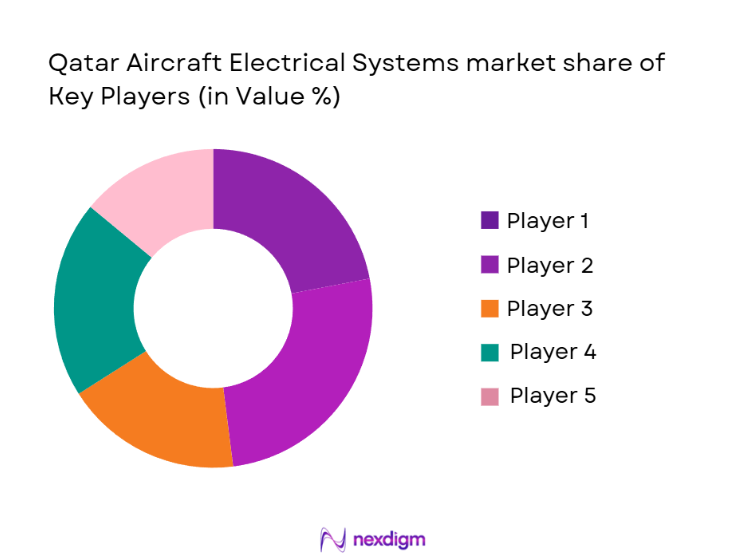
Qatar Aircraft Electrical Systems Market Analysis
Growth Drivers
Technological Advancements in Aircraft Systems
The integration of innovative technologies such as electric propulsion, advanced avionics, and energy-efficient electrical systems in aircraft is a major growth driver for the Qatar aircraft electrical systems market. With an increasing shift towards more eco-friendly solutions, the demand for advanced electrical systems is anticipated to grow, particularly in the commercial aviation sector. These technological advancements not only enhance aircraft performance but also meet stringent regulatory and environmental standards.
Expansion of the Aviation Industry
Qatar’s continuous expansion in the aviation sector, particularly through Qatar Airways, has driven demand for high-performanceaircraft electrical systems. The airline’s large fleet, including the purchase of cutting-edge aircraft like the Airbus A350 and Boeing 787, requires advanced electrical systems to support their operations. Furthermore, the rapid growth of the country’s MRO sector creates a thriving market for electrical system components and services.
Market Challenges
High Initial Investment Costs
One of the major challenges in the Qatar aircraft electrical systems market is the high initial investment required for the development and installation of advanced electrical systems in new aircraft. Although these systems promise long-term operational efficiency and cost savings, the upfront costs associated with their adoption may limit the market growth, especially in the private aviation sector. Moreover, the economic challenges of some smaller regional airlines in the region may hinder widespread adoption.
Stringent Regulatory Compliance
Compliance with evolving regulatory standards, such as those set by the International Civil Aviation Organization (ICAO) and local authorities, presents a significant challenge for manufacturers and service providers in the Qataraircraft electrical systems market. Meeting these standards while also innovating with cutting-edge technology can be a complex and costly endeavor. Companies must ensure their products meet both global and local safety standards to avoid delays and additional costs.
Opportunities
Growing Demand for Electrically Powered Aircraft
The growing trend towards electric and hybrid-electric aircraft is a significant opportunity for the Qatar aircraft electrical systems market. With rising concerns over environmental impact and fuel efficiency, both governments and airlines are increasingly investing in electrification technologies. As Qatar becomes a hub for innovation and development in the aviation industry, this trend presents opportunities for growth in electrical systems specifically designed for electric aircraft and their supporting infrastructure.
Government Support and Investments in Aviation Infrastructure
The Qatari government’s ongoing investments in aviation infrastructure and policies aimed at enhancing Qatar Airways’ global positionprovide significant opportunities for the aircraft electrical systems market. Public sector support for research and development in advanced aircraft technologies, as well as infrastructure enhancements, will likely lead to increased demand for next-generation electrical systems. Additionally, regional partnerships can further stimulate market growth.
Future Outlook
The future of Qatar’s Aircraft Electrical Systems market is expected to see significant growth driven by advancements in electrical system technologies, the expansion of Qatar’s aviation infrastructure, and government initiatives aimed at modernizing its aviation sector. Regulatory support for energy-efficient and eco-friendly aircraft systems will play a crucial role in driving the adoption of advanced electrical solutions. In addition, the demand for sustainable and innovative systems will drive technological developments in the market, fostering a robust growth trajectory.
Major Players
- General Electric
- Honeywell International
- Rockwell Collins
- Thales Group
- Safran
- United Technologies
- Boeing
- Airbus
- Ametek
- Zodiac Aerospace
- Moog Inc.
- Leonardo S.p.A.
- Eaton Corporation
- Collins Aerospace
- L3 Technologies
- Pratt & Whitney
Key Target Audience
- Airlines
- Military Aviation Units
- Aircraft Manufacturers
- Aviation Regulatory Bodies
- Aircraft MRO Providers
- Aircraft OEMs
- Aviation Component Suppliers
- Investments and Venture Capitalist Firms
Research Methodology
Step 1: Identification of Key Variables
We begin by identifying and defining the key variables that influence the Qatar Aircraft Electrical Systems market. These include factors such as market demand, growth trends, and technological advancements.
Step 2: Market Analysis and Construction
Our team analyzes the gathered data to construct a comprehensive market model. This involves assessing market drivers, trends, challenges, and opportunities, as well as competitive landscapes in the industry.
Step 3: Hypothesis Validation and Expert Consultation
We validate our findings by consulting industry experts and conducting hypothesis testing. This helps refine our conclusions and ensures the accuracy of the market projections.
Step 4: Research Synthesis and Final Output
We synthesize all collected data and insights into a detailed report, providing actionable recommendations and forecasts that cater to the needs of stakeholders in the Qatar Aircraft Electrical Systems market.

- Executive Summary
- Research Methodology (Definitions, Scope, Industry Assumptions, Market Sizing Approach, Primary & Secondary Research Framework, Data Collection & Verification Protocol, Analytic Models & Forecast Methodology, Limitations & Research Validity Checks)

- Market Definition and Scope
- Value Chain & Stakeholder Ecosystem
- Regulatory / Certification Landscape
- Sector Dynamics Affecting Demand
- Strategic Initiatives & Infrastructure Growth

- Growth Drivers
Increasing Demand for Energy-Efficient Aircraft Systems
Expansion of Qatar’s Aerospace Infrastructure
Rising Military Aircraft Investments - Market Challenges
Supply Chain and Component Shortages
Regulatory Compliance and Certification Delays
Technological Complexity in System Integration - Market Opportunities
Growth in Aircraft Fleet Size
Technological Advancements in Electrical System Designs
Rising Demand for Aircraft Electrification and Green Technologies - Trends
Shift Towards Hybrid and Electric Aircraft Systems
Increasing Integration of Smart Technologies in Aircraft Electrical Systems
Adoption of Predictive Maintenance for Aircraft Systems - Government Regulations
Stringent Safety Standards for Aircraft Electrical Systems
Qatar Civil Aviation Authority (QCAA) Regulations
International Air Transport Association (IATA) Guidelines

- By Market Value 2020-2025
- By Installed Units 2020-2025
- By Average System Price 2020-2025
- By System Complexity Tier 2020-2025

- By System Type (In Value%)
Integrated Aircraft Power Distribution Systems
Aircraft Wiring & Cabling Systems
Power Generation & Distribution Units
Aircraft Lighting Systems
Energy Storage & Management Systems - By Platform Type (In Value%)
Commercial Aircraft
Military Aircraft
Business Jets
Regional Aircraft
Helicopters - By Fitment Type (In Value%)
OEM (Original Equipment Manufacturer)
Aftermarket
Retrofit
Upgrades
Custom Modifications - By EndUser Segment (In Value%)
Airlines
Military Aviation
Aircraft OEMs
Maintenance, Repair, and Overhaul (MRO)
Aerospace Component Manufacturers - By Procurement Channel (In Value%)
Direct Purchase from OEMs
MRO Procurement
Distributors and Suppliers
Government Contracts
Third-party Procurement

- Market Share Analysis
- CrossComparison Parameters (System Type, Platform Type, Fitment Type, EndUser Segment, Procurement Channel)
- SWOT Analysis of Key Competitors
- Pricing & Procurement Analysis
- Porter’s Five Forces
- Key Players
General Electric
Honeywell International
Rockwell Collins
Thales Group
Safran
United Technologies
Boeing
Airbus
Ametek
Zodiac Aerospace
Moog Inc.
Leonardo S.p.A.
Eaton Corporation
Collins Aerospace
L3 Technologies

- Airlines Increasing Fleet Modernization
- Military Air Forces Upgrading Electrical Systems
- OEMs Emphasizing Sustainable Aircraft Designs
- MRO Providers Adapting to Advanced Electrical System Technologies

- Forecast Market Value 2026-2035
- Forecast Installed Units 2026-2035
- Price Forecast by System Tier 2026-2035
- Future Demand by Platform 2026-2035


 Request a Sample
 Ask for Customization
 Get a Quote
 Enquire Now