

 Download PDF
 Download PDF
Market Overview
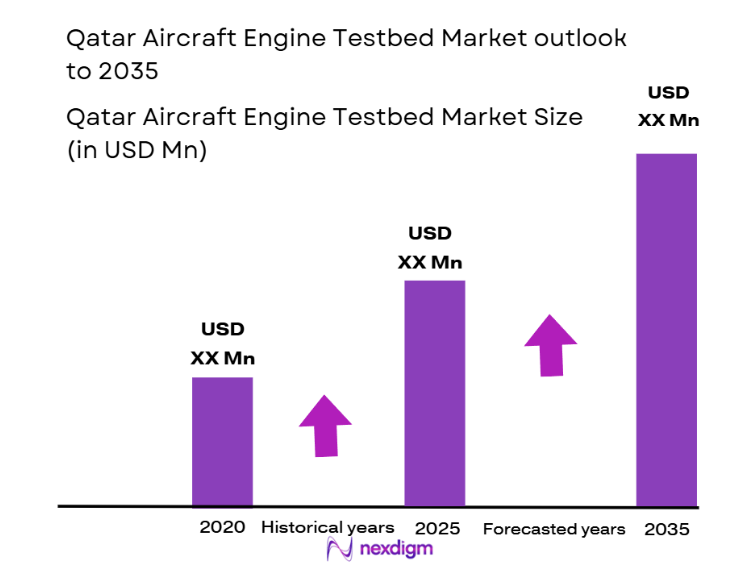
The Qatar Aircraft Engine Testbed market is valued at USD ~ million in 2025, driven by growing investments in aviation infrastructure and the need for rigorous aircraft engine testing for safety and performance. Qatar, home to major airlines like Qatar Airways and substantial aerospace activity, has seen an increasing demand for sophisticated testing solutions as part of its national infrastructure development. The market is propelled by Qatar’s strategic efforts to position itself as a hub for aviation excellence, which includes both military and commercial aerospace activities.
Qatar, with its burgeoning aerospace sector, is the dominant player in the Aircraft Engine Testbed market. The country is investing heavily in building state-of-the-art testing facilities that cater to both regional and international markets. The presence of Qatar Airways, one of the largest international carriers, and the country’s strategic positioning in the Middle East contribute to the robust demand for aircraft engine testbeds. Additionally, neighboring nations like the UAE and Saudi Arabia are also influential due to their growing aerospace activities and regional partnerships.
Market Segmentation
By System Type
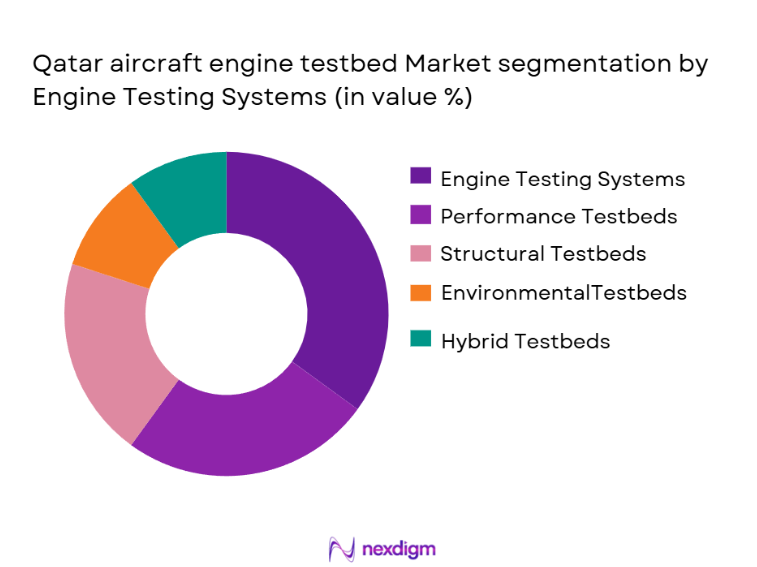
The Qatar Aircraft Engine Testbed market is primarily segmented by system type into Engine Testing Systems, Performance Testbeds, Structural Testbeds, Environmental Testbeds, and Hybrid Testbeds. Engine testing systems represent the largest segment in the market, as they are fundamental for assessing the core performance and safety standards of aircraft engines. The demand for engine testing systems is robust due to the increasing air traffic and the need for regular maintenance of engines for commercial and military aircraft. Qatar’s heavy investment in modern aviation infrastructure, including high-tech engine testing solutions, has further boosted this segment. Major aerospace players, including Qatar Airways and various international aircraft manufacturers, rely on these testbeds to ensure the efficiency and safety of their fleets.
By Platform Type
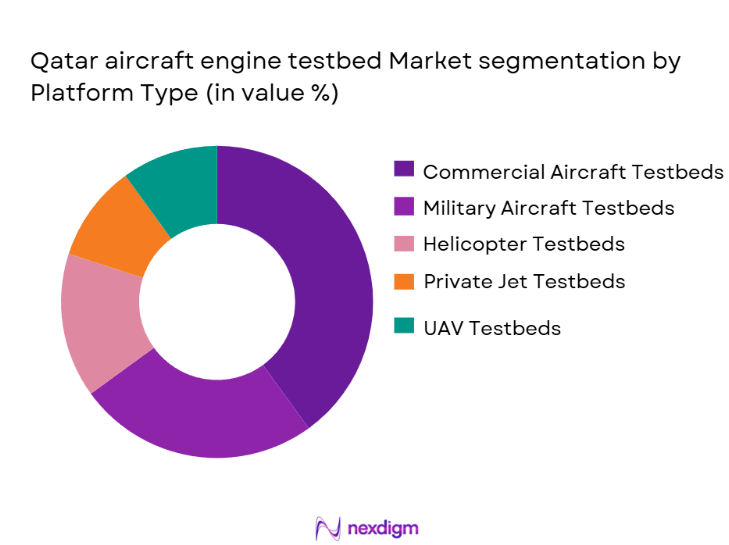
The market is also segmented by platform type, with Commercial Aircraft Testbeds, Military Aircraft Testbeds, Helicopter Testbeds, Private Jet Testbeds, and UAV Testbeds as the key subsegments. Commercial aircraft testbeds hold the largest market share within the platform type segmentation. The increasing demand for commercial flights in the Middle East, especially with Qatar Airways, has significantly increased the need for advanced engine testing capabilities. As Qatar expands its aviation network globally, the demand for commercial aircraft testbeds to ensure engine reliability and performance has surged. Additionally, the region’s strong regulatory framework for aviation safety further strengthens the demand for commercial aircraft testing solutions.
Competitive Landscape
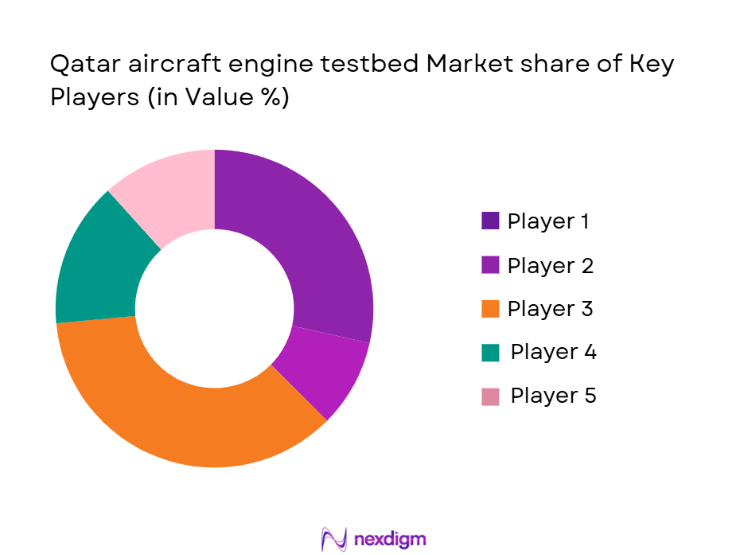
The Qatar Aircraft Engine Testbed market is dominated by a few key players, including global companies such as GE Aviation and Rolls-Royce, alongside regional players like Qatar Airways’ aviation and maintenance division. These major players have a significant impact on market dynamics due to their comprehensive product portfolios, strong technological capabilities, and strategic partnerships within the region.
| Company Name | Establishment Year | Headquarters | Engine Testing Solutions | Technological Innovation | Regional Presence | Strategic Partnerships | Product Portfolio | Market Focus | Government Contracts | Research & Development Focus |
| GE Aviation | 1917 | USA | ~ | ~ | ~ | ~ | ~ | ~ | ~ | ~ |
| Rolls-Royce | 1906 | UK | ~ | ~ | ~ | ~ | ~ | ~ | ~ | ~ |
| Pratt & Whitney | 1925 | USA | ~ | ~ | ~ | ~ | ~ | ~ | ~ | ~ |
| Safran | 2005 | France | ~ | ~ | ~ | ~ | ~ | ~ | ~ | ~ |
| Honeywell Aerospace | 1999 | USA | ~ | ~ | ~ | ~ | ~ | ~ | ~ | ~ |
Qatar Aircraft Engine Testbed Market Analysis
Growth Drivers
Expansion of Qatar’s Aviation Sector
The continuous growth of Qatar’s aviation sector, particularly Qatar Airways, has increased the demand for sophisticated aircraft engine testing solutions. With Qatar Airways expanding its fleet and global network, there is an increased need for advanced engine testing systems to ensure optimal engine performance, safety, and compliance with global aviation standards.
Government Investment in Aerospace Infrastructure
The Qatari government’s strategic investments in aerospace infrastructure, including the development of state-of-the-art aircraft engine testbeds, are driving the market’s growth. These investments are aimed at positioning Qatar as a key hub for aircraft maintenance and testing services, attracting both regional and global players to the market.
Market Challenges
High Capital Investment for Testbed Infrastructure
The initial capital investment required to establish and maintain advanced aircraft engine testbeds is substantial. This high cost, coupled with the need for specialized technology and skilled labor, can be a significant barrier to entry for smaller players or new entrants in the market.
Regulatory Compliance and Certification
The stringent regulatory requirements and certification processes for testing equipment and services in the aviation industry can delay market growth. Navigating complex certification protocols for engine testbeds can be time-consuming and costly, potentially hindering market expansion.
Opportunities
Technological Advancements in AI and Automation
The integration of artificial intelligence (AI) and automation in aircraft engine testing systems presents significant opportunities for the market. These technologies can improve the accuracy, efficiency, and speed of engine testing, reducing operational costs and enhancing system performance.
Regional Expansion and Cross-Border Collaborations
As Qatar strengthens its position as an aviation hub, opportunities for regional collaboration and cross-border partnerships in aircraft engine testing are increasing. Expanding service offerings to neighboring countries in the Middle East, along with partnerships with international aerospace companies, presents avenues for growth and market penetration.
Future Outlook
Over the next 5 years, the Qatar Aircraft Engine Testbed market is expected to experience significant growth due to advancements in testing technologies, government investment in aviation infrastructure, and an increasing demand for high-performance engines. The market will also benefit from the growing regional aviation industry and expanding international partnerships. Innovations in engine testing, including AI-driven solutions, will further propel the market forward. As Qatar strengthens its position as an aviation hub, demand for sophisticated aircraft engine testing will continue to rise, fostering new growth opportunities for market players.
Major Players in the Market
- GE Aviation
- Rolls-Royce
- Pratt & Whitney
- Safran
- Honeywell Aerospace
- MTU Aero Engines
- Air France-KLM
- Boeing
- Airbus
- Turbomeca
- Baker Hughes
- L3Harris Technologies
- Woodward Inc.
- Aero Engine Controls
- Rolls-Royce North America
Key Target Audience
- Aircraft Manufacturers
- Aircraft Operators
- MRO Providers
- Aerospace R&D Institutions
- Investments and Venture Capitalist Firms
- Government and Regulatory Bodies
- Airlines and Commercial Aviation Companies
- Military and Defense Agencies
Research Methodology
Step 1: Identification of Key Variables
The first step involves mapping the key stakeholders and variables that affect the Qatar Aircraft Engine Testbed market. This includes identifying factors such as the demand for engine testing technologies, key regulatory bodies, and the development of aviation infrastructure. Extensive desk research, leveraging both secondary data and proprietary databases, is used to gather insights on market dynamics.
Step 2: Market Analysis and Construction
In this phase, historical data for the Qatar Aircraft Engine Testbed market is compiled and analyzed. This includes examining the adoption rates of engine testing systems, market trends, and the impact of technological innovations. The goal is to develop accurate and reliable market estimates for both the current and future periods, focusing on key factors such as demand for high-performance systems and technological advances.
Step 3: Hypothesis Validation and Expert Consultation
Market hypotheses are validated through consultations with industry experts and practitioners. This step involves reaching out to key players in the aerospace and aviation sectors to gain deeper insights into operational challenges, market trends, and growth prospects. These expert consultations help to refine the market data and ensure that assumptions are grounded in real-world dynamics.
Step 4: Research Synthesis and Final Output
The final phase involves synthesizing all collected data and insights, focusing on product segments, consumer behavior, and technological trends. The output will consist of a comprehensive analysis of the Qatar Aircraft Engine Testbed market, with detailed segmentation and forecasts. Feedback from industry leaders and key stakeholders is integrated to ensure the report is robust, accurate, and aligned with market realities.

- Executive Summary
- Research Methodology (Definitions, Scope, Industry Assumptions, Market Sizing Approach, Primary & Secondary Research Framework, Data Collection & Verification Protocol, Analytic Models & Forecast Methodology, Limitations & Research Validity Checks)

- Market Definition and Scope
- Value Chain & Stakeholder Ecosystem
- Regulatory / Certification Landscape
- Sector Dynamics Affecting Demand
- Strategic Initiatives & Infrastructure Growth

- Growth Drivers
Increase in aircraft fleet size in the Middle East
Rising demand for advanced testing technologies in aerospace
Strategic investments in aerospace infrastructure by Qatar government - Market Challenges
High initial cost of testbed installations
Lack of skilled workforce for advanced testbed operations
Complex regulatory requirements for certification and testing - Market Opportunities
Integration of AI and machine learning in engine testing
Development of green technologies for sustainable aviation
Collaborations with international aerospace companies for technology exchange - Trends
Shift towards hybrid and modular testbeds
Increased adoption of remote testing technologies
Focus on reducing environmental impact in aircraft testing

- By Market Value 2020-2025
- By Installed Units 2020-2025
- By Average System Price 2020-2025
- By System Complexity Tier 2020-2025

- By System Type (In Value%)
Engine Testing Systems
Performance Testbeds
Structural Testbeds
Environmental Testbeds
Hybrid Testbeds - By Platform Type (In Value%)
Commercial Aircraft Testbeds
Military Aircraft Testbeds
Helicopter Testbeds
Private Jet Testbeds
UAV Testbeds - By Fitment Type (In Value%)
OEM Testbeds
MRO Testbeds
Hybrid Fitment Testbeds
Portable Testbeds
Fixed Testbeds - By EndUser Segment (In Value%)
Aircraft Manufacturers
Aircraft Operators
Maintenance, Repair & Overhaul Providers
Military & Defense
Research Institutes - By Procurement Channel (In Value%)
Direct Purchase
Third-Party Procurement
Lease/Purchase Options
Government Procurement
Online Marketplaces

- Market Share Analysis
- CrossComparison Parameters (Market Share, Product Innovation, Technological Advancements, Geographic Presence, Regulatory Compliance)
- SWOT Analysis of Key Competitors
- Pricing & Procurement Analysis
- Key Players
GE Aviation
Rolls-Royce
Pratt & Whitney
Safran
Honeywell Aerospace
MTU Aero Engines
Airbus
Boeing
Embraer
L3Harris Technologies
Woodward Inc.
Baker Hughes
Turbomeca
Aero Engine Controls
Daimler AG

- Increased demand from local aircraft manufacturers
- Growth in aviation research and development activities
- Military applications driving advanced engine testing
- Expansion of Qatar’s aerospace sector and its demand for localized testing

- Forecast Market Value 2026-2035
- Forecast Installed Units 2026-2035
- Price Forecast by System Tier 2026-2035
- Future Demand by Platform 2026-2035


 Request a Sample
 Ask for Customization
 Get a Quote
 Enquire Now