
 Download PDF
 Download PDF
Market Overview
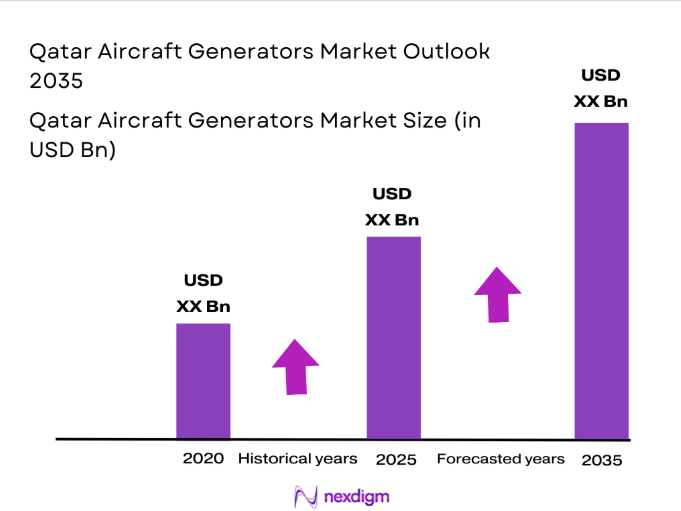
The Qatar Aircraft Generators Market has seen steady growth due to the increasing demand for air travel, particularly in the Middle East. Qatar’s aviation industry is one of the largest in the region, with Doha’s Hamad International Airport being a central hub. The country’s focus on upgrading its infrastructure, coupled with the growing fleet of modern aircraft, has significantly boosted the demand for aircraft generators. By 2023, the market was valued at USD ~ million, and it is expected to reach USD ~ million by 2024. The market is driven by factors such as the expansion of Qatar Airways, which is a major airline in the region, and the increasing adoption of next-generation aircraft, which require advanced and more efficient power generation systems.
Qatar, particularly the capital city of Doha, is the dominant player in the Aircraft Generators market in the Middle East, thanks to its strategic position as an aviation hub and its world-class airport, Hamad International Airport. Qatar Airways, one of the leading airlines globally, plays a crucial role in driving the demand for aircraft generators as it continues to expand its fleet. The country’s investments in the aviation sector, coupled with its economic diversification efforts under the Qatar National Vision 2030, create a strong foundation for growth in the Aircraft Generators market. The concentration of aviation infrastructure in Doha and its role as a gateway between the East and West makes it the focal point for this market.
Market Segmentation
By Product Type
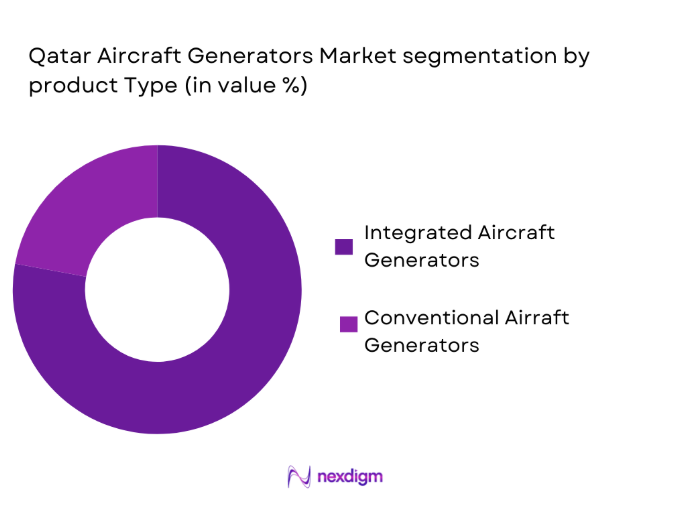
The Qatar Aircraft Generators market is segmented by product type into integrated aircraft generators and conventional aircraft generators. The integrated aircraft generator segment holds a dominant position in the market. This is primarily due to the growing trend of integrating power generation systems into the aircraft for improved efficiency, reduced weight, and better space utilization. Integrated generators are becoming the preferred choice for modern aircraft, especially in large commercial and military fleets. This type of generator is favored for its advanced design, which enhances operational performance while reducing maintenance requirements. The continuous advancement of aircraft engine technologies and the shift toward more fuel-efficient models are expected to keep this segment dominant in the coming years.
By Application
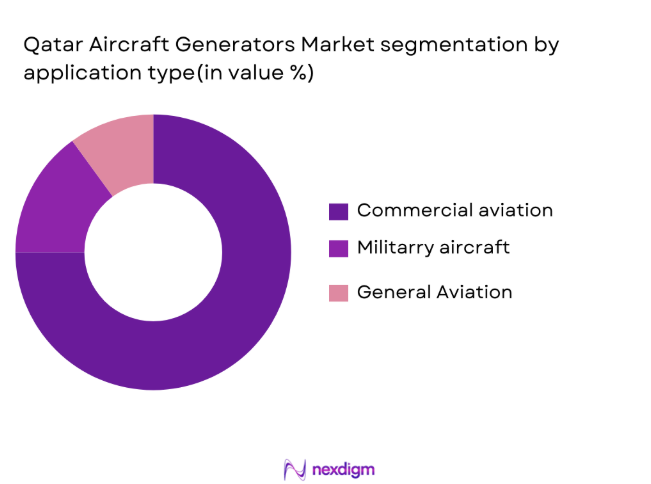
The Qatar Aircraft Generators market is further segmented by application into commercial aviation, military aviation, and general aviation. The commercial aviation segment dominates the market, driven by the rapid expansion of Qatar Airways and the increasing air traffic in the region. The demand for aircraft generators in commercial aviation is closely tied to the growth of airlines and their fleet upgrades, as modern aircraft require high-efficiency power systems. The continuous increase in passenger flights and cargo services further contributes to the need for reliable and advanced power generation solutions, making commercial aviation the largest application segment in the market.
Competitive Landscape
The Qatar Aircraft Generators market is highly competitive, with key players competing based on technological innovations, product reliability, and strong relationships with airlines and military forces. Global players like General Electric (GE), Honeywell International, and Safran are significant contributors to the market, offering advanced aircraft generators tailored for both commercial and military applications. These companies hold a competitive edge due to their strong R&D capabilities, long-standing industry relationships, and established service networks. The presence of local players in Qatar, such as Qatar Airways Engineering and other regional MRO providers, further intensifies the competition.
| Company | Year Established | Headquarters | Revenue | Key Products | Market Focus | Technological Innovations |
| General Electric (GE) | 1892 | United States | – | – | – | – |
| Honeywell International | 1906 | United States | – | – | – | – |
| Safran | 1905 | France | – | – | – | – |
| Rolls-Royce | 1904 | United Kingdom | – | – | – | – |
| Qatar Airways Engineering | 2003 | Qatar | – | – | – | – |
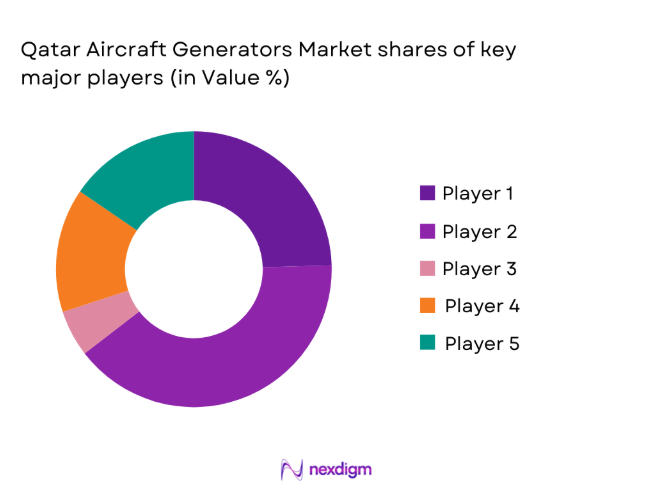
Qatar Aircraft Generators Market Analysis
Growth Drivers
Expansion of the Aviation Industry in the Middle East
The Middle East aviation industry is expanding rapidly, driven by increasing investments in airport infrastructure and growing demand for air travel. Qatar, as part of this trend, is seeing substantial growth in its aviation sector, with Hamad International Airport in Doha handling over 35 million passengers in 2022. The Qatari government is investing heavily in aviation infrastructure under the Qatar National Vision 2030, including expanding its aviation services and enhancing the fleet of Qatar Airways. This growth is directly supporting demand for aircraft generators, as the regional airlines continue to modernize their fleets. Qatar Airways itself has a fleet of more than 200 aircraft, which will continue to drive the need for new power generation systems.
Rising Demand for Efficient Power Generation in Aircraft
There is an increasing demand for more efficient and sustainable power generation systems in aircraft, which directly impacts the aircraft generators market. The push for sustainability in aviation has led to the development of more energy-efficient aircraft systems. For instance, modern aircraft, including the Boeing 787 and Airbus A350, use advanced technologies to improve fuel efficiency and reduce emissions. The growing fleet size in Qatar, as well as an increased focus on green aviation, has amplified the demand for aircraft generators that can support these advanced systems. Additionally, the government’s commitment to sustainable development, including its significant investments in the aviation sector, provides further support for the transition to more efficient power systems.
Market Challenges
High Cost of Aircraft Generators
Aircraft generators are critical components of modern aircraft, but they come at a high cost due to their complex design and the precision engineering required. The cost of these generators is increasing as new technologies, such as hybrid power systems, are being integrated into aircraft. Additionally, the aviation sector’s reliance on high-performance and highly reliable power generation systems further drives up costs. In Qatar, as part of its ongoing fleet modernization efforts, airlines and military agencies face significant financial pressure due to the high prices of such advanced equipment. Maintenance costs for aircraft generators also add to the burden, as these generators require regular service to meet stringent aviation safety standards.
Technological Complexity in Power Systems
The complexity of modern power generation systems used in aircraft presents a significant challenge for the industry. Aircraft generators are becoming increasingly sophisticated, integrating advanced technologies such as digital controls, variable speed drives, and hybrid systems. These innovations are essential to ensure aircraft efficiency and reduce environmental impact but also introduce greater technical challenges for MRO (maintenance, repair, and overhaul) operations. In Qatar, the growth of Qatar Airways and the region’s expanding aviation infrastructure necessitate the adoption of these advanced systems. However, the technological complexity involved in their integration and maintenance requires highly skilled personnel and substantial investment in training, posing a barrier for some operators in the region.
Market Opportunities
Growth in the Military and Commercial Aircraft Sectors in Qatar
Qatar’s aviation sector is benefiting from the growth of both commercial and military aviation. Qatar’s military aviation sector, driven by its strategic geopolitical position, is also experiencing an increase in investments. Qatar’s military fleet is growing with modern aircraft such as the Dassault Rafale and Eurofighter Typhoon, which require advanced power generation systems. This growth is complemented by the continuous expansion of Qatar Airways, the country’s flagship airline, which has added new aircraft to its fleet. The need for reliable and advanced aircraft generators is escalating as these aircraft are integrated into the fleet, creating substantial demand for generator systems that can support both commercial and military applications.
Technological Advancements in Energy-Efficient Aircraft Systems
Technological advancements in energy-efficient aircraft systems present significant opportunities for growth in the aircraft generators market in Qatar. The focus on reducing fuel consumption and environmental impact is driving the adoption of more energy-efficient generators. For example, the introduction of new-generation aircraft like the Airbus A350 and Boeing 787, which rely on more efficient electrical systems, is increasing the demand for next-generation aircraft generators that can deliver reliable power while minimizing fuel consumption. In Qatar, where the government is heavily investing in the aviation infrastructure, the trend toward energy efficiency is being supported by initiatives such as the Qatar National Vision 2030, which aims to enhance the sustainability of all sectors, including aviation.
Future Outlook
The Qatar Aircraft Generators market is poised for significant growth in the next decade, driven by advancements in aircraft technology and the ongoing expansion of Qatar’s aviation sector. As Qatar Airways continues to expand its fleet and introduce newer, more fuel-efficient aircraft, the demand for advanced aircraft generators will increase. Additionally, the government’s focus on diversifying its economy and the aviation industry’s contribution to GDP will further accelerate the need for high-performance power generation systems. The integration of digital technologies into the aircraft MRO (maintenance, repair, and overhaul) sector, including predictive maintenance, will also play a significant role in driving market growth.
Major Players
- General Electric (GE)
- Honeywell International
- Safran
- Rolls-Royce
- Qatar Airways Engineering
- Pratt & Whitney
- MTU Aero Engines
- United Technologies Corporation (UTC)
- Liebherr Aerospace
- Collins Aerospace
- Mitsubishi Heavy Industries
- Thales Group
- Dowty Propellers
- Ametek Aerospace & Defense
- Avio Aero
Key Target Audience
- Commercial airlines and aircraft operators
- Military and defense agencies
- Aircraft manufacturers
- Aircraft leasing companies
- Maintenance, Repair, and Overhaul (MRO) providers
- Aviation equipment suppliers
- Investments and venture capital firms
- Government and regulatory bodies
Research Methodology
Step 1: Identification of Key Variables
In this phase, the focus is on identifying the critical market variables such as aircraft fleet size, technological innovations in generators, and regulations influencing the aircraft generators market. This process is supported by extensive secondary research, drawing insights from government reports, aviation bodies, and industry publications to gather macroeconomic and aviation-specific data.
Step 2: Market Analysis and Construction
This phase involves constructing a detailed market model based on historical data, trends in air traffic, aircraft fleet expansion, and regulatory frameworks. The model includes an analysis of both commercial and military aviation sectors and forecasts their future demands for aircraft generators.
Step 3: Hypothesis Validation and Expert Consultation
Market hypotheses will be validated by conducting interviews with industry experts, including representatives from aircraft manufacturers, MRO providers, and aviation authorities. These insights will help refine and adjust the market dynamics, ensuring the accuracy and reliability of the data.
Step 4: Research Synthesis and Final Output
The final phase involves synthesizing data from various stakeholders, including airlines, government agencies, and equipment suppliers. This consolidated data will be used to produce a comprehensive and validated report on the Qatar Aircraft Generators Market, which will provide actionable insights for stakeholders.

- Executive Summary
- Research Methodology (Definitions, Scope, Industry Assumptions, Market Sizing Approach, Primary & Secondary Research Framework, Data Collection & Verification Protocol, Analytic Models & Forecast Methodology, Limitations & Research Validity Checks)

- Market Definition and Scope
- Value Chain & Stakeholder Ecosystem
- Regulatory / Certification Landscape
- Sector Dynamics Affecting Demand
- Strategic Initiatives & Infrastructure Growth

- Growth Drivers
Expansion of the aviation industry in the Middle East
Rising demand for efficient power generation in aircraft - Market Challenges
High cost of aircraft generators
Technological complexity in power systems - Market Opportunities
Growth in the military and commercial aircraft sectors in Qatar
Technological advancements in energy-efficient aircraft systems - Trends
Increasing use of hybrid and electric propulsion systems
Focus on reducing aircraft weight and energy consumption
Rising demand for sustainable and low-emission aviation technologies.

- By Market Value 2020-2025
- By Installed Units 2020-2025
- By Average System Price 2020-2025
- By System Complexity Tier 2020-2025

- By System Type (In Value%)
Turbofan Engine Generators
Turbojet Engine Generators
Turboprop Engine Generators
Helicopter Engine Generators
Auxiliary Power Unit (APU) Generators - By Platform Type (In Value%)
Commercial Aircraft
Military Aircraft
Private Aircraft
Cargo Aircraft
Unmanned Aerial Vehicles (UAVs) - By Fitment Type (In Value%)
OEM (Original Equipment Manufacturer) Generators
Replacement Generators
Aftermarket Generators
Upgrade Generators
Refurbished Generators - By End User Segment (In Value%)
Aircraft Manufacturers
Maintenance, Repair, and Overhaul (MRO) Service Providers
Airlines and Fleet Operators
Military Organizations
Private and Corporate Jet Operators - By Procurement Channel (In Value%)
Direct Sales
Third-Party Distributors
Online Procurement
OEM Partnerships
MRO Service Contracts

- Market Share Analysis
- Cross Comparison Parameters (Technology Adoption, Market Share by Region, Pricing Strategy, Customer Base, Innovation Rate)
- SWOT Analysis of Key Competitors
- Pricing & Procurement Analysis
- Detailed Company Profiles
Rolls-Royce
General Electric
Pratt & Whitney
Honeywell Aerospace
Safran Aircraft Engines
MTU Aero Engines
Liebherr Aerospace
Raytheon Technologies
Boeing Commercial Airplanes
Embraer
Airbus
Comac
Korean Air Aerospace Division
IHI Corporation
Mitsubishi Heavy Industries

- High demand from Qatar Airways and other regional airlines
- Growing military aircraft fleets requiring advanced generators
- Private jet operators seeking specialized, efficient power soluti

- Forecast Market Value 2026-2035
- Forecast Installed Units 2026-2035
- Price Forecast by System Tier 2026-2035
- Future Demand by Platform 2026-2035


 Request a Sample
 Ask for Customization
 Get a Quote
 Enquire Now