

 Download PDF
 Download PDF
Market Overview
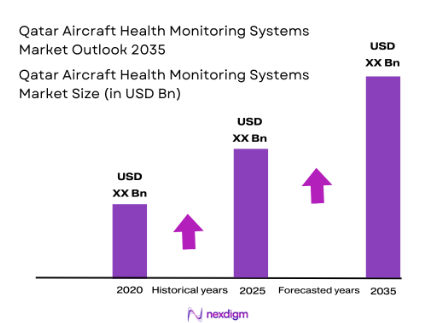
The Qatar Aircraft Health Monitoring Systems (AHMS) market has witnessed significant growth, with a market size of USD ~ million in 2025, and is expected to reach USD ~ million by 2026. The market is primarily driven by the growing aviation sector in Qatar, bolstered by the expansion of Qatar Airways, which operates a fleet of over 200 aircraft. The demand for health monitoring systems in aircraft is further fueled by advancements in predictive maintenance technologies, which allow airlines to monitor the condition of aircraft in real-time, reducing downtime and improving safety. Moreover, the increased focus on operational efficiency and regulatory compliance has pushed the adoption of such systems, making them integral to modern aircraft management.
Qatar is at the forefront of the aircraft health monitoring systems market in the Middle East, owing to its strategic position as an aviation hub and the expansion of its national carrier, Qatar Airways. The country’s commitment to enhancing its aviation infrastructure and fleet modernization supports the adoption of advanced technologies like health monitoring systems. Doha, the capital, is home to Hamad International Airport, one of the busiest airports in the region, driving the demand for cutting-edge maintenance solutions. Furthermore, Qatar’s aviation industry is backed by strong government support, further solidifying its dominance in the regional market for aircraft health monitoring systems.
Market Segmentation
By System Type
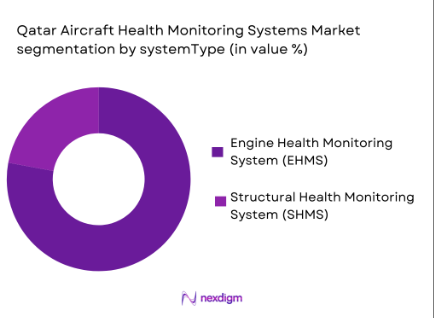
The Qatar Aircraft Health Monitoring Systems market is segmented by system type into structural health monitoring systems (SHMS) and engine health monitoring systems (EHMS). Engine health monitoring systems dominate the market due to their critical role in ensuring the operational reliability of aircraft engines, which are high-value components that require constant monitoring for performance optimization. The adoption of EHMS has surged as airlines, including Qatar Airways, continue to modernize their fleets with advanced engines that support more stringent safety standards and regulatory requirements. EHMS helps airlines reduce maintenance costs, optimize fuel consumption, and increase the operational lifespan of aircraft engines, making it a key contributor to the overall health monitoring systems market in Qatar.
By Application
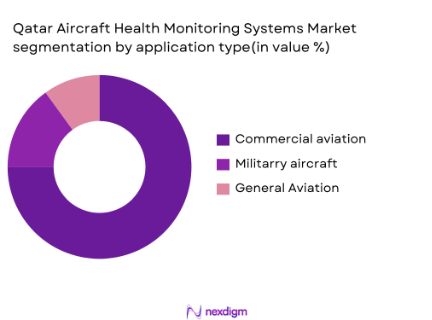
The market is segmented by application into commercial aviation, military aviation, and general aviation. The commercial aviation segment holds the largest share, driven by the large fleet sizes of airlines like Qatar Airways, which operate an extensive network of both long-haul and short-haul flights. As the airline industry continues to adopt digital solutions for maintenance and performance monitoring, the demand for advanced aircraft health monitoring systems grows. Qatar Airways and other regional carriers are increasingly implementing predictive maintenance technologies, which enable more efficient aircraft management and improved safety, propelling the dominance of the commercial aviation segment in the Qatar market.
Competitive Landscape
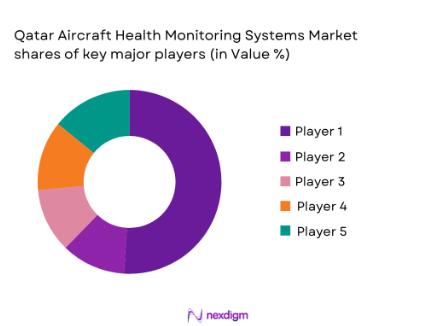
The Qatar Aircraft Health Monitoring Systems market is competitive, with several key global players contributing to its growth. Major players such as Honeywell International, General Electric, Safran, Airbus, and Rolls-Royce dominate the market, providing integrated health monitoring solutions for both commercial and military aircraft. These companies leverage their extensive R&D capabilities, global presence, and long-standing relationships with airlines and aircraft manufacturers to offer advanced solutions that optimize fleet performance and ensure safety. The consolidation of these players in the market highlights their significant influence, as they continue to innovate and cater to the increasing demand for health monitoring systems in Qatar’s growing aviation sector.
| Company | Year Established | Headquarters | Revenue | Key Products | Market Focus | Technological Innovations |
| Honeywell International | 1906 | United States | – | – | – | – |
| General Electric (GE) | 1892 | United States | – | – | – | – |
| Safran | 1905 | France | – | – | – | – |
| Airbus | 1970 | France | – | – | – | – |
| Rolls-Royce | 1904 | United Kingdom | – | – | – | – |
Qatar Aircraft Health Monitoring System Market Analysis
Growth Drivers
Increased Demand for Real-Time Data in Aircraft Health Monitoring
The demand for real-time data in aircraft health monitoring has been accelerating, primarily driven by the need for increased safety, efficiency, and operational reliability in aircraft operations. In 2022, global air traffic increased by 35%, according to the International Air Transport Association (IATA), which directly correlates with the increased demand for real-time data from aircraft health monitoring systems to optimize fleet management. Airlines and MRO (Maintenance, Repair, and Overhaul) providers are turning to health monitoring systems to provide continuous insights into aircraft performance, enabling immediate detection of anomalies, improving safety, and reducing unplanned maintenance. The integration of real-time data into daily operations has become a key enabler for modernizing fleet management.
Rise in Adoption of Predictive Maintenance Technologies
Predictive maintenance technologies have seen rapid adoption across the aviation sector as airlines strive to reduce downtime and maintenance costs while improving aircraft reliability. The global push for smarter, more efficient operations has led to a significant uptake in predictive maintenance systems, driven by advancements in IoT and AI. In 2023, Qatar Airways reported using predictive maintenance technology to optimize its fleet’s operational efficiency. Predictive maintenance is now vital in monitoring engine performance, component health, and other critical aircraft systems, enabling timely interventions before issues arise. This adoption continues to grow, especially as Qatar’s aviation sector scales up and looks to improve overall aircraft lifecycle management.
Government and Defense Sector Investments in Military Aircraft
The Qatari government has invested significantly in its defense sector, especially in military aircraft, as part of its national security strategy. The Ministry of Defense has committed substantial resources to modernizing its fleet, with new aircraft such as the Rafale fighter jets, which require advanced health monitoring systems. Qatar’s military spending is expected to rise further as part of its defense and security objectives, emphasizing the growing need for health monitoring solutions. These investments are a major growth driver for the aircraft health monitoring systems market, as these systems are critical in maintaining the operational readiness and efficiency of modern military fleets.
Market Challenges
High Installation and Integration Costs of Health Monitoring Systems
The high cost of installing and integrating aircraft health monitoring systems remains a major challenge, particularly for smaller operators and regional airlines. In 2023, Qatar Airways highlighted the significant investment required for upgrading its fleet with next-generation health monitoring technologies. While these systems provide long-term cost savings through improved efficiency and reduced unplanned maintenance, the upfront capital expenditures for installation, system integration, and training are substantial. For many airlines, especially those in the Middle East region, these initial costs can delay or limit the adoption of these advanced systems, despite the long-term benefits they offer.
Complexity in Managing Large Amounts of Real-Time Data
Managing large volumes of real-time data from aircraft health monitoring systems presents a significant operational challenge. The vast amounts of data generated by sensors and onboard systems require sophisticated processing infrastructure, data storage solutions, and analytics capabilities. Qatar Airways, as one of the largest carriers in the Middle East, faces these challenges while implementing real-time monitoring systems to enhance fleet performance. Additionally, maintaining the quality and reliability of the data while avoiding data overload or system downtime is a complex task that requires significant technical expertise and operational support.
Regulatory Challenges in Meeting International Aviation Standards
Meeting international aviation standards for aircraft health monitoring systems is an ongoing challenge. The aviation industry is governed by strict safety regulations, which require continuous updates to health monitoring technologies and their certifications. In Qatar, the Civil Aviation Authority (QCAA) oversees the implementation of these standards, ensuring that all systems comply with international norms. For new systems or upgrades, manufacturers must navigate a rigorous process of validation and certification. This regulatory complexity not only adds to the time required to deploy new technologies but also increases the costs associated with integrating these systems into commercial and military aircraft.
Market Opportunities
Growth in the Number of Commercial and Military Aircraft Fleets
Qatar’s aircraft fleet continues to grow, both in the commercial and military sectors, presenting a significant opportunity for the aircraft health monitoring systems market. As of 2023, Qatar Airways operated a fleet of over 200 aircraft, with plans to expand further to meet the increasing demand for air travel in the region. Additionally, the Qatari military is enhancing its fleet of fighter jets, helicopters, and transport aircraft, all of which require advanced health monitoring systems. This ongoing fleet expansion directly increases the demand for monitoring systems to ensure optimal aircraft performance, reduced downtime, and improved safety.
Technological Advancements in AI for Predictive Maintenance
The growing integration of Artificial Intelligence (AI) in predictive maintenance technologies is a key opportunity for the aircraft health monitoring systems market. AI-powered systems can analyze vast amounts of data from aircraft sensors in real-time, providing actionable insights that predict potential failures before they occur. The application of AI in Qatar Airways’ fleet management is an example of how AI-driven systems enhance operational efficiency, minimize disruptions, and reduce maintenance costs. With advancements in machine learning, AI is expected to further revolutionize predictive maintenance, providing even more accurate insights into aircraft health and extending the lifespan of critical components.
Future Outlook
Over the next decade, the Qatar Aircraft Health Monitoring Systems market is set to experience significant growth, driven by the continuous modernization of the aircraft fleet, advancements in predictive maintenance technologies, and increasing demand for operational efficiency. The integration of digital technologies, such as AI and machine learning, is expected to enhance the capabilities of health monitoring systems, providing real-time data for better decision-making. The growing focus on reducing maintenance costs, improving fleet uptime, and ensuring safety is expected to drive the widespread adoption of these systems in both commercial and military aviation sectors. Qatar’s commitment to becoming a global aviation hub ensures that the market for aircraft health monitoring systems will continue to expand and evolve.
Major Players
- Honeywell International
- General Electric (GE)
- Safran
- Airbus
- Rolls-Royce
- Rockwell Collins
- Lufthansa Technik
- Thales Group
- Pratt & Whitney
- MTU Aero Engines
- Collins Aerospace
- Ametek Aerospace & Defense
- Dowty Propellers
- IAE International Aero Engines
- Mitsubishi Heavy Industries
Key Target Audience
- Airlines and aircraft operators
- Military and defense agencies
- Aircraft manufacturers
- Aircraft leasing companies
- Maintenance, Repair, and Overhaul (MRO) providers
- Aviation equipment suppliers
- Investments and venture capital firms
- Government and regulatory bodies
Research Methodology
Step 1: Identification of Key Variables
In the first phase, key variables such as fleet size, aircraft modernization, regulatory factors, and technological advancements in health monitoring systems will be identified through desk research and data collection from industry reports, government sources, and aviation organizations. These variables will form the foundation of the market analysis.
Step 2: Market Analysis and Construction
This phase involves analyzing historical data, identifying market drivers and trends, and assessing the adoption of aircraft health monitoring systems across different sectors. The analysis will focus on commercial and military aviation and their adoption rates for predictive maintenance systems.
Step 3: Hypothesis Validation and Expert Consultation
The hypotheses developed from secondary research will be validated through expert consultations, including interviews with industry stakeholders, MRO providers, and aircraft manufacturers. These consultations will provide insights into operational practices and technological adoption, helping refine the market data.
Step 4: Research Synthesis and Final Output
The final phase involves synthesizing the data collected, including insights from industry experts, and verifying findings through further consultations. The output will provide a comprehensive and accurate analysis of the Qatar Aircraft Health Monitoring Systems market, which will be used to forecast future growth trends.

- Executive Summary
- Research Methodology (Definitions, Scope, Industry Assumptions, Market Sizing Approach, Primary & Secondary Research Framework, Data Collection & Verification Protocol, Analytic Models & Forecast Methodology, Limitations & Research Validity Checks)

- Market Definition and Scope
- Value Chain & Stakeholder Ecosystem
- Regulatory / Certification Landscape
- Sector Dynamics Affecting Demand
- Strategic Initiatives & Infrastructure Growth

- Growth Drivers
Increased demand for real-time data in aircraft health monitoring
Rise in adoption of predictive maintenance technologies
Government and defense sector investments in military aircraft - Market Challenges
High installation and integration costs of health monitoring systems
Complexity in managing large amounts of real-time data
Regulatory challenges in meeting international aviation standards - Market Opportunities
Growth in the number of commercial and military aircraft fleets
Technological advancements in AI for predictive maintenance
Strategic government initiatives to enhance aviation infrastructure - Trends
Adoption of AI and machine learning in aircraft health monitoring systems
Shift towards more integrated and centralized data monitoring solutions
Focus on real-time diagnostics to reduce operational downtime.

- By Market Value 2020-2025
- By Installed Units 2020-2025
- By Average System Price 2020-2025
- By System Complexity Tier 2020-2025

- By System Type (In Value%)
Engine Health Monitoring Systems
Airframe Health Monitoring Systems
Power and Propulsion Health Monitoring Systems
Flight Control Systems Monitoring
Fuel and Hydraulic System Monitoring - By Platform Type (In Value%)
Commercial Aircraft
Military Aircraft
Private Aircraft
Cargo Aircraft
Unmanned Aerial Vehicles (UAVs) - By Fitment Type (In Value%)
OEM (Original Equipment Manufacturer) Systems
Replacement Systems
Aftermarket Systems
Upgrade Systems
Refurbished Systems - By End User Segment (In Value%)
Aircraft Manufacturers
Maintenance, Repair, and Overhaul (MRO) Service Providers
Airlines and Fleet Operators
Military Organizations
Private and Corporate Jet Operators - By Procurement Channel (In Value%)
Direct Sales
Third-Party Distributors
Online Procurement
OEM Partnerships
MRO Service Contracts

- Market Share Analysis
- Cross Comparison Parameters (Technology Adoption, Market Share by Region, Pricing Strategy, Customer Base, Innovation Rate)
- SWOT Analysis of Key Competitors
- Pricing & Procurement Analysis
- Detailed Company Profiles
Rolls-Royce
General Electric
Pratt & Whitney
Honeywell Aerospace
Safran Aircraft Engines
MTU Aero Engines
Liebherr Aerospace
Raytheon Technologies
Boeing Commercial Airplanes
Embraer
Airbus
Comac
Korean Air Aerospace Division
IHI Corporation
Mitsubishi Heavy Industries

- Demand from Qatar Airways for advanced aircraft health management
- Increasing focus on military aircraft fleet management and maintenance
- Expansion of private aviation requiring health monitoring solutions
- Rising number of cargo aircraft fleets driving monitoring system needs

- Forecast Market Value 2026-2035
- Forecast Installed Units 2026-2035
- Price Forecast by System Tier 2026-2035
- Future Demand by Platform 2026-2035


 Request a Sample
 Ask for Customization
 Get a Quote
 Enquire Now