
 Download PDF
 Download PDF
Market Overview
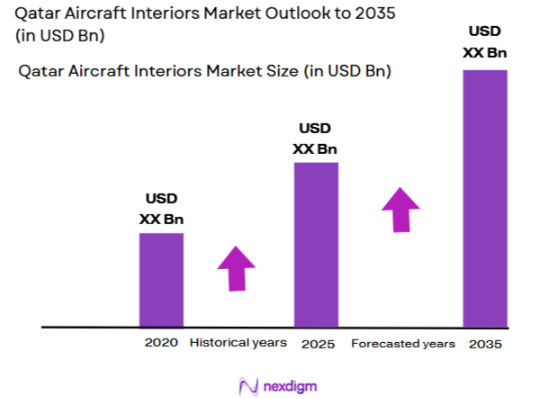
The Qatar aircraft interiors market has witnessed significant growth, driven by increasing demand for more luxurious and functional in-cabin experiences. As of 2024, the market is valued at approximately USD ~billion, bolstered by the region’s strong focus on upgrading existing aircraft interiors and the growing fleet of commercial and business jets. This market is expected to continue expanding, fueled by technological advancements and consumer demand for better seating, lighting, and entertainment options. A combination of regulatory support and the boom in air travel in the Middle East has further accelerated growth in the industry.
Qatar is a dominant player in the Middle Eastern aircraft interiors market due to its strategic position as a global aviation hub. The country’s investments in modernizing its fleet and the presence of major carriers like Qatar Airways have significantly contributed to the market’s development. Additionally, the expanding demand for luxury and custom-built aircraft interiors, especially for business jets and private aircraft, has positioned Qatar at the forefront of the market. The nation’s strong focus on aviation infrastructure and regulatory frameworks also supports its dominance in the region.
Market Segmentation
By System Type
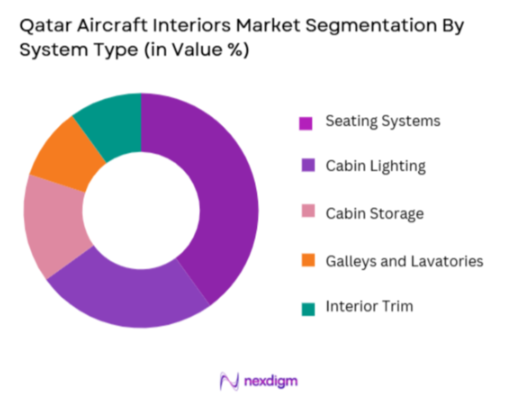
The Qatar aircraft interiors market is segmented by system type into several key areas including seating systems, cabin lighting, cabin storage, galleys and lavatories, and interior trim. Among these, the seating systems segment holds the largest market share. The demand for comfortable and customizable seating is driven by increasing consumer preferences for enhanced comfort during long flights. Luxury seating, including lie-flat seats and premium business class configurations, is a significant contributor to this dominance. Airlines and private jet operators in Qatar prioritize seating systems that offer both style and comfort, which drives market growth.
By Platform Type
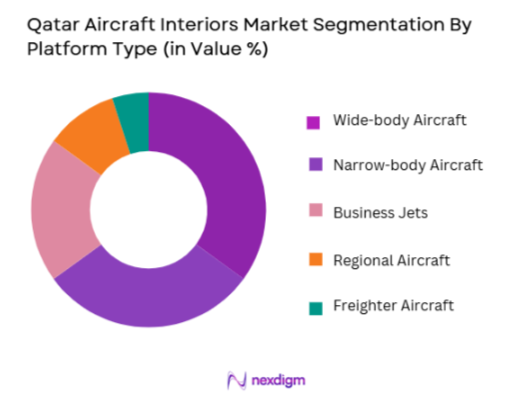
In the Qatar aircraft interiors market, the platform type segmentation includes narrow-body aircraft, wide-body aircraft, business jets, regional aircraft, and freighter aircraft. The wide-body aircraft segment dominates the market share due to the heavy demand for long-haul international flights, especially by Qatar Airways. These aircraft, which cater to both business and economy class passengers, require high-end interiors to ensure a superior in-flight experience. Furthermore, business jets, due to their luxury nature and customization, continue to show substantial demand, further contributing to the strength of the wide-body segment.
Competitive Landscape
The Qatar aircraft interiors market is dominated by several key players, both local and global, that offer a range of products and services. These players have a significant impact on market growth through continuous innovation, extensive distribution networks, and strong brand presence.The market is characterized by companies like Gulfstream Aerospace, Boeing, and Airbus, which lead the market with advanced technological solutions and high-quality designs. These global players are complemented by regional companies that cater to the specific demands of Qatar and the Middle East. The competitive landscape is highly consolidated, with a few large players controlling the majority of the market share.
| Company | Year Established | Headquarters | Product Offering | Revenue (USD) | Market Focus | Innovation Initiatives |
| Gulfstream Aerospace | 1958 | Savannah, USA | ~ | ~ | ~ | ~ |
| Boeing | 1916 | Chicago, USA | ~ | ~ | ~ | ~ |
| Airbus | 1970 | Toulouse, France | ~ | ~ | ~ | ~ |
| Rockwell Collins | 1933 | Iowa, USA | ~ | ~ | ~ | ~ |
| Lufthansa Technik | 1951 | Hamburg, Germany | ~ | ~ | ~ | ~ |
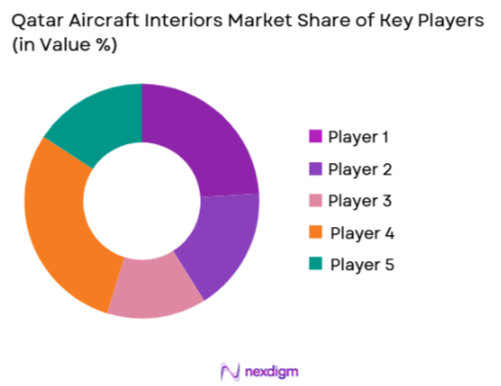
Qatar Aircraft Interiors Market Analysis
Growth Drivers
Urbanization
Urbanization is a key factor influencing the demand for enhanced aircraft interiors. As Qatar’s urban population grows, especially in Doha, the demand for air travel, both domestic and international, is increasing. In 2024, Qatar’s urban population is projected to reach over ~million people, which drives the demand for higher-end aircraft interiors to cater to the growing middle and upper classes. This urban growth promotes a need for more frequent and comfortable air travel experiences, pushing airlines to invest in advanced interior solutions. Urbanization also fosters higher disposable incomes, leading to a greater preference for luxury and customizable aircraft interiors.
Industrialization
Industrialization in Qatar has significantly contributed to the growth of the aviation sector, with industries such as oil and gas, infrastructure, and construction expanding rapidly. In 2024, Qatar’s industrial production is expected to rise by ~%, supported by significant investments in the infrastructure and energy sectors. The increase in industrial activities leads to higher air traffic, both domestic and international, which in turn pushes the need for upgraded aircraft interiors. The expansion of key industries encourages both corporate and leisure travel, driving airlines to focus on improving in-flight passenger experience through premium interior systems.
Restraints
High Initial Costs
One of the main restraints in the Qatar aircraft interiors market is the high initial investment required for advanced interior systems. Modern aircraft interiors, which include premium seating, sophisticated lighting, and entertainment systems, involve high upfront costs. In 2024, Qatar Airways has been reported to spend over USD ~million per aircraft on interior upgrades to meet passenger expectations. These substantial capital expenditures can delay or limit investments, particularly in smaller airlines or for retrofitting existing fleets. Although the long-term benefits of enhanced interiors are clear, the high initial costs remain a significant barrier for some players in the market.
Technical Challenges
The complexity of integrating advanced technologies into aircraft interiors presents technical challenges. Innovations such as advanced passenger entertainment systems, integrated cabin lighting, and climate control systems require specialized expertise and coordination with aircraft manufacturers. In 2024, Qatar’s aviation sector faces challenges related to maintaining compatibility between new interior technologies and existing aircraft frameworks. The integration of new systems while ensuring compliance with stringent safety standards continues to be a technical obstacle, slowing down the pace at which airlines can implement full-scale interior upgrades.
Opportunities
Technological Advancements
Technological advancements present significant opportunities for the Qatar aircraft interiors market, particularly with the development of more efficient, lighter, and eco-friendly materials. In 2024, innovations such as the use of composite materials for interior components and the integration of digital in-flight services are expected to transform the sector. Airlines in Qatar are investing in next-generation entertainment systems, automated lighting, and seating arrangements that enhance passenger comfort. Additionally, the use of IoT-enabled solutions in cabins to monitor passenger satisfaction is gaining momentum. These technologies are expected to open new avenues for growth, especially with airlines aiming to differentiate themselves through cutting-edge offerings.
International Collaborations
International collaborations present significant growth opportunities for the Qatar aircraft interiors market. Qatar’s strategic location as a global aviation hub allows it to partner with international companies for the development and implementation of advanced aircraft interior systems. In 2024, collaborations between Qatar Airways and global suppliers of seating, lighting, and entertainment systems are expected to drive innovation in the market. Furthermore, alliances with aerospace technology firms will allow Qatar to leverage expertise and technologies from around the world to upgrade aircraft interiors, ensuring that its airlines remain competitive on the global stage.
Future Outlook
Over the next decade, the Qatar aircraft interiors market is expected to experience substantial growth, primarily driven by the continuous expansion of the aviation sector in the region. The increasing number of airline carriers, both domestic and international, along with a rise in passenger demand for high-end experiences, will continue to propel the market. Innovations in materials, such as lightweight composites and eco-friendly options, as well as a focus on passenger comfort, are expected to play a significant role in shaping the future of the market. With Qatar’s strong regulatory environment and aviation infrastructure, the country is poised to maintain its leading position in the region.
Major Players in the Market
- Gulfstream Aerospace
- Boeing
- Airbus
- Rockwell Collins
- Lufthansa Technik
- Honeywell Aerospace
- Diehl Aerosystems
- Zodiac Aerospace
- FACC AG
- Recaro Aircraft Seating
- Thales Group
- Safran
- Mirus Aircraft Seating
- Aviointeriors
- Collins Aerospace
Key Target Audience
- Aircraft Manufacturers
- Airlines and Airline Operators
- Aircraft Interior Designers
- Aircraft Maintenance Providers
- Business Jet Operators
- Investment and Venture Capitalist Firms
- Government and Regulatory Bodies
- Aircraft Suppliers and Component Manufacturers
Research Methodology
Step 1: Identification of Key Variables
In the initial phase, we map out all the major stakeholders within the Qatar aircraft interiors market. Extensive secondary and proprietary research is utilized to gather in-depth industry-level information. The objective is to identify and define the critical variables that impact market dynamics, such as consumer demand, technological advancements, and regulatory factors.
Step 2: Market Analysis and Construction
Historical data is compiled and analyzed to assess the market penetration and the resulting revenue generation across key market segments. We will evaluate the demand for different types of aircraft interiors, including seats, lighting, and storage systems, to accurately assess market performance. A focus on service quality and pricing models also informs our analysis.
Step 3: Hypothesis Validation and Expert Consultation
To validate our market hypotheses, we conduct consultations with industry experts through computer-assisted telephone interviews (CATIs). These experts provide operational insights into market performance, consumer trends, and supplier behavior, ensuring our data is accurate and reliable.
Step 4: Research Synthesis and Final Output
The final phase involves interacting with aircraft manufacturers and component suppliers to gather real-time insights on product segments, sales performance, and upcoming innovations. This ensures that our market data is current and validated through bottom-up approaches, providing a comprehensive and accurate analysis of the Qatar aircraft interiors market.

- Executive Summary
- Qatar Aircraft Interiors Market Research Methodology(Definitions, Scope, Industry Assumptions, Market Sizing Approach, Primary & Secondary Research Framework, Data Collection & Verification Protocol, Analytic Models & Forecast Methodology, Limitations & Research Validity Checks)

- Market Definition and Scope
- Value Chain & Stakeholder Ecosystem
- Regulatory / Certification Landscape
- Sector Dynamics Affecting Demand
- Strategic Initiatives & Infrastructure Growth

- Growth Drivers
Rising demand for air travel in the Middle East
Technological advancements in aircraft interiors
Increasing focus on passenger comfort and experience - Market Challenges
High cost of aircraft interior systems
Challenges in material sourcing and supply chain disruptions
Regulatory constraints on aircraft interior designs
- Trends
Customization in aircraft interiors
Shift towards eco-friendly and lightweight materials
Integration of advanced entertainment systems
- Market Opportunities
Growing demand for sustainable materials in interior design
Expansion of aircraft fleets in the Middle East
Technological innovations in aircraft seating - Government regulations
Civil Aviation Authority regulations
Certification processes for new interior designs
Environmental regulations affecting aircraft interiors - SWOT analysis
- Porters 5 forces

- By Market Value, 2020-2025
- By Installed Units, 2020-2025
- By Average System Price, 2020-2025
- By System Complexity Tier, 2020-2025

- By System Type (In Value%)
Seat Systems
Cabin Lighting
Cabin Storage
Galleys and Lavatories
Interior Trim - By Platform Type (In Value%)
Narrow-body Aircraft
Wide-body Aircraft
Business Jets
Regional Aircraft
Freighter Aircraft - By Fitment Type (In Value%)
OEM
Retrofit
Linefit
Maintenance
Upgrade - By End-User Segment (In Value%)
Commercial Aviation
Business Aviation
Cargo Airlines
Private Aircraft
Military Aircraft - By Procurement Channel (In Value%)
Direct Procurement
Third-party Procurement
OEM Distribution Channels
Online Procurement
Regional Distributors

- Market Share Analysis
- CrossComparison Parameters[Product Innovation, Regional Presence, Manufacturing Capacity, Pricing Strategy, Technological Advancements]
- SWOT Analysis of Key Competitors
- Pricing & Procurement Analysis
- Key Players
Gulfstream Aerospace
Boeing
Airbus
Rockwell Collins
Honeywell Aerospace
Diehl Aerosystems
Zodiac Aerospace
Lufthansa Technik
Safran
Thales Group
Aerospace Technology Systems
Aviointeriors
FACC AG
Mirus Aircraft Seating
Recaro Aircraft Seating

- Commercial airlines focusing on luxury cabin designs
- Business aviation demand for customized interiors
- Cargo airlines opting for functional interior solutions
- Private aircraft owners investing in premium interior designs

- Forecast Market Value, 2026-2035
- Forecast Installed Units, 2026-2035
- Price Forecast by System Tier, 2026-2035
- Future Demand by Platform, 2026-2035


 Request a Sample
 Ask for Customization
 Get a Quote
 Enquire Now