
 Download PDF
 Download PDF
Market Overview
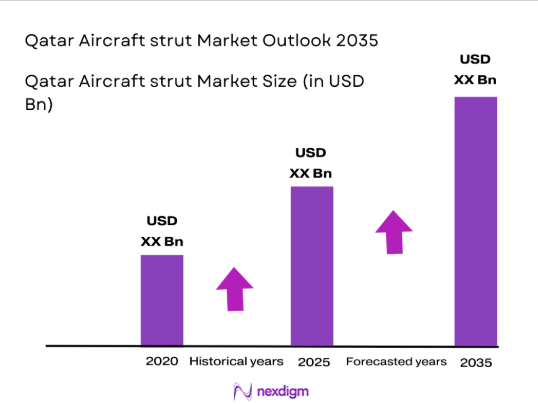
The Qatar Aircraft Strut market is valued at approximately USD ~ billion in 2025, driven by the country’s rapidly expanding aviation sector. Qatar Airways has significantly contributed to the demand for aircraft struts as the airline continues to expand its fleet to support both regional and international operations. Qatar’s position as an aviation hub in the Middle East, coupled with government investments in infrastructure, boosts the demand for reliable, high-performance components like aircraft struts. The market is also supported by increasing air traffic, which drives the need for enhanced fleet maintenance and aircraft strut replacements.
Qatar is at the forefront of the aircraft strut market in the Middle East, owing to its central location and its thriving aviation industry. Doha, Qatar’s capital, is home to Hamad International Airport, one of the busiest airports globally. The robust expansion of Qatar Airways, which added over 10 new aircraft to its fleet in 2023, also boosts demand for aircraft struts. The strategic location of Qatar, serving as a hub for international flights, further enhances its dominance in the Middle East aviation sector, fostering growth in the aircraft spare parts market, particularly struts.
Qatar Aircraft Strut Market Segmentation
By System Type
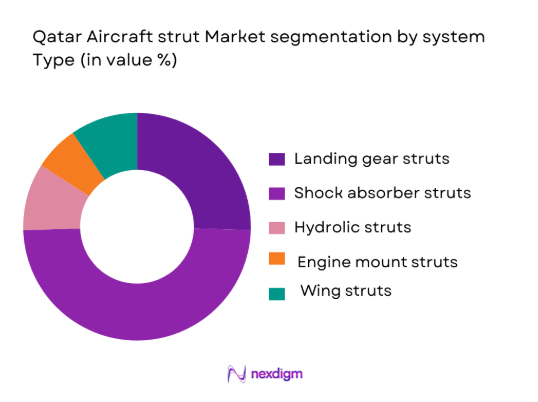
The Qatar Aircraft Strut market is segmented by system type, including landing gear struts, shock absorber struts, hydraulic struts, engine mount struts, and wing struts. Landing gear struts dominate the market due to their critical role in the aircraft’s structural integrity. As Qatar Airways continues to expand its fleet, the demand for landing gear struts increases to support the growing number of take-offs, landings, and landings on different types of terrain. Given the high frequency of landing gear maintenance cycles and the critical role of landing gear struts in flight safety, this segment is projected to maintain its leadership position.
By Platform Type
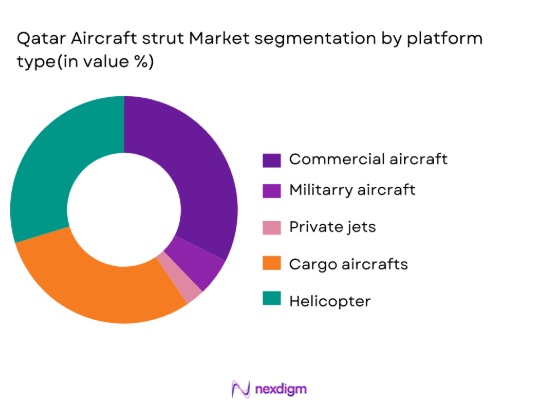
The market is also segmented by platform type, including commercial aircraft, military aircraft, private jets, cargo aircraft, and helicopters. Commercial aircraft hold the dominant market share in Qatar’s aircraft strut market due to the country’s significant investments in Qatar Airways, which operates one of the largest fleets in the Middle East. As the airline grows, the demand for various components, including struts, continues to rise. The high frequency of commercial flights and the critical maintenance cycles for these aircraft contribute to the steady demand for commercial aircraft struts in the region.
Competitive Landscape
The Qatar Aircraft Strut market is highly competitive, with both international and regional companies leading the market. The presence of key global players such as Boeing, Rolls-Royce, and Airbus, who provide high-quality aircraft parts, strengthens the overall market dynamics. Additionally, regional manufacturers and MRO (maintenance, repair, and overhaul) providers in Qatar also play a crucial role in supplying struts and providing maintenance services. This consolidation of industry players ensures a competitive yet supportive ecosystem for the growth of the aircraft strut market in Qatar.
| Company Name | Establishment Year | Headquarters | Product Portfolio | Market Reach | Technological Innovation | Service Network |
| Boeing | 1916 | Chicago, USA | – | – | – | – |
| Rolls-Royce | 1904 | Derby, UK | – | – | – | – |
| Safran | 2005 | Paris, France | – | – | – | – |
| Honeywell Aerospace | 1999 | Phoenix, USA | – | – | – | – |
| Collins Aerospace | 2018 | Charlotte, USA | – | – | – | – |
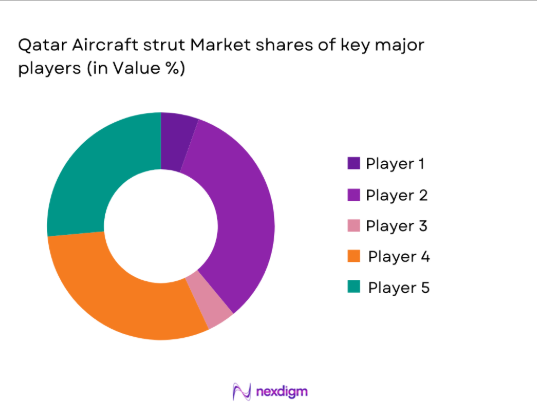
Qatar Aircraft Strut Market Dynamics
Growth Drivers
Increase in Air Traffic and Fleet Expansion
The expansion of Qatar’s aviation industry is closely tied to the increase in air traffic and the growth of Qatar Airways’ fleet. Hamad International Airport, which served over 35 million passengers in 2023, is a significant hub for international air travel. As Qatar Airways adds more aircraft to its fleet, particularly wide-body jets, the demand for maintenance services and parts, including aircraft struts, continues to grow. In 2023, Qatar Airways received 5 new aircraft, contributing to the increasing demand for spare parts such as landing gear struts to maintain operational efficiency and safety.
Government Initiatives for Aviation Infrastructure Growth
Qatar’s government plays a key role in driving the growth of the aviation sector through significant investments in infrastructure. The Qatari government’s National Vision 2030 includes plans for airport expansions and the enhancement of maintenance, repair, and overhaul (MRO) services. With a focus on infrastructure, including the planned expansion of Hamad International Airport and increased capacity for handling aircraft, the demand for critical components like aircraft struts grows. These infrastructure developments directly contribute to an expanding need for spare parts and related services.
Market Challenges
High Cost of Advanced Aircraft Strut Components
Aircraft struts, particularly those used in landing gear systems, represent a significant portion of aircraft maintenance costs due to the high quality and precision manufacturing required. As demand increases for more advanced materials like titanium and composite structures in aircraft struts, the cost continues to rise. Qatar Airways’ fleet expansion means increased costs for maintaining landing gear systems, as specialized aircraft struts are necessary for each aircraft type. The complex manufacturing and certification processes for these components add to their high cost.
Supply Chain Disruptions in the Global Market
The global supply chain has faced significant disruptions over the past few years due to geopolitical tensions, the COVID-19 pandemic, and logistical challenges. In 2023, Qatar Airways faced delays in receiving critical components for aircraft maintenance, including struts, as suppliers struggled with shipping and production delays. As the market for aircraft struts grows, these disruptions impact the timely delivery of essential components, creating bottlenecks in aircraft repairs and maintenance, which directly affect the operational efficiency of airlines like Qatar Airways.
Market Opportunities
Expanding Tourism Sector Driving Aircraft Fleet Growth
The growth of the tourism sector in Qatar provides significant opportunities for the aircraft strut market. Qatar is increasingly becoming a hub for global travelers, with the number of international visitors steadily rising. In 2023, Qatar welcomed over 2.3 million tourists, leading to increased demand for both short and long-haul flights. As airlines expand their fleets to accommodate growing tourism, the need for aircraft struts, particularly for landing gear and shock absorber struts, is increasing. The expansion of Qatar’s tourism infrastructure further drives this demand, making it a key growth area for the aircraft strut market.
Growth of Low-Cost Carriers Increasing Demand for Struts
The rise of low-cost carriers (LCCs) in the Middle East, including Qatar’s own budget airline, Scoot, is increasing the demand for affordable yet high-quality aircraft parts, including struts. These airlines often operate fleets of narrow-body aircraft that require frequent maintenance, which drives the demand for struts and other spare parts. As these carriers expand their routes, the frequency of aircraft part replacements increases, providing significant opportunities for suppliers of aircraft struts in the region. Qatar’s growing LCC market is expected to continue driving demand for cost-effective, durable aircraft struts.
Future Outlook
The Qatar Aircraft Strut market is poised for significant growth over the next decade. The continuous expansion of Qatar Airways’ fleet, coupled with increased demand for international air travel through Qatar, will drive the demand for aircraft struts, particularly in the commercial aircraft segment. The growing investment in aviation infrastructure, including modern airports and state-of-the-art MRO facilities, further supports the market’s positive outlook. Technological advancements in strut manufacturing, focusing on lightweight materials and sustainability, will also play a pivotal role in shaping the market over the coming years.
Major Players in the Market
- Boeing
- Rolls-Royce
- Safran
- Honeywell Aerospace
- Collins Aerospace
- Pratt & Whitney
- MTU Aero Engines
- GE Aviation
- Liebherr Aerospace
- Embraer
- Northrop Grumman
- Thales Group
- Lockheed Martin
- United Technologies
- SIA Engineering
Key Target Audience
- Airlines operating within the Middle East
- MRO Service Providers
- Aircraft Fleet Operators
- Government Agencies
- Defense Ministries
- Aviation Regulatory Bodies
- Investments and Venture Capitalist Firms
- Aircraft Component Manufacturers
Research Methodology
Step 1: Identification of Key Variables
This phase involves identifying the major variables that influence the Qatar Aircraft Strut market, such as the expansion of Qatar Airways’ fleet and the growth in air traffic. Data is collected from trusted sources such as industry reports, government publications, and key industry experts to define the critical variables impacting market growth.
Step 2: Market Analysis and Construction
This phase involves compiling and analyzing historical data on market performance, including fleet expansions, maintenance requirements, and trends in aircraft spare parts. Historical data is cross-referenced with regional air traffic forecasts to construct a comprehensive view of the market’s current size and projected growth.
Step 3: Hypothesis Validation and Expert Consultation
Market hypotheses are validated through consultations with industry professionals and stakeholders in Qatar’s aviation sector. Expert interviews are used to understand current trends, challenges, and emerging opportunities in the aircraft strut market.
Step 4: Research Synthesis and Final Output
In this final phase, insights gathered from expert consultations and market data are synthesized into a comprehensive market report, which provides actionable insights and strategic recommendations for businesses operating in the Qatar Aircraft Strut market.

Executive Summary
Research Methodology (Definitions, Scope, Industry Assumptions, Market Sizing Approach, Primary & Secondary Research Framework, Data Collection & Verification Protocol, Analytic Models & Forecast Methodology, Limitations & Research Validity Checks)

- Market Definition and Scope
- Value Chain & Stakeholder Ecosystem
- Regulatory / Certification Landscape
- Sector Dynamics Affecting Demand
- Strategic Initiatives & Infrastructure Growth

- Growth Drivers
Increase in air traffic and fleet expansion
Government initiatives for aviation infrastructure growth
Rising demand for aircraft maintenance and repair services - Market Challenges
High cost of advanced aircraft strut components
Supply chain disruptions in the global market
Stringent regulatory and certification requirements - Market Opportunities
Expanding tourism sector driving aircraft fleet growth
Growth of low-cost carriers increasing demand for struts
Technological advancements in materials and design improving strut durability - Trends
Shift toward digitalization in spare parts procurement
Growing preference for eco-friendly aircraft components
Integration of advanced materials in aircraft strut manufacturing

By Market Value 2020-2025
By Installed Units 2020-2025
By Average System Price 2020-2025
By System Complexity Tier 2020-2025

- By System Type (In Value%)
Landing Gear Struts
Shock Absorber Struts
Hydraulic Struts
Engine Mount Struts
Wing Struts - By Platform Type (In Value%)
Commercial Aircraft
Military Aircraft
Private Jets
Cargo Aircraft
Helicopters - By Fitment Type (In Value%)
OEM Parts
Aftermarket Parts
MRO Services
Refurbished Parts
Upgraded Parts - By End User Segment (In Value%)
Airlines
MRO Service Providers
Private Jet Owners
Government & Military
Air Cargo Operators - By Procurement Channel (In Value%)
Direct Purchase from Manufacturers
Authorized Distributors
Third-Party Resellers
Online Platforms
Fleet Operators

- Market Share Analysis
- Cross Comparison Parameters (Market Share, Revenue, Product Portfolio, Regional Reach, Technological Innovation)
- SWOT Analysis of Key Competitors
- Pricing & Procurement Analysis
- Detailed Company Profiles
Boeing
Airbus
GE Aviation
Rolls-Royce
Safran
Honeywell Aerospace
Collins Aerospace
Pratt & Whitney
MTU Aero Engines
GE Aviation
Embraer
Northrop Grumman
Liebherr Aerospace
SABCA
Thales Group

- Airlines focusing on reducing aircraft downtime
- MRO providers expanding services to cover
- new aircraft models
- Private jet owners investing in high-quality struts
- Military operators upgrading fleet maintenance capabilities

- Forecast Market Value 2026-2035
- Forecast Installed Units 2026-2035
- Price Forecast by System Tier 2026-2035
- Future Demand by Platform 2026-2035

- By System Type (In Value%)
Landing Gear Struts
Shock Absorber Struts
Hydraulic Struts
Engine Mount Struts
Wing Struts - By Platform Type (In Value%)
Commercial Aircraft
Military Aircraft
Private Jets
Cargo Aircraft
Helicopters - By Fitment Type (In Value%)
OEM Parts
Aftermarket Parts
MRO Services
Refurbished Parts
Upgraded Parts - By End User Segment (In Value%)
Airlines
MRO Service Providers
Private Jet Owners
Government & Military
Air Cargo Operators - By Procurement Channel (In Value%)
Direct Purchase from Manufacturers
Authorized Distributors
Third-Party Resellers
Online Platforms
Fleet Operators


 Request a Sample
 Ask for Customization
 Get a Quote
 Enquire Now