

 Download PDF
 Download PDF
Market Overview
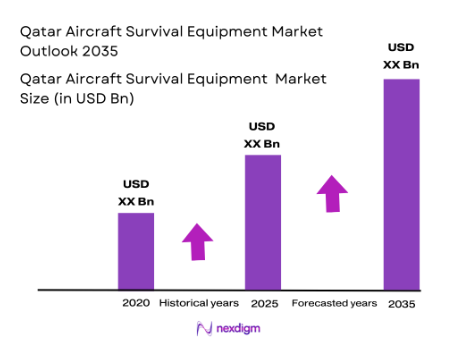
The Qatar aircraft survival equipment market is valued at USD ~ million in 2025, with its growth driven by the expanding aviation industry, increasing air traffic, and stringent safety regulations. Qatar Airways, one of the leading airlines in the region, operates a large fleet of commercial and cargo aircraft, contributing significantly to the demand for survival equipment. Government regulations, such as those mandated by the Civil Aviation Authority of Qatar, play a pivotal role in driving the market, as airlines are required to equip their aircraft with advanced safety and survival gear to ensure passenger safety during emergencies.
Qatar is a dominant player in the aircraft survival equipment market, owing to its strong aviation infrastructure and status as a major transit hub for international flights. Doha, the capital, is home to Hamad International Airport, which serves as a critical point for global air travel. The country’s commitment to enhancing its aviation sector, including fleet expansions and technological upgrades, supports the demand for survival equipment. Additionally, Qatar’s strategic investments in the defense and military sectors contribute to the increasing demand for survival gear in both commercial and military aircraft.
Market Segmentation
By Product Type
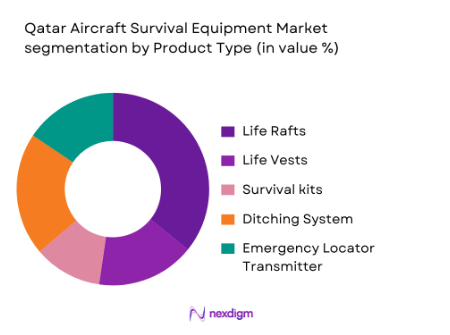
The Qatar aircraft survival equipment market is segmented by product type into life rafts, life vests, survival kits, ditching systems, and emergency locator transmitters. Life rafts dominate the market, accounting for a significant portion of the market share in 2024. The dominance of this subsegment is attributed to the critical need for life-saving devices during water ditching scenarios, which are mandatory for aircraft flying over water bodies. These products are required by regulations to ensure the safety of passengers and crew, driving continuous demand in both commercial and military sectors.
By Aircraft Type
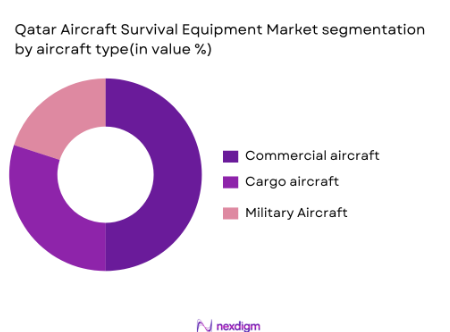
The market is further segmented by aircraft type into commercial aircraft, cargo aircraft, and military aircraft. The commercial aircraft segment holds the largest share, as Qatar Airways operates a large fleet of passenger aircraft. This segment is expected to maintain dominance due to the rising passenger traffic and the regulatory requirements for survival equipment. Additionally, Qatar’s growing military capabilities also drive demand for survival equipment in military aircraft, though the commercial segment remains the most significant contributor to the market.
Competitive Landscape
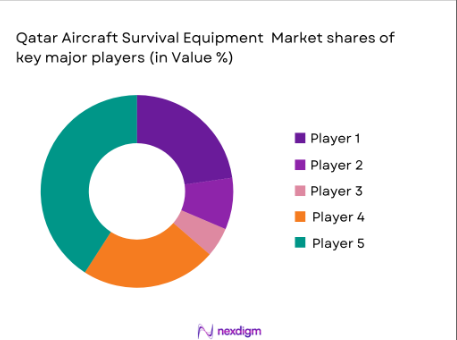
The Qatar aircraft survival equipment market is led by a few major global players who provide high-quality survival products to both commercial and military aviation sectors. The market is characterized by partnerships between aircraft manufacturers, MRO service providers, and suppliers of safety equipment. Leading companies in the market include Honeywell Aerospace, Safran, and Collins Aerospace, which have established strong positions due to their technological advancements, comprehensive product portfolios, and extensive networks across the Middle East.
| Company Name | Year of Establishment | Headquarters | Product Portfolio | Market Focus | Regional Reach | Annual Revenue (USD) |
| Honeywell Aerospace | 1906 | Morris Plains, USA | – | – | – | – |
| Safran | 2005 | Paris, France | – | – | – | – |
| Collins Aerospace | 2018 | Charlotte, USA | – | – | – | – |
| Zodiac Aerospace | 1896 | Plaisir, France | – | – | – | – |
| GKN Aerospace | 2000 | Redditch, UK | – | – | – | – |
Qatar Aircraft Survival Equipment Market Dynamics
Growth Drivers
Increase in Air Traffic in the Middle East, Particularly in Qatar
Qatar has seen a robust increase in air traffic, particularly through Hamad International Airport, which handled 7.4 million passengers in Q1 of 2024, marking a 15% rise compared to the same period in 2023. This surge in air travel has significantly boosted demand for aircraft survival equipment. Qatar Airways, one of the largest airlines in the Middle East, operates a growing fleet, which further drives the need for updated safety and survival equipment for commercial and cargo aircraft. As the country continues to strengthen its aviation industry, the demand for advanced survival systems continues to rise, underscoring the role of aviation infrastructure in safety equipment procurement.
Growing Defense Sector Expenditure in Qatar
Qatar’s defense expenditure has been steadily increasing, with a budget allocation of USD ~ billion in 2024, reflecting an upward trajectory in military investments. This rise in defense spending is largely directed toward modernizing military assets, including aircraft, which requires advanced survival equipment for enhanced safety in military operations. Qatar’s defense sector, supported by strategic geopolitical interests, is accelerating the procurement of military aircraft, thus boosting the demand for survival systems such as life vests, rafts, and emergency locator transmitters. The country’s military aviation sector is expected to continue expanding, further fueling the market for survival equipment.
Market Challenges
High Costs of Advanced Survival Equipment
The high cost of advanced survival equipment poses a significant challenge in the Qatar market, particularly in the private aircraft sector. The introduction of newer, more advanced materials in survival systems, such as lightweight composites and high-tech emergency kits, has resulted in a significant increase in production costs. These systems are critical to ensuring aircraft safety, but their high costs are a barrier for private aircraft owners and smaller operators. In 2025, the cost of emergency locator transmitters and life rafts has risen by 10%, placing additional pressure on stakeholders to justify investments while balancing safety and financial considerations.
Supply Chain Disruptions Affecting Timely Delivery of Critical Survival Equipment Parts
Global supply chain disruptions have impacted the timely availability of critical survival equipment components in Qatar. Issues such as delays in raw material supply and manufacturing backlogs have caused delays in the delivery of key survival equipment parts like life vests, survival kits, and emergency transmitters. These disruptions, exacerbated by global shipping challenges, have affected delivery timelines for airlines and MRO service providers. In 2025, these supply chain delays have extended lead times for certain survival equipment by up to 8 months, impacting aircraft servicing schedules and increasing operational costs.
Market Opportunities
Expansion of Qatar’s Airline Fleet
Qatar’s airline fleet continues to expand, particularly with Qatar Airways’ ongoing investments in new aircraft. In 2025, the airline added 15 new aircraft to its fleet, further enhancing its operational capacity. This expansion drives the demand for survival equipment, as each new aircraft requires the installation of life-saving systems. With the continuous growth of air traffic in the Middle East and Qatar’s ambitions to be a global aviation hub, the airline fleet expansion is expected to continue, creating opportunities for survival equipment suppliers to meet the growing demand for high-quality, compliant safety systems.
Government Initiatives to Modernize the Country’s Military Fleet
Qatar has committed to modernizing its military fleet, allocating substantial funds to procure advanced aircraft. In 2025, the country announced an additional USD ~ billion in defense spending focused on upgrading the Air Force’s fleet, which includes acquiring state-of-the-art fighter jets and transport aircraft. As a result, the demand for advanced survival equipment in military aviation is expected to increase. This presents a significant opportunity for suppliers of survival systems to tap into the growing military market, providing high-performance equipment for both new and retrofitted military aircraft.
Future Outlook
Over the next 5 years, the Qatar aircraft survival equipment market is expected to show significant growth driven by continuous government support, advancements in aviation safety technologies, and increasing demand for air travel. The expansion of Qatar Airways’ fleet, along with the development of Qatar’s military aircraft capabilities, will continue to drive demand for high-quality survival equipment. Additionally, regulatory pressures and safety standards will require the installation of advanced survival systems, contributing to steady market growth in the coming years.
Major Players
- Honeywell Aerospace
- Safran
- Collins Aerospace
- Zodiac Aerospace
- GKN Aerospace
- Airbus
- Boeing
- Thales Group
- Rockwell Collins
- Meggitt PLC
- AAR Corporation
- Aviall Services
- Lockheed Martin
- United Technologies
- Bombardier Aerospace
Key Target Audience
- Airlines
- Military and Defense Organizations
- Aircraft Manufacturers
- MRO Service Providers
- Aviation Safety Equipment Suppliers
- Government and Regulatory Bodies
- Investment and Venture Capital Firms
- Aircraft Component Distributors
Research Methodology
Step 1: Identification of Key Variables
The initial phase involves identifying the key drivers and variables impacting the Qatar aircraft survival equipment market. This step is supported by extensive desk research, utilizing secondary data sources such as industry reports, government publications, and aerospace manufacturer databases. The primary focus is on understanding the regulatory environment, technological developments, and market demand patterns.
Step 2: Market Analysis and Construction
In this phase, historical data on market demand, including trends in passenger traffic, fleet size, and military investments, is analyzed. The analysis focuses on the demand for survival equipment in commercial and military aircraft. This phase also includes evaluating system complexities and pricing structures.
Step 3: Hypothesis Validation and Expert Consultation
The market hypotheses are validated through consultations with key industry experts, including representatives from aircraft manufacturers, MRO providers, and survival equipment suppliers. These consultations help refine and corroborate the initial findings, providing deeper insights into market dynamics.
Step 4: Research Synthesis and Final Output
In the final phase, the research findings are synthesized, and the output is verified with feedback from major stakeholders. Direct engagement with MRO service providers and government agencies ensures a comprehensive, accurate, and validated analysis of the market.

- Executive Summary
- Research Methodology (Definitions, Scope, Industry Assumptions, Market Sizing Approach, Primary & Secondary Research Framework, Data Collection & Verification Protocol, Analytic Models & Forecast Methodology, Limitations & Research Validity Checks)

- Market Definition and Scope
- Value Chain & Stakeholder Ecosystem
- Regulatory / Certification Landscape
- Sector Dynamics Affecting Demand
- Strategic Initiatives & Infrastructure Growth

- Growth Drivers
Increase in air traffic in the Middle East, particularly in Qatar, driving demand for advanced survival equipment.
Growing defense sector expenditure in Qatar, leading to increased military aircraft survival equipment needs.
Government regulations mandating safety equipment for all aircraft, fueling demand in commercial and military sectors. - Market Challenges
High costs of advanced survival equipment, impacting adoption, especially in the private aircraft sector.
Supply chain disruptions affecting timely delivery of critical survival equipment parts.
Regulatory hurdles in getting certifications for new survival equipment technologies. - Market Opportunities
Expansion of Qatar’s airline fleet, providing opportunities for increased procurement of survival equipment.
Government initiatives to modernize the country’s military fleet, driving up demand for survival systems.
Increase in tourism and international travel routes through Qatar, leading to more stringent safety regulations. - Trends
Rise in the adoption of integrated survival systems combining multiple safety features.
Shift towards lightweight, more durable materials in survival equipment to enhance performance and reduce weight.
Growing demand for eco-friendly and sustainable materials in survival equipment manufacturing.

By Market Value 2020-2025
By Installed Units 2020-2025
By Average System Price 2020-2025
By System Complexity Tier 2020-2025

- By System Type (In Value%)
Life Rafts
Life Vests
Survival Kits
Ditching Systems
Emergency Locator Transmitters - By Platform Type (In Value%)
Commercial Aircraft
Cargo Aircraft
Military Aircraft
Business Jets
Helicopters - By Fitment Type (In Value%)
OEM (Original Equipment Manufacturer)
Aftermarket
Retrofit
Replacement
New Installation - By End User Segment (In Value%)
Airlines
Private Aircraft Owners
Military Organizations
Cargo Operators
MRO Service Providers - By Procurement Channel (In Value%)
Direct Procurement from Manufacturers
Third-Party Suppliers
Government Contracts
Distributor Partnerships
Online Sales

- Market Share Analysis
- Cross Comparison Parameters (Market Share, Product Innovation, Geographic Reach, Procurement Strategy, Price Competitiveness)
- SWOT Analysis of Key Competitors
- Pricing & Procurement Analysis
- Detailed Company Profiles
Honeywell Aerospace
Safran
Rockwell Collins
United Technologies
Collins Aerospace
Liebherr Aerospace
Aero Designs
Aviall Services
Boeing
Airbus
General Electric Aviation
Thales Group
GKN Aerospace
Curtiss-Wright
Zodiac Aerospace

- Airlines focusing on enhancing safety features and meeting regulatory compliance requirements.
- Private aircraft owners investing in advanced survival systems to improve safety standards.
- Military agencies upgrading survival equipment in line with modernization and defense strategies.
- MRO service providers increasingly offering retrofitting solutions for survival equipment in older aircraft.

- Forecast Market Value 2026-2035
- Forecast Installed Units 2026-2035
- Price Forecast by System Tier 2026-2035
- Future Demand by Platform 2026-2035


 Request a Sample
 Ask for Customization
 Get a Quote
 Enquire Now